Explosive Gaza Debate Rocks U.S. Media as Commentators Clash Over Genocide, October 7, and America’s Support for Israel
Explosive Gaza Debate Rocks U.S. Media as Commentators Clash Over Genocide, October 7, and America’s Support for Israel
A furious online debate over Gaza, Israel, genocide law, October 7, and U.S. support for Israel has erupted across American political media, exposing how deeply the war has divided not only the Middle East, but the American public square itself.
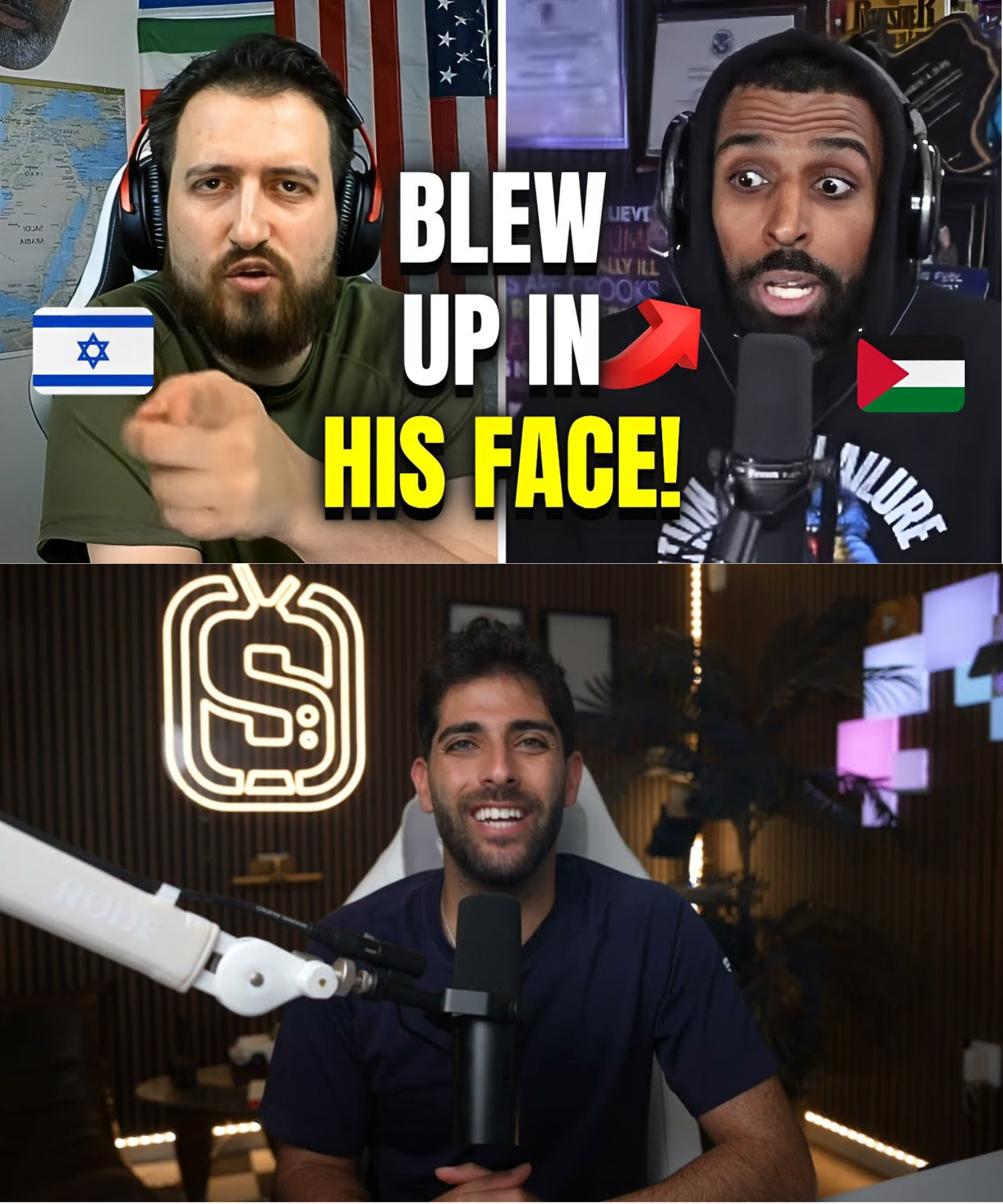
The exchange, centered on a confrontation between pro-Israel and anti-Israel commentators, quickly moved beyond ordinary disagreement. It became a shouting match over law, history, casualty figures, international courts, Hamas, Hezbollah, the Hannibal Directive, and whether the United States should continue backing Israel after more than two years of catastrophic war.
The central question was brutal: is what happened in Gaza legally genocide, or is that word being used politically before the courts have reached a final judgment?
One side insisted the answer is obvious. Gaza has been bombed, starved, displaced, and devastated. Tens of thousands of Palestinians have been killed. Human rights organizations, genocide scholars, Israeli rights groups, and independent UN-linked investigators have accused Israel of conduct that they say meets the legal and moral threshold of genocide. To this side, focusing on technical legal requirements looks like an attempt to hide mass suffering behind paperwork.
The other side argued that genocide is not just a word for terrible war. It is a specific legal crime with specific elements. The debate repeatedly returned to the 1948 Genocide Convention, which defines genocide as acts committed with intent to destroy a protected group, in whole or in part. The pro-Israel speaker emphasized that the most important legal issue is not simply death tolls or destruction, but special intent — the requirement to prove that the acts were committed with the purpose of destroying the group as such.
That point became the legal battlefield.
The anti-Israel speaker argued that the definition is already fulfilled by the destruction of Palestinians in whole or in part. He pointed to the scale of death, starvation, displacement, bombing, rubble, and international condemnation. In his view, the case does not require endless technical explanation. The devastation itself is the evidence.
The pro-Israel speaker pushed back hard. He argued that the other side was cherry-picking only part of the definition while ignoring the legal requirement of special intent. He said that civilian deaths in war, even horrifying civilian deaths, do not automatically prove genocide unless the specific intent to destroy a protected group is established. War crimes, crimes against humanity, and genocide may overlap morally in the public imagination, but legally they are not identical.
That distinction is exactly what makes the debate so explosive in the United States.
America is not a neutral spectator. Washington has supplied Israel with weapons, diplomatic cover, intelligence cooperation, and political support. At the same time, a growing portion of the American public — especially young voters, progressive activists, Arab Americans, Muslim Americans, and some Jewish anti-occupation groups — has demanded an end to U.S. military support for Israel. The Gaza debate has become a test of American credibility: does the U.S. defend human rights universally, or only when its allies are not accused?
The argument then turned to international courts.
One side claimed that the world already recognizes Gaza as genocide. The other side replied that the International Court of Justice has not issued a final ruling declaring genocide, and that the International Criminal Court warrants against Israeli leaders concern alleged war crimes and crimes against humanity, not a final genocide conviction. That matters legally, but politically, the word “genocide” has already escaped the courtroom. It is now shouted at protests, printed on signs, debated on podcasts, and used in campaign speeches.
The result is a communication collapse.
Legal experts speak in terms of jurisdiction, provisional measures, intent, protected groups, evidentiary burdens, and state responsibility. Activists speak in terms of dead children, destroyed hospitals, starvation, mass displacement, and moral clarity. Both languages are powerful. But they often pass each other without meeting.
Then came the October 7 argument.
The pro-Israel side insisted that the war cannot be discussed honestly without starting at the Hamas-led attack on Israel, when Israeli civilians and soldiers were killed and hostages were taken. For supporters of Israel, October 7 remains the starting point of the current war because it triggered Israel’s military response. They argue that no country would tolerate such an attack without responding.
The anti-Israel side rejected that framing. He argued that starting history on October 7 erases decades of occupation, blockade, settlement expansion, imprisonment without charge, military raids, displacement, and Palestinian suffering. To him, October 7 was not the beginning of the conflict but one horrifying chapter in a much longer story.
That is one of the deepest divides in the entire debate.
Where does the clock start?
For Israel’s defenders, the clock starts with the massacre and kidnapping of Israelis. For Palestinians and their supporters, the clock starts much earlier — with dispossession, occupation, siege, and decades of statelessness. The starting point determines the moral frame. And the moral frame determines everything else.
The debate then moved into one of the most controversial claims surrounding October 7: the Hannibal Directive.
Anti-Israel voices have argued that Israeli forces may have killed some of their own civilians during the chaos of the Hamas attack, citing reports of tank fire, helicopter strikes, and emergency military decisions. The pro-Israel speaker rejected broad claims, arguing that the timeline does not support the idea that Israel killed large numbers of its own people when full troop response came hours later. He pressed his opponent: did Israel respond immediately and kill its own people, or did it fail to respond for six hours? Both claims, he argued, cannot be used interchangeably without evidence.
The exchange showed how the internet has turned wartime confusion into an information war.
Every casualty number, every military order, every leaked report, every word from a minister, and every court filing becomes ammunition. People are not only debating what happened. They are debating who has the right to narrate what happened.
The conversation also spilled into Lebanon, Yemen, Syria, Iraq, Iran, Hezbollah, the Houthis, and wider regional escalation. The pro-Israel side argued that Israel did not start every front, pointing to rocket attacks, drones, and Iran-backed militias. The anti-Israel side responded that many of those groups exist because of previous Israeli military action and regional resentment. Again, the fight returned to history: who started what, and how far back should accountability go?
For American viewers, the most consequential question may be simpler than the legal and historical maze:
Should the United States keep supporting Israel?
The anti-Israel side said no. He described Israel as a destabilizing force and argued that it behaves recklessly because it knows America will protect it. The pro-Israel side argued that Israel is fighting enemies that attacked first and that critics ignore the timelines, legal standards, and regional threats Israel faces.
No side walked away convinced.
But the debate revealed the new reality of U.S. politics. Gaza is no longer a foreign-policy issue reserved for diplomats. It is a domestic political earthquake. It is dividing Democrats, energizing activists, reshaping young voters’ views of Israel, and forcing conservatives, progressives, Christians, Jews, Muslims, and independents to confront questions they cannot easily answer.
Is this genocide, or a brutal war being legally mislabeled?
Is Israel defending itself, or destroying a people?
Is America protecting an ally, or enabling catastrophe?
Those questions are no longer academic.
They are tearing through America in real time.