Denmark’s Call-to-Prayer Crackdown Sends a Warning to America as Immigration Battle Reaches a Breaking Point
Denmark’s Call-to-Prayer Crackdown Sends a Warning to America as Immigration Battle Reaches a Breaking Point
A political shockwave from Denmark is now racing across the Atlantic, forcing America to confront a question few leaders in Washington dare to ask out loud: how much religious and cultural change can a Western society absorb before voters demand the state step in?
The latest flashpoint came after Denmark’s government moved to examine a nationwide ban on the public broadcast of the Islamic call to prayer, the adhan. To supporters, the proposal is a bold defense of secular public space. To critics, it is a dangerous attack on religious freedom. But to American observers, it is something even bigger: a preview of the immigration fight that could soon explode in the United States.
Denmark is not Hungary. It is not usually treated as Europe’s hard-right laboratory. It is a small, wealthy, high-trust Scandinavian welfare state — universal healthcare, generous public services, free education, low corruption, and a social model admired by American progressives for decades.
That is exactly why this story is so explosive.
The country now pushing some of the toughest immigration and integration policies in Western Europe is not led by a cartoonish nationalist strongman. It is led by center-left Social Democrats who concluded that their welfare state could not survive without stronger borders, stricter integration, and a more aggressive defense of Danish secular culture.
That conclusion should terrify America’s political class.
For years, American progressives have argued that diversity and a generous welfare state can expand together without serious friction. Denmark’s ruling left has effectively answered: not so fast.
The Danish argument is blunt. A high-trust welfare system only works if citizens believe the people around them share the same basic rules, obligations, language, civic norms, and loyalty to the national framework. When neighborhoods become culturally isolated, when unemployment rises, when Danish is not spoken, when the state feels less like a shared project and more like a benefit machine, the system starts to crack.
Denmark decided it would not wait for the crack to become collapse.
The country’s “parallel societies” policies targeted neighborhoods where high percentages of residents from non-Western backgrounds overlapped with poor employment, weak education, low income, and criminal convictions. The state did not simply send more social workers. It moved to break up concentrated housing patterns. In some areas, that meant demolitions, forced relocations, and reducing public housing.
In America, the reaction would be nuclear.
Imagine the federal government declaring parts of Dearborn, Minneapolis, Queens, Paterson, or Northern Virginia “parallel societies” and demanding demographic restructuring. Imagine a governor saying no neighborhood should contain too high a concentration of one immigrant group. Imagine Washington doubling criminal penalties in certain districts based partly on social integration data. Every civil rights organization in the country would mobilize overnight.
And yet Denmark did it.
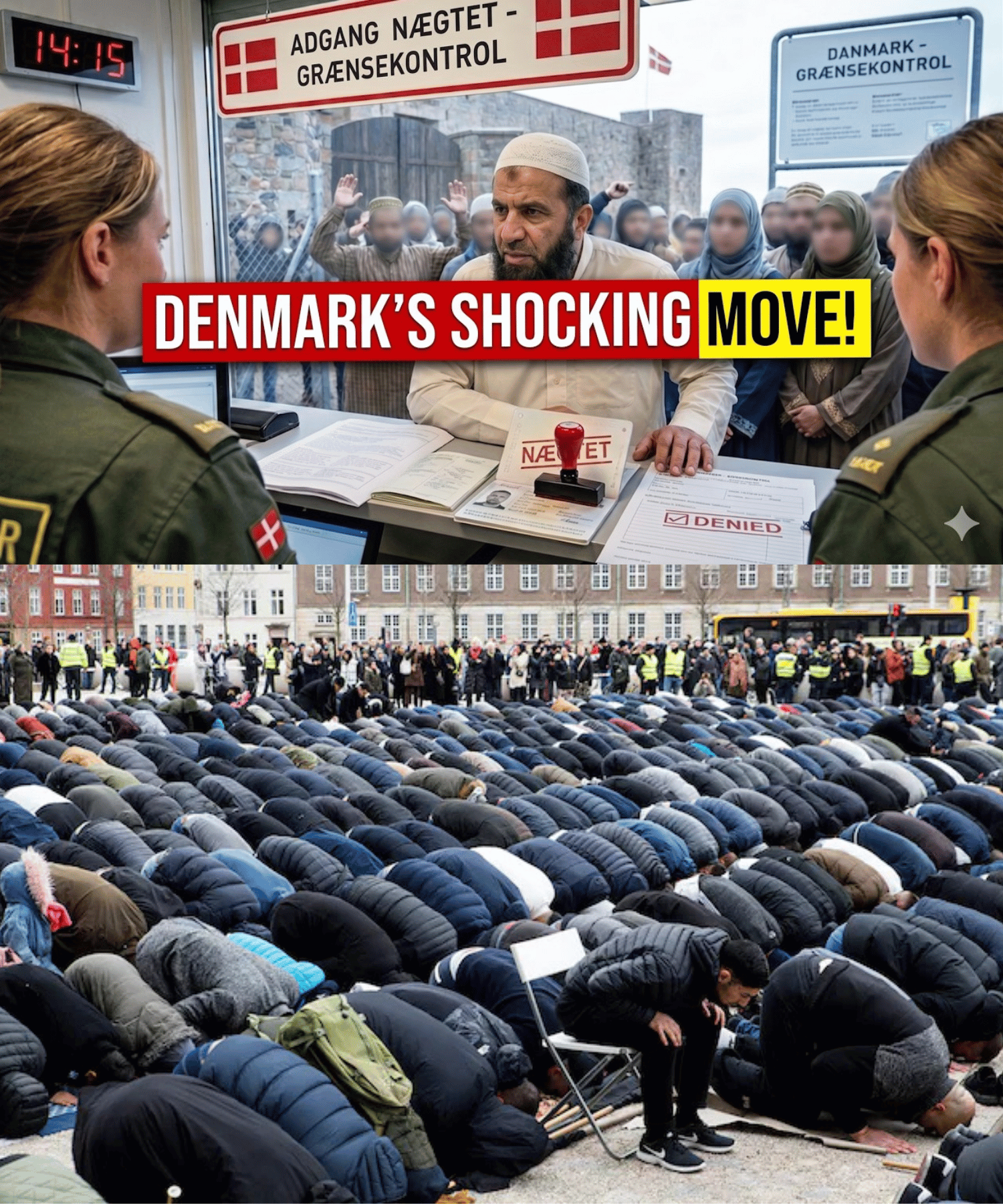
That is why the adhan proposal matters. The call to prayer debate is not an isolated sound ordinance. It is the latest front in a broader question: should Western governments treat public space as culturally neutral, or should they defend an inherited national identity?
In America, the First Amendment makes any nationwide ban on a religious call to prayer nearly impossible. Churches ring bells. Synagogues hold public events. Mosques, temples, and religious groups have constitutional protections. A city that tried to ban the adhan simply because it was Islamic would face immediate legal challenges.
But politics is not only law.
The Danish debate will still influence America because the underlying anxiety already exists here. Many Americans worry that leaders have lost control of immigration. They see border chaos, overwhelmed cities, taxpayer-funded migrant shelters, language fragmentation, religious tension, rising antisemitism, protests tied to foreign conflicts, and local governments struggling to absorb newcomers faster than communities can integrate them.
Most Americans do not want religious persecution. But many do want assimilation.
That distinction is crucial.
There is a difference between saying Muslims cannot practice their faith and saying every immigrant community must accept the constitutional, secular, civic order of the country they join. There is a difference between protecting religious liberty and allowing foreign conflicts, sectarian politics, or separatist norms to reshape public life. There is a difference between welcoming newcomers and dissolving the social contract that made the country attractive in the first place.
Denmark is testing where that line sits.
America may soon be forced to test it, too.
The Democratic Party should be paying close attention. Denmark’s tough migration turn was not built only by conservatives. It was embraced by the left because working-class voters began to see uncontrolled immigration as a threat to wages, schools, housing, public order, and welfare benefits. That is exactly the coalition Democrats in the United States cannot afford to lose.
In New York, Chicago, Denver, Boston, and Los Angeles, Democratic mayors have already learned how quickly humanitarian slogans collide with budgets. Migrant arrivals require shelter, food, schooling, healthcare, legal services, policing, translation, and emergency logistics. Wealthy progressives may praise compassion from a distance, but working-class neighborhoods often carry the pressure.
That is the Danish warning.
If mainstream parties refuse to control immigration, voters will find parties that will.
If governments refuse to defend integration, voters will support more aggressive solutions.
If elites dismiss every concern as bigotry, public trust will not disappear. It will harden into revolt.
Still, Denmark’s model carries serious moral danger. A policy that uses “non-Western background” as a key marker risks treating citizens as permanent outsiders. A child born in Denmark, educated in Denmark, paying taxes in Denmark, may still be counted as part of a demographic problem because of ancestry. That is the line critics call discriminatory, and they are not wrong to be alarmed.
America, with its history of segregation, redlining, internment, and racial profiling, should be especially careful before admiring policies that sort people by origin.
But America should also be honest enough to admit that integration failure is real.
A society cannot survive if it is afraid to say that some cultural practices clash with liberal democracy. It cannot defend women’s rights, free speech, equal citizenship, secular law, and public safety if every discussion of integration is shut down as hatred. It cannot maintain trust if citizens feel their leaders care more about international approval than local reality.
Denmark’s message to the West is harsh: social trust is not automatic. It can be lost.
For America, the lesson is not to copy Denmark blindly. The Constitution would not allow it, and the country’s immigrant identity is different. But the United States cannot ignore the problem Denmark is trying to solve.
A free society must protect mosques from discrimination.
It must also protect the civic order from fragmentation.
A nation can welcome Muslims as citizens while refusing Islamist separatism. It can defend religious freedom while insisting that public law, not religious pressure, governs public life. It can accept diversity while demanding loyalty to a shared national framework.
That is the balance America has to find before the crisis finds it first.
Denmark has drawn its line with bulldozers, asylum limits, secular rules, and now possibly the silence of the adhan over rooftops.
America’s line will have to be different.
But if Washington keeps pretending no line is needed at all, voters may eventually demand one that is far harder than anyone expected.