Tucker Carlson and Thomas Massie Reveal the DARK TRUTH About AIPAC and the Israel Lobby
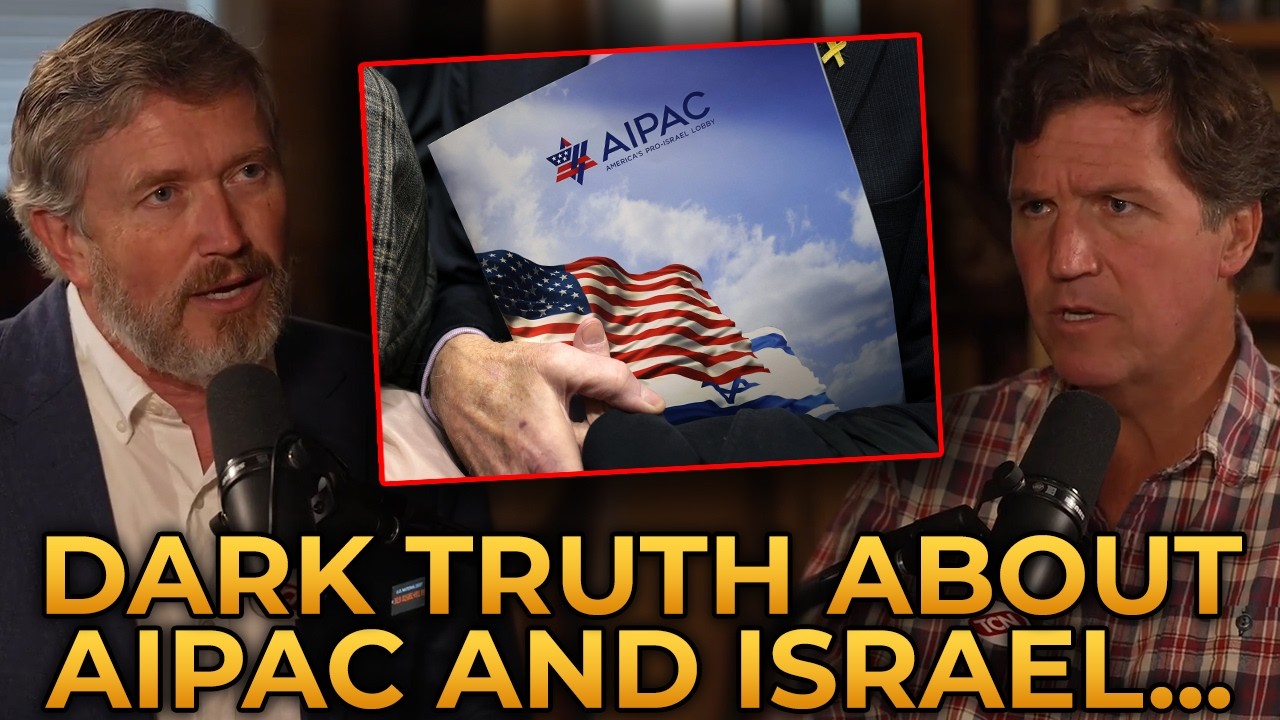
In Washington, power rarely announces itself openly. It speaks through money, through networks of influence, and through the people willing to name those networks out loud. That is exactly what sparked a new wave of controversy in American politics.
A recent conversation between media personality Tucker Carlson and Congressman Thomas Massie has reignited debate over how U.S. foreign policy positions are shaped, who funds political campaigns, and how much influence advocacy groups and wealthy donors truly wield in Washington. The discussion, widely circulated online, centered on claims about lobbying, transparency, and political retaliation—particularly involving pro-Israel advocacy organizations such as the American Israel Public Affairs Committee.
At the heart of the exchange is a simple but explosive idea: that transparency itself can become politically costly.
What follows is not just a story about one congressman or one interview. It is a window into how modern American politics is argued, funded, and contested—and why the fight over influence is now as much about perception as it is about policy.
The controversy begins with a claim about transparency
In the interview, Massie advances a theme he has repeated in various forms over recent years: that revealing how legislative decisions are made and how lobbying functions inside Congress can provoke backlash stronger than the votes themselves.
According to his argument, the most controversial act is not necessarily opposing legislation supported by powerful interest groups, but publicly describing how those groups operate within the political system. In his framing, this includes claims that lawmakers interact regularly with lobbying representatives and that policy positions are reinforced through sustained advocacy efforts, fundraising networks, and coordinated political messaging.
In the clip, Massie suggests that the backlash he has experienced is less about specific votes and more about what he has said publicly regarding the structure of influence in Washington.
This idea—that transparency itself is treated as disruption—forms the backbone of the broader conversation.
Tucker Carlson, media amplification, and political narrative framing
The interview hosted by Tucker Carlson plays a significant role in how these ideas spread beyond traditional political audiences. Carlson, now operating largely outside mainstream cable news institutions, has become a central figure in shaping alternative political narratives that challenge established foreign policy consensus in Washington.
In the conversation, Carlson presses Massie on his prior claims that lobbyists maintain ongoing contact with members of Congress. The discussion frames these relationships not merely as advocacy—which is a normal part of democratic politics—but as something closer to structured influence networks.
This framing is where interpretation begins to diverge sharply depending on political perspective.
Supporters of Massie and Carlson argue that they are exposing under-discussed realities of lobbying: that organized interest groups routinely meet with lawmakers, provide policy research, and contribute heavily to campaigns.
Critics, however, argue that such framing risks oversimplifying how policymaking works and can slip into narratives that attribute coordinated control to specific ethnic, religious, or foreign-linked groups—an area that has historically generated serious concern in political discourse.
AIPAC and the debate over influence in Washington
Much of the discussion revolves around the role of the American Israel Public Affairs Committee, one of the most influential foreign-policy advocacy organizations in Washington.
AIPAC is not a foreign government entity; it is a U.S.-based lobbying organization that advocates for strong U.S.–Israel relations. It organizes fundraising networks, policy conferences, and congressional meetings, and supports candidates it views as aligned with its policy priorities.
Supporters describe AIPAC as a legitimate advocacy group exercising First Amendment rights—similar to business lobbies, labor unions, or ideological organizations.
Critics, including some voices in the Carlson–Massie conversation, argue that AIPAC’s political reach is unusually strong and that it exerts disproportionate influence over foreign policy debates, particularly regarding military aid and Middle East policy.
In the interview framing, Massie suggests that opposition to him is partly driven by his consistent skepticism toward foreign aid spending and military entanglements abroad. He presents himself as a fiscal conservative and non-interventionist who applies the same standard across all foreign aid—not just one country or region.
The tension arises when these policy disagreements are interpreted through the lens of lobbying influence.
Campaign finance: where influence becomes measurable
To understand the debate, it is important to separate perception from structure.
U.S. campaign finance law allows individuals, corporations, and organizations to support candidates through two main channels:
Direct campaign contributions, which are legally capped
Independent expenditures through Super PACs, which are not capped but cannot coordinate directly with campaigns
This system creates space for large-scale spending by ideological donors, advocacy networks, and aligned political organizations.
Massie’s argument in the interview focuses on the idea that these financial flows are not always transparent to voters and that large-scale spending can shape electoral outcomes indirectly through advertising, voter outreach, and issue framing.
He and Carlson discuss the role of wealthy donors and political action committees, arguing that coordinated funding networks can significantly amplify certain policy positions.
However, political scientists generally emphasize that while money influences messaging and competitiveness, it does not function as direct control over legislators in the way conspiracy-oriented interpretations sometimes suggest. Lawmakers still vote on a wide range of incentives, including ideology, constituency preferences, party alignment, and personal belief systems.
The “AIPAC staffer” claim and how lobbying actually works
One of the most controversial themes referenced in the discussion is the idea that members of Congress have dedicated lobbying contacts who maintain ongoing communication.
In Washington, it is normal for advocacy organizations—including defense contractors, environmental groups, labor unions, and foreign policy lobbies—to assign legislative affairs staff to track bills, meet with offices, and communicate policy preferences. These individuals are often called “lobbyists” or “liaisons,” and they are a standard part of the policymaking ecosystem.
The controversy arises not from the existence of lobbying, but from how it is interpreted. In the Carlson–Massie framing, these relationships are described as unusually controlling or directive. Critics of that interpretation argue that it overstates the influence of lobbyists and understates the independence of elected officials.
This tension sits at the center of the modern debate about Washington: where legitimate advocacy ends and undue influence begins.
The role of donors and political alignment
Another major theme in the interview is the influence of high-net-worth donors in shaping electoral outcomes.
Massie claims that significant outside funding is directed toward challengers in his political contests, framing this as evidence of targeted opposition due to his policy positions. He argues that this spending is designed to shape congressional behavior by incentivizing alignment with certain foreign policy positions.
Political observers, however, note that donor behavior is often driven by multiple overlapping factors: ideology, party loyalty, foreign policy priorities, and broader geopolitical worldview. Donors frequently support candidates across multiple issues, not a single policy dimension.
Still, the perception of coordinated donor influence remains powerful in American political discourse, particularly in an era where campaign spending has reached historically high levels.
Foreign policy, non-interventionism, and ideological conflict
Beyond lobbying, the interview also reflects a deeper ideological divide in American politics: the role of the United States in global affairs.
Massie positions himself within a non-interventionist tradition, arguing against long-term foreign military engagement and expansive overseas aid programs. This perspective has gained traction among segments of both the libertarian right and anti-war left.
Carlson’s platform has increasingly highlighted similar themes, particularly skepticism toward prolonged foreign conflicts and intelligence operations abroad.
Opponents of this view argue that U.S. alliances and aid programs are strategic tools that maintain global stability and protect national interests. They warn that reducing engagement could create geopolitical vacuums.
This debate is not new, but it has become more visible as geopolitical tensions rise and domestic political polarization deepens.
Media amplification and political identity
What makes this particular conversation significant is not just its content, but its distribution. Clips circulate rapidly across social media platforms, often detached from context, and are reframed through highly polarized interpretations.
Supporters see figures like Carlson and Massie as exposing hidden systems of power. Critics see them as amplifying narratives that oversimplify complex institutional relationships and risk reinforcing harmful stereotypes about political influence and ethnic or religious identity.
This dual interpretation reflects a broader challenge in modern media: the same content can function simultaneously as critique, persuasion, and controversy generator depending on the audience.
The deeper question: who defines “influence”?
At the center of the entire debate is a philosophical question about democracy itself.
Is influence in politics inherently problematic—or is it simply the natural outcome of a pluralistic system where groups compete to shape policy?
If lobbying is transparent, legal, and regulated, does its influence undermine democracy—or is it part of democracy’s functioning structure?
And when politicians claim they are being targeted for their positions, how do voters distinguish between legitimate political competition and coordinated suppression?
These questions do not have simple answers, which is why debates like the Carlson–Massie interview resonate so strongly.
Conclusion: a system under scrutiny, not a system in collapse
The conversation between Tucker Carlson and Thomas Massie reflects a growing skepticism among parts of the American public toward institutions of political influence—especially lobbying networks, campaign finance systems, and foreign policy advocacy groups such as the American Israel Public Affairs Committee.
Whether one views these concerns as overdue scrutiny or as overstated interpretations depends largely on political perspective.
But what is clear is that the underlying tension is not going away.
As long as money, advocacy, and policy remain intertwined, the debate over influence in Washington will continue—not quietly, but in public, in interviews, in viral clips, and in increasingly polarized interpretations of what it means to govern a democracy under pressure.
And that may be the real story beneath all the arguments: not who controls whom, but how fiercely Americans now disagree about how their own system actually works.