Douglas Murray’s Terrorism Warning Hits America as Media Trust Collapses Over What Reporters Refuse to Say
Douglas Murray’s Terrorism Warning Hits America as Media Trust Collapses Over What Reporters Refuse to Say
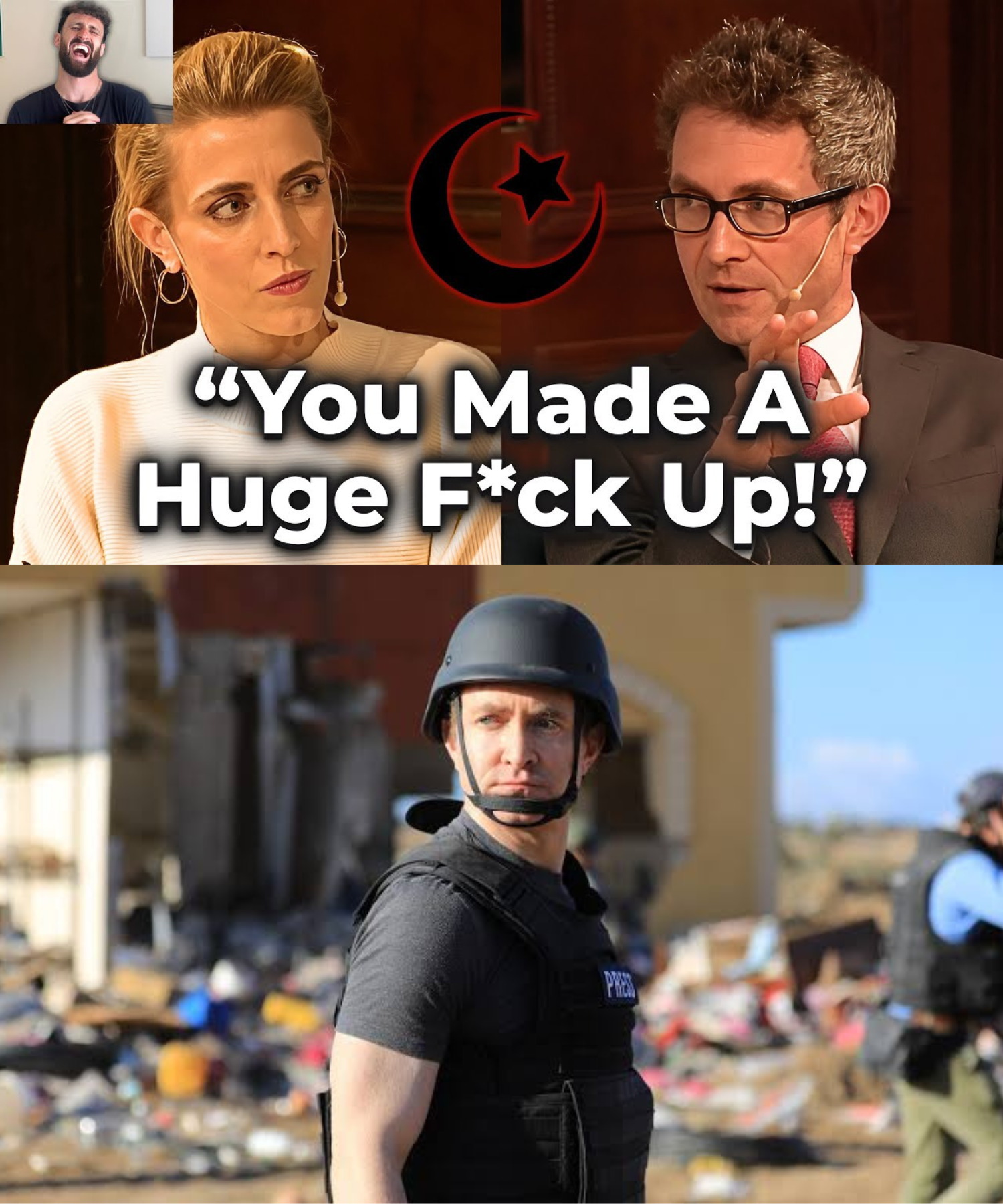
A fierce warning from Douglas Murray about terrorism, media restraint, censorship, and the West’s fear of naming radical Islamist violence has landed directly in the middle of America’s own battle over truth, security, and journalism.
The debate is no longer only about Europe.
It is about whether Western media can tell the public what is happening without either amplifying terrorists or hiding reality.
Murray’s argument, drawn from a wider discussion about whether the press should cover terrorism less, is brutally simple: people have a right to know. When coordinated attacks strike Paris, when bombs explode near stadiums, when gunmen open fire in restaurants, when hostages are filmed by extremists, when soldiers are murdered in broad daylight, the public does not want vague language and emotional anesthesia. The public wants facts.
And that is where the firestorm begins.
For years, Western elites have argued that terrorists crave attention. Every headline, every photo, every looping video, every dramatic news package gives them oxygen. Their goal is not only to kill. It is to terrify. It is to force open the global news cycle and make millions watch.
That argument is true.
But Murray’s warning is that the opposite approach — minimizing, softening, sanitizing, or refusing to discuss ideology — creates another danger. If the public believes journalists are withholding the motive, hiding the ideology, or refusing to say “Islamist terrorism” out of fear, then citizens stop trusting the press entirely.
That mistrust is now exploding in America.
After 9/11, the United States entered a long era of careful language. President George W. Bush famously separated Islam from terrorism and insisted America was not at war with Muslims. Barack Obama’s administration avoided certain terms critics wanted used more directly. Donald Trump later leaned into the phrase “radical Islamic terrorism,” arguing that naming the threat was essential before defeating it.
The country has never stopped fighting over that sentence.
To one side, refusing to say “radical Islamic terrorism” is cowardice. They see it as elite denial, political correctness, and a dangerous refusal to confront the religious language used by jihadist groups themselves. To the other side, repeating the phrase too broadly risks smearing millions of peaceful Muslims who reject terrorism and live ordinary lives as citizens, parents, soldiers, doctors, students, business owners, and neighbors.
That tension sits at the heart of the American crisis.
The challenge is not whether Islamist terrorism exists. It does. The challenge is how to discuss it honestly without turning every Muslim into a suspect.
Murray’s critique of media behavior goes deeper than terminology. He argues that the press often shows restraint in the wrong places and sensationalism in others. News organizations may refuse to show graphic terrorist aftermaths, partly to protect viewers and deny terrorists spectacle. But those same outlets may obsess for days over political outrage, viral rumor, or anonymous claims that entered the bloodstream through the internet.
That contradiction is now familiar to Americans.
A shocking claim appears online. It may be unsourced, unverified, or politically motivated. But because millions are already discussing it, mainstream outlets feel pressure to mention it. Once they mention it, it becomes “news.” The old editorial gate collapses. The rumor becomes a segment. The segment becomes a debate. The debate becomes a national mood.
Murray warned that this dynamic is dangerous enough with political gossip. It is even more dangerous with terrorism.
Extremist movements understand media psychology. They know how to stage horror. They know how to use symbols. They know that a single image can travel faster than a government briefing. They know that the 24-hour news cycle needs reaction, then counterreaction, then outrage, then calls for resignation, then moral panic.
The result is a poisonous relationship between terrorists and media.
Terrorists create drama. Media amplifies drama. Politicians respond to drama. Social media radicalizes the drama further. Then ordinary people are left trying to separate information from manipulation.
That is why Murray’s comments about ISIS still matter. He objected to editorial language that seemed to soften or distance the group from its own self-description. The debate over whether to say “Islamic State,” “ISIS,” “Daesh,” or “so-called Islamic State” may sound like semantics. But in public life, semantics become reality. Words tell audiences what they are allowed to understand.
If journalists overcorrect to avoid offense, they risk producing confusion.
If they sensationalize ideology, they risk producing fear.
The American press is trapped between those failures.
The same problem appears in coverage of terrorism labels. When an Islamist extremist attacks civilians, the word terrorism often appears quickly. When a white supremacist attacks a church, synagogue, school, or public space, the language may shift toward “gunman,” “shooter,” “disturbed,” “troubled,” or “lone wolf.” That inconsistency fuels suspicion from every direction.
Muslims hear selective blame.
Conservatives hear selective protection.
Minority communities hear double standards.
Victims’ families hear politics.
The public hears noise.
Murray’s point is not that every violent act is the same. It is that the public notices when language changes depending on the perpetrator. In a media environment already defined by distrust, that inconsistency becomes explosive.
The transcript also turns to Sweden, Europe’s migration crisis, and stories that many citizens believe were ignored by major outlets until populist politicians forced them into the open. That issue now echoes across America. Voters worry that journalists underreport social breakdown when the facts challenge progressive assumptions about immigration, integration, crime, or multiculturalism.
Sometimes those fears are exaggerated.
Sometimes they are not.
But once citizens believe the media is hiding reality, they will find alternative sources. Some will be serious. Some will be conspiratorial. Some will be bigoted. Some will be propaganda. The tragedy is that elite silence often creates the very extremism it claims to prevent.
This is the lesson America cannot ignore.
A democracy cannot function if the press treats citizens like children. It also cannot survive if the press becomes a megaphone for terrorists. The answer is not censorship. The answer is disciplined honesty.
Report the attack.
Name the ideology when ideology is relevant.
Do not blame peaceful communities for the acts of extremists.
Do not glorify killers with cinematic coverage.
Do not hide facts because they are politically inconvenient.
Do not turn every tragedy into a partisan weapon before families have even buried the dead.
And above all, do not lie by omission.
The American people can handle hard truths. What they cannot handle is being told not to notice what they can see with their own eyes.
Douglas Murray’s warning is powerful because it touches a wound far bigger than terrorism. It is about trust. It is about whether the public still believes journalists are describing the world as it is, or editing reality to protect a narrative.
That question now hangs over every newsroom in America.
If the media tells too much, it may serve the terrorist.
If it tells too little, it may lose the country.
And if it refuses to tell the truth at all, the public will go looking for it somewhere far darker.