Viral Israel-Palestine Debate Explodes Across America as Muslim and Jewish Voices Clash Over Land, Faith, and Peace
Viral Israel-Palestine Debate Explodes Across America as Muslim and Jewish Voices Clash Over Land, Faith, and Peace
A tense online exchange over Israel, Palestine, Islam, Judaism, and the future of peace in the Middle East has exploded across American social media, reigniting one of the most emotionally charged debates in the world: who has the rightful claim to the land, and can peace ever survive when both sides believe history, faith, and blood are on their side?
The viral conversation began unexpectedly, with what sounded at first like a blessing.
“May Allah bless your people with peace,” one speaker said. “Because that would be peace for my people as well.”
For a moment, the tone seemed hopeful. It sounded like the beginning of a rare conversation between two people divided by history but still searching for some shared human ground. Then the other man answered with a sentence that cut through the calm like a blade:
“There’s no peace between us.”
That was the moment the exchange changed.
What followed was not a polite panel discussion or a carefully moderated television debate. It was raw, fast, emotional, and deeply personal — the kind of exchange that has become common in America’s digital public square, where conflicts from across the world are dragged into livestreams, podcasts, campuses, comment sections, and viral reaction videos.
The speaker challenging the Palestinian side appeared to be a Jewish or Israeli voice, familiar with both the Torah and the Quran. The other man identified with the Muslim side and spoke from a perspective tied emotionally to Bethlehem, Jerusalem, and Palestinian claims to the land. Their conversation moved quickly from greetings to accusation, from theology to territory, from prayer to war.
At one point, the Muslim speaker made a distinction that has become common in global debates over the Israeli-Palestinian conflict. He said he had no problem with Jews as a people. His problem, he insisted, was with Israelis — specifically those he believes took Palestinian land.
That distinction is often used by critics of Israel who argue that opposition to Zionism is not the same as hatred of Jews. But in heated debates, the line can become difficult to maintain, especially when the conversation turns from policy to identity, history, and religious destiny.
The Jewish speaker responded by taking the debate into scripture.
He asked a pointed question: if Allah gives a people a land, does that land belong to them?
The Muslim speaker hesitated, then answered in a way that revealed the tension at the heart of the argument. If God gives someone land, he suggested, it still does not justify stealing it. The Jewish speaker pushed back. Can a people steal what God Himself has assigned to them?
That question sent the debate into the Quran.
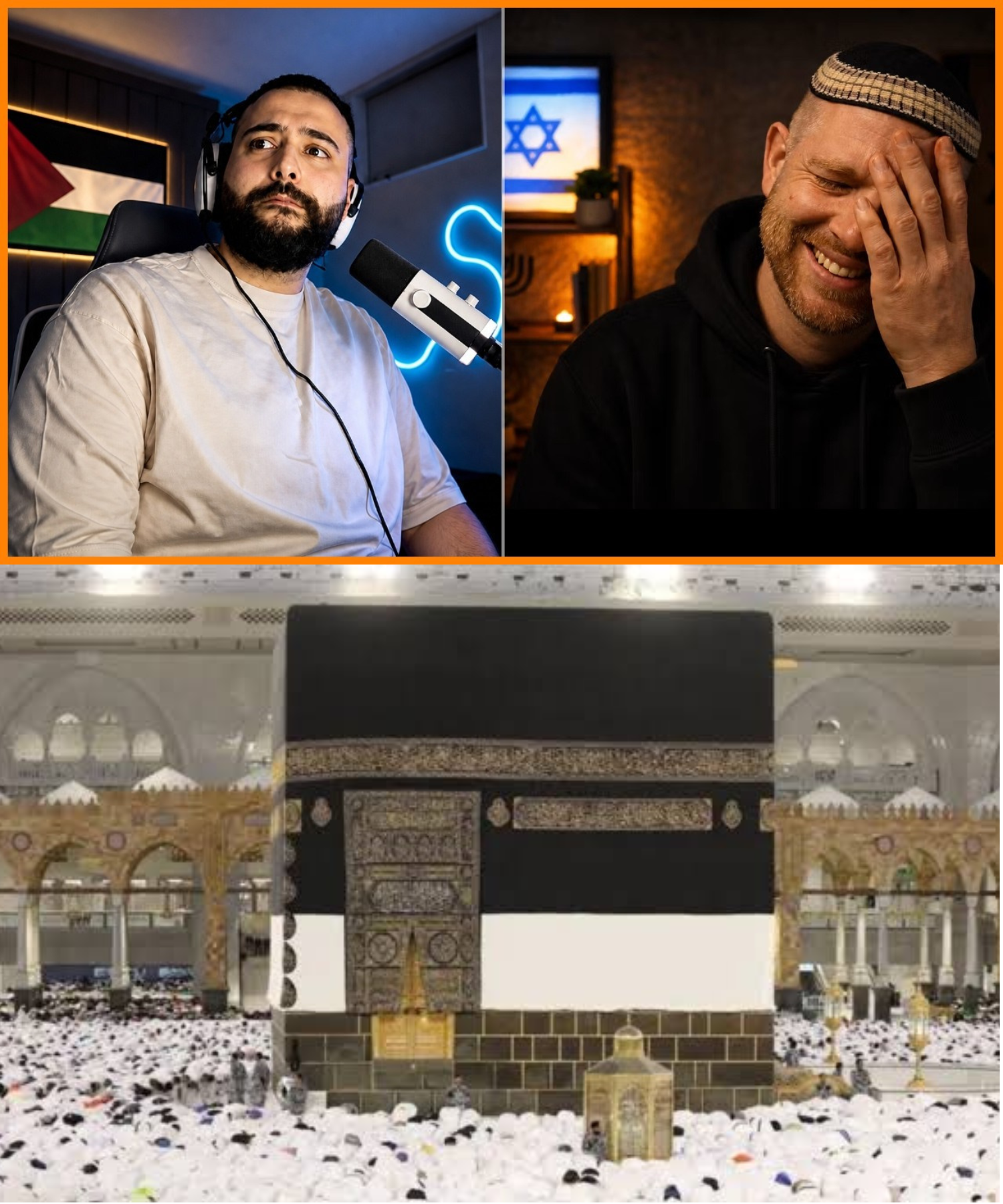
The Jewish speaker referred to the passage in which Moses tells the Children of Israel to enter the Holy Land that God has assigned to them. His argument was clear: even within Islamic scripture, there is recognition of a divine connection between the Children of Israel and the land.
The Muslim speaker tried to qualify the point. If a people refuse what God gives them, he argued, then the matter becomes more complicated. The Jewish speaker agreed that refusal mattered, but insisted the deeper point remained: the land was assigned.
For American audiences watching, that exchange hit with unusual force.
Most U.S. debates over Israel and Palestine focus on modern politics: borders, settlements, Gaza, Jerusalem, war, terrorism, occupation, displacement, refugees, hostage crises, and civilian deaths. But this conversation went deeper into the religious framework that continues to shape how millions of people understand the conflict. It was not only about 1948, 1967, modern diplomacy, or international law. It was about Moses, divine promise, scripture, inheritance, and whether sacred texts can still be invoked in modern national claims.
Then came the question of origin.
The Jewish speaker asked the Muslim man where his family came from, pressing whether his ancestors were originally Christian or Muslim and whether they arrived in Bethlehem through later waves of Islamic conquest. The question was designed to challenge the idea that one side’s presence is ancient and the other’s is foreign. In the Middle East, history itself is a battlefield. Every name, village, language, and family story can become evidence.
The Muslim speaker eventually admitted that his English was not strong enough for such a complex debate and suggested that the Jewish speaker speak with someone more knowledgeable in religion and language. That humility briefly softened the confrontation. The Jewish speaker acknowledged it respectfully.
But the calm did not last.
The Muslim speaker again offered a blessing: may God bless your people with peace, because peace for your people would mean peace for mine as well.
That could have been the ending.
Instead, the exchange turned brutal.
The Jewish speaker answered that if there is no peace, the Palestinian side would continue losing because, in his words, Israel is better at fighting. He pointed to repeated Arab losses in wars against Israel — 1948, 1967, and other conflicts — and told his opponent to stop losing, stop being a loser, and make peace.
The line was harsh, even cruel.
But it also revealed the cold strategic argument that sits beneath many Israeli hardline views: war has consequences, and if one side repeatedly rejects peace or chooses confrontation, defeat becomes part of the political reality. To supporters of Israel, this sounds like blunt truth. To Palestinians and their allies, it sounds like triumphalism over suffering.
That is why the clip is tearing through American audiences.
For pro-Israel viewers, the Jewish speaker exposed what they see as a contradiction: critics invoke religious language but ignore the parts of scripture that acknowledge Jewish connection to the land. They also see his final argument as a harsh but necessary message — peace is the only path that prevents more loss.
For pro-Palestinian viewers, the exchange will feel entirely different. They will hear a man dismissing Palestinian pain, refugee history, occupation, and civilian suffering with a winner’s logic. They will hear scripture used to justify modern power. They will hear “make peace” coming from someone whose side already controls far more land, military power, and international support.
That is the tragedy of the conflict in miniature.
Both sides speak of peace.
Both sides speak of God.
Both sides speak of history.
But when they explain what justice means, they often describe completely different worlds.
In America, this debate lands in a country already split over Israel and Palestine. Universities have seen protests, counterprotests, donor revolts, police crackdowns, and bitter arguments over antisemitism, Islamophobia, free speech, and foreign policy. Social media has made every conflict immediate, every death political, every clip a weapon.
This viral exchange is powerful because it shows that the Israel-Palestine debate is not just about land. It is about memory. It is about who counts as native. It is about whether scripture should matter in modern politics. It is about whether peace is possible when one side sees return and liberation while the other sees survival and divine inheritance.
No one in the clip solved the conflict.
No border was drawn. No hostage returned. No refugee came home. No family was healed. No grieving mother received an answer.
But the conversation exposed the wound.
A blessing was offered.
A challenge was returned.
A holy land became a battleground again, not with rockets or rifles, but with words.
And in America, millions watching from far away are being forced to confront the same question that haunts Jerusalem, Bethlehem, Gaza, Tel Aviv, and Washington:
Can peace ever come when both sides believe history itself is on their side?