Gad Saad’s “Suicidal Empathy” Warning Sets Off Firestorm in America as West Faces Border, Iran, and Free-Speech Crisis
Gad Saad’s “Suicidal Empathy” Warning Sets Off Firestorm in America as West Faces Border, Iran, and Free-Speech Crisis
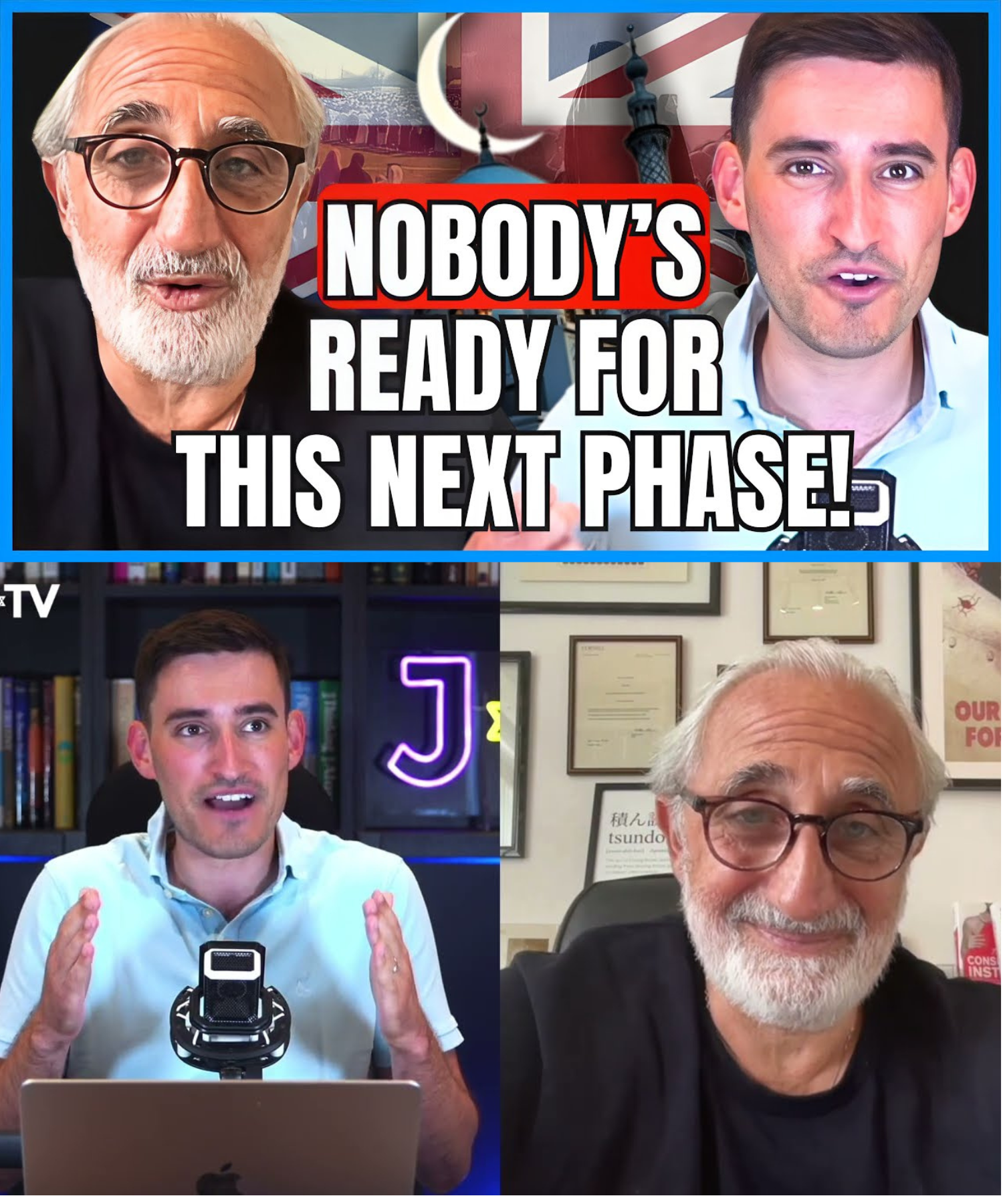
A blistering new interview with Professor Gad Saad has ignited fresh controversy across American political and cultural circles, after the outspoken author warned that the West is not being defeated only by enemies abroad — but by its own emotional weakness at home.
At the center of the conversation was Saad’s latest argument, built around the phrase “suicidal empathy.” The idea is simple, brutal, and deeply provocative: empathy, when detached from reason, boundaries, truth, and self-preservation, can become a weapon used against the very civilization that practices it.
In Saad’s view, the West has confused kindness with surrender.
The interview opened with a discussion of Saad’s diagnosis of the modern Western crisis. He argued that societies are not only shaped by ideas, but also by emotions. First, he said, destructive ideologies enter the mind through the university system: postmodernism, radical cultural relativism, social constructivism, and activist theories that teach people to reject objective standards. Then, once the mind is weakened, the emotions are captured. That is where suicidal empathy begins.
The result, he warned, is a civilization that feels compassion for people who may reject its values while showing hostility toward its own citizens who defend those values.
That point became one of the most explosive moments of the interview.
Saad argued that the West has trained itself to sympathize with outsiders, criminals, extremists, and ideological enemies while dismissing or even attacking victims who belong to its own society. In his framing, the most glaring example is the way some Western institutions respond to immigration, crime, antisemitism, and Islamist extremism. Instead of asking how to protect citizens, he said, leaders often ask how to avoid offending the people causing the danger.
For an American audience, that claim lands in the middle of a national crisis.
The United States is already locked in furious battles over the southern border, sanctuary cities, refugee policy, crime, homelessness, campus antisemitism, religious freedom, and the future of national identity. Saad’s warning gives those debates a single name: suicidal empathy.
He was careful to say that empathy itself is not evil. Human beings need empathy to live in families, communities, and nations. But he argued that empathy must be balanced, like courage. Too little empathy can become cruelty. Too much empathy, aimed at the wrong target, can become self-destruction.
That is where his argument becomes politically explosive.
Saad claimed that open-border policies are the most dangerous expression of suicidal empathy because they assume all immigrants are equally likely to integrate into Western liberal societies. He rejected that premise. In his view, some cultural, religious, and political backgrounds are far more compatible with Western values than others, and pretending otherwise is not compassion — it is civilizational blindness.
Critics will call that framing harsh, inflammatory, and unfair to millions of peaceful immigrants and Muslims who live lawfully in the West. Saad’s supporters will call it honesty in a political era terrified of obvious facts. The divide is exactly why his message is spreading.
The interview then turned toward Britain, Canada, Europe, and America. Saad argued that Britain and Canada have fallen deeper into what he described as advanced stages of suicidal empathy, while the United States remains less damaged because it still has stronger protective mechanisms: the First Amendment, the Second Amendment, and a deeper cultural instinct toward individual liberty.
But even America, he warned, is catching up fast.
He pointed to places such as Dearborn, Michigan, Paterson, New Jersey, and Minneapolis as examples of cities where Americans should pay attention to cultural and religious tension rather than pretending every community is integrating seamlessly. The message was not subtle: the United States may still have safeguards, but safeguards mean nothing if voters, judges, politicians, and institutions refuse to use them.
The most controversial section of the interview came when Saad discussed freedom of religion.
In America, religious liberty is sacred. It is one of the country’s deepest constitutional principles. But Saad asked whether that principle should protect any belief system that, in practice, violates the rights of others. He used a deliberately extreme hypothetical: what if a religion claimed it had the right to execute people with green eyes? Would society be powerless because the word “religion” had been invoked?
His proposed answer was explosive. He suggested that religious freedom must end the moment a religious practice encroaches on the rights of others. Civil liberties advocates would immediately warn that such language, if abused by government, could threaten religious minorities and constitutional protections. But Saad’s broader point was that no free society can survive if it treats every religious claim as untouchable, no matter its consequences.
That argument is now colliding directly with America’s post-9/11 political language.
For decades, officials on both left and right have drawn a line between Islam and “radical Islamism.” Saad mocked that distinction as linguistic protectionism, arguing that piling adjectives in front of Islam allows elites to avoid confronting harder theological and cultural questions. His critics say that distinction is essential because blaming all Muslims for extremist movements is unjust, dangerous, and morally wrong. His supporters say the distinction has become a shield that prevents honest debate.
That tension followed the interview into the discussion of Iran.
Saad argued that Western leaders often suffer from “cultural blindness” when dealing with regimes like Tehran. They assume that goodwill, generosity, diplomacy, and compromise will be interpreted as noble virtues. But hostile regimes, he said, may interpret those same gestures as weakness. In his view, this is why Iran has repeatedly been able to exploit Western negotiators.
The warning arrives at a volatile moment in U.S. politics, where debates over Iran, Israel, nuclear agreements, sanctions, and military pressure have split both parties. Some argue America must avoid another Middle Eastern war at all costs. Others argue that treating Iran like a normal state ignores the ideological nature of the regime.
Saad placed himself firmly in the second camp: if America misreads the enemy, America gets played.
The interview also turned on the “woke right,” a phrase increasingly used to describe conservatives who adopt left-wing anti-American or anti-Israel narratives while claiming to oppose establishment politics. Names such as Tucker Carlson, Candace Owens, Megyn Kelly, Joe Rogan, and Piers Morgan surfaced in the discussion, not always as direct equivalents, but as symbols of a new media battlefield.
Saad distinguished between platforming bad ideas and endorsing them. He defended going on massive platforms such as Joe Rogan’s, arguing that if sane voices refuse to appear where millions are listening, they surrender the audience to radicals and propagandists. At the same time, he warned that some debates are not real debates at all. If one side is immune to evidence, he suggested, then giving that position equal footing can legitimize nonsense.
That is a major question in America’s information war.
Should dangerous ideas be debated publicly, or does debating them elevate them? Should hosts challenge extremist guests harder, or should the audience decide? Is free speech enough, or does free speech require stronger moral courage from the people who run the platforms?
Saad’s answer was not simple. He believes in open debate, but not fake neutrality. He believes in speaking to large audiences, but not pretending every idea deserves equal respect.
By the end of the interview, one theme dominated everything: the West still has solutions, but may not have the courage to use them.
Saad’s warning is not that America has already fallen. His warning is that America still has time — and may waste it.
Open borders, ideological universities, weak foreign policy, selective empathy, elite denial, religious cowardice, antisemitism, and media confusion are not separate crises in his framework. They are symptoms of the same disease.
A civilization that cannot distinguish compassion from surrender will eventually lose both compassion and freedom.
And that is why this interview has struck such a nerve.
It asks a question America can no longer avoid:
Can a nation remain kind without becoming weak?