Viral Quran Preservation Speech Rocks America as Christian Apologist Turns Islamic Sources Into a Battlefield
Viral Quran Preservation Speech Rocks America as Christian Apologist Turns Islamic Sources Into a Battlefield
A fiery speech about the preservation of the Quran is now spreading through American faith circles, reigniting one of the most sensitive debates in modern Christian-Muslim apologetics: was the Quran perfectly preserved, or do Islamic sources themselves raise questions that Muslim scholars and public debaters can no longer avoid?
The lecture, delivered in a high-energy Christian setting, did not begin quietly. The speaker opened by telling the audience that the “greatest Islamophobic argument of all time” was simply to quote Islamic sources themselves — the Quran, the Hadith, the companions of Muhammad, and the early traditions surrounding the compilation of Islam’s holy book.
It was a deliberately provocative line.
But beneath the humor, the jokes, and the sharp stage presence was a serious argument that has now entered America’s religious culture war: if Christians are routinely challenged over Bible transmission, canon formation, manuscript variants, and alleged textual corruption, then Muslims must also face the same scrutiny over their own tradition.
For decades, many Muslim apologists have argued that the Quran is uniquely preserved — unchanged, letter for letter, word for word, from the time of Muhammad to the present day. That claim has often been contrasted with the Bible, which Muslim critics say went through translation, copying, canon debates, and textual variants.
But the speaker in this viral lecture turned that argument around.
His central claim was that early Islamic sources do not present a simple story of perfect, effortless preservation. Instead, he argued, they describe fear, compilation, missing material, different recitations, burning of manuscripts, and disputes among early Muslims over how the Quran was read and written.
The first major point came from the story of Abu Bakr’s compilation of the Quran after the Battle of Yamama. According to the speaker, the report describes concern that many memorizers of the Quran had died in battle and that more could die in future conflicts, causing portions of the Quran to be lost. That detail, he argued, clashes with the modern claim that the Quran was securely and universally preserved through mass memorization from the beginning.
His question was blunt: if the Quran could not be lost, why were Muhammad’s own companions afraid that parts of it might disappear?
The lecture then moved to Zayd ibn Thabit, one of the scribes associated with collecting the Quran into a written manuscript. The speaker emphasized that Zayd reportedly described the task as heavier than moving a mountain. To the speaker, that meant the Quran was not sitting everywhere in complete written form, easily available and universally verified. Instead, it had to be searched for across palm stalks, stones, written fragments, and the memories of men.
That image has now become central to the controversy.
For Christian critics, it suggests a fragile process. For Muslim defenders, it reflects careful preservation, not corruption. They argue that the companions were not inventing the Quran but gathering, verifying, and safeguarding what had already been memorized and written in Muhammad’s lifetime.
But the speaker pressed harder.
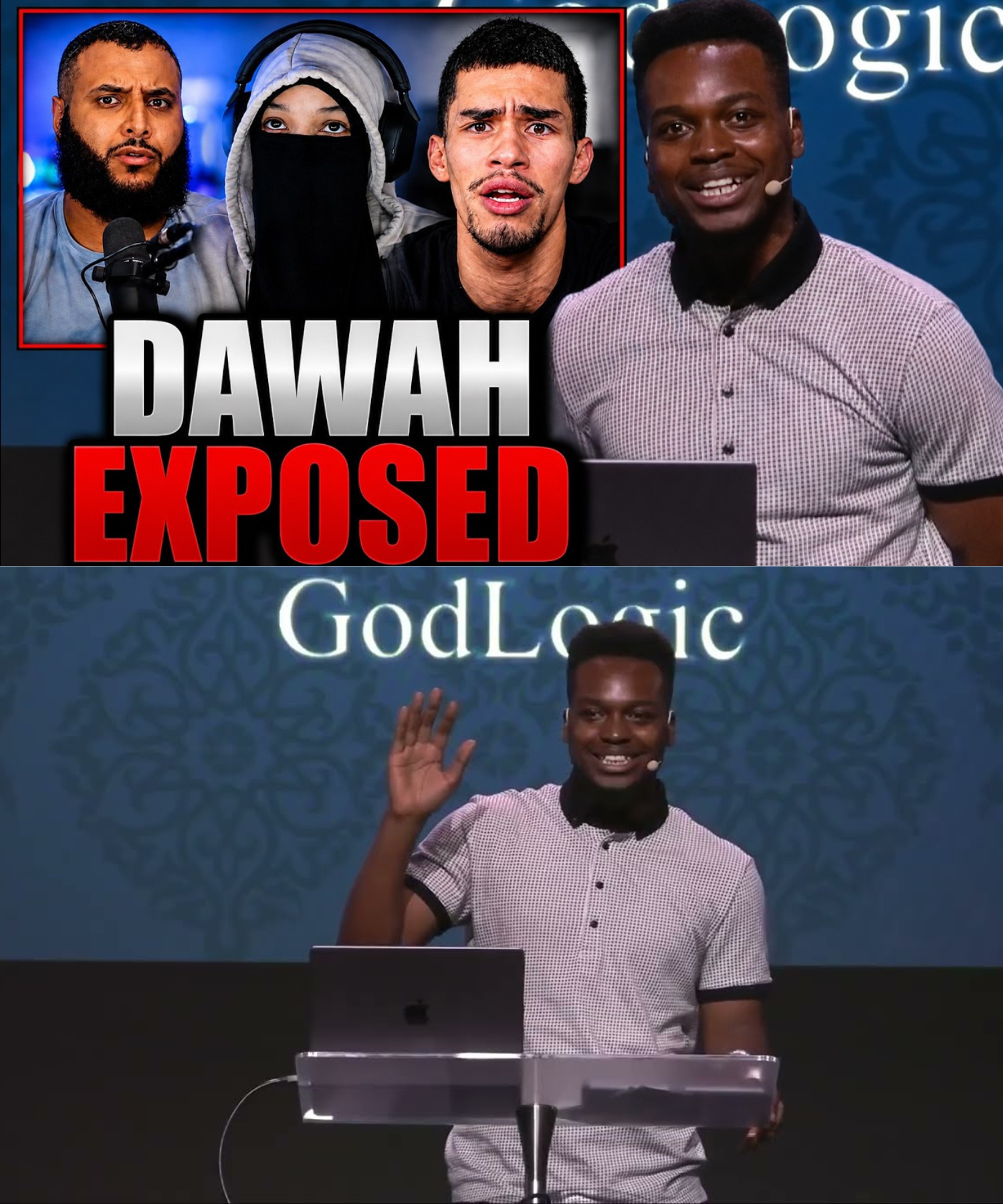
He highlighted the report that the final verse of Surah At-Tawbah was found with only one man. If true, he argued, that raises a verification problem. Muslim apologists often say that if one reciter makes a mistake, other reciters can correct him. But what happens when a specific verse is located with only one person? Who corrects him? Who confirms his exact wording?
That question struck the audience because it mirrored a challenge Muslims often direct at Christians: where is the chain of certainty?
Then came the Uthmanic standardization.
The speaker described the later moment when Caliph Uthman ordered a standard written text and had other Quranic materials burned to prevent division among Muslims. In Muslim tradition, this is often defended as a unifying measure that preserved the Quran from dialectal dispute and confusion. But in the speaker’s framing, it was explosive evidence that different written or recited forms were serious enough to threaten the unity of the early Muslim community.
He asked a question that landed like a courtroom challenge: if Abu Bakr had already compiled the Quran, why did Uthman need to recompile, standardize, and burn other copies?
The comparison to Christianity was immediate. The speaker argued that if Paul or another early Christian leader had gathered Gospel manuscripts, rewritten “perfect copies,” and ordered all competing copies burned, Muslims would call that proof of corruption. Therefore, he argued, Christians have every right to apply the same standard to Islamic history.
That is why the debate has become so heated in America.
It is not only about Islam. It is about double standards.
American Christian apologists say they are tired of being told that the Bible is unreliable while Muslim claims about the Quran receive softer treatment. They argue that Islamic history contains its own complexities, and those complexities should be examined openly.
Muslim scholars and defenders respond that Christian polemicists often quote Hadith selectively, ignore technical categories such as abrogation, dialect, qira’at, ahruf, scribal compilation, and oral transmission, and present complex Islamic sciences in a way designed to shock uninformed audiences. They say the Quran’s preservation cannot be judged by hostile sound bites from stage lectures.
But the speaker anticipated that response.
He said Muslims often answer with words like “abrogation” or “dialect,” but he insisted those explanations do not solve the problem. If a verse was truly abrogated, he argued, there must be evidence that Muhammad himself declared it abrogated before his death. If a dispute was merely dialectal, he asked why early Muslims feared division like Jews and Christians over scripture.
The lecture also cited reports attributed to Abu Musa about forgotten surahs, as well as narrations involving Ibn Masud and disagreements over recitation. The speaker argued that these examples show not minor pronunciation differences but lost chapters, missing verses, and real textual disagreement.
For many viewers, that was the most shocking part.
The speaker was not relying on modern anti-Islam books. He was claiming to use Islamic sources against Islamic certainty. That tactic is powerful because it forces Muslim defenders to respond not only to outside criticism, but to material inside their own tradition.
Still, the danger is obvious.
A serious academic or theological debate can quickly become a weapon against ordinary Muslims. Most Muslim Americans are not textual scholars. They are families, workers, students, business owners, neighbors, doctors, engineers, teachers, and citizens. They should not be mocked or treated as enemies because specialists disagree over Hadith interpretation or Quranic transmission.
That distinction matters in the United States, where religious freedom protects both criticism and belief.
A Christian has the right to challenge Islam. A Muslim has the right to defend Islam. An atheist has the right to challenge both. What no one should do is turn theological debate into hatred of people.
Yet this controversy shows how deeply the internet has changed religion.
Questions once debated in seminaries, mosques, universities, and specialist circles are now turned into viral clips. Terms like “Uthmanic recension,” “Sahih Bukhari,” “Ibn Masud,” “abrogation,” and “variant recitation” are entering comment sections, podcasts, livestreams, and church conferences. Young Christians and Muslims are no longer waiting for scholars to tell them what to think. They are pulling up sources, screenshots, translations, and arguments in real time.
That is why the speech matters.
It is not just another anti-Islam presentation. It is part of a larger American shift, where religious claims are being cross-examined in public by people armed with digital libraries and aggressive rhetoric.
For Muslims, the challenge is to explain their tradition clearly without pretending difficult reports do not exist.
For Christians, the challenge is to critique Islam without turning critique into contempt.
For America, the challenge is to keep religious debate free, sharp, and honest without allowing it to become another form of tribal warfare.
The speaker’s argument was explosive because it attacked one of Islam’s strongest public claims: perfect preservation.
Whether his case persuades viewers or not, one thing is clear.
The age of polite, private interfaith disagreement is over.
The battlefield is now online, the sources are open, and every sacred claim is being dragged into the light.