Viral Monologue Rejecting “White Privilege” Sparks Explosive Debate Over Race, History, and Identity Politics in America
Viral Monologue Rejecting “White Privilege” Sparks Explosive Debate Over Race, History, and Identity Politics in America
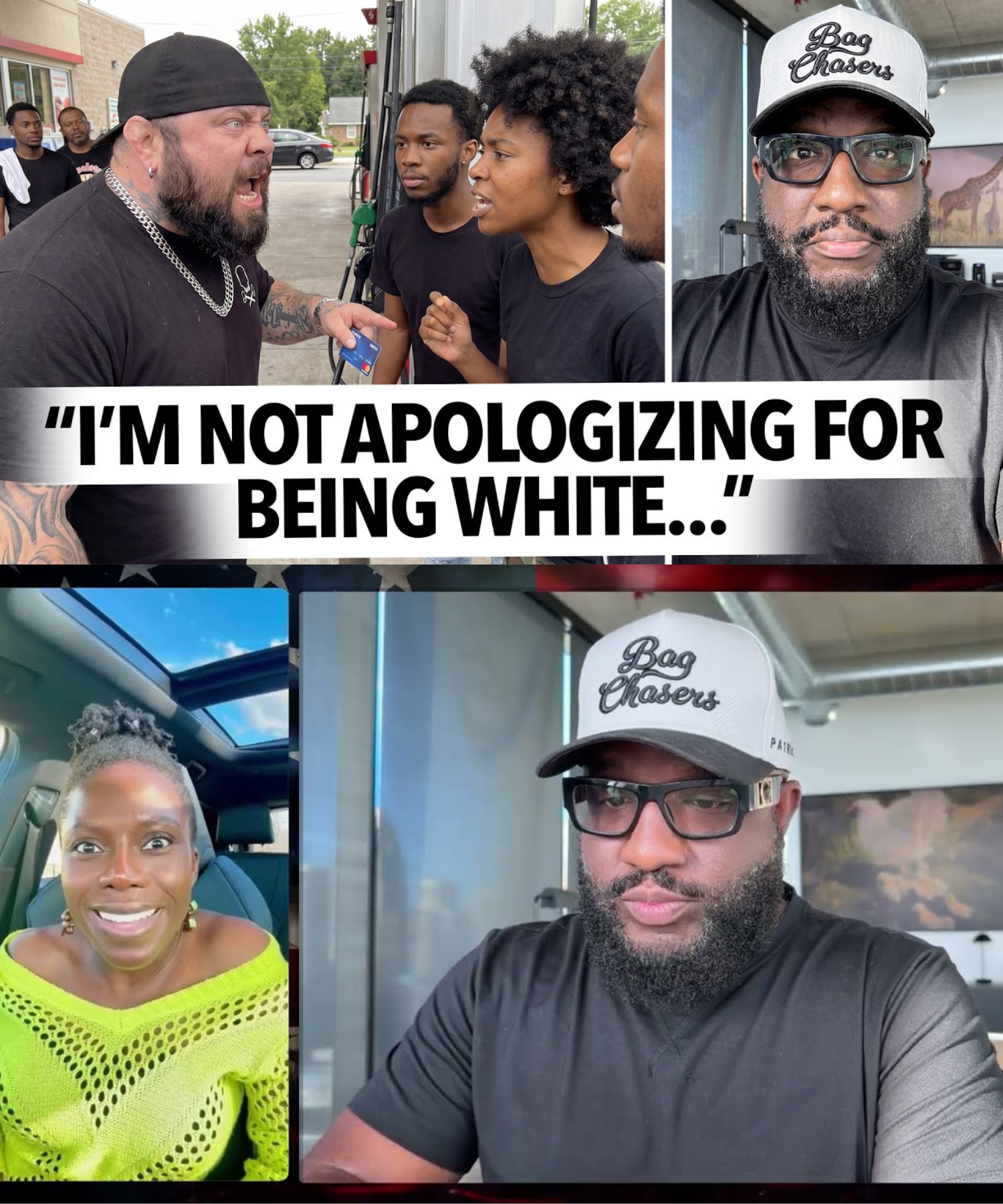
New York — A viral video featuring a passionate monologue rejecting the concept of “white privilege” has ignited a heated cultural debate across the United States, reigniting long-running tensions over race, historical responsibility, and how inequality should be discussed in modern American society.
The footage, widely circulated on social media platforms, shows a speaker arguing that contemporary discussions of race unfairly assign collective guilt to white Americans for historical injustices such as slavery, segregation, and systemic discrimination.
The video has divided audiences sharply, with supporters praising it as a defense of individual responsibility and critics condemning it as a dismissal of ongoing structural inequalities.
“I’m Done Apologizing” — Core Message Goes Viral
At the center of the monologue is a strong rejection of what the speaker describes as “white guilt culture” and the expectation that modern white Americans should feel responsible for historical injustices they did not personally commit.
He argues that he, like many others, was born decades after slavery and segregation ended, and that holding individuals accountable for ancestral history is both unfair and counterproductive.
The speaker emphasizes personal work ethic, taxation, and individual responsibility, stating that success in modern America is earned through effort rather than inherited privilege.
These remarks immediately sparked intense reaction online, with some viewers calling the message “refreshing honesty” and others labeling it as an oversimplification of complex racial history.
Slavery, History, and Competing Narratives
A significant portion of the video expands into historical discussion, with the speaker arguing that slavery was a global institution practiced by nearly every civilization, including ancient Egypt, Greece, Rome, China, and various African kingdoms.
He claims that focusing exclusively on Western involvement in slavery creates a distorted historical narrative that ignores global participation in the institution.
The speaker also argues that the British Empire played a major role in abolishing slavery worldwide, referencing the abolition of the slave trade in 1807 and anti-slavery campaigns led by figures such as William Wilberforce.
Historians agree that Britain was instrumental in formal abolition efforts, particularly through naval enforcement against slave trading ships. However, scholars also emphasize that Britain and other European powers benefited economically from slavery during earlier periods, making the historical record more complex than the video suggests.
African and Arab Slave Trade Claims
The monologue further expands into controversial territory by discussing African and Arab participation in historic slave systems.
The speaker argues that African kingdoms and elites actively participated in the capture and sale of enslaved people, and that the trans-Saharan and Arab slave trades involved millions of individuals over centuries.
He claims that these historical realities are often underrepresented in modern discussions of slavery and racial justice.
While historians acknowledge the existence of African and Arab participation in slave systems, they caution that such comparisons must account for major differences in scale, structure, and global impact between various slave economies, including the transatlantic slave trade.
“White Guilt” and Modern Identity Politics
The speaker strongly criticizes what he calls “white guilt ideology,” arguing that modern social discourse unfairly assigns moral blame based on race.
He claims that concepts like “white privilege” are often misunderstood or misapplied, and that many working-class white Americans face economic hardship similar to other racial groups.
He further argues that identity politics has created division by encouraging people to define themselves primarily through historical victimhood or guilt.
Supporters of this view say it highlights an important distinction between systemic history and individual responsibility. Critics argue it minimizes ongoing disparities in wealth, education, housing, and criminal justice outcomes that continue to affect racial minorities in the United States.
Systemic Racism vs Individual Responsibility
A major point of contention raised by the video is whether racism in America should be understood primarily as a systemic structure or as individual behavior.
The speaker argues that many modern discussions of racism overstate systemic explanations while ignoring personal agency and economic factors affecting all groups.
He also claims that many people are encouraged to view society through a lens of perpetual oppression, which he argues can be psychologically damaging and socially divisive.
Sociologists, however, emphasize that systemic inequality refers to long-standing structural patterns embedded in institutions such as housing, education, employment, and criminal justice — not just individual prejudice.
Emotional Reaction and “Victim Narrative” Debate
The video also introduces psychological framing, suggesting that society has become overly focused on victim narratives.
The speaker argues that excessive emphasis on historical suffering can trap individuals in cycles of resentment rather than empowerment.
He encourages viewers to reject identity-based victimhood and focus instead on personal accountability and economic progress.
Critics argue that acknowledging historical and structural inequality is not about perpetuating victimhood, but about understanding unequal starting points and designing policies that address them.
Social Media Reaction: Deep Polarization
The viral spread of the monologue has generated sharply divided reactions across social media.
Supporters describe it as a candid rejection of what they see as politically driven narratives that overemphasize race in everyday life. They argue that the speaker promotes unity through individual responsibility rather than collective blame.
Critics argue that the message minimizes the continuing impact of historical injustice and overlooks data showing persistent racial disparities in income, incarceration rates, health outcomes, and education access.
Academic Response and Historical Context
Historians and social scientists caution against framing slavery and racial inequality as either purely Western or purely global phenomena without proper context.
They emphasize that while slavery existed worldwide, the transatlantic slave trade created uniquely durable racial hierarchies that continue to influence modern societies.
They also note that abolition movements, including those in Britain and the United States, were complex and often involved resistance, economic pressure, and political conflict.
A Broader Cultural Divide in America
The viral video reflects a broader cultural divide in the United States over how history should be remembered and how inequality should be addressed.
On one side are those who argue that modern society places too much emphasis on historical guilt and identity-based narratives.
On the other are those who argue that acknowledging structural inequality is essential to understanding present-day disparities.
This tension has become a defining feature of American political and cultural discourse in recent years, shaping debates in education, media, and public policy.
No Easy Resolution
As the video continues to circulate, no consensus has emerged.
Instead, it has become part of a larger national conversation about race, history, and identity — one that remains deeply polarized and emotionally charged.
What is clear is that the debate over “white privilege,” historical responsibility, and systemic inequality is not fading.
And as this viral monologue shows, it continues to evolve into one of the most contentious cultural fault lines in modern America.