San Francisco Erupts as Scott Wiener Is Driven From Trans March Over Gaza in Democratic Party Civil War
San Francisco Erupts as Scott Wiener Is Driven From Trans March Over Gaza in Democratic Party Civil War
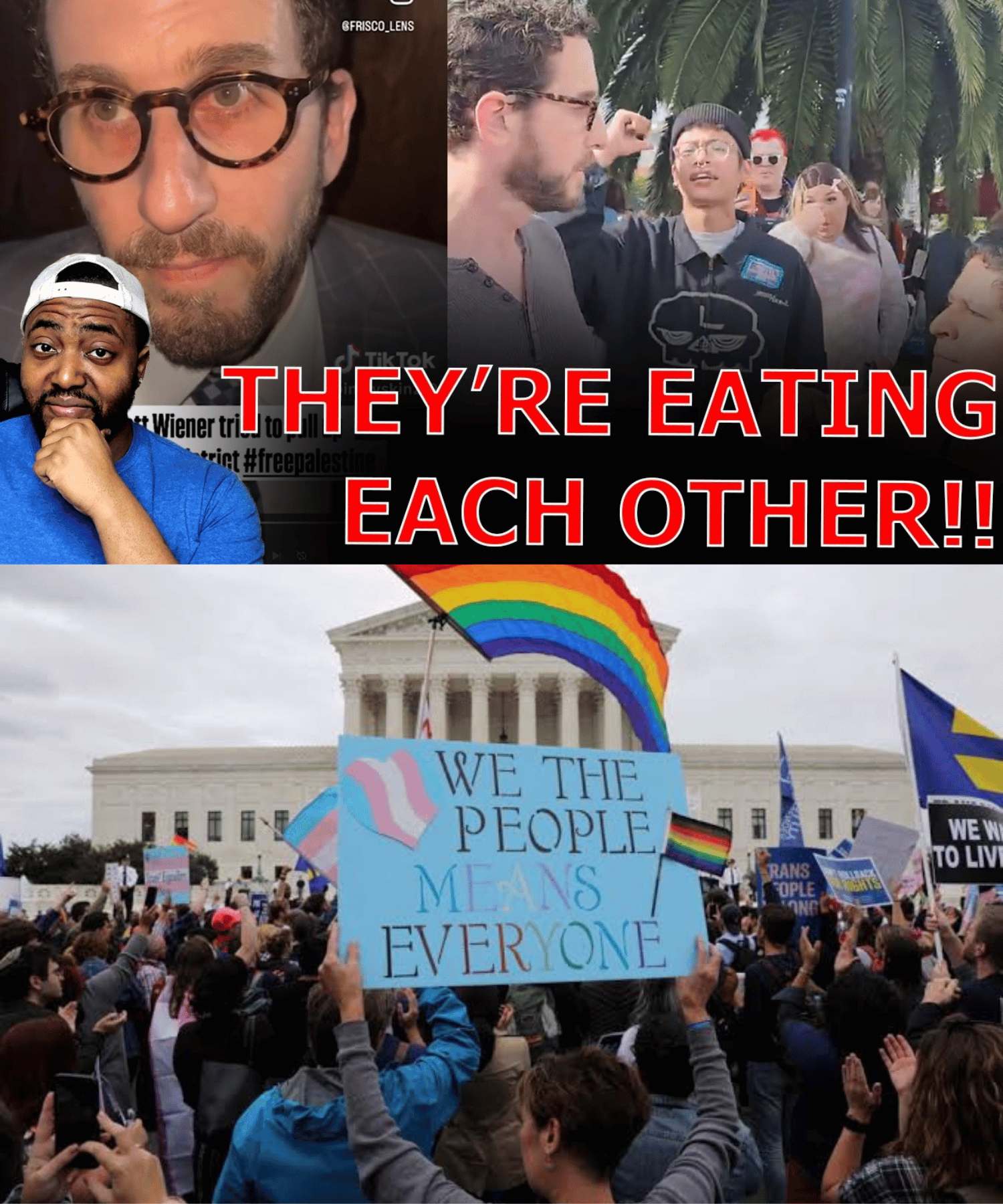
San Francisco has become the latest battlefield in America’s Democratic civil war, after California State Senator Scott Wiener, one of the country’s most prominent LGBTQ lawmakers and a candidate for Nancy Pelosi’s congressional seat, was confronted, cursed at, and pushed out of a Pride weekend event by activists furious over his stance on Israel and Gaza.
The viral confrontation was not just another heated street argument. It was a warning flare from the heart of progressive America.
Wiener is not a conservative. He is not a Republican. He is not a moderate Democrat from a red district trying to survive by trimming his politics. He is a San Francisco progressive, an openly gay lawmaker, a major voice on housing reform, LGBTQ rights, transgender protections, public health, and anti-Trump politics. In almost any other city in America, he would be considered firmly on the left.
But in San Francisco in 2026, that may no longer be enough.
The footage shows Wiener being confronted by activists who demanded that he say “Free Palestine” on camera. One man accused him of pushing a “genocidal agenda.” Others told him he did not belong in the Mission District. Another protester acknowledged his legislative work for queer and trans people, even praising it, before declaring that his Gaza position made him unwelcome.
That was the stunning part.
The argument was not that Wiener had done nothing for the LGBTQ community. The argument was that his work on LGBTQ issues no longer mattered if he failed the Gaza test.
One protester told him, in effect, that he had been wonderful for trans people but terrible on Gaza. Another shouted that he had betrayed queers. The message was unmistakable: support for the progressive coalition is now conditional, and Israel-Palestine has become a loyalty test capable of erasing years of political alliance.
For the Democratic Party, this is a nightmare.
Since October 7 and the Gaza war that followed, Democrats have struggled to keep together a coalition that includes Jewish voters, Muslim voters, Arab Americans, young progressives, Black activists, LGBTQ organizers, labor groups, suburban liberals, and pro-Israel donors. For years, those factions could often unite around opposition to Republicans. But Gaza has cracked the coalition open in a way party leaders still do not fully understand.
In San Francisco, that fracture was captured on camera.
Wiener’s predicament reveals a brutal reality for Democratic politicians in deep-blue cities. It is no longer enough to support universal healthcare, affordable housing, trans rights, police reform, and climate action. It is no longer enough to oppose Trump. It is no longer enough to have spent years writing bills that progressive activists once celebrated.
If a politician refuses to speak about Israel and Gaza in the exact language demanded by the most militant activists, that politician can be branded a traitor.
That is what makes the incident so politically dangerous.
The far left has built a moral universe where every struggle is connected. Palestine, queer liberation, racial justice, anti-capitalism, anti-policing, immigrant rights, and anti-Zionism are treated not as separate issues, but as one interconnected cause. Under that worldview, a politician cannot be “good on trans rights” and “bad on Gaza.” The second cancels the first.
To supporters of that view, this is moral consistency.
To critics, it is ideological blackmail.
The phrase “you do not belong here anymore” may become the defining line of the incident. It was not shouted at a Republican. It was shouted at one of the most progressive Jewish Democrats in California. That is why Jewish voters across the country are watching closely. Many are asking whether there is still room in the Democratic Party for Jewish politicians who support Israel’s existence while also criticizing its government or calling for humanitarian restraint.
This is not happening only in California.
In New York, Rep. Dan Goldman became the center of a separate firestorm after a Brooklyn coffee shop banned him over his pro-Israel views. That controversy escalated so quickly that federal civil rights officials began looking into whether the business crossed a legal line. The message from the street was clear: for some activists, elected Democrats who support Israel are no longer merely wrong. They are unwelcome.
That is a massive shift.
For decades, the Democratic Party managed disagreement over Israel through careful language. Leaders supported Israel’s security, backed a two-state solution, expressed concern for Palestinian civilians, and tried to avoid alienating either side. That balancing act is now collapsing.
Young activists want sharper language. They want “genocide” acknowledged. They want AIPAC condemned. They want politicians to say “Free Palestine” without hesitation. They want moral clarity, not diplomatic nuance.
But politics runs on coalitions, and coalitions require disagreement.
If every disagreement becomes betrayal, the coalition dies.
Wiener’s confrontation also shows how activist spaces are changing. Pride events were once broadly understood as places where LGBTQ politicians could appear, march, and show solidarity. But in recent years, Pride has also become a site of broader anti-war, anti-police, anti-corporate, and anti-Israel activism. The meaning of “belonging” has changed. A politician’s identity is no longer enough. Their entire ideological profile is judged at the gate.
This creates an almost impossible dilemma for Democrats.
If they embrace the activist language fully, they risk losing Jewish voters, pro-Israel liberals, moderate Democrats, and donors. If they resist it, they risk being shouted out of the very progressive spaces that once powered their campaigns.
Wiener is now standing at the center of that storm.
His congressional campaign was supposed to represent the next generation of San Francisco liberalism after the Pelosi era: gay, urban, housing-focused, anti-Trump, technocratic, and proudly progressive. Instead, his campaign has become a test case for whether any Democrat can survive in a deep-blue district without satisfying the party’s most uncompromising Gaza activists.
That is why Republicans are watching with open amusement and quiet concern.
On one hand, the spectacle gives conservatives exactly the argument they want: Democrats, they say, created a radical activist base they can no longer control. On the other hand, if those activists continue winning primaries in major cities, they will shape national politics from inside Congress, city halls, and state legislatures.
The fight is not staying on campus.
It is moving into campaigns, coffee shops, Pride marches, mosques, synagogues, city councils, and congressional races.
For America, the question is larger than Scott Wiener.
Can a political party survive when moral purity becomes more important than governing? Can Jewish Democrats still walk into progressive spaces without being treated as suspects? Can LGBTQ politics remain a coalition if every foreign-policy dispute becomes a test of identity? Can activists protest war without turning disagreement into public intimidation?
San Francisco just offered the country a preview of what happens when the answer is no.
A politician who helped write some of the left’s most celebrated social legislation was told he no longer belonged.
Not by conservatives.
By his own side.
And that may be the most explosive warning of all.