Chicago Police Shooting Video Reignites Fierce Debate Over Crime, Race, and Policing in America’s Inner Cities
Chicago Police Shooting Video Reignites Fierce Debate Over Crime, Race, and Policing in America’s Inner Cities
Chicago — A newly resurfaced police incident video from August 9, 2020, has reignited a national firestorm over gun violence, policing, race, and the collapse of public trust in some of America’s most troubled neighborhoods.
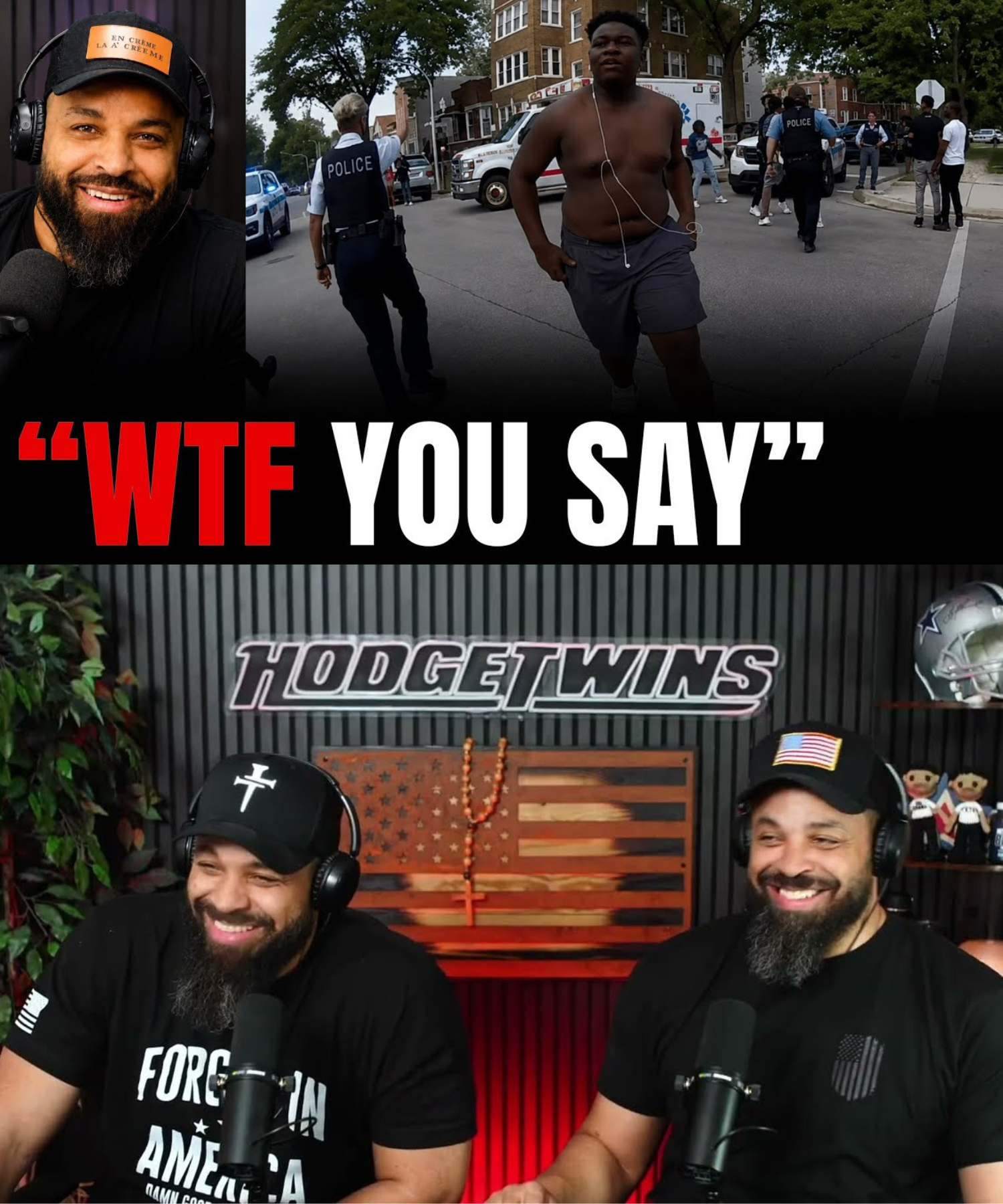
According to the narration in the viral footage, Chicago police were called to Moran Park after reports of a person with a gun allegedly trying to fight people. The description given over police radio was specific: a male suspect wearing a red shirt and red hat.
Moments later, officers spotted a person matching that description. A foot chase began. Then, according to the account, the situation exploded.
The suspect allegedly pointed a handgun at officers and fired multiple rounds during the pursuit. Police returned fire, striking him, but he still managed to flee into the basement of a nearby home, triggering a tense manhunt and standoff in a residential neighborhood.
What began as a call about a gun in a park quickly became a scene of chaos: officers flooding the area, residents shouting, police trying to secure a perimeter, and radio traffic warning that the suspect had fired at law enforcement.
But what has pushed the video back into the national spotlight is not only the police response. It is the commentary surrounding it.
The clip includes racially inflammatory remarks from commentators reacting to the neighborhood, the suspect, and the crowd that gathers after the shooting. Those remarks have intensified debate over how crime in Black communities is discussed online, where public safety concerns often collide with racial stereotypes and political rage.
A Foot Chase Turns Into Gunfire
The incident begins with police responding to a report of a man with a gun. The officers, according to the narration, locate someone matching the description and begin pursuing him on foot near 57th Street.
During the chase, the suspect allegedly turns and fires at officers.
For police, that moment transforms the situation instantly. A foot pursuit becomes a deadly-force encounter.
The officer fires back, hitting the suspect. But instead of going down at the scene, the wounded suspect escapes into the basement of a nearby home.
The video then captures the frantic aftermath. Officers call for additional units. Dispatch mentions no helicopter is available. Police work to establish a perimeter and identify where the suspect has gone.
The tension is clear. Officers know they are dealing with an armed suspect who has already allegedly fired at police. Residents are nearby. Family members appear anxious. The risk of another confrontation is high.
Basement Standoff Ends With Surrender
Officers eventually locate the suspect in the basement.
The bodycam-style audio captures police trying to coax him out alive.
One officer repeatedly tells the suspect that he does not want him to die and that officers need to get him medical help. The officer demands to see the suspect’s hands and orders him to come toward them slowly.
After several tense moments, the suspect emerges with his hands up. Officers take him into custody and check him for weapons.
The tone of the exchange is significant. Despite the fact that the suspect allegedly shot at police moments earlier, officers can be heard attempting to preserve his life once the immediate threat appears contained.
That detail has become one of the central arguments among viewers defending the police response. They argue that the footage shows restraint after a dangerous armed attack.
Critics of policing, however, are more cautious, warning that viral clips often show only one angle and should not be used to dismiss broader concerns about police conduct in Chicago and other cities.
Crowd Reaction Adds Fuel to the Debate
As the suspect is removed from the area, the video captures people nearby shouting and objecting to police actions. Officers order people to move back as they work to secure the scene and transport the injured suspect.
The reaction from the crowd becomes another flashpoint.
Some online commentators argue that residents should have directed anger at the suspect for allegedly firing at police and putting the neighborhood at risk. Others argue that community distrust of police is deeply rooted in years of negative encounters, trauma, and suspicion.
That divide is now familiar in America.
When police are involved in a shooting, one side often sees officers confronting violent criminals in impossible conditions. The other side sees a law enforcement system viewed by many Black Americans as aggressive, unequal, and historically abusive.
This video forces those interpretations into direct conflict.
Inflammatory Racial Commentary Draws Backlash
The most controversial part of the viral clip is the reaction commentary layered over the police footage.
The commentators make broad, derogatory claims about Black neighborhoods and Black family structures, including remarks about absent fathers and community behavior. They also use inflammatory racial language that critics say crosses from political commentary into dehumanizing stereotype.
Those remarks have sparked intense backlash.
Civil rights advocates say that discussing crime in Black neighborhoods is legitimate, but turning individual incidents into blanket condemnation of Black communities is reckless and damaging.
They argue that gun violence in Chicago is a real crisis, but it must be understood through a broader lens: poverty, school failure, gang networks, housing instability, unemployment, fatherlessness, and decades of failed policy.
At the same time, some viewers argue that fear of being called racist has made honest discussion of inner-city violence nearly impossible. They say communities cannot heal if crime, family collapse, and gang influence are ignored.
Both realities now sit at the center of the debate.
Chicago as a National Symbol
Chicago has long been used as a political symbol in America’s crime debate.
For conservatives, the city is often cited as an example of Democratic leadership failing to control violence. For progressives, Chicago represents the complex legacy of segregation, disinvestment, policing failures, and economic inequality.
Videos like this one become political ammunition because they appear to show, in a few chaotic minutes, the breakdown that millions of Americans fear: armed suspects, police under fire, neighborhoods under stress, angry bystanders, and public trust collapsing in real time.
But experts caution against reducing Chicago to a viral clip.
The city is vast, diverse, and complex. It includes thriving neighborhoods, working families, deep civic institutions, and also areas struggling with serious violence. One incident cannot define an entire community.
Still, the emotional impact of the footage is undeniable.
Police Under Pressure
The video also highlights the burden on officers responding to violent calls in real time.
A person with a gun call can become a shooting in seconds. Officers must decide whether to chase, take cover, return fire, secure civilians, call backup, and preserve evidence — all under pressure.
Police supporters argue that this incident shows why officers must be prepared to use force when suspects fire first.
Police reform advocates counter that the broader goal must be preventing these moments before they happen by investing in violence prevention, youth intervention, and community-based trust.
The Real Question
The viral video raises a brutal question America keeps avoiding:
How does a country confront violent crime without turning entire communities into targets of contempt?
The suspect in this case, according to the narration, allegedly fired at police. That is a serious violent act. Police had to respond.
But the commentary surrounding the video shows how quickly public safety conversations can become racialized, cruel, and politically explosive.
America’s challenge is not choosing between accountability and compassion.
It needs both.
Communities deserve protection from armed violence. Police deserve to survive dangerous encounters. Black neighborhoods deserve safety without being reduced to stereotypes. And the public deserves honest conversations without turning every tragedy into a weapon.
The Chicago footage is more than a police video.
It is a mirror.
And what it reflects is a country still struggling to talk about crime, race, and responsibility without tearing itself apart.