Viral JNS Speech Sparks Heated Debate Over Israel Advocacy, Antisemitism, and Jewish “Civil Rights vs PR War”
Viral JNS Speech Sparks Heated Debate Over Israel Advocacy, Antisemitism, and Jewish “Civil Rights vs PR War”
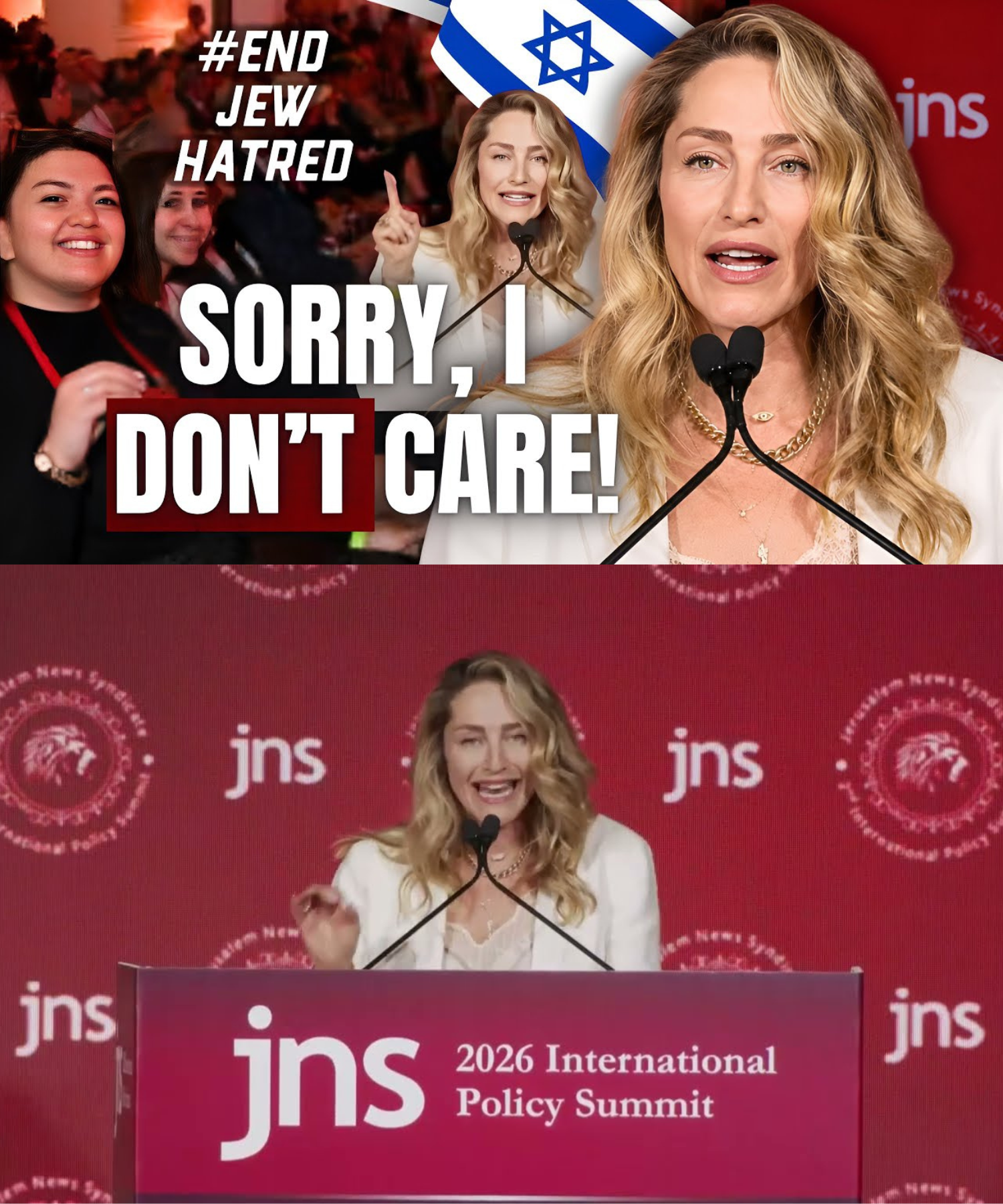
Washington — A fiery speech delivered at a Jewish News Syndicate (JNS) conference has gone viral, igniting an intense international debate over Israel advocacy, antisemitism, Jewish identity politics, and whether efforts to “win the PR war” around Israel have actually made Jews safer — or instead distracted from what speakers describe as a deeper civil rights struggle.
The address, delivered to a packed audience of pro-Israel advocates, legal experts, and policy figures, rejects the idea that Israel suffers from a public relations problem. Instead, the speaker argues that Jewish identity and sovereignty are being misframed as a communications issue when they should be understood as a matter of fundamental civil rights.
The speech has since circulated widely across social media, drawing praise from supporters who call it a powerful assertion of Jewish empowerment and criticism from opponents who say it blurs the line between political advocacy and religious-national identity claims.
“This Is Not a PR Problem” — Core Message of the Speech
The speaker begins by directly challenging the premise of mainstream pro-Israel advocacy campaigns, which often focus on improving Israel’s global image through messaging, polling, and narrative strategy.
Rejecting that approach, the speaker argues that the Jewish state does not suffer from a public relations problem but from a deeper struggle over legitimacy, identity, and sovereignty.
He claims that Jewish history has been repeatedly shaped by survival in the face of existential threats and that modern efforts to “market” Israel underestimate the scale of antisemitism and ideological opposition worldwide.
According to the speech, Jewish narrative framing has been “copied, distorted, and weaponized” by opponents, turning identity into a contested political battlefield rather than a neutral historical claim.
Historical Identity and the “Judea Narrative”
A major portion of the speech focuses on historical identity, particularly the connection between Jewish people and ancient Judea.
The speaker argues that Jews are indigenous to the region and that historical displacement has been systematically misrepresented in modern political discourse.
He asserts that Jewish historical claims to the land are rooted in ancient identity, referencing biblical lineage and historical continuity.
Critics of this framing argue that while Jewish historical connection to the region is widely recognized, modern political claims remain contested and deeply tied to the Israeli–Palestinian conflict.
Historians emphasize that both Jewish and Palestinian identities involve complex historical narratives that overlap across centuries of migration, empire, and cultural evolution.
“PR Campaigns Have Not Stopped Antisemitism”
The speech then shifts to the effectiveness of pro-Israel advocacy campaigns.
The speaker argues that despite billions of dollars spent on messaging, polling, and outreach efforts, antisemitism has not decreased and may in fact be increasing globally.
He suggests that advocacy efforts focused on improving Israel’s image have failed to change underlying attitudes and instead may have distracted from legal and civil rights strategies.
This claim has sparked debate among policy analysts, some of whom argue that public diplomacy has had mixed results depending on region, political context, and media environment.
Others note that measuring antisemitism trends is complex, influenced by political polarization, conflict cycles, and online amplification.
Civil Rights Framing of Jewish Identity
One of the most controversial parts of the speech is the argument that Jewish sovereignty should be understood primarily as a civil rights issue rather than a political debate.
The speaker draws parallels between Jewish rights and broader civil rights protections in democratic societies, arguing that discrimination against Jews in business, education, or public life should be treated as a legal equality issue rather than a foreign policy disagreement.
He references campus protests and allegations of antisemitism in academic environments, arguing that Jewish students are entitled to protection from discrimination regardless of global political events.
Civil rights advocates broadly agree that antisemitism on campuses should be addressed through legal and institutional mechanisms, though they differ on how such protections intersect with free speech and political protest.
Legal Strategy and Courtroom Advocacy
The speech highlights recent legal actions involving Jewish organizations and advocacy groups, describing them as examples of a shift away from PR campaigns toward courtroom-based strategies.
The speaker references lawsuits challenging sanctions and discriminatory policies, framing them as efforts to defend Jewish civil rights through legal precedent.
He argues that legal frameworks, rather than public relations efforts, offer stronger protection for minority communities.
Legal experts note that strategic litigation has long been a tool used by civil rights movements in the United States, including cases involving racial, religious, and ethnic discrimination.
Anti-Israel Activism and “Narrative Warfare”
The speech also directly addresses anti-Israel activism, accusing some movements of disguising broader ideological goals under the language of human rights advocacy.
The speaker suggests that certain political movements frame their arguments in ways that mask deeper hostility toward Jewish identity and sovereignty.
This claim has been strongly disputed by activists who argue that criticism of Israeli government policy should not be conflated with antisemitism.
Human rights organizations emphasize the importance of distinguishing between political criticism and hate-based discrimination, warning against collapsing the two categories.
Sovereignty and the Temple Mount Controversy
Another segment of the speech references religious freedom issues, including Jewish access to prayer sites in Jerusalem.
The speaker argues that restrictions on Jewish prayer in certain contested religious spaces represent a civil rights issue within Israel itself.
This topic remains one of the most sensitive and complex points in the Israeli–Palestinian conflict, involving competing religious claims, security concerns, and longstanding political agreements.
Social Media Reaction: Praise and Backlash
The viral spread of the speech has produced sharply divided reactions.
Supporters describe the address as a strong articulation of Jewish empowerment, sovereignty, and legal self-defense in the face of rising antisemitism.
Critics argue that the framing risks politicizing civil rights language and may blur distinctions between religious identity, state policy, and international conflict.
Some analysts warn that such rhetoric may further polarize already tense global debates surrounding Israel and Palestine.
Experts Warn of “Identity Politics Escalation”
Political scientists and communication experts note that speeches like this reflect a broader trend in global discourse: the merging of identity politics, legal advocacy, and geopolitical conflict into a single narrative framework.
They argue that while civil rights language can be powerful, it becomes more controversial when applied to international state conflicts.
The result, they say, is increasing polarization, where audiences interpret the same message either as empowerment or exclusion depending on political perspective.
A Debate Far Beyond One Speech
As the speech continues to circulate, it has become part of a much larger global conversation about Israel, antisemitism, civil rights, and political legitimacy.
For supporters, it represents a call to move beyond public relations strategies and toward legal and institutional empowerment.
For critics, it reflects the dangers of collapsing complex geopolitical issues into identity-based civil rights frameworks.
What remains clear is that the debate over Israel advocacy, antisemitism, and narrative control is not subsiding — and continues to intensify across political, legal, and cultural arenas worldwide.