Viral Christian–Muslim Debate Explodes Online After John 14 “Comforter” Claim Collapses Under the Next Verse
Viral Christian–Muslim Debate Explodes Online After John 14 “Comforter” Claim Collapses Under the Next Verse
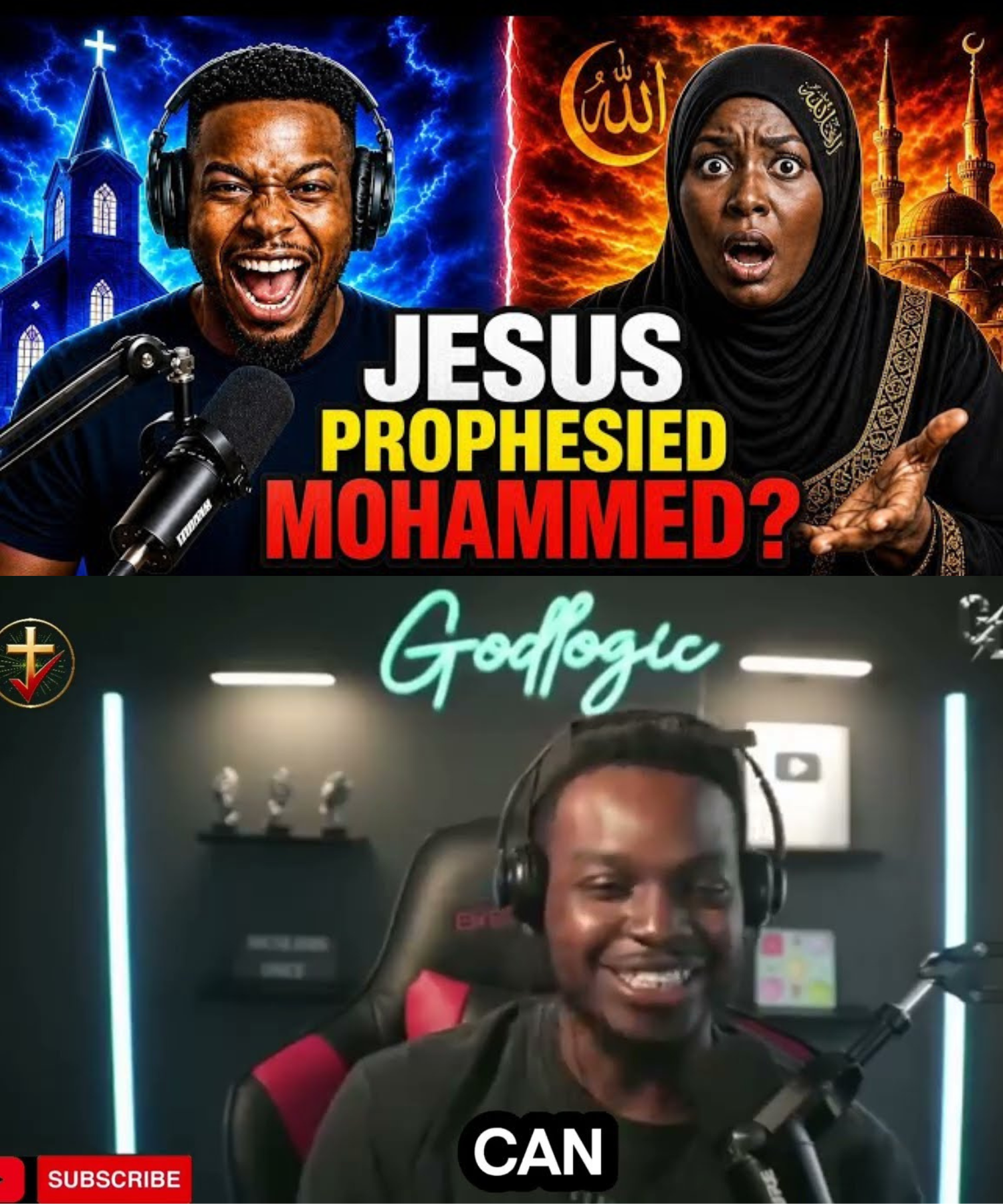
A tense online religious debate has erupted across American Christian and Muslim commentary circles after a Muslim woman entered a livestream convinced she had found the verse that would settle one of the oldest claims in Islamic apologetics: that Jesus secretly prophesied Muhammad in the Gospel of John.
The passage at the center of the clash was John 14, where Jesus promises his followers “another Comforter,” also described as the “Spirit of truth.” For decades, Muslim speakers and popular dawah preachers have argued that this Comforter, sometimes called the Paraclete, points not to the Holy Spirit but to Muhammad. The argument has been repeated in public debates, campus discussions, YouTube lectures, and street preaching encounters across the West.
But in this exchange, the claim ran into a problem that the Christian debater insisted was impossible to ignore: the text itself identifies the Comforter only a few verses later.
The woman began confidently. She cited John 14:16-17 and focused on the language of “another Comforter,” arguing that this figure sounded like a person similar to Jesus rather than a spirit. She connected the title “Spirit of truth” to Muhammad’s traditional reputation as trustworthy and truthful, suggesting that Jesus was pointing forward to the final prophet of Islam.
The Christian debater immediately slowed the conversation down.
His first question was not about Greek, Islam, or prophecy. It was about audience.
Who was Jesus speaking to?
That question became the foundation of his response. He argued that Jesus was speaking directly to his disciples — Peter, James, John, Matthew, and the others gathered with him before his departure. If Jesus promised that the Comforter would come to them, then any candidate for that prophecy had to reach them first. Muhammad, born centuries later in Arabia, did not come to Jesus’s first-century disciples, did not teach them, did not remind them of Jesus’s words, and did not remain with them forever.
That single point shifted the debate.
The Muslim woman tried to broaden the prophecy, saying it could apply to future believers and not only to the original disciples. The Christian debater agreed that the promise could extend to later believers, but insisted that the beginning of the promise could not be erased. In his view, if the prophecy starts with the disciples, then any interpretation that bypasses them collapses before it begins.
Then came the crucial verse.
The debater pressed her to read John 14:26. That verse, in the translation used during the debate, states that the Comforter is the Holy Ghost, whom the Father sends in Jesus’s name. The Christian debater seized on that moment, arguing that no complicated interpretation was needed. Jesus himself, he said, names the Comforter. The passage does not leave the identity open for a prophet hundreds of years later. It identifies the Comforter as the Holy Spirit.
That was the turning point.
The woman resisted, arguing that from an Islamic perspective, the Bible has been changed and that Muslims use the Quran as the criterion over previous scriptures. She cited the Quranic claim that Jesus gave glad tidings of a messenger to come after him whose name is Ahmad. From her perspective, John 14 was a possible surviving trace of that prophecy.
But the Christian debater argued that this created a dilemma.
If the Bible is corrupted, he said, then it cannot be used as reliable proof that Jesus prophesied Muhammad. But if John 14 is reliable enough to prove Muhammad, then the same passage must be reliable enough when it identifies the Comforter as the Holy Spirit. In his framing, the Muslim argument borrowed authority from a book it simultaneously rejected.
That dilemma has become one of the most powerful themes in Christian apologetics against Islam.
Muslims often claim that the Torah and Gospel once contained references to Muhammad, but that Jews and Christians later corrupted or concealed those references. Christians respond by asking where those original documents are and why Muslims appeal to the current Bible whenever they try to prove the claim. The result is a circular fight: the Quran says Muhammad is mentioned in earlier revelation, but the existing Bible does not clearly identify him by name.
In the debate, the Christian speaker pressed that point hard.
He asked whether Muhammad is mentioned in the Injil, the Gospel referred to by the Quran. The woman answered that Christians do not possess the original Injil. But that response opened another problem: if Muslims do not possess the original Injil either, then how can anyone verify that Muhammad was mentioned there? The Christian debater argued that the Islamic claim depends on a document that cannot be produced.
The debate also turned briefly to the Greek word “Paraclete.” The Muslim woman suggested that it could be connected to “praised one,” linking it to Ahmad, a name related to praise. The Christian debater rejected that sharply, saying Paraclete means advocate, helper, or comforter, not praised one. To him, the language argument was a later attempt to force Muhammad into a passage that already explains itself.
Then he raised another issue: John 14:17 describes the Spirit of truth as someone the world cannot see or know. Muhammad, he argued, was a visible historical man — a preacher, leader, husband, lawgiver, and military figure known publicly by followers and opponents. Therefore, he said, Muhammad cannot fulfill a promise about an invisible Spirit whom the disciples already knew and who would dwell with them.
That point intensified the pressure.
When asked whether she believed Muhammad was the Holy Spirit, the Muslim woman refused that conclusion, because identifying Muhammad with God’s Spirit would create serious theological problems inside Islam. The Christian debater argued that this was the trap created by her own claim: if John 14 says the Comforter is the Holy Spirit, and she insists the Comforter is Muhammad, then she is forced into a position she herself rejects.
The conversation did not end in agreement.
The woman maintained that from an Islamic perspective, Jesus did prophesy Muhammad. The Christian debater maintained that the Bible does not support that claim and that the Quran makes a false statement when it says Muhammad is found in previous scripture. Their exchange ended with more unresolved questions, including a brief dispute over Quranic descriptions of Jesus performing miracles by Allah’s permission.
But the viral impact of the debate came from one simple command: read the next verse.
For Christian viewers, the exchange became a clear example of how a popular Islamic argument can appear strong only when isolated from context. For Muslim viewers, it was another example of Christians refusing to accept the Quran’s authority over earlier revelation. For neutral observers, it exposed the deep divide between two religious systems that often use the same names — Jesus, Gospel, Spirit, prophecy — while assigning them radically different meanings.
That is why the debate matters in America.
Across college campuses, livestream panels, TikTok debates, mosque–church dialogues, and YouTube apologetics channels, Christian–Muslim arguments are no longer hidden inside seminaries. They are public, fast-moving, emotional, and watched by thousands in real time. One verse can become a battlefield. One Greek word can become a weapon. One follow-up question can flip an entire argument.
The John 14 debate is not just about Muhammad or the Holy Spirit.
It is about authority.
For Christians, the passage means Jesus promised the Holy Spirit to his disciples, fulfilled in the life of the early church. For Muslims, the Quran insists that Jesus announced a messenger after him named Ahmad. The clash comes when one side tries to prove the Quran by using a Bible passage that, in Christian reading, says something else entirely.
That tension is not going away.
In fact, this viral exchange shows that the apologetics war is only growing sharper. The old claims are being tested in public. The audience is no longer passive. Viewers can pause the video, open the passage, check the Greek, compare translations, and watch the argument unfold line by line.
And in this case, the Christian debater’s message was simple:
If a doctrine cannot survive the very next verse, it may not be a prophecy at all.