Viral Plane Seat-Switch Meltdown Sparks Fury After Police Threaten Arrest and Passengers Fear Missing Connections
Viral Plane Seat-Switch Meltdown Sparks Fury After Police Threaten Arrest and Passengers Fear Missing Connections
Miami — A chaotic airplane confrontation captured on video has ignited a national debate over airline authority, passenger behavior, police escalation, and the fragile reality of modern air travel in America.
The footage, now spreading rapidly across social media, appears to show police boarding a commercial aircraft after two passengers allegedly moved into first class, accepted drinks, and later refused repeated instructions to leave the plane. What began as a dispute over seating quickly spiraled into a threat to deplane the entire aircraft, leaving surrounding passengers furious, anxious, and afraid of missing connecting flights.
The scene is tense from the beginning.
An officer is heard telling the passengers that if they do not deboard immediately, the aircraft will be cleared and they will be arrested for trespassing.
“Do you understand that?” the officer asks repeatedly.
One passenger responds that she needs a lawyer.
The officer replies that the time for negotiation has passed: either leave the aircraft or go to jail.
Within minutes, the video turns from a seat dispute into a full-blown airport standoff.
The Seat Switch That Started Everything
According to the conversation heard in the video, the problem began before takeoff when two passengers allegedly moved into first class even though they were not assigned to sit there.
A crew member tells police the passengers accepted drinks in first class and began drinking before being told to return to their correct seats. The concern, according to the clip, was not only that they had changed seats, but that they were also believed to be intoxicated.
Once airline staff decided the passengers would not be allowed to fly, police were called to the aircraft.
That is when the situation escalated.
The passengers were reportedly told multiple times to come forward and speak with officers. Instead, they remained seated, triggering the warning that the entire aircraft might have to be cleared.
“We’re All Going to Miss Our Connection”
The most explosive moment comes not from the passengers being removed, but from the reaction of everyone else on board.
As officers and airline staff discuss deplaning the aircraft, frustrated travelers begin asking what will happen to their connections.
One passenger can be heard saying they only have a 30-minute connection and may not have another flight available.
The anxiety spreads instantly. In modern American air travel, one delay can destroy an entire day. A missed connection can mean lost hotel reservations, missed work, stranded families, and hours of rebooking chaos.
That is why the video has enraged viewers online.
Many are asking the same question: why should an entire aircraft full of passengers be punished because two people allegedly refused to follow instructions?
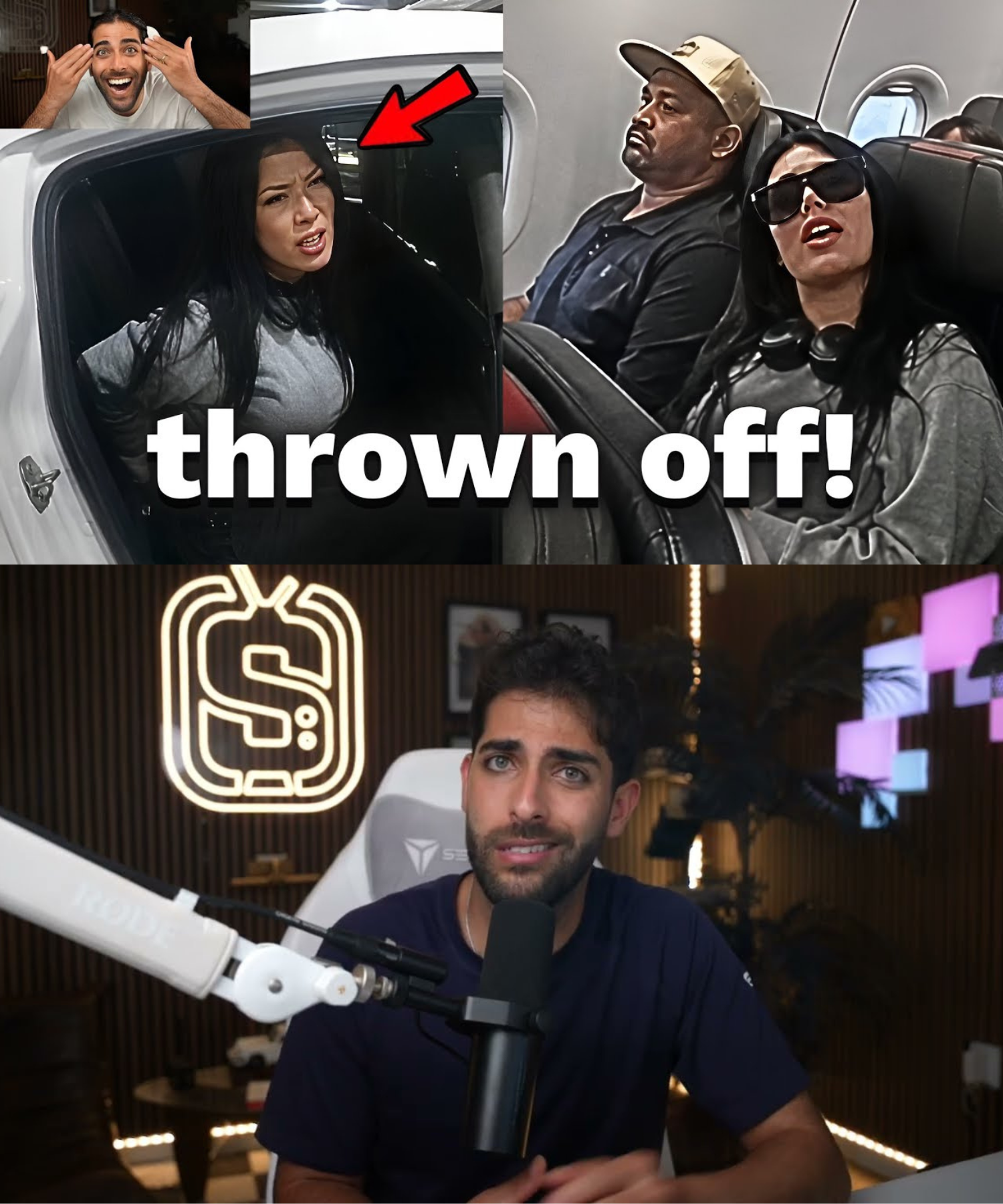
The Trespass Warning
Once a passenger is no longer allowed to remain on an aircraft, refusal to leave can become a law enforcement matter.
In the video, officers frame the issue as trespassing. The message is direct: the airline has withdrawn permission for the passengers to remain onboard, and police are now giving a final warning.
“You were supposed to exit when I told you to exit,” one officer later tells the passenger.
The passenger appears to continue arguing that she was being punished merely for sitting in the wrong seat.
An officer responds that the issue involved moving to first class, consuming drinks, and refusing to leave after being told the flight was no longer available to them.
At that point, police move to place the passenger in handcuffs.
Arrest on the Aircraft
The arrest itself unfolds in front of other passengers.
The officer instructs the passenger to put her hands behind her back. The passenger protests and continues to speak about her attorney, her phone, and what she claims was recorded.
Officers tell her that her chance to resolve the situation peacefully came earlier, when she was told to exit the aircraft voluntarily.
The passenger insists she has video evidence. Police continue removing her from the aircraft.
A second passenger is also taken into custody, according to the exchange in the video.
One of the most striking parts of the footage is how routine and surreal the process feels. Travelers sit in their seats, waiting, watching, whispering, and calculating whether their connection is gone. Meanwhile, a dispute that could have been resolved at the gate becomes a public spectacle inside a sealed aircraft.
Social Media Turns on the Passengers
Online reaction has been swift and harsh.
Many viewers condemned the passengers, calling their refusal selfish and arguing that their actions disrupted everyone else’s travel plans.
The anger is not only about the alleged seat switch. It is about the refusal to comply once airline staff and police were involved.
To many Americans, air travel already feels strained, expensive, and unpredictable. Passengers are dealing with delays, cancellations, security lines, crowded airports, and shrinking patience.
In that environment, a traveler who refuses to leave after being removed from a flight is unlikely to receive public sympathy.
The dominant reaction online has been blunt: follow airline rules or do not fly.
Others Question Police Strategy
But the video has also sparked criticism of how the situation was handled.
Some commentators argue that threatening to deplane the entire aircraft gave disruptive passengers too much leverage. They say police should have removed the individuals more quickly rather than creating fear among everyone onboard.
Others counter that aircraft removals are sensitive, especially when passengers are seated deep in the cabin. Officers must consider safety, narrow aisles, surrounding travelers, luggage, possible resistance, and airline procedures.
Still, the question remains: should law enforcement prioritize speed, or should it prioritize controlled compliance?
The answer depends on who is watching.
Passengers fearing missed connections want immediate action.
Police departments want to avoid injuries, lawsuits, or escalation.
Airlines want the aircraft secured before departure.
The Larger Crisis in Air Travel
This incident fits into a broader pattern of viral airline confrontations across the United States.
In recent years, unruly passenger incidents have become a major source of public frustration. Disputes over masks, alcohol, seating, carry-on bags, intoxication, dress codes, and crew instructions have repeatedly turned flights into social media spectacles.
The aircraft cabin is one of the few public spaces where passengers have very little room to walk away. When one person refuses to comply, everyone is trapped in the consequences.
That claustrophobic reality is why these incidents feel so explosive.
A restaurant argument affects a few tables.
A gate dispute affects a boarding line.
But an aircraft standoff can hold an entire plane hostage.
Airline Authority vs Passenger Rights
The video also raises a question many travelers misunderstand: buying a ticket does not mean a passenger has unlimited rights onboard.
Airlines can deny transport for safety, intoxication, disruptive behavior, refusal to follow crew instructions, or violating policy. Once police are called, the dispute is no longer merely customer service.
But passengers also have rights. They can complain, file claims, request documentation, and challenge airline decisions later.
What they generally cannot do is refuse to leave an aircraft after the airline and police have ordered them off.
That is where the legal danger begins.
A Warning for Every Traveler
The lesson from the viral video is simple and brutal.
Argue later.
Comply first.
Once a flight crew decides a passenger is not flying and law enforcement boards the plane, the aisle is no longer a debate stage. It is a legal line.
Cross it, and a seat dispute can become handcuffs.
For the passengers watching from rows behind, the message is equally clear: one person’s refusal can become everyone’s delay.
And in America’s already tense air travel system, patience is running out fast.
The plane may eventually take off.
But the video has already landed — hard.