Viral “West Has Fallen” Video Ignites U.S. Firestorm Over Islam, Immigration, Sharia, and America’s Cultural Breaking Point
Viral “West Has Fallen” Video Ignites U.S. Firestorm Over Islam, Immigration, Sharia, and America’s Cultural Breaking Point
A new viral compilation titled around the claim that “the West has fallen” has detonated across American social media, pulling together scenes from California, Michigan, New York, Europe, and beyond into one explosive argument: Western societies, the video claims, are losing control of their public spaces, their borders, their values, and their ability to speak honestly about Islam, immigration, antisemitism, and cultural conflict.
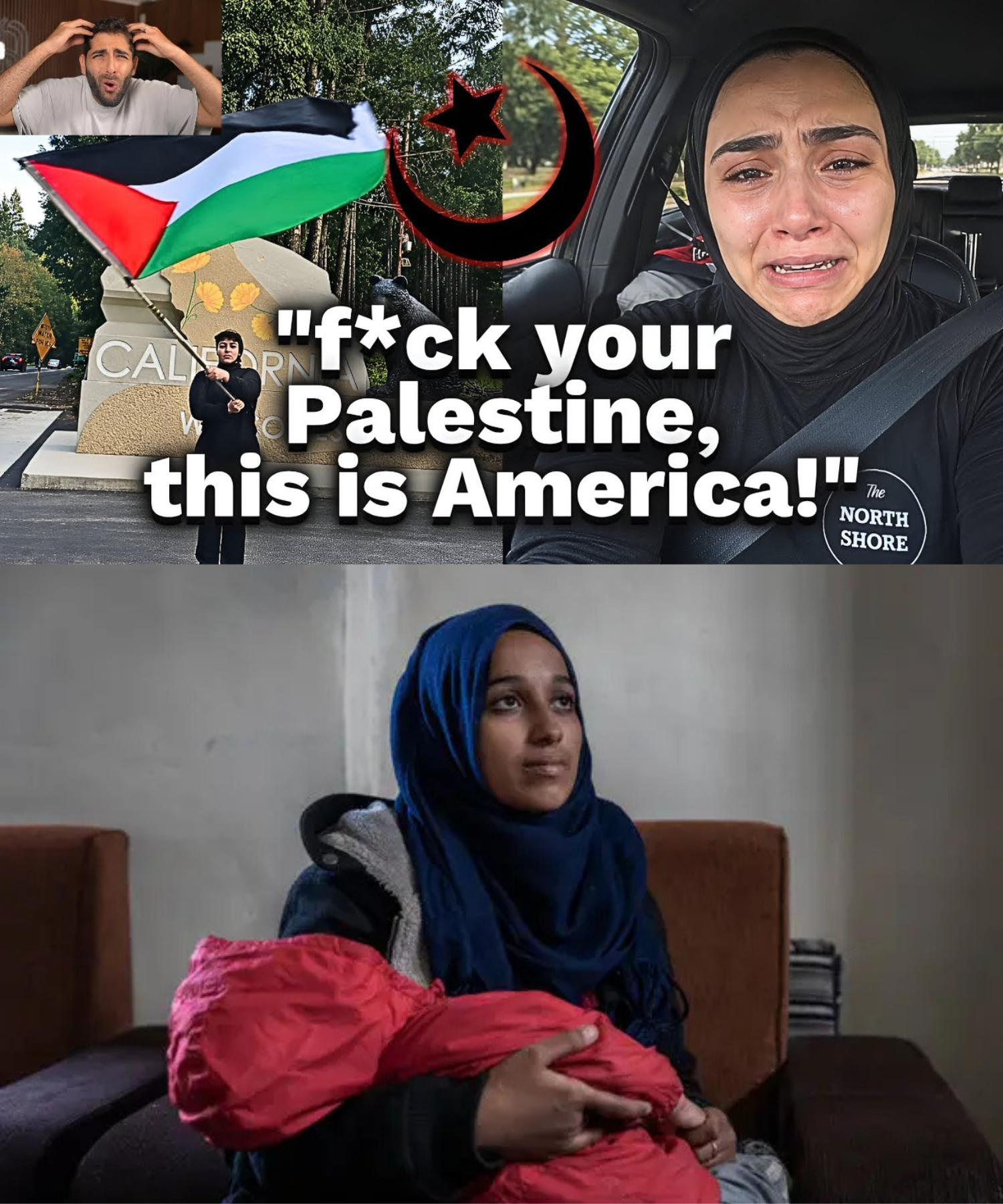
The video opens in California, where a Muslim woman waving a Palestinian flag says several cars drove past her shouting “USA” and cursing at her. Shaken, she pulls over, saying she felt transported back to junior high school, bullied and targeted all over again. Her voice trembles as she describes checking to make sure no one was following her. To her, the moment represented ignorance and hate. To the commentator presenting the clip, it represented something else entirely: Americans rejecting what they see as the importation of a foreign religious-political conflict into their own country.
That opening clip set the tone for the entire compilation.
Across America, the Palestinian flag has become one of the most emotionally charged symbols in public life. For some, it represents solidarity with suffering civilians in Gaza. For others, especially after October 7 and the rise of openly anti-Israel street rhetoric, it has become associated with Islamist activism, anti-American protest, and hostility toward Jews. The woman in the video sees herself as a victim of bullying. The commentator sees the drivers as ordinary Americans pushing back against a movement they no longer trust.
That clash — victimhood versus resistance — is exactly why the video spread so fast.
The next section moves overseas, showing Muslim women in Germany apparently criticizing a woman for how she is dressed. The commentator presents the scene as evidence that Islamic modesty norms do not stay private when imported into Western societies. To supporters of the video, this is the core danger: a religious worldview that begins with personal belief but soon becomes social pressure, public policing, and hostility toward women who dress differently.
Critics would argue that one confrontation does not represent all Muslims. And that is true. Millions of Muslims in the West do not harass strangers, do not demand Sharia, and do not police women in public. But the video’s power comes from showing moments that many viewers believe authorities and media outlets downplay.
Then the compilation shifts to the United States.
A Muslim preacher in America is shown condemning Christianity as idolatry, warning Muslims not to take Jews and Christians as close allies, and urging believers to teach children to reject kufr — unbelief. The clip is framed as a shocking example of what some Islamic sermons may sound like when delivered openly in the very country that protects religious freedom.
For American viewers, this part hit particularly hard.
The United States was built on religious liberty, but religious liberty also protects hardline preaching. A Christian can preach against Islam. A Muslim can preach against Christianity. A Jew can reject both. An atheist can criticize all three. But when sermons move from theological disagreement to teaching children to hate everything associated with unbelievers, many Americans begin to ask whether tolerance is being used to protect intolerance.
That question grows sharper in the next clip from Dearborn, Michigan, where a speaker denounces the “American empire” and says Western powers that have harmed his people must fall. He says people are willing to put their lives and everything they have on the line to bring those empires down.
Dearborn has long been a symbol of Muslim-American political life. To supporters, it represents immigrant success, civic participation, and free speech. To critics, it has become a warning sign: a city inside America where some activists appear to enjoy American freedoms while openly calling for America’s defeat.
That contradiction is at the heart of the U.S. reaction.
The same Constitution that allows a preacher to condemn Christianity also allows protesters to condemn the United States. But Americans watching the clip ask a harsher question: how long can a country survive if it protects people who openly pray for its downfall?
The compilation then moves through clips from Monaco, Sweden, France, Thailand, Germany, and beyond. A Muslim man prays inside a restaurant, and the manager objects. A Swedish father discusses his son’s experience with immigrants. Coptic Christians warn Western audiences about what they describe as the Islamization of Egypt. An Iraqi Christian priest speaks about the horrors of ISIS. A crowd in Idaho reportedly waves Islamic flags and calls for Sharia in America. A German street clip shows a man declaring that no one can save Europe, not America, not NATO, not Germany.
The tone is relentless.
Each clip is designed to build one conclusion: the West is not merely facing isolated crimes or cultural misunderstandings. It is facing a civilizational pressure test.
One of the most disturbing moments in the transcript involves a Muslim religious figure being asked why Muhammad married a minor. Instead of expressing discomfort, the speaker defends the marriage and says that if he had a six-month-old daughter, he would give her to the prophet. The commentator reacts with disbelief, asking what could be happening in the man’s mind.
For American audiences, this clip is radioactive.
Child protection is one of the few moral lines that cuts across nearly every political and religious divide. When any religious leader appears to justify the marriage of a child, especially in modern terms, it triggers immediate outrage. Defenders may argue context, history, or translation. Critics respond that no context can make such language acceptable today.
The video also includes a scene involving a 16-year-old girl in a park with her dog, where an older asylum seeker approaches and makes comments that leave her visibly uncomfortable. The commentator argues that once the man learned her age, he should have walked away immediately. This clip feeds into a wider fear among parents across America and Europe: that public spaces are becoming less safe for young girls, and that authorities are too afraid of appearing discriminatory to confront uncomfortable patterns.
That is one of the strongest emotional engines behind the video.
It is not just about religion. It is about mothers and fathers asking whether their daughters are safe on streets, buses, campuses, parks, and trains.
At the same time, the danger of this kind of compilation is obvious. By stitching together dozens of clips involving Muslims, migrants, and foreign-born individuals, the video risks pushing viewers toward a sweeping conclusion: that all Muslims or all immigrants are dangerous. That conclusion would be false and unjust. Many Muslims serve in hospitals, police departments, schools, businesses, and the U.S. military. Many immigrants are patriotic, law-abiding, and grateful for the freedoms they found in the West.
But the video’s supporters argue that this reminder is often used to shut down the conversation entirely.
They say the real issue is not every Muslim or every immigrant. The issue is ideology, failed integration, imported antisemitism, religious supremacism, and a political class that refuses to say when Western values are being challenged.
That is why the compilation is resonating in America.
The country is already divided over Gaza, Israel, border security, free speech, crime, public schools, and religious expression. Clips like these pour gasoline onto an already burning debate. For conservatives, the video is proof that multiculturalism without boundaries becomes national suicide. For liberals, it is a warning about how fear-based media can turn minority communities into targets. For many ordinary Americans, it is simply unsettling.
The question now is not whether the video is fair in every frame. Viral compilations rarely are.
The real question is whether the anxiety it captures is real.
And across the United States, from California highways to Michigan rallies to college campuses and city streets, millions of Americans are asking the same thing:
Can the West defend tolerance without surrendering to people who despise it?
That question is now driving one of the fiercest culture wars in America.