BBC Interview Clash Goes Viral as Debate Over Pro-Palestine Protests and “UTK Rallies” Sparks Free Speech Firestorm
BBC Interview Clash Goes Viral as Debate Over Pro-Palestine Protests and “UTK Rallies” Sparks Free Speech Firestorm
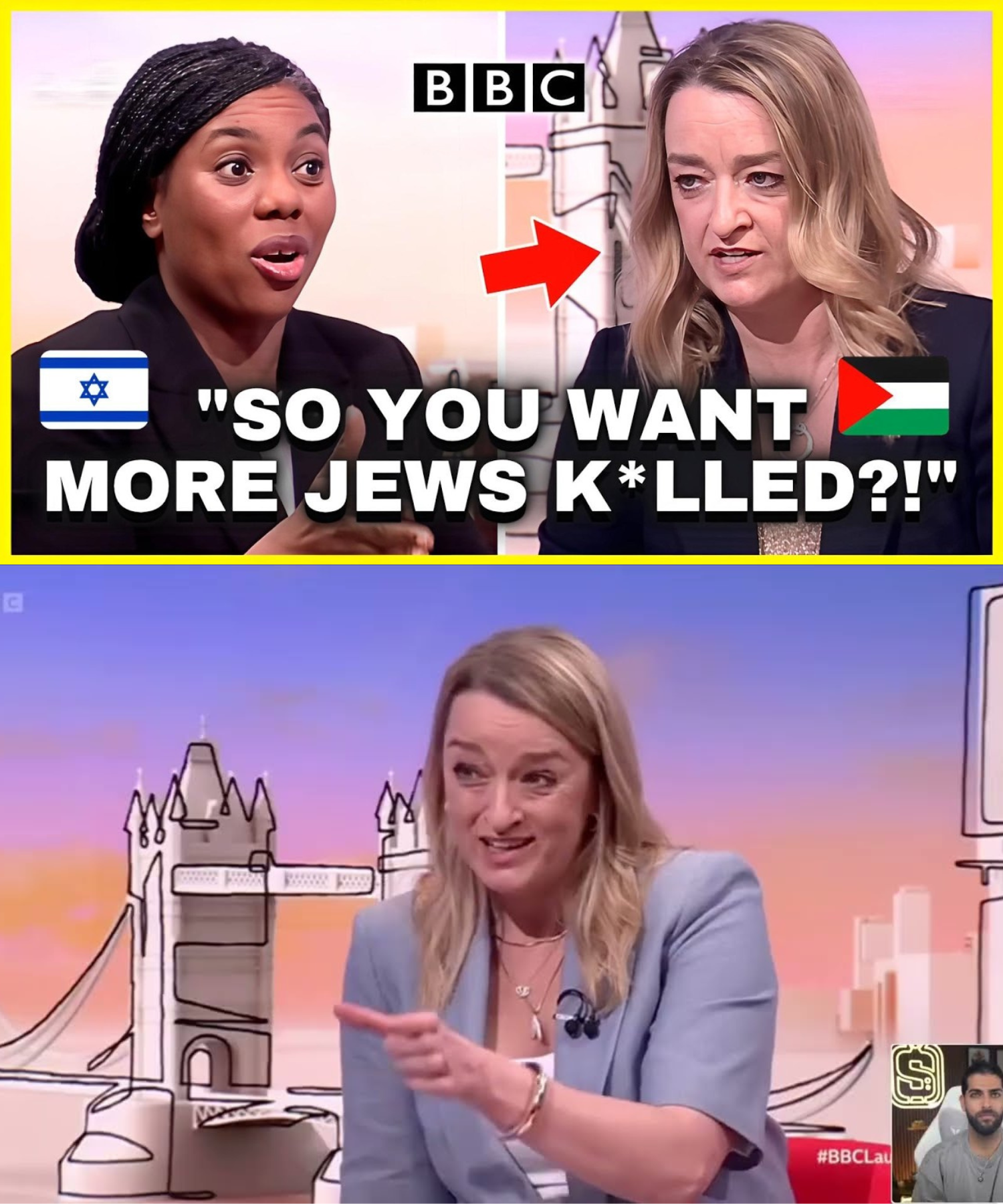
New York — A heated BBC interview featuring political commentator Cammy Baden has gone viral across social media, igniting a fierce transatlantic debate over antisemitism, free speech, and the growing tension between pro-Palestine demonstrations and right-wing “UTK rallies” associated with activist Tommy Robinson.
The interview, conducted by BBC reporter Laura Kay, centered on rising concerns about antisemitism in the United Kingdom and whether certain protest movements have crossed the line from political expression into public safety threats.
What began as a routine discussion about national security quickly escalated into one of the most divisive cultural debates now circulating in Western media.
“Biggest National Security Emergency in Years”
The exchange opens with Kay asking whether attacks on Jewish communities in the UK represent the most serious national security concern in recent years.
Baden agrees, stating that recent incidents have left Jewish communities feeling deeply unsafe, particularly in areas with significant Jewish populations such as Golders Green. She references meetings with local volunteers and community security groups, describing how Jewish organizations have increasingly taken on protective roles due to fears that state response may not always arrive quickly enough.
One such group, referenced in the interview, operates community security and emergency response services designed to assist in protecting Jewish neighborhoods and institutions.
Baden emphasizes that these measures reflect a growing sense of vulnerability, not political rhetoric.
Calls for Protest Restrictions Ignite Controversy
The interview then shifts into more controversial territory when Baden suggests that the government may need to consider a temporary moratorium on large public marches if they are being linked to rising antisemitic incidents.
She argues that while freedom of speech and protest are essential democratic rights, some demonstrations may be creating environments where extremist slogans or hate speech become normalized.
Her position is clear: the state, she says, may need to intervene if public safety is at risk.
Baden also supports stronger enforcement measures, including increased policing, visa restrictions for individuals linked to extremist organizations, and stricter penalties for hate crimes, particularly in public institutions such as hospitals.
She specifically references the idea of proscribing the IRGC, Iran’s Islamic Revolutionary Guard Corps, arguing that stronger action is needed against organizations accused of promoting extremism internationally.
The “Globalize the Intifada” Debate
One of the most contentious moments comes when Kay asks about the phrase “Globalize the Intifada,” which has appeared at pro-Palestinian demonstrations in the UK and elsewhere.
Baden responds that such slogans should be treated as potentially criminal if they are interpreted as calls for violence. She argues that even if some participants view the phrase as symbolic, others may interpret it as encouragement for attacks against Jewish people.
Her argument reflects a growing concern among some lawmakers and advocacy groups that political slogans at protests may carry implicit violent meaning.
Critics, however, argue that such interpretations risk criminalizing political speech and conflating solidarity with Palestine with antisemitism.
Free Speech vs Public Safety
Throughout the interview, Baden repeatedly emphasizes that she supports free speech and the right to protest, but insists that these rights are not absolute when they intersect with public safety concerns.
She argues that antisemitism in the UK should not be normalized in any social setting, including public discourse, workplaces, or healthcare institutions.
Her position reflects a broader trend in Western political debate: the increasing tension between protecting free expression and preventing hate speech.
Legal experts note that this balance has become one of the most difficult challenges facing liberal democracies, particularly in the context of emotionally charged geopolitical conflicts.
Historical Context and Jewish Security in Britain
Baden also references the long history of Jewish communities in the UK, including periods of expulsion and persecution, to highlight why current fears should be taken seriously.
She argues that Britain has historically been both a refuge and a place of vulnerability for Jewish populations, and that recent incidents have revived fears of historical patterns repeating.
Supporters of her position say that Jewish communities are justified in demanding stronger protections given recent spikes in reported antisemitic incidents.
Opponents argue that focusing heavily on one community risks ignoring broader issues of discrimination affecting multiple groups across society.
Comparison Between Protest Movements
A significant portion of the post-interview commentary focuses on comparisons between pro-Palestinian demonstrations and UTK rallies associated with Tommy Robinson.
Baden suggests that while both movements involve political expression, they differ in tone and messaging. She argues that some pro-Palestinian protests have included rhetoric that creates fear among Jewish communities, while other demonstrations focus primarily on national identity and immigration concerns.
The comparison has become highly controversial online.
Supporters of Baden’s framing argue that there is a clear distinction between political nationalism and slogans that may be interpreted as threatening.
Critics accuse her of selectively interpreting protest movements and oversimplifying complex political expressions into categories of “safe” and “unsafe.”
Social Media Reaction and Political Polarization
The viral clip has triggered intense reactions across social media platforms in both the UK and the United States.
Supporters praise Baden for taking a strong stance against antisemitism and calling for stricter enforcement against extremist rhetoric. They argue that Jewish communities are facing real and increasing threats that require urgent political attention.
Critics, however, accuse her of conflating pro-Palestinian activism with antisemitism and argue that restricting protests or slogans could set a dangerous precedent for free speech.
Meanwhile, some observers point out that both pro-Israel and pro-Palestine demonstrations have seen rising tensions, suggesting that the issue is not confined to one side of the political spectrum.
A Debate Rooted in Fear, Law, and Identity
Experts say the interview reflects a broader crisis in Western democracies where geopolitical conflicts abroad are increasingly shaping domestic political tensions.
Issues related to Israel and Gaza have become deeply embedded in discussions about identity, immigration, policing, and civil liberties.
What once might have been foreign policy debates are now playing out in local streets, universities, and media platforms.
No Easy Resolution
By the end of the interview, no consensus is reached.
Baden maintains that stronger legal and policing measures are necessary to prevent antisemitism from escalating. Critics maintain that such measures risk undermining the right to protest and free expression.
What remains clear is that the issue is far from settled.
As the viral clip continues to circulate, it has become a symbol of a larger unresolved question facing Western democracies:
How can societies protect vulnerable communities from hate while preserving the fundamental right to political expression?
For now, the answer remains contested — and increasingly urgent.