Arab-Israeli Speaker Stuns U.S. Campus Debate After Challenging “Apartheid” Claims and Defending Israel’s Right to Survive
Arab-Israeli Speaker Stuns U.S. Campus Debate After Challenging “Apartheid” Claims and Defending Israel’s Right to Survive
A packed university debate hall in the United States erupted into shouting, applause, and stunned silence after an Arab-Israeli speaker delivered a blistering defense of Israel, directly confronting students and activists who accused the country of apartheid, genocide, and colonial violence.
The speaker, introduced as an Arab-Israeli journalist and advocate for coexistence, did not enter the room with slogans. He entered with a warning: too many people in Western debate halls, he argued, speak about Israel without ever living there, visiting its mixed cities, meeting its Arab citizens, or understanding the daily reality of Jews and Arabs sharing schools, workplaces, hospitals, restaurants, and neighborhoods.
Then he turned the room upside down.
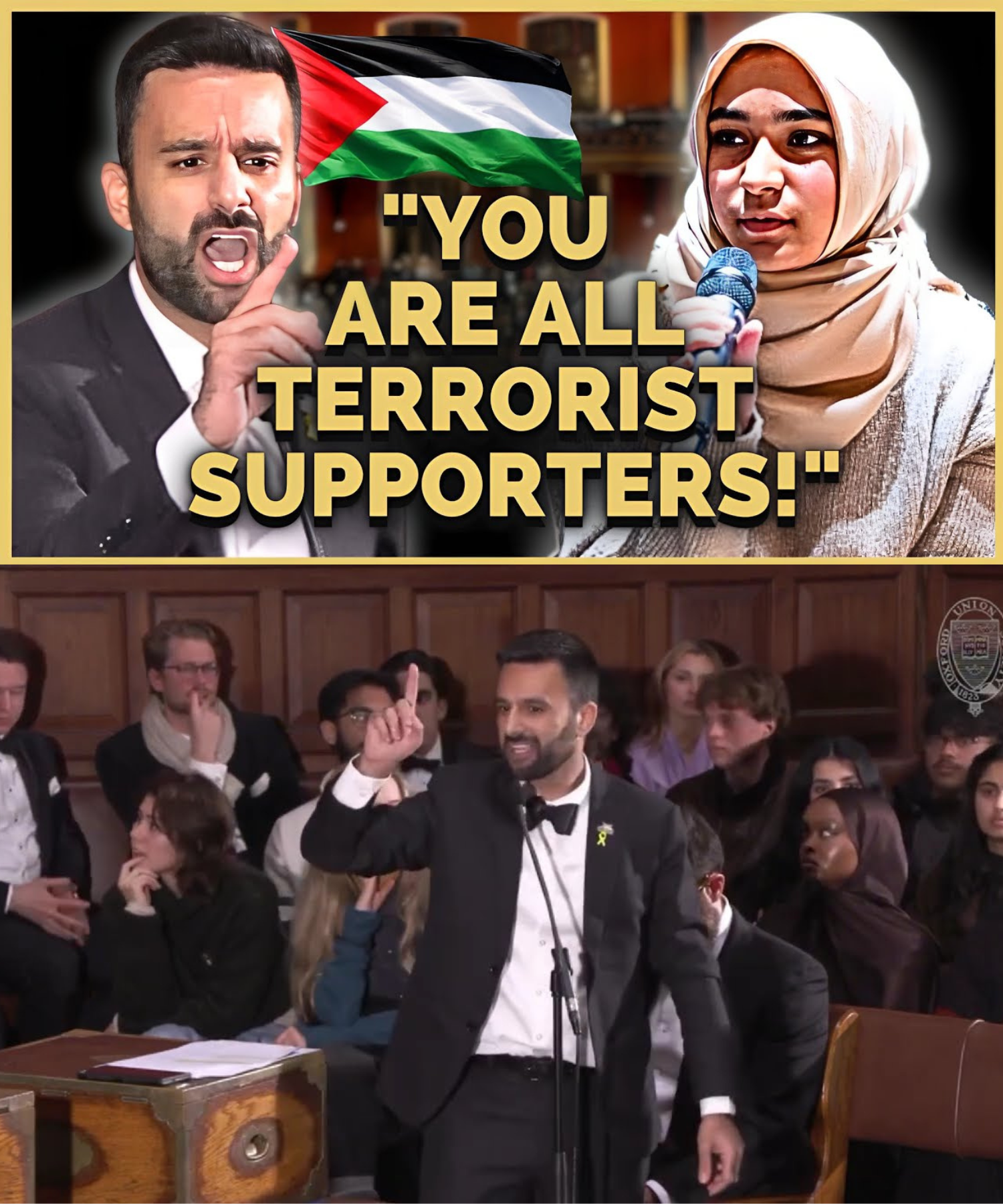
“You have the audacity to tell me I live under an apartheid regime?” he said, addressing an audience that had already made its position clear. “Shame on you. You have no clue what you’re talking about.”
The reaction was immediate. Some students cheered. Others booed. The moderator struggled to keep order as the speaker pressed forward, refusing to soften his language or surrender the microphone to the crowd.
The debate, held amid growing tensions on American campuses over Israel, Gaza, Hamas, and the aftermath of October 7, quickly became one of the most intense pro-Israel speeches to go viral in recent weeks. What made it especially powerful was not simply the argument — but the identity of the man making it.
He was not a Jewish Israeli defending his own community from afar. He was an Arab citizen of Israel, born in Haifa, raised in Nazareth, and shaped by a childhood he described as one of direct coexistence: Muslims, Christians, Druze, and Jews playing football together, visiting each other’s homes, celebrating each other’s holidays, and learning each other’s languages.
To him, the accusation that Israel is an apartheid state is not merely wrong. It is personal.
He began by forcing the room to confront the violence of October 7. Referring to videos allegedly released or circulated by Hamas and its supporters, he described a Palestinian attacker calling his father and boasting about killing Jews. His point was harsh and direct: Western audiences often use the word “civilian” too casually, he argued, without asking whether someone participated in or celebrated violence.
That claim drew immediate backlash from the audience. But the speaker did not retreat.
He then shifted to history, challenging the common narrative that Israel alone prevented Palestinian statehood. He reminded the room that from 1948 to 1967, Gaza was controlled by Egypt and the West Bank by Jordan. If the Arab world truly wanted to establish a Palestinian state during that period, he asked, why did Egypt and Jordan not create one when they held those territories?
The question hung in the room.
For supporters, it was a devastating historical point. For critics, it was a deflection from the current suffering in Gaza and the ongoing dispute over occupation, borders, and rights. But no one could deny that the room had shifted from slogans to confrontation.
Then came the phrase that ignited the loudest reaction: “If you want to free Palestine, first free Palestine from Hamas.”
The audience erupted. Some applauded. Others booed loudly. The speaker seized on the response.
“If I say free Palestine from Hamas and you boo,” he said, “then I’m sorry to tell you, you are supporting terror.”
The room exploded again.
In America, where campus protests have repeatedly centered on calls for Palestinian liberation, that line landed like a political grenade. Many pro-Palestinian activists argue that opposition to Israel does not equal support for Hamas. But the speaker’s challenge was aimed at a specific refusal: why, he asked, would anyone object to freeing Palestinians from an armed Islamist group that rules Gaza by force and has been accused of killing both Arabs and Jews?
From there, the speech became personal.
The speaker described growing up in Israel’s mixed society and volunteering for the Israel Defense Forces. Arab Christians and Arab Muslims, he noted, are not required to serve. He volunteered anyway. Why? Because, as he put it, the IDF is the Israel Defense Forces — not the Jewish Defense Forces. When Hamas, Hezbollah, or Iran attack Israel, they do not attack only Jews. They attack all Israelis.
That distinction became the emotional center of his speech.
He recalled the 2003 bombing of the Maxim restaurant in Haifa, a restaurant co-owned by Arabs and Jews, where Arab and Jewish Israelis ate and worked together. A Palestinian suicide bomber attacked it, killing 21 people and wounding more than 50. To him, that attack erased any illusion that terrorism distinguishes between Jewish and Arab citizens living under the Israeli flag.
After that bombing, he said, his decision to serve was no longer 100 percent. It became “one million percent.”
The audience was restless, but the speaker continued.
He described becoming an Arab commander over Jewish soldiers in the IDF. That fact, he argued, destroys the apartheid accusation. In a real apartheid system, Arabs do not command Jews in the national army. Arabs do not serve as judges sending Jewish presidents and prime ministers to prison. Arabs do not sit in parliament while openly criticizing the state. Arabs do not lead major banks, attend universities, serve in hospitals, and hold positions across public life.
To make the point sharper, he cited Arab figures in Israeli society: an Arab judge who helped send Jewish leaders to prison, Arab politicians who criticize Israel while being paid by the state, and an Arab Muslim who rose to head one of Israel’s largest banks.
His message was clear: if critics want to accuse Israel of apartheid, they must bring evidence — not slogans.
The most dramatic moment came when he recalled his own injury during the Second Lebanon War. He said that after being wounded in combat, Jewish soldiers risked their lives to carry him to safety under fire. According to him, they ran kilometers while exposed to danger, saving his life when abandoning him would have been easier.
To the speaker, that experience is impossible to reconcile with the claim that Jews see Arab Israelis as disposable.
“I felt it. I saw it. I lived it,” he told the room, his voice rising over boos. “You want to lie, keep lying.”
The debate then moved to Hamas and Arab victims. He named Arab Muslims allegedly kidnapped on October 7 and held hostage by Hamas. When some in the room reacted with hostility, he accused them of revealing their real priorities: they were not defending Palestinians, he argued, but defending a narrative that could not tolerate Arab voices who support Israel.
That moment cut deeply because it challenged the moral structure of the campus debate. If an Arab Israeli supports Israel, is he allowed to speak? If an Arab Muslim is killed or kidnapped by Hamas, does the crowd care? If Hamas kills Arabs, does the anti-Israel movement acknowledge it?
The speech ended with a defiant declaration: Israel is not going anywhere.
Whether one agrees with him or not, the effect was undeniable. The room had been forced to confront a voice that did not fit neatly into American campus categories. He was Arab, not Jewish. Israeli, not foreign. A critic of Hamas, not a defender of every Israeli policy. A man who rejected the apartheid label not because he read a talking point, but because he lived the opposite.
For American universities, the viral debate is a warning.
The Israel-Palestine argument is no longer just about competing slogans. It is about whose lived experience counts, whose suffering is acknowledged, and whether uncomfortable facts are allowed to enter the room.
On that night, the speaker did not persuade everyone.
But he made one thing impossible to ignore: the Middle East is far more complicated than the chants echoing across U.S. campuses.