Viral Campus Interview Sparks Firestorm After Students Compare Trump Supporters to Hamas on LGBT Rights
Viral Campus Interview Sparks Firestorm After Students Compare Trump Supporters to Hamas on LGBT Rights
New York — A viral campus interview has detonated a political firestorm across the United States after students were asked a shocking question: who is more likely to support LGBT rights — Trump supporters or Hamas and Hezbollah supporters?
The clip, filmed in a street-interview style and later amplified by political commentators online, shows young Americans being asked to compare two dramatically different groups: supporters of former President Donald Trump and supporters of Islamist militant organizations such as Hamas or Hezbollah.
The responses stunned viewers.
Several students appeared hesitant to say Trump supporters would be safer or more supportive of LGBT people. Some suggested Hamas or Hezbollah supporters might be more sympathetic simply because they were not associated with Trump or MAGA politics. Others paused, admitted confusion, or said neither side seemed likely to support gay rights.
The video has since gone viral because it exposes one of the most explosive contradictions in modern campus politics: many progressive students strongly oppose Trump supporters while simultaneously struggling to confront the anti-LGBT beliefs held by groups they may view through an anti-Western or pro-Palestinian political lens.
A Question Designed to Shock
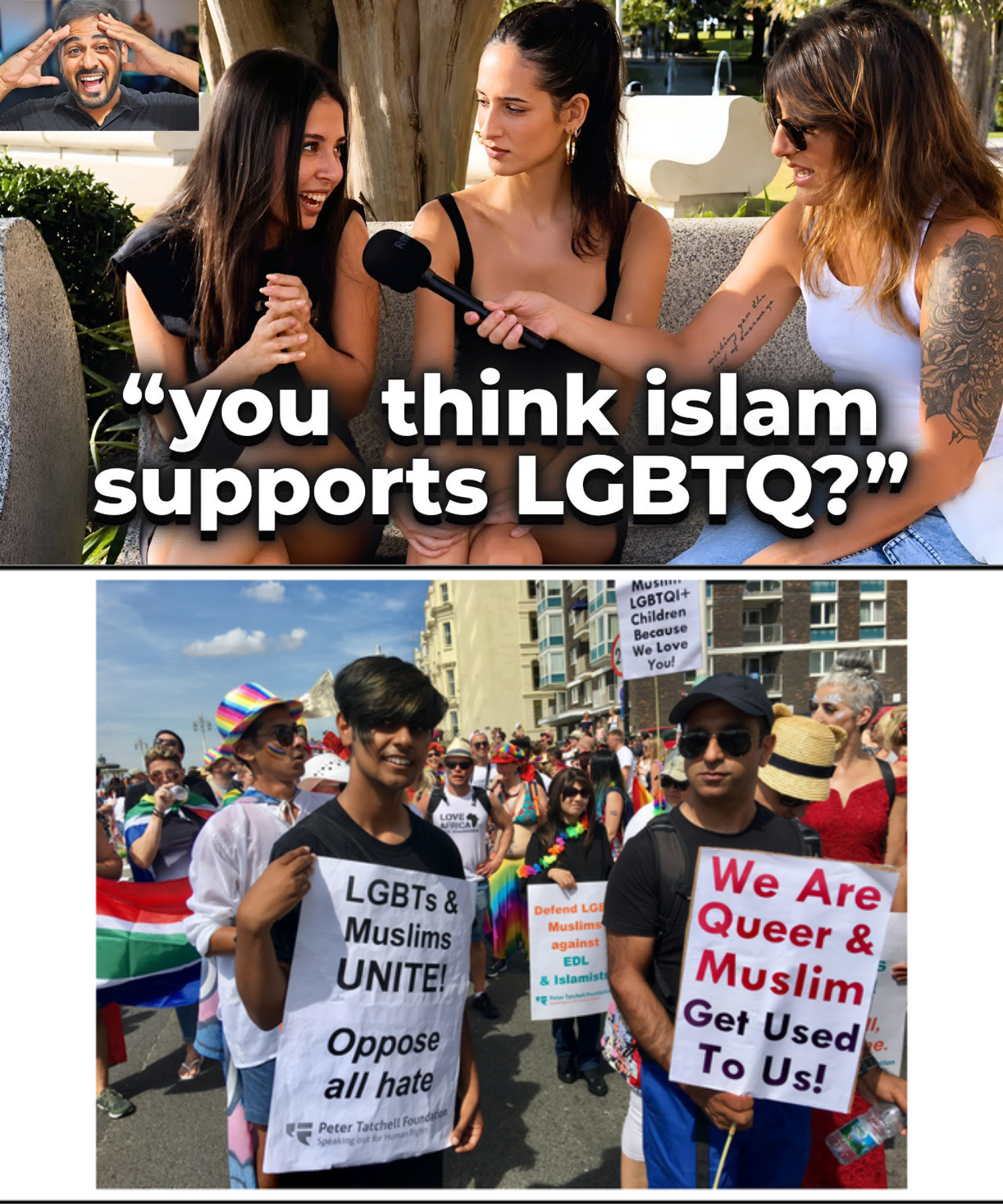
The interviewer’s question is simple but deliberately provocative.
Students are shown two political images or categories and asked who would be more likely to support LGBT rights. In one case, the interviewer frames one side as a Trump supporter and the other as a person associated with support for Hezbollah.
For many viewers, the answer seems obvious. Hamas and Hezbollah are widely associated with Islamist political ideology, and both operate in cultural and legal environments where homosexuality is often condemned. Trump supporters, while frequently criticized by progressives for opposing certain LGBT policy goals, live within a U.S. political system where gay Americans have constitutional protections, public visibility, and legal rights.
Yet the students’ reactions reveal deep uncertainty.
One student says she does not know enough about either group to answer. Another says she would assume campus students might pick the anti-Trump side because many people associate Trump supporters with hostility toward LGBT rights. One student acknowledges that Trump supporters she knows personally have been unsupportive of gay rights, but also recognizes that anti-gay beliefs exist within strict religious systems.
That hesitation became the viral moment.
“Hamas Is Better Than Trump?” Clip Stuns Viewers
The most controversial part of the video comes when a student appears to say she would rather choose Hamas than Trump when asked about gay rights.
The remark immediately triggered outrage online.
Conservative commentators framed it as evidence that American campuses have become so consumed by anti-Trump sentiment that some students can no longer distinguish between domestic political opponents and militant movements that openly reject LGBT freedoms.
Progressive viewers pushed back, arguing that the clip may exaggerate confusion, selectively edit responses, and present students under pressure in an artificial interview environment.
Still, the moment spread because it captured a larger anxiety already present in American politics: that ideological tribalism has become so intense that many young voters define morality less by policy and more by whether someone belongs to the “right” or “wrong” political camp.
Hezbollah Clip Changes the Conversation
The interviewer then introduces a clip of a Hezbollah figure stating that homosexuality should be punished harshly. The student who had hesitated appears visibly shaken and says the statement is “depressing.”
After hearing that, she revises her answer, suggesting that Trump supporters may in fact be more likely to support or tolerate LGBT people than Hezbollah-aligned figures.
That reversal is what made the video so powerful for its supporters.
They argue that once students are confronted with the actual ideology of groups like Hezbollah, the anti-Trump reflex collapses. The question is no longer about personality, slogans, or American partisanship. It becomes about legal reality, human rights, and what happens to gay people under different political and religious systems.
Trump Supporters and LGBT Rights
The clip also highlights a real tension in American politics.
Many LGBT Americans and progressive activists view Trump-aligned politics as hostile to their rights, especially on issues involving transgender policy, education, religious liberty exemptions, and conservative judicial appointments.
Students in the video reference personal experiences with Trump supporters or family members they describe as homophobic.
That experience matters.
For some young Americans, opposition to Trump is not abstract. It is tied to family arguments, school debates, church culture, online harassment, and fears about legal rollback.
But critics of the students argue that disliking Trump supporters does not make Hamas or Hezbollah safer alternatives for LGBT people.
That distinction is now driving the debate.
Campus Politics Under the Microscope
The video arrives at a time when college campuses have become central battlegrounds over Israel, Palestine, free speech, antisemitism, Islamophobia, and LGBT rights.
Since the war in Gaza became a dominant issue in student activism, many young progressives have marched under broad pro-Palestinian coalitions. Critics argue that some students fail to separate support for Palestinian civilians from sympathy for militant organizations that hold deeply conservative or violent positions on women, gays, dissidents, and religious minorities.
Supporters of campus activism reject that framing. They say defending Palestinian civilians does not mean endorsing Hamas, Hezbollah, or any anti-LGBT ideology. They argue that conservatives often exploit these comparisons to discredit humanitarian concern.
But the viral interview reveals how blurred the conversation can become when slogans replace careful distinctions.
The Larger Contradiction
At the heart of the firestorm is a question many Americans are now asking:
Can progressive politics defend LGBT rights while also aligning rhetorically with movements or governments that reject those same rights?
The answer depends on how carefully activists distinguish people from regimes, civilians from militants, and humanitarian concern from ideological endorsement.
A person can oppose civilian suffering in Gaza without supporting Hamas.
A person can criticize Trump without pretending Hezbollah is tolerant.
A person can support Palestinian rights while still condemning anti-gay religious extremism.
But viral clips thrive on moments where those distinctions collapse.
Social Media Reaction: Outrage and Mockery
Conservative commentators have treated the video as proof of what they call campus “brainwashing,” arguing that students have absorbed a worldview in which Trump supporters are seen as worse than foreign extremist groups.
Liberal commentators have accused the interview format of baiting young people into awkward answers and using their confusion for content.
LGBT commentators are split. Some say the video exposes hypocrisy among activists who ignore anti-gay ideology when it comes from anti-Western groups. Others warn that LGBT rights should not be used as a political weapon to justify blanket hostility toward Muslims or Palestinians.
That warning is important. Hamas and Hezbollah are political-militant organizations. They do not represent all Muslims, all Arabs, or all Palestinians. Millions of Muslims worldwide hold diverse views, and many reject violence and support coexistence.
A Debate America Cannot Ignore
The video has gone viral because it forces a brutally uncomfortable comparison.
In America, even the most socially conservative Trump supporter operates within a system where gay citizens can vote, sue, protest, marry, organize, publish, and criticize their government.
Under militant Islamist movements, LGBT people can face severe persecution, imprisonment, or death.
That contrast does not erase concerns about anti-LGBT rhetoric in American politics. But it does challenge students and activists to think more clearly about moral categories.
Not every political opponent is a fascist.
Not every enemy of Trump is a defender of human rights.
And not every slogan shouted at a protest survives contact with reality.
The Viral Lesson
By the end of the clip, the student’s uncertainty becomes the story.
She begins from personal experience. She knows people who dislike Trump and people who fear MAGA politics. But when shown the ideological reality of Hezbollah’s stance on homosexuality, she has to reconsider.
That is why the video struck a nerve.
It is not just about Trump.
It is not just about Hamas.
It is about whether America’s youngest political voices can still separate emotional tribalism from basic moral analysis.
And in a country already torn apart by culture wars, that question may be more explosive than the interview itself.