Viral Street Debate Over Jesus as the Son of God Erupts in America as Christian and Muslim Apologists Clash Over Scripture
Viral Street Debate Over Jesus as the Son of God Erupts in America as Christian and Muslim Apologists Clash Over Scripture
A fiery street debate between Christian and Muslim apologists has gone viral across American religious media, after a tense exchange over Jesus, the Old Testament, the Quran, and the meaning of “Son of God” turned into a larger battle over consistency, standards, and whether one side was demanding proof it could not provide for itself.
The confrontation began with a direct challenge.
The Muslim debater pressed the Christian speaker on John 10:36, where Jesus refers to Himself as the Son of God. His demand was sharp: if Christians claim that Jesus is the unique, eternal, divine Son of God, then that doctrine must be visible in the earlier Scriptures. Not merely hinted at later. Not developed after centuries of theology. Not introduced only in the New Testament. He wanted to see it in the Law of Moses.
His argument was blunt: if Jesus claimed to be the Son of God, and if that doctrine cannot be found in the foundation of the Bible, then Christianity has a serious problem.
The crowd immediately understood the stakes.
This was not a mild interfaith conversation. This was a street-level theological showdown. Phones were out. People laughed, shouted, interrupted, cheered, and reacted as the two men tried to corner each other in front of a live audience. The debate had the energy of a prizefight, but the weapons were Scripture, logic, and public pressure.
The Muslim speaker framed his case as a continuity test. If Christianity is true, he argued, its core doctrine should be present throughout its book. Since Christians believe Jesus is the divine Son of God, he insisted that the Christian debater should be able to show that doctrine clearly in the Torah, especially the first five books traditionally associated with Moses.
Then came the Christian counterattack.
Instead of immediately accepting the limitation, the Christian speaker turned the method back on his opponent. He asked whether Muslims believe Jesus is the Messiah. The Muslim debater answered yes. The Christian then asked whether a person could be a Muslim while denying that Jesus is the Messiah. The answer again was no.
That opened the trap.
If belief in Jesus as Messiah is required in Islam, the Christian speaker argued, then the Muslim debater should be able to show that doctrine in the beginning of the Quran — specifically, in the first two chapters. If the Muslim challenger could demand that Christianity’s core doctrine appear early in the Torah, then the Christian could demand that Islam’s required belief about Jesus appear early in the Quran.
The crowd reacted instantly.
The Muslim speaker objected, arguing that this was not the same kind of claim. He said Islam’s foundational doctrine is not the messiahship of Jesus, but tawhid — the belief that none has the right to be worshiped except Allah alone without partner. Jesus as Messiah, he argued, is important, but not the central doctrine of God in Islam.
The Christian speaker refused to let that answer pass.
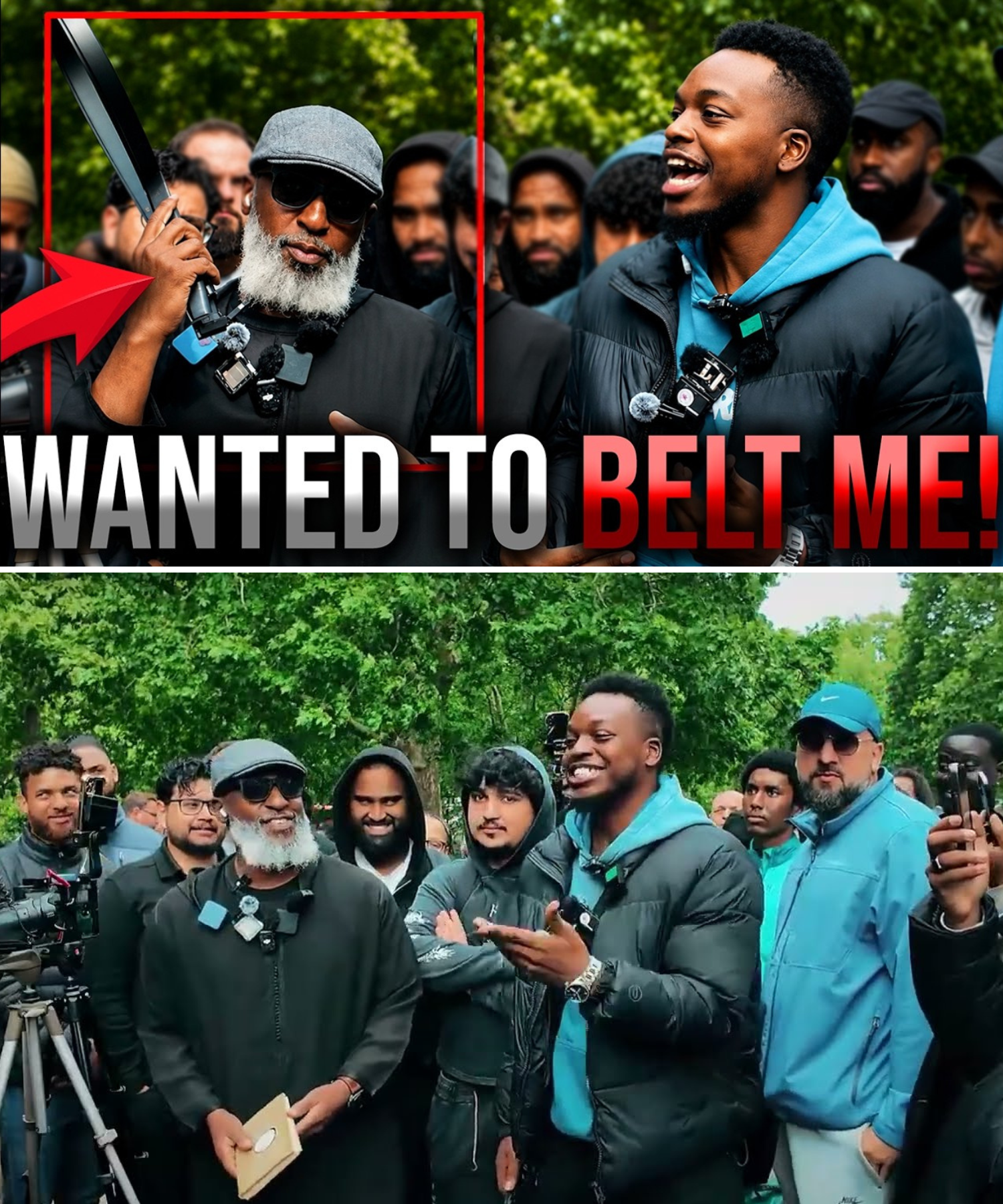
He pressed the point again. Can someone be Muslim and deny Jesus is the Messiah? No. Then it is still a necessary doctrine. So why should one side be forced to produce a doctrine in a narrow early section of its Scripture while the other side is allowed to appeal to the broader text?
That became the heart of the debate.
The Muslim speaker insisted the Bible and Quran are not the same kind of book. The Bible, he said, is a collection of writings from different authors across different periods — Moses, prophets, Gospel writers, Paul, and others. Christianity claims continuity across these separate writings. Therefore, he argued, Christians must prove that continuity.
The Quran, he claimed, does not face the same issue because Muslims believe it has one divine source, revealed to one prophet. In his view, it was unfair to impose the same test on the Quran that he was imposing on the Bible.
The Christian response was quick: what the Muslim speaker was describing in Christianity is progressive revelation.
That phrase shifted the entire conversation.
Progressive revelation means that a doctrine can unfold across Scripture over time. It does not have to appear in its full final form at the beginning. A seed can appear early, develop through the prophets, become clearer in later writings, and reach fullness in the New Testament. According to the Christian debater, that is exactly how biblical theology works.
He then argued that the Quran itself was also revealed over time, meaning the Muslim position also involves a form of progressive revelation. If Muslims allow later Quranic passages to explain or develop earlier ones, then Christians should be allowed to use the whole Old Testament to explain doctrines that become clearer later.
The debate turned into a fight over methodology.
Was the Muslim debater exposing a Christian weakness? Or was he setting an impossible standard that he could not apply evenly to his own religion?
For American audiences, the moment hit hard because it reflected a larger trend in public religious debate. Online apologetics has become a major force. Street debates are clipped, reposted, argued over, and weaponized across TikTok, YouTube, X, Instagram, and livestream platforms. A single exchange can become a viral sermon, a reaction video, a takedown, or a recruitment tool for either side.
The stakes are especially high in Christian-Muslim debates because both religions make claims about Jesus, but radically different ones.
Christians worship Jesus as the divine Son of God, crucified and risen. Muslims honor Jesus as the Messiah and a prophet, but reject His divinity, crucifixion as understood by Christianity, and Sonship in the Christian sense. That means both sides speak about Jesus, but they do not mean the same thing when they do.
That is why this debate became so intense.
The Muslim debater wanted Christians to prove that Jesus’ divine Sonship is rooted in the Hebrew Scriptures. The Christian debater wanted to show that the Muslim’s standard was inconsistent unless applied equally. Each side accused the other of dodging. Each side claimed the other was shifting definitions. Each side appealed to logic, Scripture, and the crowd.
At one point, when the Muslim debater read from the Quran to show a passage about Jesus son of Mary, the Christian speaker immediately asked whether the passage actually identified Jesus as the Messiah in the specific way requested. The crowd reacted again. The Christian’s point was not that Islam never teaches Jesus is Messiah, but that the narrow “show it at the beginning” standard was unfair when applied selectively.
The Muslim speaker then returned to the Bible’s structure, saying Christians claim continuity across multiple authors and books. The Christian speaker answered that continuity does not require every doctrine to be fully spelled out in the first pages. It requires development that does not contradict the earlier revelation.
That is where the Christian speaker claimed he could show the divine Son of God in the Old Testament if allowed to use the broader Hebrew Bible — Psalms, Proverbs, prophets, and other writings. He refused the narrow demand that he prove the entire doctrine only from Genesis through Deuteronomy.
The debate ended without a clean resolution.
But that is exactly why it spread.
To Christians watching, the exchange looked like a successful exposure of a double standard. They saw the Muslim challenger demanding something from Christianity that he struggled to provide under the same restrictions. To Muslims watching, the exchange may have looked like the Christian refusing to answer the original question directly and retreating into broader theology.
To neutral observers, the moment revealed something deeper: these debates are often not only about verses. They are about rules. Who gets to define the standard? Who gets to decide what counts as evidence? Can a doctrine develop across Scripture, or must it appear fully formed at the beginning? Can one religion demand a test that it refuses to take itself?
Those questions matter far beyond one street corner.
In America, where religious identity, secularism, Christianity, Islam, and online debate culture increasingly collide, this viral confrontation shows how theological arguments are becoming public entertainment — but also public education. People who might never read John 10, the Torah, or the Quran are suddenly hearing arguments about textual continuity, messiahship, divine Sonship, and progressive revelation.
The crowd came for a debate.
They got a theological brawl.
And as the clips continue spreading, one thing is clear: the question of who Jesus is remains one of the most explosive questions in the world.