andace Owens Exposes the BETRAYAL of Charlie Kirk, TRANSFORMATION of TPUSA
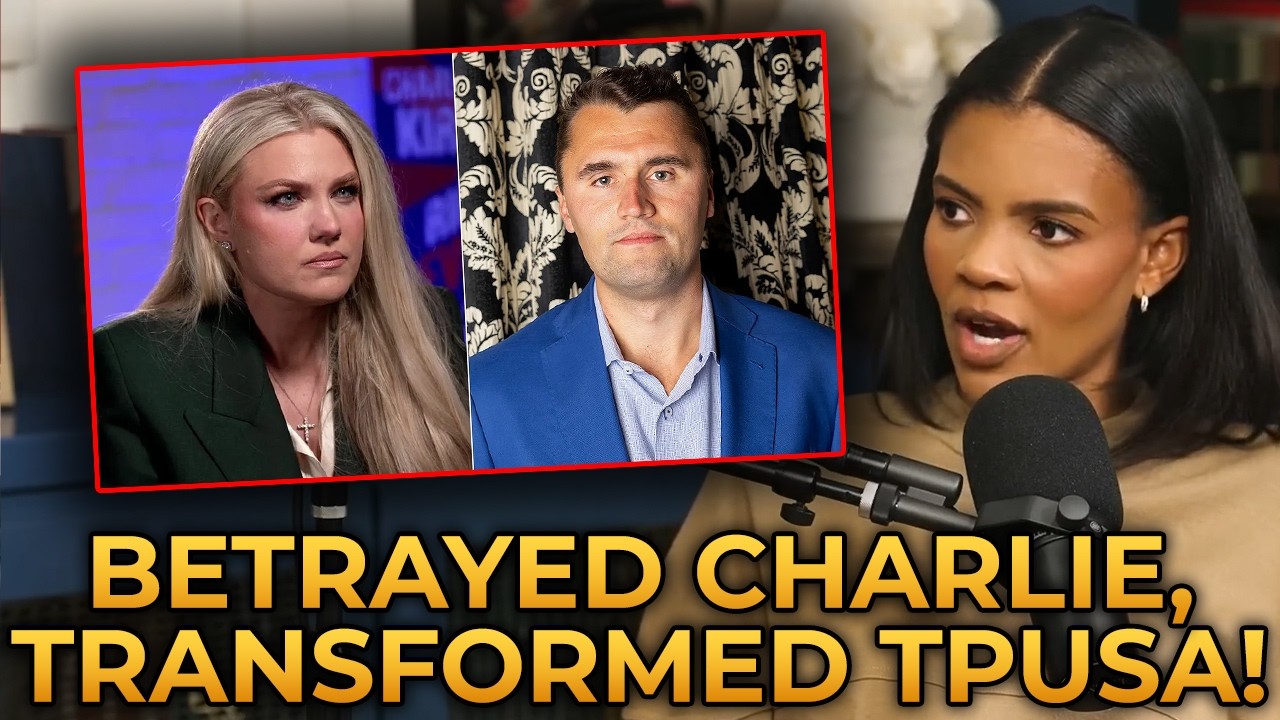
The Battle Over Charlie Kirk’s Legacy: How One Interview Reignited a Bitter Civil War Inside the Conservative Movement
Charlie Kirk’s death didn’t just leave a leadership vacuum—it opened a political fault line that continues to widen.
Almost immediately, a fierce debate erupted over who would carry forward his vision, whether Turning Point USA had changed course, and how history would ultimately remember one of the most influential conservative activists of his generation. Those questions have only grown louder, fueled by public disagreements among some of the biggest names on the American Right.
At the center of the latest controversy is Candace Owens, whose recent interview with Elizabeth Lane has reignited arguments over Kirk’s legacy, the future of Turning Point USA, and the growing divide over Israel, donor influence, and the direction of modern conservatism.
Whether people agree with Owens or reject her conclusions, one thing is undeniable: the battle over Charlie Kirk’s political legacy is far from over.
A Movement Divided
For years, Charlie Kirk stood at the center of America’s conservative youth movement. As founder of Turning Point USA, he built an organization that became one of the most influential forces in conservative campus activism, eventually growing into a major player in Republican politics.
Following his death, however, critics began arguing that the organization was changing far more rapidly than anyone expected.
One of the loudest voices making that case has been Candace Owens.
Speaking with Elizabeth Lane, Owens argued that Turning Point USA has undergone a dramatic transformation in both leadership and messaging. In her view, the organization is moving away from positions that Kirk increasingly embraced during the later stages of his career.
Her criticism goes beyond policy differences. Owens suggested that many of the decisions made after Kirk’s death appeared disconnected from what she believes would have been the natural response of people seeking to preserve his vision.
Those comments quickly spread across conservative media, prompting renewed debate over whether the organization today reflects Charlie Kirk’s priorities or those of its current leadership and financial backers.
The Question of Leadership
A major focus of the discussion centered on Erica Kirk, who assumed a prominent leadership role after her husband’s death.
Owens questioned both the speed of the transition and several public decisions made afterward, arguing that they struck many observers as inconsistent with how an organization would typically honor the wishes of its founder.
Supporters of the current leadership, however, argue that organizations inevitably evolve after the loss of a founder. They contend that adapting to new political realities is necessary for long-term survival and that continuing Kirk’s mission does not require freezing the organization exactly as it existed during his lifetime.
That disagreement reflects a broader question confronting many political organizations after the death of a charismatic founder: should preserving a legacy mean maintaining every aspect of the founder’s approach, or should new leaders reshape the organization to meet changing circumstances?
The debate surrounding Turning Point USA has become a vivid example of that tension.
Was Charlie Kirk Changing?
Perhaps the most significant issue raised during the interview concerns Charlie Kirk’s own political evolution.
Owens argued that Kirk’s views—particularly regarding Israel and American foreign policy—had begun shifting before his death.
According to Owens, Kirk had grown increasingly willing to challenge long-standing assumptions within conservative politics about America’s relationship with Israel and the broader Middle East.
She pointed to public appearances and private communications that, in her interpretation, suggested Kirk was becoming more receptive to voices such as Tucker Carlson while distancing himself from others, including Ben Shapiro.
This claim has become one of the central points of contention.
Supporters of Owens believe Kirk was moving toward a more restrained foreign-policy approach that placed greater emphasis on American national interests over overseas commitments.
Others reject that interpretation, arguing that while Kirk may have broadened the range of viewpoints featured by Turning Point USA, he remained firmly supportive of Israel throughout his public career.
The available public record includes statements that can support different interpretations, making the debate unlikely to end anytime soon.
The Ben Shapiro Controversy
Another flashpoint involves Ben Shapiro.
Owens argued that featuring Shapiro prominently at Turning Point USA events after Kirk’s death represented a sharp departure from what she described as Kirk’s personal preferences.
According to Owens, Kirk had increasingly disagreed with Shapiro on several foreign-policy issues and had become frustrated by what he viewed as ideological differences within the conservative movement.
Critics of Turning Point USA argue that elevating Shapiro so quickly symbolized a broader ideological shift inside the organization.
Supporters respond that Shapiro remains one of the most influential conservative voices in America and that inviting him to speak reflects strategic considerations rather than any attempt to rewrite Kirk’s legacy.
The disagreement illustrates how symbolic decisions—such as keynote speakers and public appearances—can become proxies for much larger ideological battles.
Donors and Influence
Another recurring theme throughout the interview was the role of major donors.
Owens suggested that financial pressure from influential contributors affected the direction of Turning Point USA after Kirk’s death.
She argued that disagreements over foreign policy, particularly regarding Israel, created tension between certain donors and figures within the organization.
Questions about donor influence are hardly unique to Turning Point USA.
Across American politics, advocacy groups on both the left and right rely heavily on wealthy contributors, creating ongoing debates about whether financial support shapes organizational priorities.
Supporters of the current leadership reject suggestions that donors dictate policy, arguing that contributors support organizations because they already agree with their mission—not the other way around.
Nevertheless, concerns about financial influence continue to resonate with many grassroots activists who worry that large political organizations gradually become more responsive to donors than to their broader membership.
The Israel Debate
No issue generated more discussion during the interview than Israel.
Owens argued that some political figures attempted to define Charlie Kirk’s legacy primarily through his support for Israel, despite what she believes was an evolving perspective near the end of his life.
She questioned whether Kirk’s views were becoming more nuanced as debates over U.S. foreign policy intensified within conservative circles.
This dispute reflects a much larger transformation taking place across the Republican Party.
For decades, strong support for Israel represented one of the few areas of near-universal agreement among conservative leaders.
Today, that consensus is increasingly being challenged.
Figures such as Tucker Carlson, Candace Owens, and others have openly questioned aspects of American foreign policy in the Middle East, arguing for a more restrained approach that places greater emphasis on domestic priorities.
Meanwhile, traditional conservatives continue to argue that close cooperation with Israel remains an essential component of American national security.
The resulting divide has become one of the defining ideological battles shaping the future of the conservative movement.
The Role of Independent Media
Owens also argued that independent media have fundamentally changed the political landscape.
Unlike previous generations, she suggested, alternative media platforms now allow audiences to compare competing narratives without relying exclusively on traditional news organizations.
Whether discussing internal conservative politics, foreign policy, or organizational leadership, independent creators have become increasingly influential in shaping public opinion.
Supporters view this development as a healthy decentralization of information.
Critics argue that it also enables speculation and misinformation to spread more rapidly, particularly when emotionally charged events generate intense public interest.
Regardless of one’s perspective, there is little doubt that podcasts, YouTube channels, and independent journalists now play a central role in political discourse.
Public Figures and Public Scrutiny
Another theme explored during the interview involved the expectations placed on public figures.
Owens argued that individuals who choose to lead major political organizations inevitably become subject to public criticism and scrutiny.
She contrasted that expectation with what she described as attempts to discourage questions about Turning Point USA’s post-Kirk leadership.
Supporters of the organization counter that criticism is entirely appropriate but should remain grounded in evidence rather than speculation.
That distinction has become increasingly important as online political discussions grow more polarized.
Healthy public debate depends on vigorous criticism of influential institutions while also recognizing the importance of distinguishing verified facts from allegations and personal interpretations.
A Conservative Movement in Transition
Stepping back from the personalities involved, the controversy reveals something much larger than an internal disagreement at one organization.
The American conservative movement is undergoing significant change.
Questions that once united Republicans—foreign policy, military intervention, globalization, free trade, and America’s role in the world—now generate fierce internal disagreements.
Younger conservatives increasingly express skepticism toward interventionist foreign policy and traditional establishment positions.
Older factions continue defending longstanding alliances and international commitments.
Charlie Kirk occupied a unique position within that transition.
He maintained relationships across multiple wings of the conservative movement, giving him unusual influence over its future direction.
That helps explain why debates about his legacy have become so politically significant.
Why This Debate Matters
The argument over Turning Point USA is ultimately about more than one organization.
It reflects competing visions for the future of American conservatism.
Should the movement continue emphasizing the foreign-policy consensus that dominated Republican politics for decades?
Or should it embrace the more populist, America First approach championed by many newer voices?
Those questions extend far beyond Turning Point USA.
They affect electoral strategy, donor networks, media influence, and the ideological identity of the Republican Party itself.
That is why discussions about Charlie Kirk’s legacy continue attracting enormous attention months after his death.
The Road Ahead
The controversy surrounding Charlie Kirk’s legacy is unlikely to disappear anytime soon.
Candace Owens’ interview has reignited debates that were already simmering beneath the surface, forcing conservatives to confront difficult questions about leadership, loyalty, donor influence, and the future direction of their movement.
Some believe Turning Point USA remains faithful to Kirk’s mission.
Others believe it has fundamentally changed.
Those competing narratives will continue shaping how activists, donors, and voters view one of the most influential conservative organizations in America.
What remains clear is that Charlie Kirk’s influence continues to be felt long after his death—not only through the organization he founded but through the ongoing struggle over what he represented.
As the conservative movement evolves, that struggle may prove just as consequential as the legacy itself.