Viral “Ex-Muslim Testimony” Video Sparks Fierce Debate Over Islam, Migration, and Western Identity
Viral “Ex-Muslim Testimony” Video Sparks Fierce Debate Over Islam, Migration, and Western Identity
New York — A viral video featuring a man identifying himself as a former Muslim has ignited a firestorm across social media platforms, triggering an intense debate over Islam, immigration, and the future of Western societies.
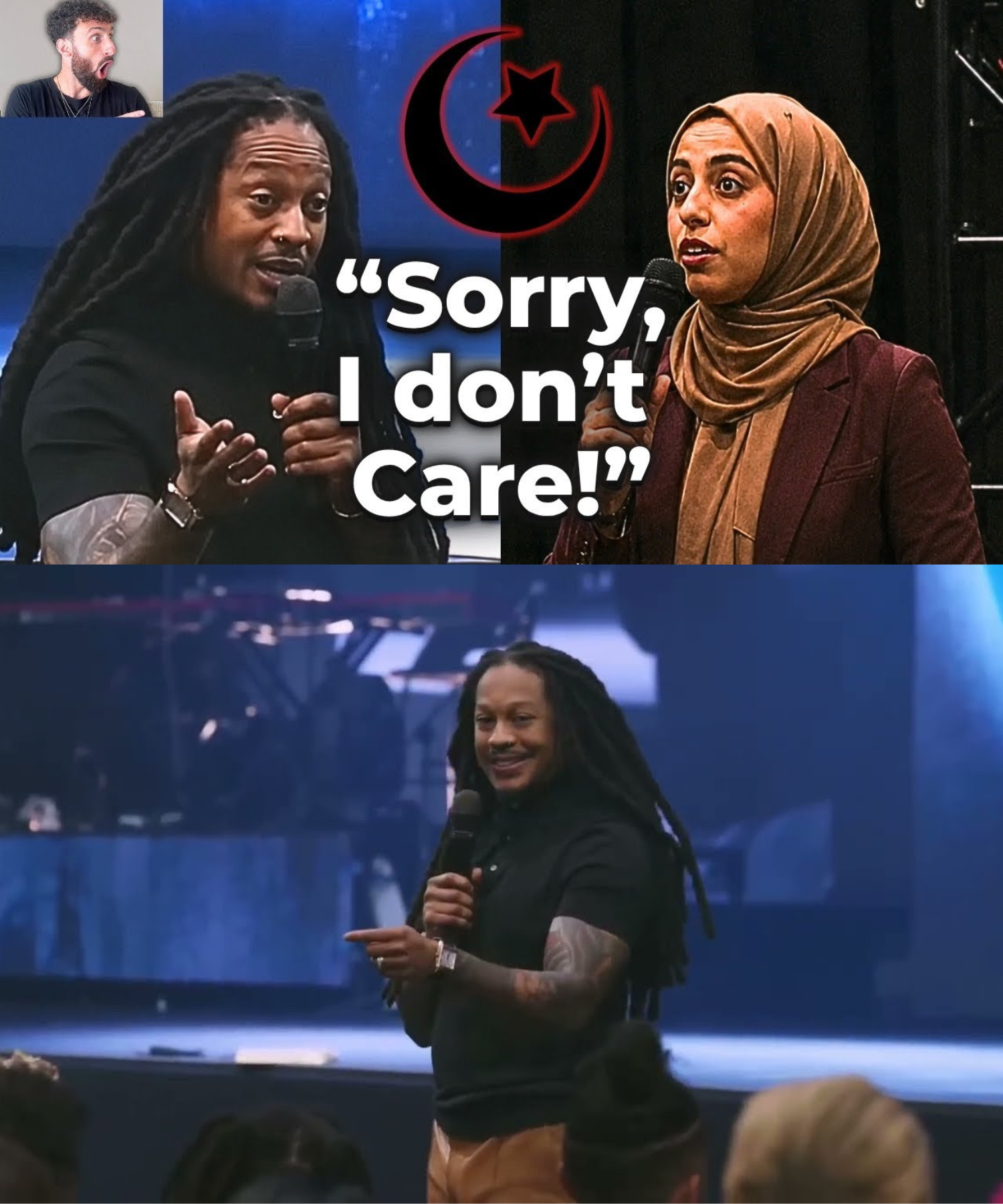
The footage, widely circulated on X, YouTube, and TikTok, shows the speaker delivering a strongly worded personal testimony in which he claims Islam is fundamentally incompatible with integration into Western systems and argues that Muslim-majority migration is reshaping Europe in ways that may prove irreversible.
The video has divided audiences sharply, with supporters praising it as “truth-telling from lived experience” and critics condemning it as sweeping generalization that risks fueling religious and ethnic tension.
“Islam Was Not Designed to Integrate”
At the center of the video is a man who identifies himself as having grown up within Islam and attended religious schooling. He claims that his lived experience led him to conclude that Islam was not intended to integrate into secular societies but instead to transform them.
He argues that Islamic ideology seeks eventual dominance over existing systems and that this creates long-term friction when practiced within Western liberal democracies.
These claims, delivered in a highly emotional tone, immediately sparked backlash from religious scholars and interfaith commentators who argue that Islam, like Christianity and Judaism, contains diverse interpretations and traditions that cannot be reduced to a single ideological narrative.
Europe and the UK as the “Warning Case”
The speaker repeatedly references Europe and the United Kingdom as examples of societies undergoing rapid cultural change due to immigration.
He suggests that Western nations are experiencing demographic and cultural shifts that may fundamentally alter their identity over the next few decades, warning that countries “may no longer resemble what they once were.”
He also claims that Western societies are overly tolerant and hesitant to enforce cultural boundaries, framing this as a vulnerability rather than a strength.
Critics of the video argue that such framing echoes long-standing “civilizational collapse” narratives that oversimplify migration trends and ignore economic, historical, and geopolitical context.
Claims About Violence, Religion, and Extremism
The video also includes sweeping claims about violence, terrorism, and religious doctrine, with the speaker arguing that violent incidents carried out by extremists are not anomalies but reflect deeper ideological issues.
He asserts that criticism of Islam is treated differently from criticism of other religions, claiming that public debate is constrained by fear of being labeled racist or Islamophobic.
Experts in religious studies and security policy caution that while extremist violence is a real global issue, attributing it to an entire religion risks conflating ideology with faith practiced peacefully by the vast majority of adherents worldwide.
Allegations of Indoctrination and Cultural Growth
A significant portion of the video focuses on claims about demographic change and cultural influence.
The speaker argues that Muslim populations are growing rapidly in Western countries due to higher birth rates and continued migration, suggesting this will lead to long-term societal transformation.
He also claims that Islamic education systems and religious instruction contribute to ideological reinforcement across generations.
Demographers and migration experts note that population trends are complex and influenced by multiple factors including economics, education, integration policies, and generational change. They warn against reducing demographic shifts to single-cause explanations.
Controversial Historical Claims
The video further escalates into historical claims about slavery, religious expansion, and early Islamic history.
The speaker references historical figures such as Bilal ibn Rabah, a companion of Prophet Muhammad, and argues that slavery was embedded in early Islamic society. These interpretations are heavily contested by historians, who emphasize the importance of contextualizing historical institutions across all civilizations, including Europe, the Middle East, and Africa.
Religious scholars argue that selective historical framing often ignores parallel systems of slavery that existed globally during the same period.
Accusations of “Takiyya” and Distrust Narratives
One of the most controversial claims in the video involves the concept of “taqiyya,” which the speaker describes as religious permission to conceal belief under certain circumstances.
He suggests this leads to distrust in public discourse between Muslim and non-Muslim communities.
However, Islamic scholars emphasize that “taqiyya” is a highly specific theological concept with limited historical application, often misrepresented in political commentary.
Experts warn that such interpretations can contribute to suspicion and misunderstanding between communities.
References to Global Conflict and 9/11
The video also includes references to the September 11 attacks and subsequent geopolitical conflicts, with the speaker suggesting that the events shaped Western perceptions of Islam in a way that continues to influence political discourse today.
He claims that slogans such as “Allahu Akbar” are associated in public perception with violence, despite being a common religious phrase used by millions of Muslims worldwide in non-political contexts.
Counter-arguments stress that conflating religious expression with terrorism contributes to stigmatization and misunderstanding.
Call to Political and Cultural Action
Toward the end of the video, the speaker transitions from analysis to activism, urging viewers to become more politically engaged and to defend what he describes as Western cultural identity.
He argues that prayer alone is insufficient and that political participation, civic engagement, and ideological resistance are necessary to address what he perceives as structural change in Western societies.
This call to action has drawn criticism for its tone, with opponents warning that it encourages polarization and frames entire communities as existential threats.
Online Reaction: Deep Division
The video has generated sharply divided reactions online.
Supporters describe it as a rare example of someone speaking openly about difficult experiences and raising concerns they believe are often ignored in mainstream discourse.
Critics argue that the video generalizes billions of people, blurs the distinction between religion and extremism, and risks amplifying fear-based narratives about migration and identity.
Civil rights advocates emphasize that while debate about immigration and integration is legitimate, it must avoid framing entire religious or ethnic groups as inherently threatening.
A Broader Western Debate
The viral spread of the video reflects a broader and ongoing debate across Europe and the United States over immigration, integration, religious identity, and freedom of speech.
In many Western countries, discussions about cultural cohesion have become increasingly polarized, with competing narratives about security, diversity, and national identity shaping political discourse.
Experts say that such viral content often reflects deeper societal anxieties rather than isolated incidents or single perspectives.
No Consensus, Only Escalation
As the video continues to circulate, no consensus has emerged.
Instead, it has become a symbol of a larger unresolved question facing Western democracies:
How can societies balance open immigration, religious freedom, and cultural cohesion without slipping into polarization or exclusion?
For now, the debate remains unresolved — and increasingly central to political life on both sides of the Atlantic.