Viral Jesse Lee Peterson Interview Sparks Firestorm Over Race, White Supremacy Debate, and On-Air Walkout Controversy
Viral Jesse Lee Peterson Interview Sparks Firestorm Over Race, White Supremacy Debate, and On-Air Walkout Controversy
New York — A tense on-air interview featuring conservative commentator Jesse Lee Peterson has gone viral across the United States after a heated exchange over race, white supremacy, and political violence ended with a guest abruptly stopping the conversation and walking off set.
The footage, widely circulated on social media, shows a structured but increasingly emotional debate in which Peterson questions a guest about racial division in America, gun violence, historical narratives, and the meaning of “white supremacy.”
The exchange escalates over the course of the interview, ultimately breaking down into accusations of misunderstanding, discomfort, and competing interpretations of American history.
The clip has triggered intense national debate, with supporters praising Peterson for pressing uncomfortable questions, while critics argue the interview pushed sensitive topics into an adversarial format that made meaningful dialogue difficult.
A Conversation About Violence Quickly Turns Into a Cultural Clash
The interview begins with Peterson questioning fears surrounding violence in American society, particularly mass shootings and urban crime.
The guest responds that fear of violence exists on multiple levels, but emphasizes concerns about assault-style weapons and broader societal factors such as online radicalization and cultural division.
The conversation then shifts toward a broader question: why is American society so divided?
The guest argues that America has always been shaped by structural divisions — including race, class, geography, and ideology — and that modern polarization is an extension of long-standing historical fault lines.
Peterson challenges this framing, arguing that earlier generations of Americans were more unified under a single national identity regardless of race or background.
That disagreement sets the stage for a deeper confrontation about identity, history, and national cohesion.
The “One Culture vs Many Cultures” Debate
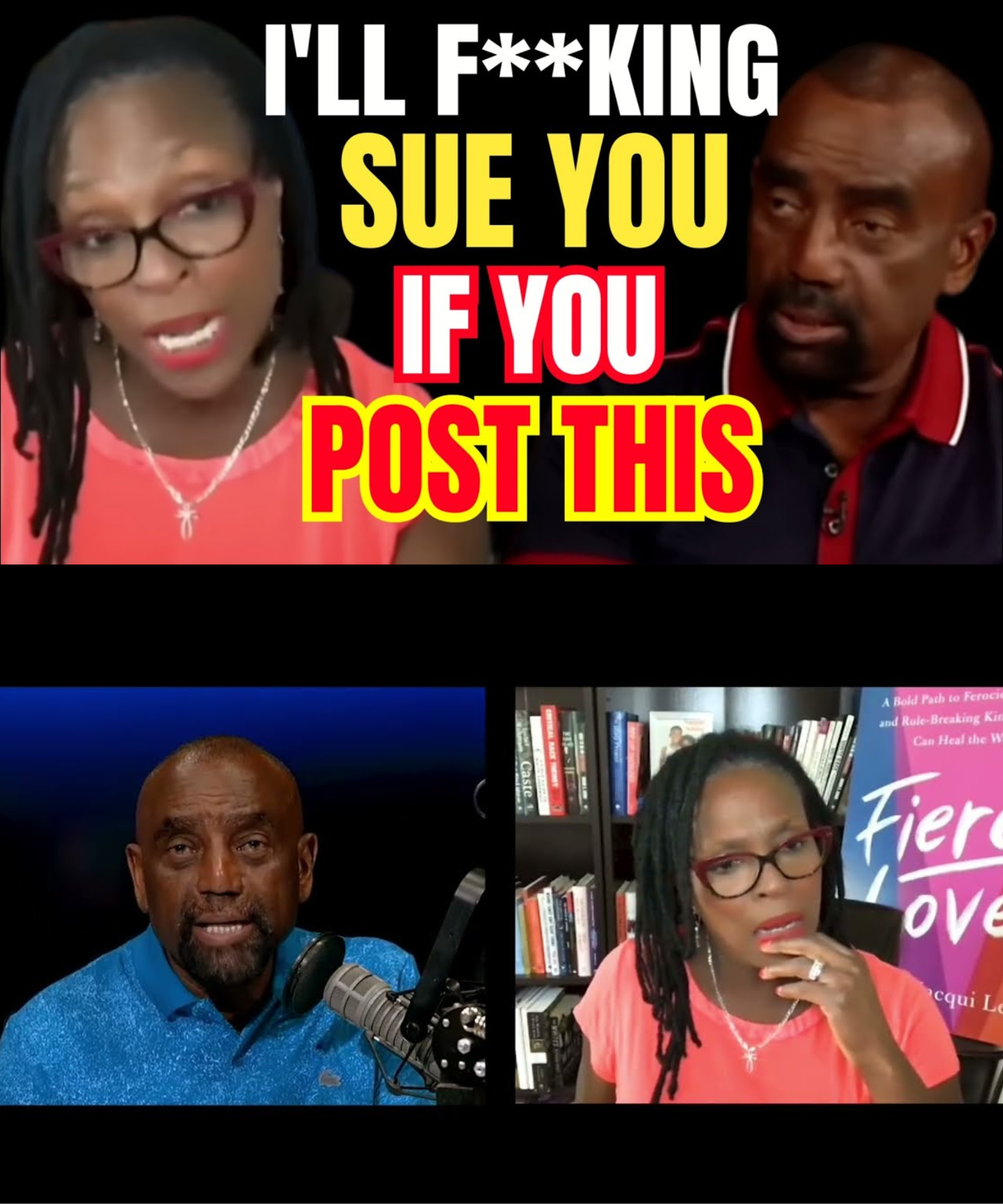
One of the most viral moments occurs when Peterson asserts that America once had a single shared culture that unified citizens regardless of race.
The guest pushes back, arguing that America’s identity has always been pluralistic and shaped by competing histories and cultural experiences.
The discussion becomes more pointed when Peterson suggests that immigration and cultural diversity have contributed to fragmentation in national identity.
The guest responds that divisions in America predate modern immigration trends and are rooted in historical inequality and segregation.
This exchange reflects a broader national debate over whether American identity is unified or inherently diverse and fragmented.
Slavery, History, and the Meaning of “Discovery”
The conversation takes a historical turn when Peterson references the idea that white Europeans “built” America and asks whether modern society should be grateful for that legacy.
The guest challenges the framing, noting that the land existed long before European arrival and referencing Indigenous perspectives on early settlement.
The debate shifts to the meaning of “discovery,” with the guest arguing that European arrival should not be framed as the discovery of an uninhabited land.
Peterson questions whether America’s development would have been possible without European colonization, while the guest emphasizes that history is complex and involves multiple competing narratives.
The exchange reflects ongoing tensions in American education and public discourse over how to interpret colonial history.
The White Supremacy Definition Dispute
A key flashpoint occurs when Peterson asks the guest to define “white supremacy.”
The guest responds with a historical explanation, referencing early American thinkers and scientific theories that suggested racial hierarchies, arguing that such ideas formed the foundation of white supremacist ideology.
Peterson challenges the definition, stating that many Black Americans use the term without understanding its meaning, and suggesting that it implies belief in white superiority.
The guest clarifies that white supremacy refers to systems and historical structures that elevated whiteness as normative or superior in law, science, and culture.
At this point, the tone of the interview becomes noticeably more strained.
Emotional Breakdown and Request to Stop Recording
As the discussion continues, the guest begins to express discomfort with the direction of the interview.
They state that they do not feel the conversation is productive and express concern about how their comments may be interpreted once published publicly.
The guest repeatedly requests to pause the recording and eventually says they do not want to continue the interview.
Peterson, however, encourages continuation, arguing that open dialogue is essential even when uncomfortable.
The guest maintains their position and ultimately ends participation in the interview.
The moment has since gone viral, with viewers divided over whether the exit represents a breakdown of respectful dialogue or a refusal to engage with challenging questions.
Miscommunication Over Political Context Adds Confusion
The interview also includes a moment of confusion involving references to political figures and protests.
At one point, Peterson and the guest appear to misunderstand each other regarding references to political events and public demonstrations, leading to further frustration on both sides.
Critics of the format argue that rapid questioning on sensitive topics such as race and political violence can lead to misinterpretation and emotional overload, especially when participants feel their words may be publicly judged or taken out of context.
Social Media Reaction: Deep Division
The viral spread of the interview has produced sharply divided reactions online.
Supporters of Peterson argue that the exchange highlights the difficulty of having honest conversations about race in America, claiming that many guests become uncomfortable when challenged on systemic narratives.
Critics argue that the interview demonstrates how discussions about race, history, and identity can quickly become confrontational when framed in adversarial terms, especially when participants feel interrogated rather than engaged.
Civil rights commentators emphasize that discussions of white supremacy and systemic racism require careful definition and historical context, warning that oversimplification can distort understanding.
Experts Warn About “Debate Breakdown Culture”
Media analysts say the interview reflects a broader trend in online political content: the transformation of nuanced discussions into viral confrontation clips.
Experts note that when complex topics such as race, history, and violence are compressed into short-form debate formats, misunderstandings and emotional escalation become more likely.
They also warn that audiences often interpret such clips through ideological filters, reinforcing existing beliefs rather than fostering understanding.
A National Debate Still Unresolved
The interview has become part of a larger ongoing debate in the United States over how race, history, and national identity should be discussed in public spaces.
At its core, the controversy raises questions about whether America can maintain constructive dialogue on deeply sensitive issues, or whether ideological divides have become too entrenched for traditional debate formats to succeed.
For some viewers, the exchange represents an honest confrontation with uncomfortable truths about division in America.
For others, it represents a breakdown of communication that illustrates the limits of adversarial media formats.
No Consensus, Only Escalation
As the clip continues to circulate, no consensus has emerged about what the interview ultimately demonstrates.
Instead, it has become another flashpoint in America’s ongoing cultural conflict over race, identity, and free expression.
What remains clear is that the debate over white supremacy, historical interpretation, and national unity is not fading — and continues to shape how Americans talk about themselves, their history, and their future.