London Car Attack Sends Shockwaves Across America as Public Safety Fears Explode Again
London Car Attack Sends Shockwaves Across America as Public Safety Fears Explode Again
A busy shopping street in West London became the scene of panic after a car struck multiple pedestrians in Ealing Broadway, injuring five people and triggering a wave of public anger that is now spreading far beyond the United Kingdom.
For Americans watching from New York, Chicago, Los Angeles, Washington, and Minneapolis, the footage and early police statements landed with an uncomfortable familiarity. A normal afternoon. A shopping district. Pedestrians going about their lives. Then a vehicle hitting people, the driver allegedly fleeing, emergency crews rushing in, and police moving quickly to arrest a suspect.
It is the kind of incident that instantly turns an ordinary street into a national argument.
According to reports, the crash happened around 2:30 p.m. on Saturday in Ealing Broadway, a busy West London area filled with shops, commuters, families, and weekend foot traffic. Five people were injured. Two were treated at the scene, while three were taken to hospital. None of the injuries were initially described as life-threatening or life-changing, but the level of emergency response showed how seriously authorities treated the incident.
Police arrested a 34-year-old British man of Somali origin nearby after the car allegedly failed to stop. He was held on suspicion of attempted murder and dangerous driving.
That detail immediately set off the second explosion: not the physical crash, but the political one.
The Metropolitan Police said counterterrorism officers were contacted during the initial inquiry because of the nature of the incident. But officials also made clear that, at this stage, the case is not being treated as terrorism. Investigators say they are keeping an open mind about motive.
To many viewers, that phrase — “not being treated as terrorism” — has become almost as controversial as the incident itself.
Across social media, frustrated users asked why a car striking pedestrians in a crowded shopping area, followed by an alleged attempt to flee, would not automatically be treated as a potential terror attack. Others cautioned that motive matters, and that police cannot call something terrorism simply because the suspect has an immigrant background or because the public is afraid.
That tension is exactly why the story has crossed the Atlantic.
America has been living inside this same argument for years.
When a vehicle hits a crowd, when a knife attack occurs, when gunfire erupts in a public space, the first question is no longer only “what happened?” It is “why did it happen?” Was it terrorism? Mental illness? Criminal recklessness? Ideology? Rage? Accident? Addiction? Political extremism? Personal grievance?
And in the space before authorities provide answers, the internet rushes in to fill the silence.
That is where public trust can collapse.
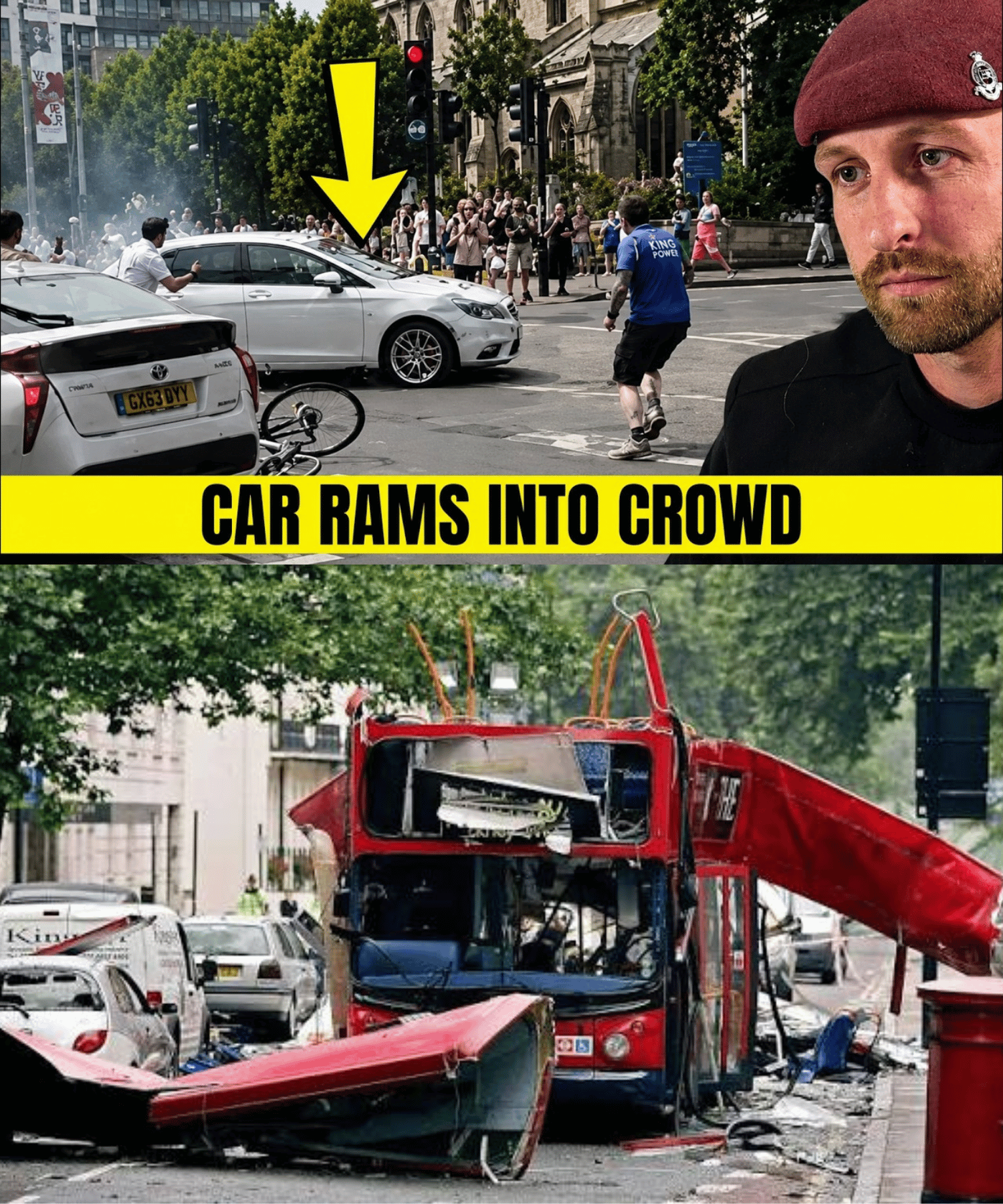
The commentator in the transcript argues that officials should release basic information quickly because secrecy fuels suspicion. Whether one agrees with his tone or not, the underlying point is difficult to dismiss. When authorities withhold details for too long, people start assuming the worst. They ask what is being hidden. They wonder whether police, politicians, or media outlets are protecting a narrative rather than informing the public.
That does not mean every detail should be dumped online before investigators verify it. False information can destroy innocent lives and inflame communities. But silence has a cost, too.
In both Britain and America, the public has become deeply suspicious of official language. Words like “isolated incident,” “mental health,” “no wider threat,” and “not terrorism-related” are now heard by many people not as reassurance, but as evasion. Even when officials are telling the truth, too many citizens no longer believe them.
That is a dangerous place for any democracy to be.
The Ealing incident also reignites debate over the media. The transcript criticizes mainstream coverage as too quiet, suggesting that if the suspect’s background fits certain uncomfortable political patterns, the story may receive less attention. That accusation is common in both Britain and the United States. Conservatives often argue that major outlets downplay crimes involving migrants or minorities. Progressives respond that publicizing nationality or origin before motive is known can fuel prejudice and collective blame.
Both sides understand the stakes.
In America, the same debate erupts after almost every high-profile crime. If the suspect is foreign-born, some demand the information be front and center. If the suspect is native-born, others accuse critics of suddenly losing interest. If the suspect is white, ideological motive is often interrogated aggressively. If the suspect is from a minority group, media outlets may use more caution to avoid inflaming hate.
The result is that every crime story becomes a test of political trust.
That is poisonous.
A suspect’s background may be relevant. It may also be irrelevant. The only honest approach is consistency. Tell the public what is verified. Do not hide facts because they are uncomfortable. Do not exaggerate facts because they are politically useful. Do not turn one suspect into an indictment of an entire community. And do not pretend people are wrong to ask questions after pedestrians are hit in broad daylight on a busy street.
For American cities, the practical warning is immediate.
Public streets are vulnerable. Sidewalks, shopping districts, outdoor markets, parades, protests, and downtown corridors are difficult to secure. A vehicle can become a weapon in seconds. That is why more cities have installed bollards, barriers, pedestrian zones, surveillance systems, and rapid-response plans. But infrastructure can only do so much. The deeper issue is whether citizens believe their leaders are prepared, honest, and serious about safety.
The Ealing case is still developing. The motive is not established. The suspect is entitled to due process. The victims deserve privacy, care, and justice. Police must investigate without political pressure forcing them into premature conclusions.
But the public fear is real.
People want to walk down a shopping street without scanning for danger. They want to take their children into town without wondering whether a vehicle will mount the pavement. They want to believe that if something happens, the truth will be told quickly and plainly. They want to know that the law will be enforced without fear of political backlash.
That demand is not extreme.
It is the minimum expectation of civilization.
The danger now is that every incident becomes another brick in a wall of distrust. One side sees proof that immigration and public safety are being mishandled. Another sees proof that minorities will be blamed before facts are known. Police are caught in the middle. Media outlets are accused no matter what they publish. Politicians issue statements that satisfy nobody.
And ordinary people are left feeling exposed.
That is why the Ealing crash matters in America.
It is not because London and New York are identical. They are not. It is not because a suspect’s origin proves a political theory. It does not. It is not because every violent incident should be treated as terrorism. It should not.
It matters because the same civic fracture is visible on both sides of the Atlantic.
Public safety is no longer only about crime. It is about trust. Trust in police. Trust in media. Trust in government. Trust that officials will tell the truth. Trust that communities will not be collectively blamed. Trust that victims will not be forgotten once the political argument begins.
A car struck pedestrians on a London street.
Five people were hurt.
A suspect is in custody.
Those are the facts.
But the firestorm around the case shows something larger and more alarming: Western publics are now so suspicious, so angry, and so exhausted that every act of violence becomes a referendum on the country itself.
That is the real emergency.