Viral Police Shooting Video Sparks Fierce National Debate Over Use of Force, Gender in Policing, and Online Misinformation
Viral Police Shooting Video Sparks Fierce National Debate Over Use of Force, Gender in Policing, and Online Misinformation
New York — A highly controversial viral video claiming that a female police officer mistakenly shot a bystander during an active shooter incident has triggered intense backlash online, reigniting heated debates over policing standards, officer training, gender roles in law enforcement, and the rapid spread of unverified claims on social media.
The footage, widely circulated across multiple platforms, is accompanied by commentary alleging that a female officer mistakenly shot a civilian while responding to an active shooter scenario, then allegedly retreated when the real suspect appeared on scene.
The claims in the viral commentary remain disputed and have not been independently verified in the clip itself. However, the narrative has already fueled a wave of outrage, with millions of viewers reacting before full investigative details are available.
Allegations of Mistaken Identity and Use of Force
In the viral breakdown of the incident, the commentator claims that a female officer fired at what he describes as a “random bystander” during a chaotic confrontation, mistakenly believing the individual to be the shooter.
The narration then alleges that when the actual armed suspect appeared, the officer retreated from her position, leaving the scene in what critics describe as a breakdown of command and control during a high-risk situation.
The video repeatedly emphasizes that two people allegedly died as a result of what the commentator calls “incompetence,” though official reports confirming these claims are not included in the footage.
Law enforcement experts caution that early viral interpretations of police incidents often lack full context, including threat perception, crossfire conditions, body camera perspective, and tactical constraints.
Gender in Policing Becomes Flashpoint
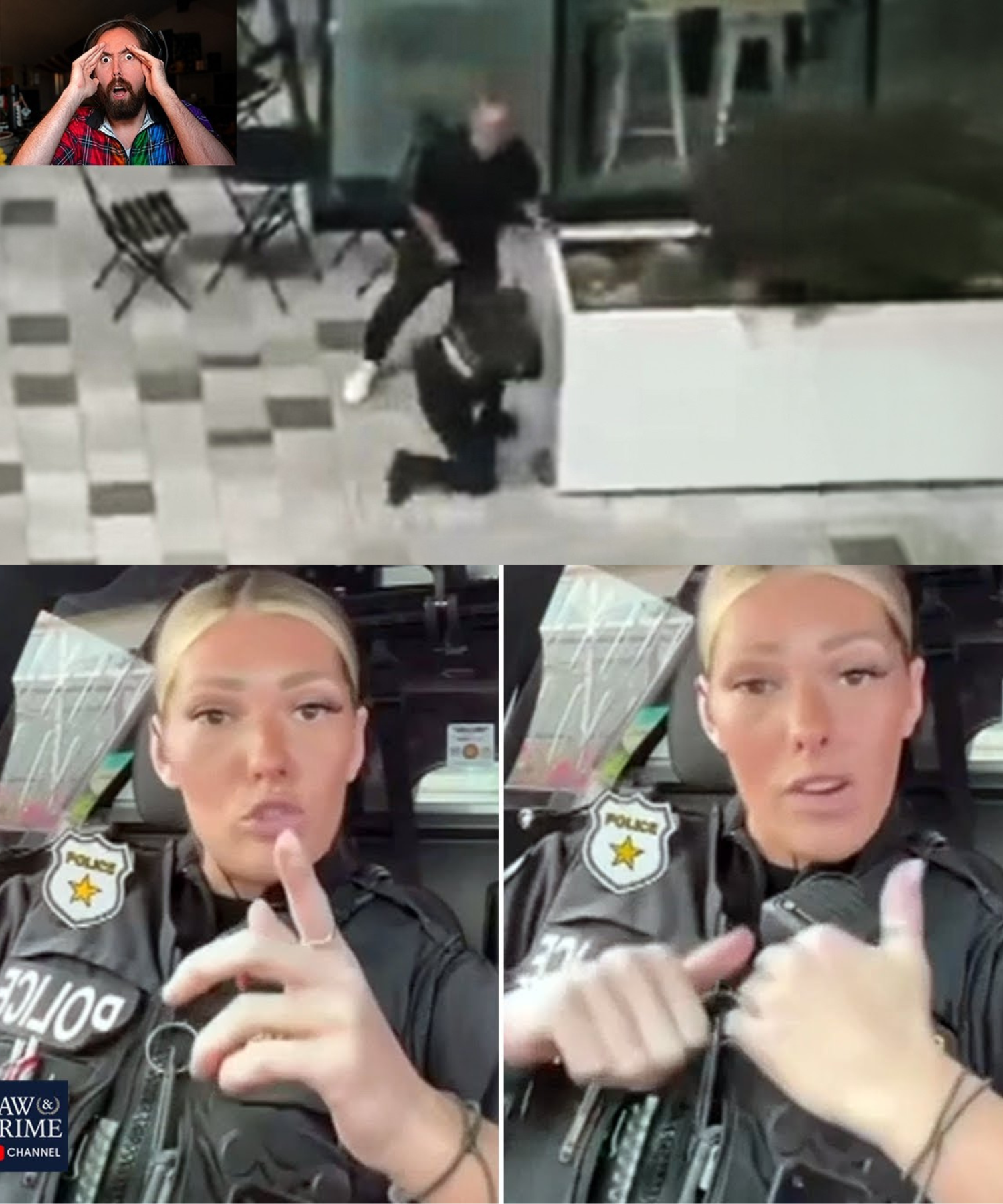
What transformed the video from a local incident into a national controversy is the commentary that follows.
The narrator argues that female officers are not physically or psychologically suited for frontline policing roles involving armed suspects, hostage situations, or active shooter engagements.
He claims that physical strength differences, reaction time differences, and biological factors make it less likely for female officers to successfully restrain or neutralize violent suspects in close-range encounters.
These claims have sparked immediate and widespread backlash.
Women’s rights advocates, law enforcement officials, and policing reform experts argue that such generalizations are unsupported, outdated, and inconsistent with modern policing standards, where training, coordination, and firearms proficiency are considered more important than gender.
They emphasize that thousands of female officers across the United States serve in patrol units, SWAT teams, federal agencies, and military police roles with documented effectiveness.
“She Fired, Then Retreats” — Narrative Under Scrutiny
The viral commentary insists that the officer first shot an individual who was not the attacker, then retreated when the real suspect entered the scene.
However, no official bodycam footage or verified incident report is included in the clip to substantiate the sequence of events as described.
Police accountability analysts warn that such narratives can be highly misleading when constructed from partial footage or secondhand interpretation.
In active shooter environments, officers often operate under extreme uncertainty, where split-second decisions are made under limited visibility, high stress, and incomplete information.
Mistaken identity cases, while rare, are typically subject to internal investigation, forensic review, and legal scrutiny before conclusions are drawn.
Reactionary Online Commentary Fuels Outrage
The most controversial aspect of the viral video is not only the alleged incident itself, but the commentary surrounding it.
The narrator escalates from describing the event to making sweeping claims about gender capability in policing, arguing that men are biologically better suited for frontline enforcement roles due to strength, reaction time, and historical evolutionary factors.
He suggests that women should be limited to investigative roles rather than patrol or combat-style law enforcement duties.
These remarks have been widely condemned by critics as sexist generalizations that ignore decades of empirical research on policing performance, training effectiveness, and occupational diversity.
Police departments across the United States currently employ women in nearly all operational roles, including homicide investigation, crisis negotiation, tactical units, and command leadership.
Experts Warn Against “Viral Reconstruction Policing”
Criminal justice experts caution that viral breakdown videos often reconstruct events based on assumptions rather than verified evidence.
They warn that these clips can create “instant narratives” that spread faster than official investigations, shaping public perception before facts are established.
In many cases, early interpretations of police incidents are later revised significantly after bodycam footage, witness statements, and forensic analysis are reviewed.
Experts emphasize that active shooter environments are among the most complex scenarios in policing, where officers must distinguish between multiple potential threats in seconds while under extreme pressure.
Gender and Physical Standards Debate Resurfaces
Despite the controversy over the specific incident, the video has reignited a broader debate about physical standards in policing and military roles.
Some commentators argue that certain frontline roles require minimum physical thresholds regardless of gender, particularly in situations involving close-quarters combat or suspect restraint.
Others argue that modern policing relies more on firearms proficiency, communication, de-escalation training, and teamwork than raw physical strength.
Law enforcement agencies generally maintain standardized testing requirements designed to ensure all officers meet operational thresholds, regardless of gender.
Public Trust and Police Accountability Concerns
Beyond the gender debate, the viral clip reflects deeper concerns about police decision-making under pressure.
Public trust in law enforcement continues to be shaped by high-profile incidents, particularly those involving mistaken identity, use-of-force escalation, and controversial tactical outcomes.
Civil rights groups emphasize the importance of transparency, body camera release policies, and independent investigations to maintain accountability and public confidence.
At the same time, police unions argue that officers are increasingly judged in real time by social media clips that lack full operational context.
Social Media Reaction: Deep Division
The video has generated sharply divided responses across platforms.
Supporters of the narrator argue that the clip highlights legitimate concerns about policing effectiveness, training consistency, and accountability in high-risk environments.
Critics argue that the commentary crosses into dangerous stereotyping, using a disputed incident to make broad claims about gender and capability that are not supported by professional standards or data.
Many viewers also expressed concern about the speed at which unverified claims about police shootings circulate online, often outpacing official statements and investigations.
No Verified Conclusion Yet
As of now, no official confirmation in the transcript supports the full sequence of events described in the viral narration, and authorities have not issued a detailed verified breakdown within the clip.
Investigations into police use-of-force incidents typically take weeks or months to complete, involving internal review boards, prosecutors, and sometimes federal oversight agencies.
A Larger Cultural Flashpoint
Ultimately, the viral video has become more than a debate about one alleged shooting incident.
It has become a proxy battle over policing standards, gender roles in law enforcement, media accountability, and the power of viral narratives to shape public perception before facts are established.
For some, the clip represents a failure of training and accountability in a high-stakes profession.
For others, it represents a dangerous example of how incomplete footage and reactionary commentary can distort reality and inflame public outrage.
What remains clear is that the debate over policing, performance, and perception in America is not only continuing — it is intensifying with every viral clip shared online.