“Israel Was Thrown Under the Bus”: Viral War Panel Sends Shockwaves Through Washington Over Trump, Iran, and the Future of Israel’s Security
“Israel Was Thrown Under the Bus”: Viral War Panel Sends Shockwaves Through Washington Over Trump, Iran, and the Future of Israel’s Security
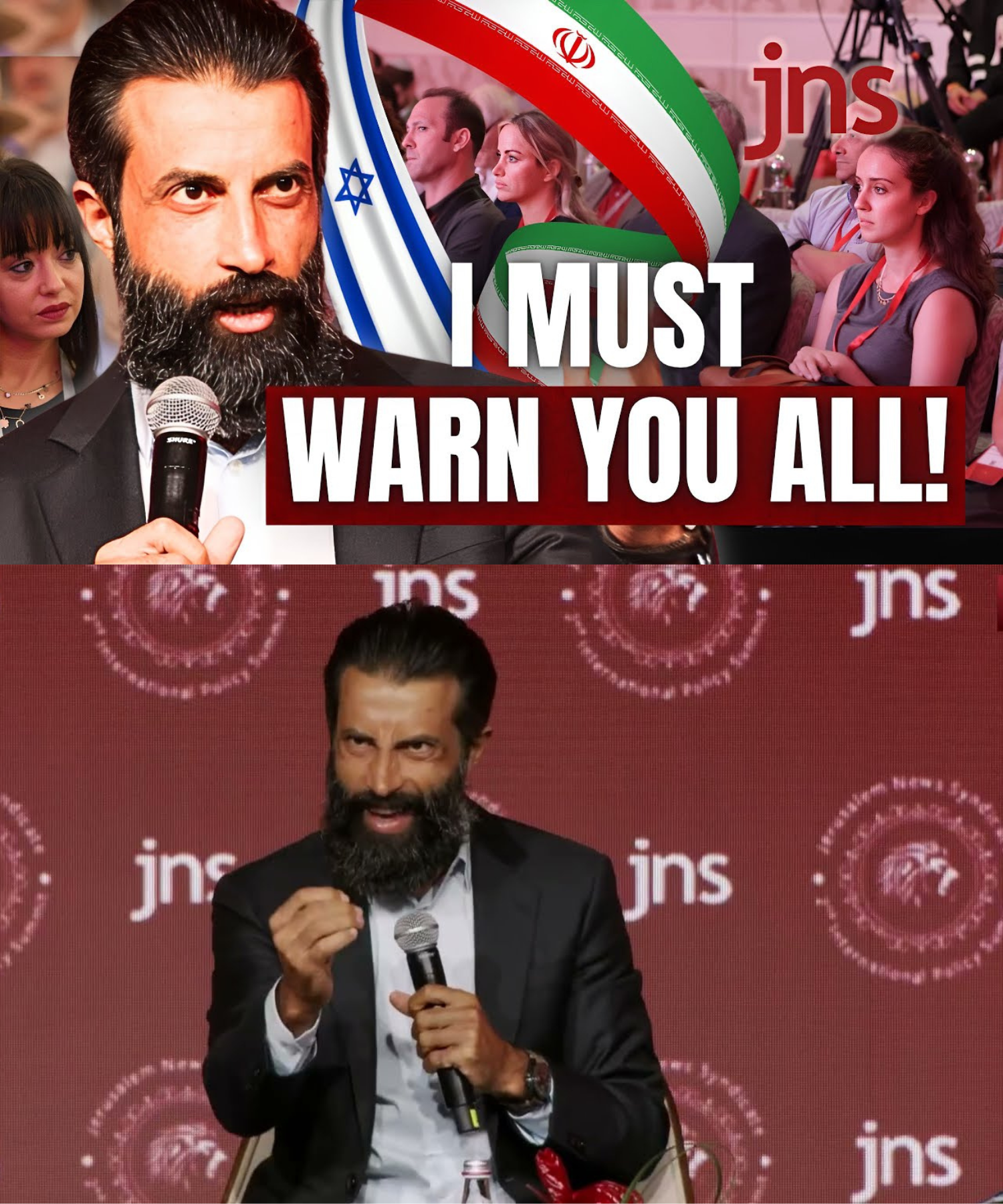
Washington — A fiery security panel featuring Mosab Hassan Yousef — widely known as the “Green Prince” — and Israeli security analyst Dan Diker has erupted across U.S. political circles after Yousef delivered a blunt and highly unusual warning: Israel’s war strategy, he argued, has been damaged not only by enemies, but by allies who entered the conflict late, imposed their own schedule, and then left Israel exposed.
The remarks, delivered during a discussion hosted with security and foreign-policy figures, have become a flashpoint among American conservatives, pro-Israel activists, national-security analysts, and critics of U.S. Middle East policy.
At the center of the controversy is Yousef’s claim that Israel had the advantage during what he called the “12-day war” in June 2025, but failed to finish the job. In his view, Israel had shocked its enemies, cornered Iran’s clerical leadership, and created a rare opening — only to be slowed down by outside interference and political hesitation.
“This one is chaotic,” Yousef said of the current campaign, sharply contrasting it with the earlier operation, which he described as highly prepared, precise, and state-of-the-art.
The result, he warned, is a dangerous strategic mess.
A Stunning Critique of Trump’s Role
The most politically explosive moment came when Yousef criticized President Donald Trump’s involvement in the war effort, saying he did not want Trump involved because, in his view, the American president had become “a disadvantage.”
The statement immediately drew attention in Washington, where Trump’s pro-Israel credentials have long been celebrated by many Republicans and evangelical supporters.
Yousef’s argument was not that America should abandon Israel. It was that war cannot be run on a political calendar.
“He does not understand war,” Yousef said, arguing that Trump expected Israel to act according to a schedule rather than the brutal, unpredictable reality of combat against a sophisticated enemy.
According to Yousef, Israel had momentum months earlier but lost it when the campaign was interrupted. He accused outside actors of waiting until Israel was winning, then entering the process to claim credit — only later leaving Israel with the consequences.
That accusation has now created a sharp debate in American foreign-policy circles: should U.S. presidents shape Israel’s battlefield decisions, or should Israel be allowed to act independently when its survival is at stake?
“Who Goes to War on a Schedule?”
Yousef’s harshest line may become the defining quote from the panel.
“Who goes to war on a schedule?” he asked, warning that no serious military campaign against a powerful enemy can be treated as a five-week project, a messaging operation, or a campaign-season headline.
To Yousef, war is not a performance. It is not a branding exercise. It is not built around applause lines or diplomatic optics.
It is built around readiness, timing, sacrifice, and the willingness to accept that defeat and death are possible.
His remarks were especially striking because they did not sound like a partisan attack. They sounded like a battlefield warning.
In Washington, where war debates often become ideological theater, the comment landed with unusual force.
Dan Diker: Narrative Warfare Is National Security
Dan Diker, president of the Jerusalem Institute for Security and Foreign Affairs, added a broader strategic frame.
He argued that Israel must think of narrative warfare as a national security issue, not a public-relations afterthought. In his view, the battlefield is no longer only Gaza, Lebanon, Iran, or the Red Sea. It is also cable news, social media, university campuses, international courts, and diplomatic forums.
Diker said Israel must learn to think as an indigenous Middle Eastern people, not merely as a Western outpost trying to explain itself to foreign elites.
That argument has found strong support among American pro-Israel groups who believe Israel has been losing the information war even when it wins militarily.
Since October 7, Israel’s military campaigns have been paired with a relentless narrative battle over civilian casualties, hostages, proportionality, occupation, antisemitism, and whether Israel is being unfairly singled out by the international community.
For Diker, failing to fight that battle is not bad messaging.
It is a security failure.
Defensible Borders Return to the Center
The panel also revived one of Israel’s oldest strategic doctrines: defensible borders.
Diker argued that Israel’s security depends on holding terrain that gives it strategic depth and buffer zones, particularly along the Judea and Samaria ridge, near Lebanon, and around Gaza.
He said the lesson of October 7 is that Israel cannot simply rely on promises, international monitors, ceasefire documents, or optimistic assumptions about enemy intentions.
Israel, he argued, must maintain zones of control that prevent another massacre.
The point is deeply controversial. Critics argue that indefinite control over disputed territories fuels conflict and undermines diplomacy. Supporters say withdrawal without durable security guarantees invites disaster.
The panel’s position was clear: after October 7, the old assumptions are dead.
Pessimism After October 7
When asked for optimistic and pessimistic scenarios, Yousef stunned the room by saying he had no optimistic scenario in the immediate future.
He said the damage was already done — not only by the current war, but by the failures that allowed October 7 to happen.
He accused Israeli leaders and security officials of failing the people, making poor choices, and avoiding full responsibility.
Since then, he said, Israel has been fighting on multiple fronts, trying not only to win battles but to restore a shattered image of deterrence.
His words reflected a painful reality for many Israelis and American Jews: October 7 was not merely an attack. It was a psychological earthquake.
The state built to protect Jews had failed to protect them at the most basic level.
“Israel Has Become a Liability” — The Western Dilemma
Yousef also warned that some Western policymakers now see Israel as a political liability rather than an asset.
He accused leaders of wanting to appease public opinion, win elections, and distance themselves from Israel while it is bleeding.
That message has immediate relevance in the United States.
The Democratic Party remains divided over Israel. University campuses have become battlegrounds. International pressure has intensified. Younger voters increasingly view the conflict through a human-rights lens rather than a traditional alliance lens.
Yousef’s warning was blunt: if the West turns against Israel to satisfy public pressure, it may undermine the very security structure that protects Western interests in the Middle East.
“Israel’s Existence Is Not Negotiable”
Despite his pessimism, Yousef also issued a fierce declaration of resolve.
Israel, he said, has survived repeated attempts at annihilation across thousands of years and understands survival better than any nation alive today.
He said Israel’s existence does not depend on superpowers or public opinion.
That line has gone viral among pro-Israel audiences in the United States, especially those who believe Israel must stop asking permission to survive.
Yousef also hinted that Israel has not revealed everything it possesses militarily, saying the country has advanced capabilities it has deliberately kept hidden.
The implication was unmistakable: Israel may be restrained, but it is not helpless.
The American Political Fallout
The panel has created a new pressure point in Washington.
Pro-Israel Republicans who strongly support Trump must now grapple with Yousef’s criticism of Trump’s wartime decision-making. Democrats critical of Israeli policy may point to the same remarks as evidence of strategic disorder. National-security hawks may use the discussion to argue that Israel should be given greater operational freedom.
The deeper issue is not Trump alone.
It is whether the United States understands the Middle East clearly enough to help Israel win, or whether American politics keeps forcing Israel into half-measures.
Sons and Daughters at War
Diker ended on a more hopeful note, pointing to Israeli sons and daughters who have fought since October 7 as the true source of Israel’s future strength.
He described them as moral examples and warriors carrying the nation on their backs.
That moment softened an otherwise grim discussion. But it also underlined the stakes.
For Israel, this is not abstract strategy.
It is children at war. Families in shelters. Borders under threat. Hostages remembered. Soldiers buried. A nation refusing to disappear.
For America, the panel is a warning that alliance politics cannot be managed like television.
Wars do not wait for campaign calendars.
Enemies do not pause for approval ratings.
And Israel, whether Washington likes it or not, is fighting as if survival is not theoretical.
Because for Israel, it never has been.