Viral Debate Over Iran Ceasefire Violations Explodes as America First Conservatives Split Over Israel, Hezbollah, and Trump’s Deal
Viral Debate Over Iran Ceasefire Violations Explodes as America First Conservatives Split Over Israel, Hezbollah, and Trump’s Deal
A fierce online debate over Iran, Hezbollah, Israel, and America’s role in the Middle East has erupted across U.S. political media, exposing a widening split inside the America First right over one brutal question: when a ceasefire keeps getting violated, should Washington keep negotiating — or finish the fight?
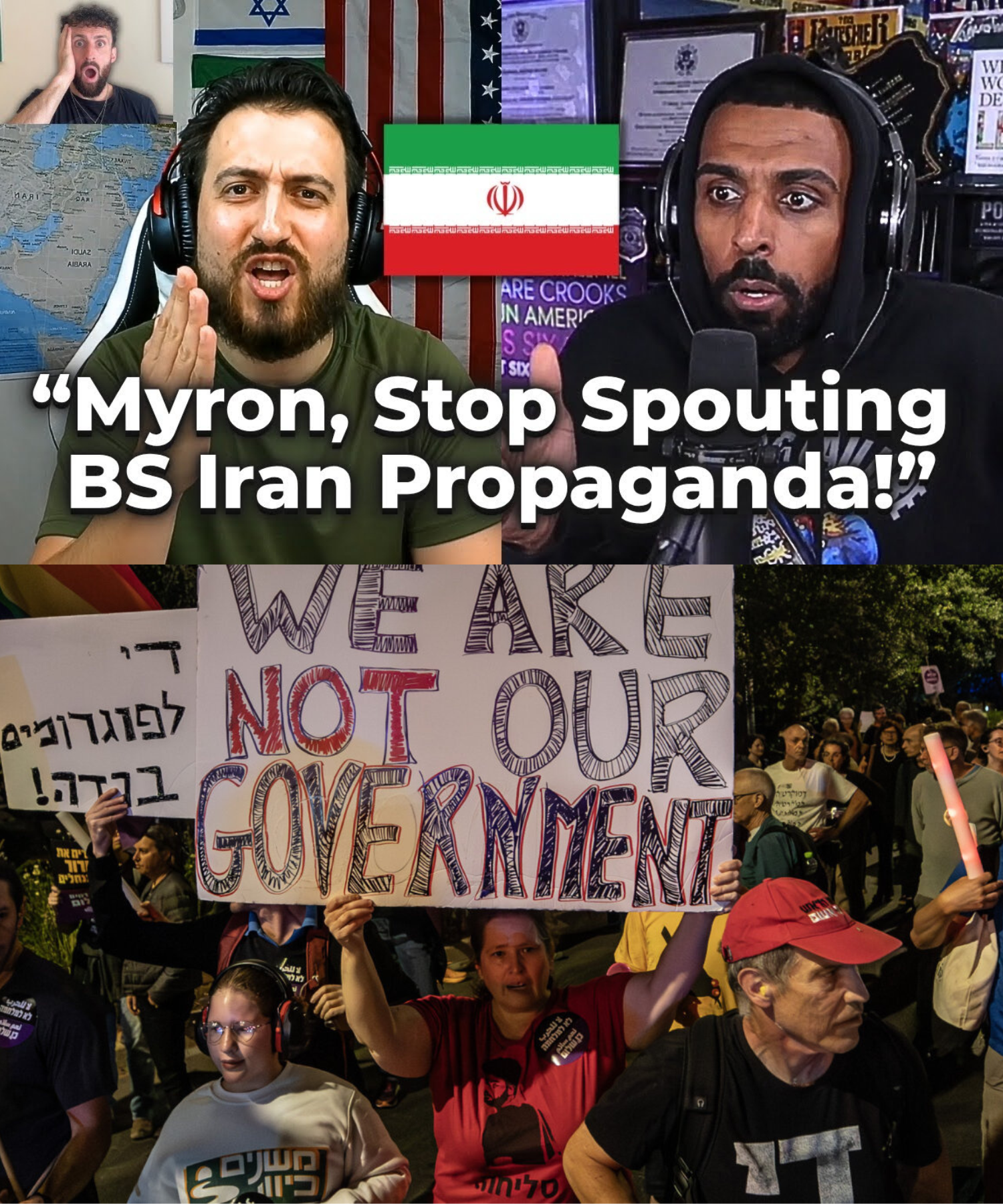
The clash centered on a heated exchange between Nick Matau and Myron Gaines, two commentators arguing over whether Iran and its proxy network have been violating a recent ceasefire arrangement and whether the United States is being dragged into a strategic defeat by accepting a weak deal.
The debate began with a direct accusation: Iran, through proxies and sometimes through forces tied more directly to the regime, has been violating the ceasefire almost every day. The argument was not framed as a minor technical dispute. It was presented as a pattern — a test of whether Tehran respects agreements or uses them as breathing room.
That claim immediately opened a larger fight over Hezbollah, Lebanon, and Israel’s military presence north of its border.
One side argued that Hezbollah is not some distant, independent actor. It is part of Iran’s regional pressure system. In that view, when Hezbollah attacks, threatens, or refuses to disarm, Iran cannot wash its hands and pretend the violence is separate. The ceasefire may have been written on paper between capitals, but the real battlefield runs through proxy forces, militias, border zones, and shattered villages.
The opposing side pushed back by focusing on Lebanon’s internal reality. Hezbollah, he argued, has deep support inside Lebanon and far more power than the Lebanese government can easily confront. The Lebanese military may exist on paper, but Hezbollah remains one of the strongest forces in the country. That means simply saying “the Lebanese government should handle it” ignores the ugly fact that Beirut is often too weak, divided, or politically trapped to impose its will.
That disagreement exposed the first major divide.
Is Lebanon a sovereign state being undermined by Hezbollah? Or is Hezbollah so embedded that Lebanon’s official government no longer tells the full story?
For Israel’s defenders, the answer is obvious: Iran does not get to use Hezbollah as a sword and then hide behind Lebanese sovereignty when Israel strikes back. If the Lebanese government objects, let Beirut speak. But the IRGC, Hezbollah, and Tehran do not get to claim Lebanon as their chessboard while denying responsibility for the fires they start.
For critics of Israel’s strategy, the issue is more complicated. They argue that Israeli operations inside Lebanon, especially when extended and militarily aggressive, create the very conditions that can collapse ceasefires and derail diplomatic frameworks. If Washington is trying to stabilize a U.S.–Iran deal, they say, Israel’s refusal to pull back may become the central obstacle.
Then came the America First question.
How, one side asked, is occupying or holding southern Lebanon “America First”?
That line cut through the debate like a blade. It captured the growing frustration among U.S. voters who are tired of Middle East wars, tired of open-ended commitments, tired of foreign policy language that sounds detached from American costs. To them, the United States should not be asked to absorb the consequences of every Israeli decision, every Iranian provocation, or every Hezbollah escalation.
But Nick’s response was equally sharp. He argued that America First should mean following values and strategic interests, not blindly opposing every foreign entanglement. If Iran’s regime is weakened, if Hezbollah is constrained, if Israel’s enemies are deterred, and if U.S. allies are safer, then the argument goes, American interests may be served — even if the fight is happening far away.
That is where the conversation shifted to the U.S.–Iran deal.
The debate turned bitter over whether Washington should offer sanction relief, unfreeze billions of dollars, or accept a framework that could give Tehran economic breathing room. One side argued that the United States should negotiate, but from a position of overwhelming leverage. If Iran suffered serious damage, then Washington should demand strict concessions — not rush to hand over relief.
The other side argued that diplomacy sometimes requires giving something to get something. He pointed to earlier nuclear negotiations and suggested that, despite flaws, some deals can be practical if they freeze or restrict dangerous programs. But even he admitted that sunset clauses and weak enforcement mechanisms are major vulnerabilities.
That brought the argument to an uncomfortable point for Trump’s own supporters.
If Obama’s Iran deal was criticized for sanctions relief, cash transfers, sunset clauses, and trusting Tehran too much, then what happens if a Trump-backed framework contains similar weaknesses? Can conservatives attack one deal as surrender and defend another as strategy simply because the president changed?
Nick’s argument was that both can be bad. A weak Obama deal and a weak Trump deal do not cancel each other out. They prove the same lesson: making agreements with hostile regimes is dangerous when the other side operates in bad faith.
The debate then turned military.
One side argued that if the United States and Israel chose war, they should not have conducted it halfway. In his view, half-measures are the worst option. Doing nothing is one strategy. Going in decisively is another. But striking enough to enrage the enemy while leaving core structures intact can create a long-term strategic disaster.
He did not present it as a call for another Iraq-style occupation. In fact, he rejected the idea of fighting a 20-year ground war. His argument was about strategic pressure: if the goal was to weaken the IRGC, then key regime military structures should not have been spared merely because some future opposition movement might need them later.
The opposing side demanded specifics. What targets? What escalation ladder? How far should America go? Airstrikes? Naval pressure? Continued sanctions? Direct confrontation? These are not small questions. They are the questions that separate tough talk from actual policy.
And that is where the debate showed the tension inside modern American conservatism.
Many America First voters want strength without endless war. They want deterrence without occupation. They want Iran contained without U.S. soldiers trapped in another regional nightmare. They want Israel defended without America becoming responsible for every battlefield decision. They want peace, but not surrender.
That balance is extremely hard to maintain.
The commentators also fought over intelligence claims, including whether Iran was actively pursuing nuclear weapons and whether U.S. officials had accurately described the state of Tehran’s program. One side argued that statements from Iranian figures themselves showed intent. The other warned against overconfidence, especially after decades of intelligence failures in the Middle East.
For American viewers, the ghosts of Iraq still linger.
Whenever officials say a hostile regime is pursuing weapons, voters remember what happened before. But whenever officials downplay a threat, voters also remember what happened when enemies were underestimated. This is the trap Washington lives inside: act too soon and be accused of warmongering; wait too long and be blamed for weakness.
The debate ended without agreement, but it revealed something larger than one argument about Iran.
The old Republican consensus on foreign policy is gone. The new right is fighting itself in real time. Some want maximum pressure and military dominance. Some want restraint and negotiations. Some back Israel almost reflexively. Others see Israel as a strategic burden. Some trust Trump to make a better deal. Others believe even Trump can fall into the same traps as every president before him.
And Iran is exploiting that uncertainty.
That is the most dangerous takeaway.
A ceasefire that exists only on paper is not peace. A proxy war that continues under another name is not stability. A deal that rewards violations may become an invitation for the next violation. But a war pursued without a clear end state can become its own catastrophe.
America is now trapped between those dangers.
The viral debate between Nick Matau and Myron Gaines mattered because it forced that reality into the open. It was not just about Iran. It was not just about Hezbollah. It was not just about Israel. It was about whether the United States still knows how to use power without losing control of the consequences.
And as the ceasefire strains, the proxies move, and Washington debates another deal, one question now hangs over the entire region:
Is America negotiating from strength — or managing another strategic retreat?