Nick Fuentes GRILLS Steven Crowder on Iran: “It’s All for Israel and Netanyahu!”
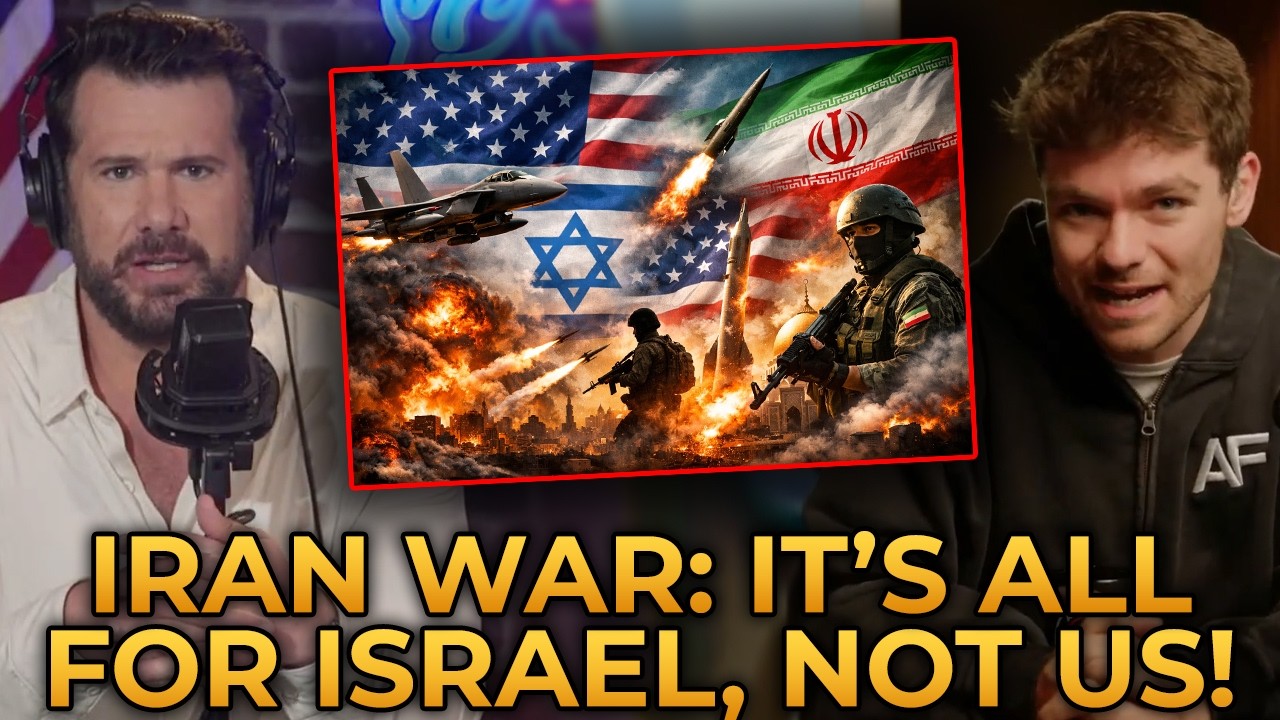
America First or Israel First? The Explosive Crowder–Fuentes Debate That Exposed the Biggest Divide on U.S. Foreign Policy
For years, America’s foreign policy debates have followed a familiar script. But every so often, a conversation comes along that forces people to question assumptions they may have held for decades. The recent debate between Steven Crowder and Nick Fuentes over Iran, Israel, and America’s role in the Middle East did exactly that.
What made the exchange so compelling wasn’t simply that the two disagreed. It was that they approached the same conflict from entirely different frameworks. One viewed Iran primarily as a long-term strategic threat whose ambitions justify American pressure. The other argued that nearly every recent U.S. intervention in the Middle East has been driven less by American interests than by Israel’s regional priorities.
Whether you agree with either side or reject both entirely, the debate highlighted a growing divide inside conservative and populist circles—a divide that can no longer be ignored.
A Debate That Went Far Beyond Iran
At first glance, the discussion centered on whether military action against Iran could ever be considered “America First.” But within minutes, it became clear that the real issue was much broader.
Crowder argued that someone could sincerely believe Iran represents a danger to both the United States and its allies without simply repeating Israeli talking points. In his view, opposition to the Iranian regime doesn’t automatically mean supporting every action taken by Israel.
Fuentes challenged that premise from the beginning.
His central argument was that, regardless of intentions, military confrontation with Iran inevitably advances Israeli strategic objectives. According to him, there is no practical way to separate support for attacking Iran from support for Israel’s long-standing campaign to weaken one of its principal regional adversaries.
That distinction became the foundation of the entire conversation.
Can Military Action Against Iran Truly Be “America First”?
One of the strongest moments in the debate came when Fuentes repeatedly asked a simple question:
How exactly does attacking Iran make ordinary Americans safer?
Rather than focusing on ideology, he framed the issue in practical terms.
He argued that Iran possesses neither nuclear weapons nor an intercontinental missile capability capable of directly threatening the continental United States. Therefore, he questioned how a preventive military campaign could reasonably be described as defending American national security.
Crowder responded differently.
He maintained that preventing hostile regimes from obtaining nuclear weapons can itself be viewed as serving American interests. From his perspective, waiting until an adversary actually possesses nuclear capabilities could be far more dangerous than acting beforehand.
The disagreement wasn’t merely about Iran.
It reflected two fundamentally different philosophies of foreign policy.
One favors preventing future threats before they fully emerge.
The other demands clear evidence of a direct threat before military force is considered justified.
The Escalation Problem
Perhaps the most substantive exchange came when the discussion turned from ideology to strategy.
Fuentes argued that even if one accepts the goal of preventing Iran from developing a nuclear weapon, military strikes do not solve the underlying problem.
Instead, he outlined what he described as an almost unavoidable escalation ladder.
Initial airstrikes would likely be followed by Iranian retaliation.
Shipping through the Strait of Hormuz could become disrupted.
Regional allies might come under missile or drone attacks.
Pressure would then mount for additional American intervention.
Eventually, the United States could find itself confronting the same dilemma that has characterized previous Middle Eastern conflicts: limited military operations expanding into open-ended commitments.
His broader point was that even those advocating limited action often underestimate how quickly military objectives evolve once hostilities begin.
Crowder acknowledged that escalation presents real challenges but maintained that the nature of the Iranian regime still justifies a firm response.
The Larger Question: What Drives American Policy?
The discussion became even more controversial when it shifted from military strategy to political influence.
Fuentes argued that American policy toward Iran cannot be understood without considering the influence of Israel and pro-Israel advocacy organizations.
According to his argument, Israeli governments across multiple administrations have consistently viewed Iran as their most significant regional adversary and have sought stronger American action against Tehran.
Crowder agreed that lobbying organizations should not receive special treatment.
He criticized foreign lobbying generally and specifically stated that he opposes giving any foreign nation a blank check.
However, he rejected the idea that concern over Iran exists only because of Israeli influence.
In his view, American policymakers can independently conclude that Iran poses a serious strategic challenge.
This distinction became one of the defining disagreements of the debate.
Could Diplomacy Have Worked?
One of the more interesting moments came when Fuentes proposed an alternative approach.
Rather than increasing military pressure on Iran, he argued that Washington should focus on restraining Israeli actions that, in his view, undermine negotiations.
His proposal included using American leverage—including military aid and diplomatic pressure—to discourage actions that could derail future agreements.
He suggested reviving a framework similar to previous nuclear negotiations, combining sanctions relief, inspections, and international verification mechanisms.
Whether such an approach would succeed remains an open question.
Supporters argue diplomacy has historically slowed Iran’s nuclear activities.
Critics counter that Tehran has repeatedly used negotiations to buy time while continuing sensitive nuclear work.
The debate reflected this broader disagreement without resolving it.
The Nuclear Question
No issue generated more disagreement than Iran’s nuclear ambitions.
Fuentes argued that Iran has consistently denied pursuing nuclear weapons and that previous U.S. intelligence assessments concluded Tehran was not actively building a bomb.
Crowder focused less on whether Iran currently possesses a weapon and more on preventing it from eventually acquiring one.
This distinction matters.
Foreign policy often revolves not only around existing capabilities but also around perceived future intentions.
That is precisely why debates over intelligence assessments become so contentious.
History offers examples in both directions.
Some governments have pursued nuclear programs covertly despite public denials.
In other cases, intelligence assessments have later proven incomplete or incorrect.
As a result, policymakers frequently face difficult decisions under conditions of uncertainty.
The Legacy of America’s Middle East Interventions
Throughout the discussion, Fuentes repeatedly pointed to previous U.S. military interventions.
He cited Iraq, Libya, Syria, Afghanistan, and other conflicts as examples where promises of quick victories gave way to prolonged instability and enormous financial costs.
His argument was straightforward:
If repeated interventions have failed to produce lasting stability, why should Americans expect different results this time?
Crowder did not dispute that many previous interventions ended poorly.
Instead, he emphasized that historical failures do not necessarily eliminate the possibility that confronting Iran could still be strategically justified.
Again, the disagreement reflected different lessons drawn from the same history.
The Conservative Foreign Policy Divide
Perhaps the most fascinating aspect of the debate was not the discussion about Iran itself.
It was what the exchange revealed about the modern American right.
For decades, conservative foreign policy largely aligned behind interventionist positions emphasizing military strength, alliances, and American global leadership.
Today, that consensus appears increasingly fractured.
One faction continues to argue that maintaining American influence abroad requires confronting adversaries before they become stronger.
Another increasingly questions whether decades of intervention have produced meaningful benefits for ordinary Americans.
This internal divide now extends well beyond Iran.
It shapes debates over Ukraine, NATO, military spending, overseas bases, and the broader purpose of American power.
Is There an Alternative?
If military intervention carries enormous risks and complete disengagement creates its own dangers, what options remain?
Most foreign policy experts point to several possibilities:
Continued diplomatic engagement combined with international inspections.
Regional security arrangements involving multiple Middle Eastern states.
Economic sanctions targeted at specific military or nuclear activities.
Stronger deterrence without direct military intervention.
Greater burden-sharing among regional partners rather than relying primarily on U.S. forces.
None of these options is without drawbacks.
Each requires difficult trade-offs.
That reality explains why debates like this continue to resonate.
Why This Debate Matters
Regardless of which side viewers ultimately found more persuasive, one thing became clear.
The traditional foreign policy consensus inside American conservatism is no longer intact.
Questions that once existed primarily on the political fringes are now being debated openly before millions of viewers.
How much influence should allies have over U.S. foreign policy?
When should America use military force?
What constitutes a direct threat to national security?
How much weight should be given to diplomacy versus deterrence?
These are no longer abstract academic questions.
They are becoming central issues in American politics.
Final Thoughts
The Crowder–Fuentes debate was never likely to produce consensus. Instead, it exposed the growing philosophical divide over America’s role in the world.
Crowder defended the view that confronting hostile regimes like Iran can be consistent with protecting American interests, even while criticizing aspects of Israeli influence and opposing unconditional foreign aid.
Fuentes argued that military confrontation with Iran ultimately serves Israeli strategic objectives more than American ones and that diplomacy, backed by greater pressure on allies as well as adversaries, offers a more sustainable path.
Reasonable observers will disagree with both men on various points. Some will find Crowder’s emphasis on deterrence more persuasive. Others will agree with Fuentes’ warnings about escalation and intervention. Still others may conclude that neither position fully addresses the complexity of the region.
What cannot be denied is that the debate reflects a broader shift in American politics. Foreign policy is no longer divided simply between Republicans and Democrats. Increasingly, the deepest disagreements exist within political coalitions themselves, where competing visions of national interest, alliances, and military power are reshaping the conversation.
As these debates continue, one question is likely to remain at the center of every discussion: What does an “America First” foreign policy actually look like—and who ultimately decides what is truly in America’s national interest?