Viral “Anti-Racism Industry” Documentary Ignites Firestorm Over Race Training, Identity Politics, and Cultural Division in America
Viral “Anti-Racism Industry” Documentary Ignites Firestorm Over Race Training, Identity Politics, and Cultural Division in America
New York — A controversial documentary-style film examining America’s “anti-racism industry” has gone viral, triggering an intense national debate over diversity training programs, critical race theory, systemic racism narratives, and the growing commercialization of racial discourse in the United States.
The production, described by supporters as a “comedic documentary” and by critics as a politically charged satire, follows a central figure infiltrating diversity, equity, and inclusion (DEI) workshops, anti-racist training sessions, and academic discussions on race in modern America.
The film has divided audiences sharply, with supporters praising it as a necessary exposure of ideological excesses, while critics argue it misrepresents academic theory, selectively edits participants, and trivializes ongoing racial inequality.
“What Is Racism Today?” — The Central Question Driving the Film
At the heart of the documentary is a recurring question: how is racism defined in modern America, and who gets to define it?
Throughout the film, participants in DEI workshops and anti-racist seminars are shown discussing concepts such as “whiteness,” “white supremacy structures,” “systemic oppression,” and “decentering privilege.”
In several segments, facilitators ask participants to reflect on their racial identity and examine how social systems may reinforce inequality. One scene features attendees being asked to identify “who in the room holds privilege,” a moment that the film presents as emblematic of what it calls the “anti-racism industry.”
Supporters of the film argue that such exercises demonstrate how abstract academic frameworks can become emotionally charged or performative when applied in real-world settings.
Critics counter that these practices are widely used in organizational psychology and diversity education to encourage self-awareness about bias and structural inequality.
“Race to Dinner” Workshop Becomes Flashpoint
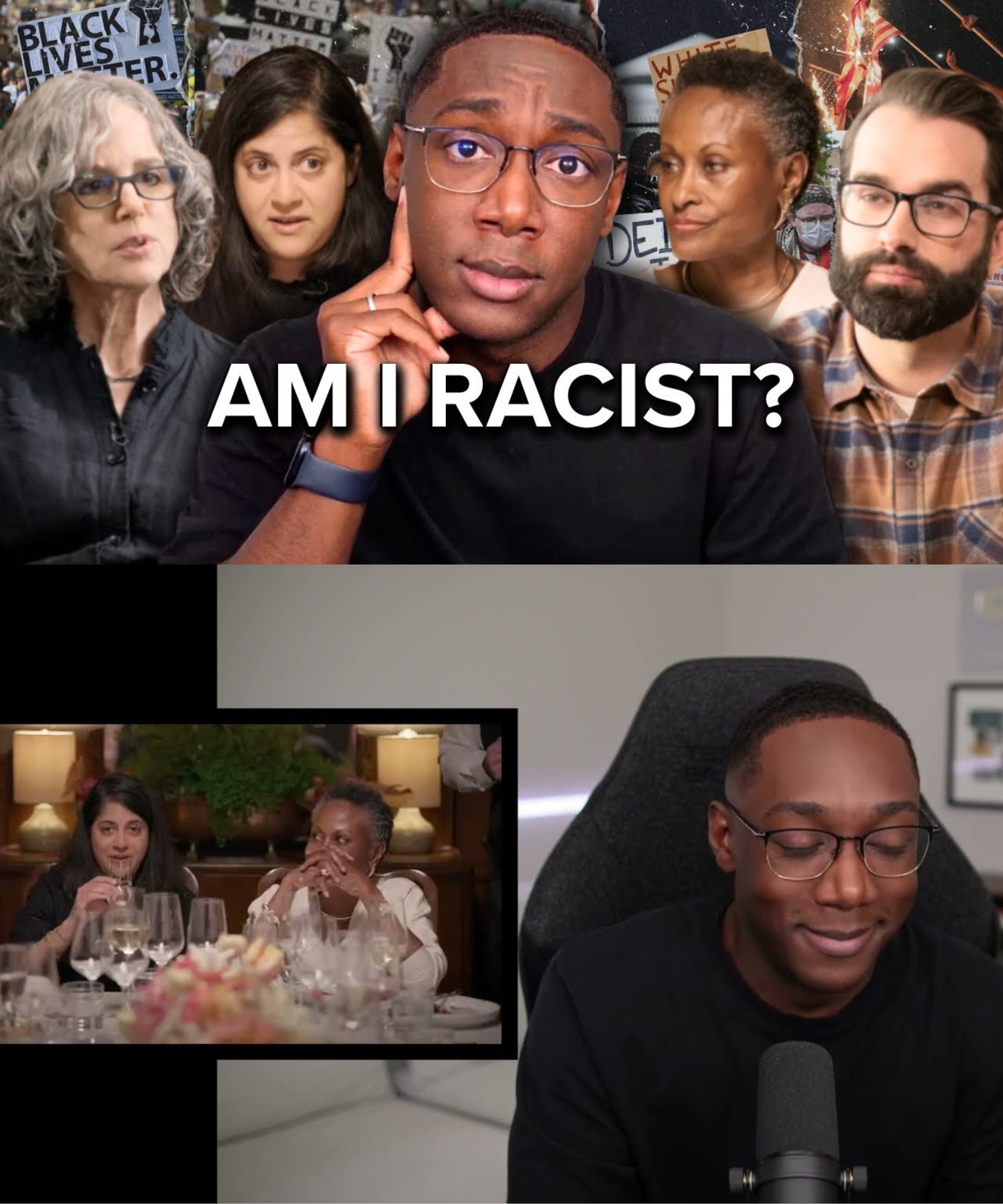
One of the most viral segments features a real-world program known as “Race to Dinner,” where white participants reportedly pay to attend structured conversations about race, privilege, and systemic inequality.
The film portrays these sessions as emotionally intense environments in which participants are asked to confront their racial identity and role in historical injustice.
In the documentary’s framing, the experience is depicted as both educational and controversial, with participants expressing feelings of discomfort, guilt, and reflection.
Critics of the film argue that such workshops are designed to foster dialogue about unconscious bias and structural inequality, not to shame participants. Supporters, however, say the commercialization of racial guilt raises ethical questions about how these programs operate.
Robin DiAngelo and the “White Fragility” Debate
A significant portion of the documentary focuses on the work of author and academic Robin DiAngelo, known for her influential book White Fragility.
The film critiques DiAngelo’s ideas, arguing that the framework encourages individuals to interpret everyday interactions through a racial lens and may reinforce division rather than unity.
One controversial scene highlighted in the documentary involves DiAngelo participating in a discussion about reparations, where a symbolic exchange of money is presented as a demonstration of accountability.
Supporters of DiAngelo argue that her work is intended to help individuals recognize unconscious bias and structural inequality, not to promote hostility between racial groups.
The debate over her ideas has become one of the central fault lines in America’s broader culture war over race.
“Systemic Racism vs Individual Responsibility”
A recurring theme throughout the documentary is the tension between systemic explanations of inequality and individual responsibility.
Participants in anti-racist trainings are shown discussing whether America is “inherently racist” or shaped by historical systems that continue to influence present-day outcomes.
The film’s narrator repeatedly challenges these ideas, arguing that overemphasis on systemic explanations can overshadow personal agency and cultural factors.
Critics of the film say this framing ignores extensive academic research showing persistent disparities in wealth, housing, education, and criminal justice outcomes tied to historical inequality.
Supporters argue that modern discourse often discourages dissenting perspectives and frames disagreement as moral failure.
“White Fragility” and Emotional Response Training
The documentary also critiques diversity training exercises that encourage participants to examine emotional reactions to discussions of race.
One segment shows facilitators guiding participants through discussions about “white fragility,” a term used in academic literature to describe defensive reactions to racial stress.
The film presents these sessions as emotionally charged and sometimes uncomfortable, with participants questioning their role in broader societal structures.
Advocates of such training say it is designed to build resilience, empathy, and awareness of unconscious bias in professional environments.
Classroom Race Discussions Go Viral
Another widely circulated segment shows a classroom discussion in which participants debate whether children’s preferences for fictional characters reflect racial bias.
The film highlights disagreements between participants who interpret such preferences as evidence of structural conditioning versus those who argue they are natural forms of identification and familiarity.
This segment has been particularly controversial, with viewers split over whether the discussion demonstrates insightful analysis or over-interpretation of childhood behavior.
Social Media Reaction: Deep Polarization
The viral spread of the documentary has generated sharply divided reactions across the United States.
Supporters describe the film as a revealing critique of what they see as an expanding “anti-racism industry” that monetizes racial discourse through corporate training, academic programs, and consulting systems.
Critics argue that the film misrepresents complex academic theories, selectively edits conversations, and strips context from nuanced discussions about inequality and historical injustice.
Civil rights advocates emphasize that systemic racism remains a documented issue in areas such as housing, employment, education, and criminal justice, and warn against dismissing structural analysis as ideological excess.
Experts Warn of “Culture War Distortion”
Sociologists and media scholars say the film reflects a broader trend in which complex academic and social frameworks are compressed into viral content designed for emotional reaction.
They warn that both critics and supporters of DEI programs often interpret the same material through fundamentally different ideological lenses, making consensus increasingly difficult.
Experts also note that commercialization of diversity training has grown significantly in corporate America, contributing to both legitimate educational efforts and controversial implementations.
A National Debate With No Easy Resolution
As the documentary continues to circulate, it has become part of a larger national argument over race, identity, and how inequality should be addressed in modern America.
On one side are those who believe that anti-racist frameworks have become too ideological, emotionally charged, or commercially driven.
On the other are those who argue that such frameworks are necessary tools for understanding and addressing historical and ongoing inequality.
Conclusion: A Cultural Fault Line Deepens
The viral film has not resolved the debate it highlights — instead, it has intensified it.
For some Americans, it is a long-overdue critique of a growing ideological industry.
For others, it is a misrepresentation of essential tools used to address real disparities.
What is clear is that the conversation about race, identity, and inequality in America remains deeply divided — and increasingly shaped not in academic journals or policy rooms, but in viral videos watched by millions online.