Katie Hopkins Immigration Debate Clip Goes Viral as Clash Over Islam, Free Speech, and “Londonistan” Narrative Sparks Outrage
Katie Hopkins Immigration Debate Clip Goes Viral as Clash Over Islam, Free Speech, and “Londonistan” Narrative Sparks Outrage
New York — A controversial interview segment featuring British media figure Katie Hopkins has gone viral across social media, reigniting a fierce transatlantic debate over immigration, Islam, and cultural integration in the United Kingdom.
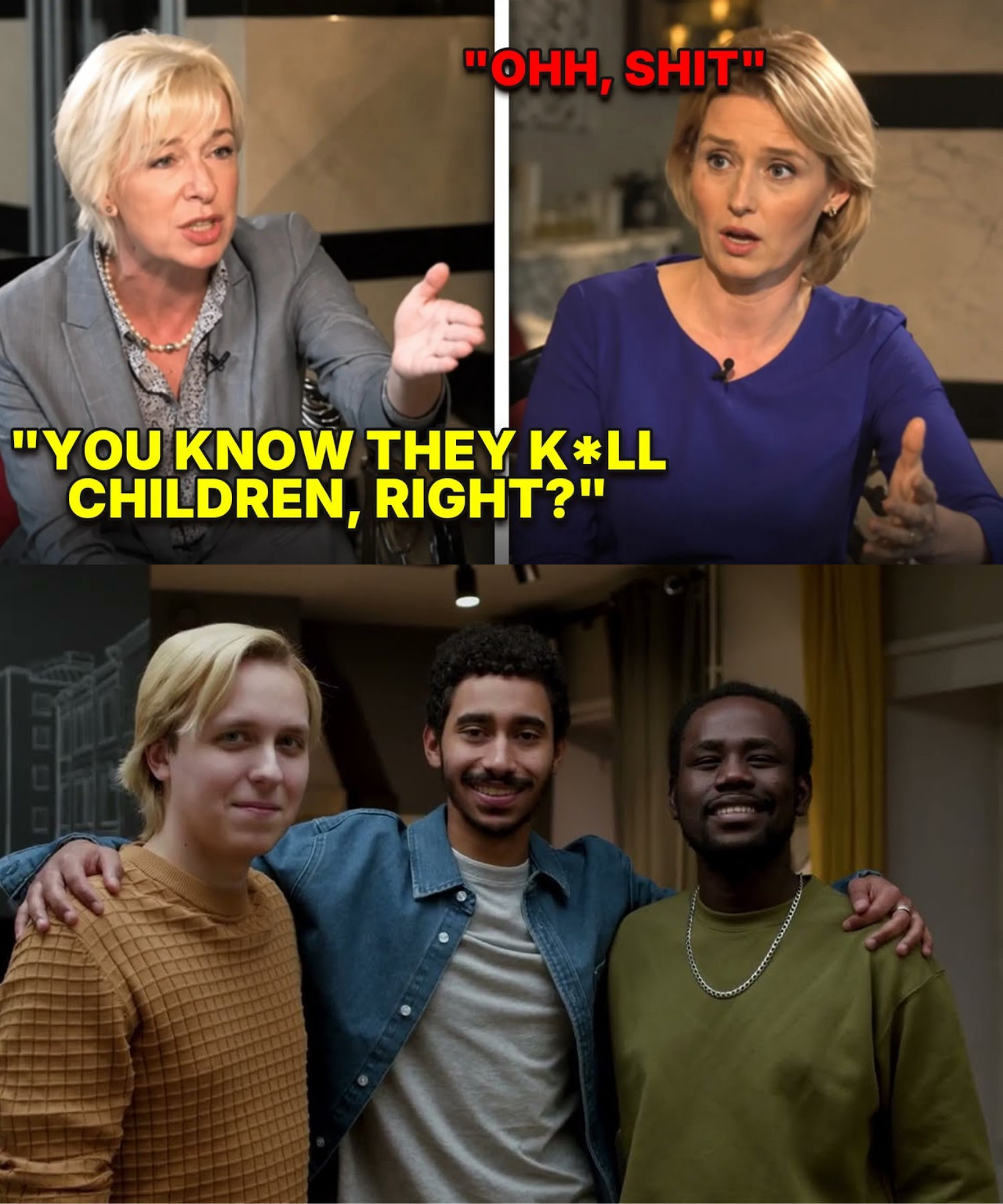
The footage, originally aired in a political interview format, shows Hopkins engaged in a heated exchange with a journalist over immigration policy, multiculturalism, and public safety in London. The clip has since been widely shared in the United States, where it has become a flashpoint in ongoing debates about migration and national identity.
At the center of the controversy are Hopkins’ claims that parts of London have become culturally segregated, that immigration from Muslim-majority countries is reshaping British society, and that political leaders have failed to manage integration effectively.
Her remarks have been praised by supporters as blunt truth-telling and condemned by critics as inflammatory generalization.
“Monocultures, Not Multiculturalism” — Core Claim Sparks Division
In the interview, Hopkins argues that what is commonly described as multiculturalism in the UK is in fact “monocultures living in ghettos,” suggesting that immigrant communities often remain socially isolated rather than integrated into broader British society.
She claims that in certain areas of London, demographic change has been so significant that traditional British cultural identity is no longer visible in everyday life.
These remarks have drawn sharp criticism from academics and civil rights groups, who argue that they oversimplify complex urban demographics and ignore long-standing patterns of migration, assimilation, and cultural blending.
Supporters of Hopkins, however, argue that she is highlighting real concerns about integration failures and social fragmentation in major European cities.
“Londonistan” Controversy Reignites
One of the most controversial moments in the interview comes when Hopkins refers to London as “Londonistan,” a term critics say carries inflammatory and politically loaded implications.
Hopkins defends the term as a critique of governance and demographic change, specifically targeting political leadership in London and national immigration policy rather than any ethnic or religious group.
She argues that certain boroughs of London have become heavily segregated, citing statistics she claims show rising crime rates and increasing social tension.
These claims remain highly contested, with official data showing variation in crime trends depending on category, location, and reporting methods.
Immigration, Integration, and Cultural Conflict
A central theme of the interview is whether mass immigration from Muslim-majority countries is compatible with Western liberal societies.
Hopkins argues that integration has failed in parts of the UK because of cultural incompatibility between different value systems, suggesting that parallel communities have formed rather than a unified national identity.
Her critics argue that such framing reduces complex socioeconomic issues to cultural determinism and ignores the role of poverty, housing policy, education access, and labor market dynamics.
Migration experts note that integration outcomes vary widely across regions and generations, and that second- and third-generation immigrants often show significantly different social patterns compared to first-generation arrivals.
Crime, Security, and Political Rhetoric
The interview also includes references to rising crime rates, including knife crime, acid attacks, and gang-related violence in London.
Hopkins links these trends to immigration policy, arguing that government reluctance to address cultural integration has contributed to public safety concerns.
Her opponents argue that crime trends are influenced by multiple factors, including austerity policies, policing budgets, urban inequality, and youth disengagement, rather than immigration alone.
Law enforcement data in the UK shows that crime patterns vary significantly by category and geography, complicating broad generalizations.
Putin Comments Add Unexpected Twist
In a surprising portion of the interview, Hopkins also comments on Russian President Vladimir Putin, suggesting that Western narratives about him are overly simplistic and that political disagreement does not necessarily mean moral absolutism.
These remarks sparked additional controversy, particularly among viewers who viewed them as unrelated to the immigration discussion.
The segment highlights the increasingly interconnected nature of global political commentary, where discussions of immigration, foreign policy, and cultural identity often overlap.
Free Speech vs Social Cohesion Debate
A key tension in the interview revolves around free speech and social cohesion.
Hopkins argues that political correctness prevents honest discussion about immigration and integration, claiming that criticism of cultural change is often dismissed as racism or extremism.
Critics counter that unrestricted rhetoric about demographic change can fuel polarization and stigmatization of minority communities.
Legal scholars note that while free speech is strongly protected in democratic societies, it does not shield public figures from criticism or consequences when speech is perceived as harmful or divisive.
“Stop Tiptoeing Around Issues” Argument
Hopkins repeatedly argues that Western societies are avoiding necessary conversations about immigration due to fear of political backlash.
She suggests that journalists often avoid direct questions about cultural integration, leading to what she describes as “sanitized” public discourse.
Her supporters say this reflects a broader frustration among segments of the population who feel that mainstream media does not adequately address their concerns.
Critics argue that framing complex demographic and social issues in confrontational terms risks oversimplifying policy challenges and reinforcing division.
Social Media Reaction: Deep Polarization
The viral spread of the clip has produced sharply divided reactions across platforms in both the UK and the United States.
Supporters describe Hopkins as articulating concerns that are widely held but rarely expressed in mainstream media. They argue that her framing of integration issues reflects lived experiences in certain urban areas.
Critics accuse her of promoting divisive narratives that conflate immigration with crime and cultural decline, warning that such rhetoric can deepen social tensions.
Experts Warn Against Oversimplification
Sociologists and migration researchers caution that viral political clips often strip away nuance, presenting complex structural issues as simplified cultural conflicts.
They emphasize that immigration, integration, and urban development are influenced by a wide range of economic, political, and historical factors.
Experts also warn that framing entire communities as culturally incompatible risks undermining social cohesion and public trust.
A Debate With No Easy Resolution
As the clip continues to circulate, no consensus has emerged.
Instead, it has become part of a larger ongoing debate over immigration policy, national identity, and the future of multicultural societies in the West.
For some, Hopkins’ remarks represent a necessary challenge to political orthodoxy. For others, they represent a dangerous simplification of deeply complex social realities.
What remains clear is that the debate is far from settled — and increasingly central to political discourse in both Europe and the United States.
As one analyst noted, the question is no longer whether immigration shapes society, but how societies choose to interpret that change.
And for now, that question remains sharply contested.