Viral Street Interview Sparks Fierce U.S. Debate Over Sharia Law, Free Speech, and Religious Extremism
Viral Street Interview Sparks Fierce U.S. Debate Over Sharia Law, Free Speech, and Religious Extremism
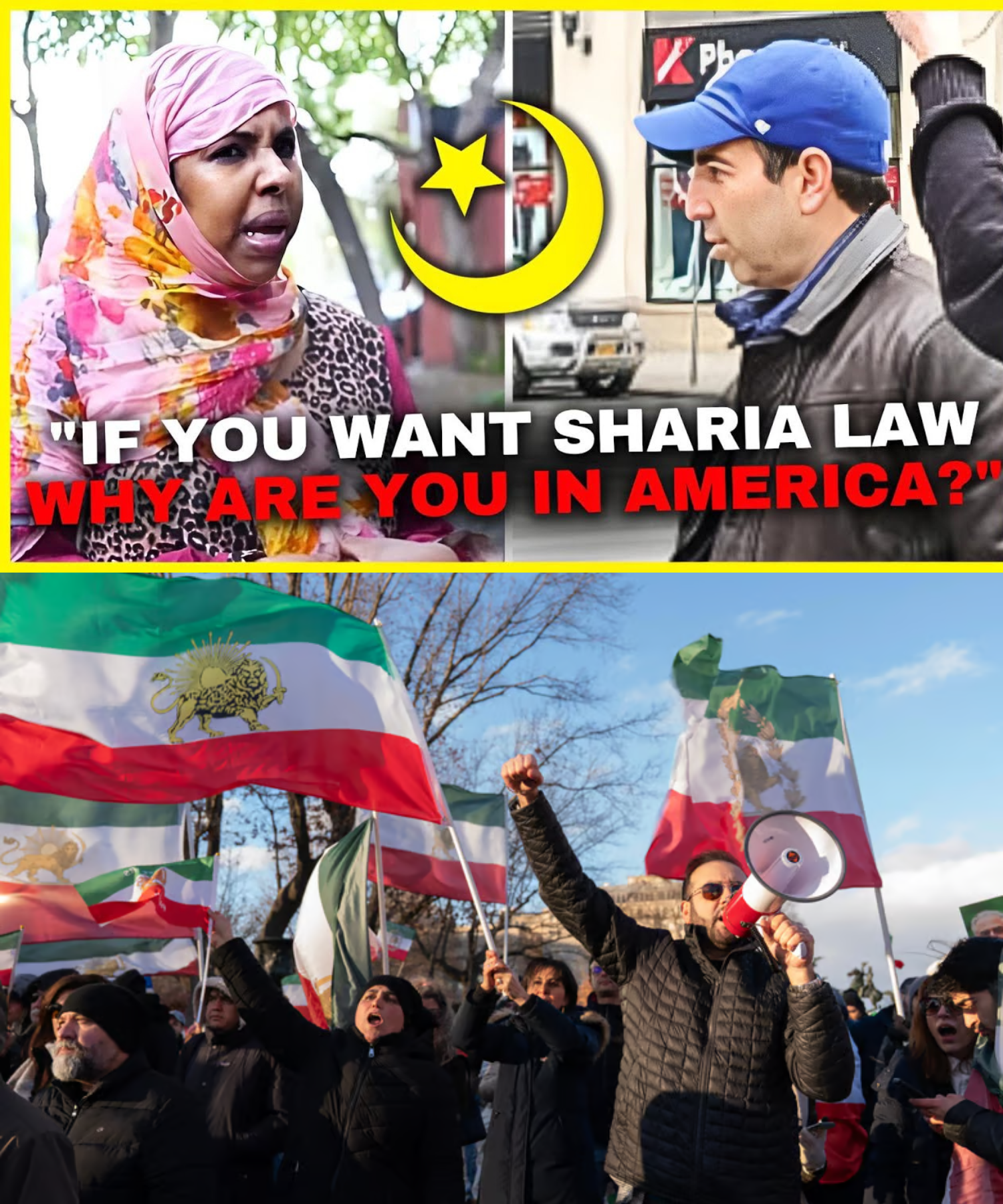
New York — A viral street interview circulating across American social media has ignited a heated national debate over free speech, religious law, and immigration, after a man openly stated he prefers Sharia law over American constitutional law and expressed support for punishing individuals who insult religious figures.
The footage, filmed in a public setting and widely shared online, has drawn intense reactions from viewers who say it highlights growing cultural and ideological tensions inside Western societies — particularly around the limits of free expression and religious sensitivity.
At the center of the controversy is a statement made by the interviewee, who argues that Islamic Sharia law is superior to the U.S. Constitution because, in his view, Sharia is “written by God,” whereas constitutional law is “written by men.”
He suggests that this difference makes religious law inherently more legitimate than secular democratic systems, adding that many Muslims share this belief because of their religious conviction.
The interviewer pushes back, arguing that such a position creates fundamental conflict in a pluralistic society like the United States, where laws are designed to protect people of different religions, beliefs, and cultural backgrounds equally.
“Sharia vs. Constitution” Becomes Central Flashpoint
In the video, the participant claims that Western legal systems are incompatible with Islamic principles, suggesting that Muslims living in Western countries face a contradiction between their faith and the laws of the society they live in.
He argues that Islamic law provides moral clarity that secular systems lack, while critics in the video frame this position as problematic in a diverse democracy where no single religious system is supposed to govern all citizens.
The conversation escalates further when the topic shifts to religious criticism and depictions of the Prophet Muhammad — a highly sensitive issue that has repeatedly sparked global controversy.
The interviewee expresses anger over cartoons and depictions of the Prophet, describing them as deliberate provocations that create hostility toward Muslims.
He argues that such depictions should not be allowed and suggests that legal restrictions on insulting religious figures would be preferable in order to prevent social conflict.
Free Speech vs. Religious Protection
The interviewer raises a central question in Western democratic societies: whether protecting religious figures from insult is compatible with freedom of speech.
In the United States, the First Amendment protects expression even when it is offensive or critical of religion. However, many countries in Europe and other parts of the world have debated or implemented limitations on speech that is considered blasphemous or inciting religious hatred.
In the clip, the interviewee supports the idea of legal restrictions on insulting the Prophet Muhammad, arguing that unrestricted speech leads to violence and emotional harm within the Muslim community.
He suggests that restricting such speech would reduce tensions and prevent individuals from reacting violently to perceived insults.
This statement immediately sparked backlash online, with critics warning that endorsing violence or justifying violent reactions to speech crosses a line in democratic discourse.
Justification of Violence Sparks Alarm
One of the most controversial moments in the video occurs when the interviewer asks whether violence against individuals who insult religious figures can ever be justified.
The interviewee responds in a way that suggests he understands why people might react violently when they feel deeply offended or insulted by depictions of the Prophet Muhammad.
He frames such reactions as emotional responses to prolonged frustration and humiliation, rather than isolated acts of aggression.
However, when directly asked whether killing someone who insults the Prophet is justifiable, he appears to agree with the idea, prompting immediate concern from viewers and commentators.
The interviewer challenges this position, pointing out that violence is not an acceptable response to speech in any other religious context in Western societies — including Christianity, Judaism, or Hinduism.
The interviewee responds that Islamic cases are different due to the depth of religious attachment and perceived severity of insult, further intensifying the debate.
Preference for Life in Muslim Countries Over the U.S.
The discussion then shifts toward immigration and cultural belonging.
When asked where he would prefer to live, the interviewee states that he would rather live in a Muslim-majority country such as Somalia, even if it lacks the economic stability or infrastructure of the United States.
He explains that the reason is cultural and religious alignment — suggesting that living among people who share his faith and values is more important than material conditions or political freedoms.
He also argues that Western freedoms, including freedom of speech, can sometimes lead to disrespect toward religious beliefs, which he views as unacceptable.
The interviewer presses further, asking whether the United States does in fact allow religious freedom.
The interviewee acknowledges that it does, but maintains that freedom of speech often becomes freedom to insult religion — something he believes is harmful to social cohesion.
Broader Debate Over Integration and Identity
The video then broadens into a discussion about immigration and assimilation in Western societies.
The interviewer questions why individuals who express strong preference for religious law and life in Muslim-majority countries choose to live in the United States.
He argues that the U.S. offers religious freedom, economic opportunity, and legal protections that are not always available elsewhere, including countries with stronger alignment to Islamic law.
The interviewee responds that many immigrants maintain cultural and religious identities even while living in the West, and that this does not necessarily mean they reject their host country.
However, critics of the video argue that the statements made in the clip reveal deeper tensions between liberal democratic values and strict religious interpretations of law and speech.
Online Reaction and Political Sensitivity
The footage has triggered widespread debate across social media platforms, with some viewers warning that it highlights a growing ideological divide in Western societies over free expression, religion, and integration.
Supporters of strict free speech protections argue that the interview reinforces the importance of defending open discourse, even when it is offensive.
Others argue that the conversation demonstrates how certain interpretations of religious law may conflict with secular democratic principles, particularly when violence is introduced into discussions about speech.
At the same time, many commentators have stressed the importance of avoiding generalizations about entire religious communities based on one interview.
They emphasize that the vast majority of Muslims in the United States and around the world do not support violence and fully participate in democratic societies while practicing their faith peacefully.
A Familiar American Flashpoint
The controversy reflects a recurring American debate: how to balance freedom of expression with respect for religious beliefs in a diverse society.
While the First Amendment protects even offensive speech, the question of cultural sensitivity and social harmony continues to divide policymakers, activists, and citizens.
The viral video does not provide clear answers, but it has clearly reignited a difficult conversation about identity, law, and coexistence in modern America.
As the clip continues to circulate online, it has become another flashpoint in the ongoing struggle to define the limits of free speech in an increasingly pluralistic society — and what happens when deeply held religious convictions collide with the principles of open expression.