Douglas Murray Immigration Debate Goes Viral as Clash Over “Values, Burqas, and Free Speech” Reignites Western Culture War
Douglas Murray Immigration Debate Goes Viral as Clash Over “Values, Burqas, and Free Speech” Reignites Western Culture War
New York — A heated public exchange involving British author and commentator Douglas Murray has gone viral across U.S. social media, reigniting a fierce transatlantic debate over immigration, cultural integration, and the future of Western values.
The discussion, originally recorded during a live political forum, quickly escalated into one of the most polarizing arguments now circulating online: whether large-scale migration from Muslim-majority countries is compatible with liberal democratic societies in Europe and North America.
At the center of the exchange is a recurring question that has defined Western political discourse for more than a decade — are immigrants expected to fully adapt to host-country values, or do multicultural societies require mutual cultural adjustment?
“Us Versus Them” or Cultural Reality?
The confrontation began when Murray was challenged on whether his argument framed migrants as holding “lesser values” compared to Western societies. The interviewer suggested that Murray’s critique of immigration risked portraying newcomers as inherently incompatible with British or European life.
Murray rejected that characterization, insisting that his argument was not about superiority, but about cultural friction.
He pointed to visible changes in European cities, including what he described as a growing presence of religious dress such as burqas in London compared to even some Gulf countries. Speaking from his recent travel experience in Doha, Murray argued that the visibility of certain cultural practices in Europe can feel unfamiliar to segments of the local population.
However, he emphasized that discomfort does not equate to hostility toward individuals. “I don’t feel hatred toward people who wear these things,” he said in the exchange, while also acknowledging that societies naturally react when cultural norms change rapidly.
That distinction — between critique of cultural change and rejection of individuals — sits at the core of the modern immigration debate.
Freedom of Speech as the First Fault Line
Murray then shifted the focus to what he described as the most threatened Western value: freedom of speech.
He argued that concerns over integration are not abstract but tied directly to real-world events, including violent attacks on journalists in Europe. In his view, societies that fail to defend free expression risk undermining one of the foundational pillars of liberal democracy.
His remarks drew a mixed reaction online. Supporters say he is highlighting genuine security concerns in Europe, while critics argue that linking immigration to threats against free speech risks stigmatizing entire communities based on isolated incidents.
Still, Murray insisted that discussing such issues openly is necessary, even if uncomfortable.
“Every society has difficulty integrating people from very different backgrounds,” he said, arguing that Europe is not uniquely failing but is facing challenges at a larger scale due to rapid demographic change.
The Qatar Comparison and “Selective Expectations”
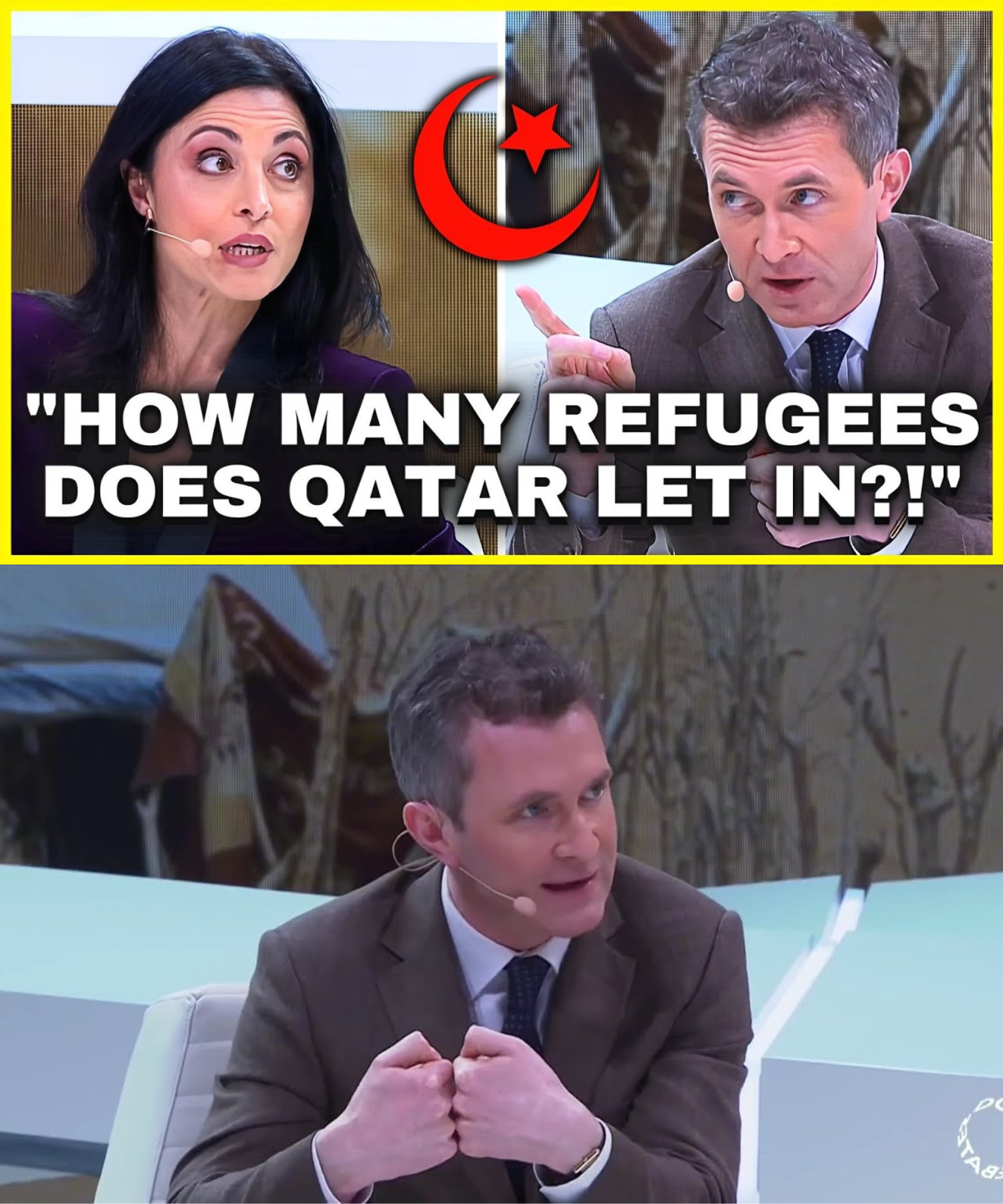
One of the most viral moments came when Murray pointed to immigration policies in Gulf countries, particularly asking why states such as Qatar and Saudi Arabia are not expected to naturalize large numbers of refugees.
He questioned why European nations are often the primary destinations for asylum seekers, while wealthier Gulf states remain far more restrictive in granting citizenship.
This comparison sparked immediate backlash and support in equal measure online.
Critics argue that Gulf states operate under fundamentally different legal and labor systems, making direct comparisons misleading. Supporters counter that Western nations face disproportionate expectations regarding asylum intake and long-term integration responsibilities.
The debate reflects a broader tension in global migration policy: who carries the responsibility for displaced populations in a fractured geopolitical world?
Cultural Friction and the Question of “Non-Negotiable Values”
Murray also argued that all societies have core values they are unwilling to abandon. In Western democracies, he identified freedom of speech as one such principle. He warned that if societies are forced to compromise on foundational rights to accommodate integration pressures, they risk losing the very identity that makes them attractive destinations for migrants.
His critics, however, argue that this framing oversimplifies multicultural reality. They say that migrants often contribute positively to host countries while adopting democratic norms over time, and that fears of cultural erosion are frequently overstated.
Still, the concern resonates with a segment of Western voters who feel that rapid social change is not always accompanied by sufficient public debate or consent.
“It’s Always Difficult” — But How Difficult?
Murray acknowledged that integration is not a new challenge, nor one exclusive to Europe. He compared current debates to broader global struggles with migration and identity, including issues in the United States, where gun violence and political polarization also shape public anxiety about safety and cohesion.
However, he maintained that European nations are now facing a particularly acute version of this challenge due to the scale and speed of immigration in recent decades.
The interviewer pressed him on whether such arguments risk encouraging division. Murray responded that avoiding difficult conversations does not eliminate the underlying issues — it only pushes them into more extreme political expressions later.
Burqas, Visibility, and the Symbolism of Change
Another flashpoint in the discussion centered on visible religious symbols, particularly the burqa.
Murray said that while individuals have the right to dress as they choose, the increasing visibility of religious dress in public spaces can create cultural tension in societies unaccustomed to it.
This remark sparked immediate debate online, with supporters saying he is describing a real cultural shift, and critics warning that focusing on religious clothing risks singling out Muslim women and reinforcing stereotypes.
The issue reflects one of the most sensitive fault lines in Western politics: how to balance religious freedom with cultural cohesion in pluralistic societies.
A Debate That Mirrors Western Politics
The viral exchange has since spread far beyond the original forum, becoming a focal point in American discussions about immigration, assimilation, and identity politics.
In the United States, similar debates are playing out in cities and state legislatures, where policymakers are grappling with questions of border enforcement, refugee intake, and cultural integration.
For many observers, the Murray interview is not just about Europe — it is a preview of arguments that will define American politics in the coming decade.
No Easy Resolution
As the debate concluded, neither side reached agreement. Murray maintained that Western societies must be honest about cultural friction and defend core liberal values. His critics argued that such framing risks inflaming tensions and oversimplifying the complex realities of immigration and identity.
What remains clear is that the conversation is far from over.
In fact, it is accelerating.
As migration continues to reshape societies across Europe and North America, the central question raised in the debate remains unanswered:
How does a liberal society preserve its core values while remaining open to the world?
For now, the answer depends entirely on who is asked — and which values they believe are truly non-negotiable.