Israel, Iran, and Lebanon Clash Debate Goes Viral as Experts Warn of “Permanent Middle East Crisis”
Israel, Iran, and Lebanon Clash Debate Goes Viral as Experts Warn of “Permanent Middle East Crisis”
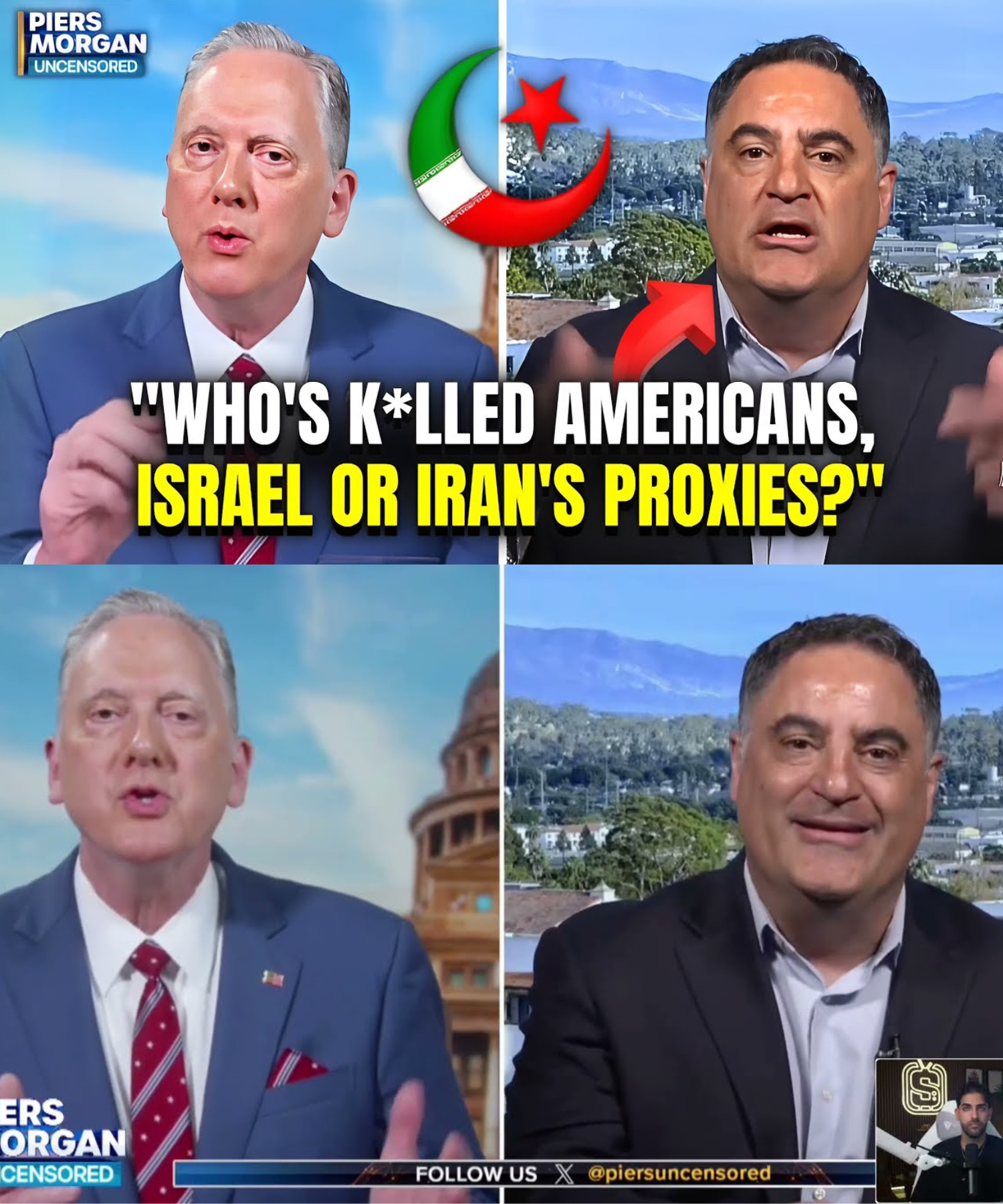
New York — A fiery geopolitical debate involving Israel, Lebanon, Iran, and the United States has gone viral after a heated panel discussion on Middle East conflict escalated into accusations of occupation, proxy warfare, nuclear deterrence, and regional collapse — exposing once again how deeply divided American commentary on the region has become.
The exchange, which spread rapidly across social media, centers on a fundamental question: is Israel acting in self-defense inside Lebanon and Gaza, or is it engaged in territorial expansion justified under the logic of security?
That question immediately split the panel.
One side argued that Israel is currently operating inside Lebanon due to ongoing attacks from Hezbollah, an armed group widely described by Western governments as an Iranian-backed proxy organization. The panelist insisted that Hezbollah’s rocket attacks into northern Israel force Israel into cross-border operations and buffer zone strategies.
The opposing side rejected that framing entirely, arguing that Israel’s military presence inside Lebanese territory constitutes occupation. They claimed that the reality is being inverted in public discourse — suggesting that Lebanon is often portrayed as the aggressor when, in their view, it is responding to incursions and territorial pressure.
That clash set the tone for the rest of the discussion.
Lebanon, Hezbollah, and the Question of “Who Invaded Whom”
At the center of the argument is southern Lebanon, where Israeli military operations and Hezbollah activity have created one of the most volatile frontlines in the region.
Critics on the panel argued that Israel’s repeated military actions inside Lebanon amount to long-term occupation, referencing historical conflicts and ongoing cross-border strikes. They questioned whether buffer zones or security corridors justify sustained presence in another sovereign state.
Supporters of Israel’s position countered that Hezbollah’s rocket attacks and Iranian-backed military infrastructure in Lebanon leave Israel with no choice but to maintain operational depth beyond its borders. They compared the situation to a hypothetical scenario in which a neighboring state launches daily missile attacks into U.S. territory.
The analogy sparked immediate backlash.
Opponents said the comparison oversimplifies a complex regional history, while supporters argued it illustrates the security logic driving Israeli military policy.
Iran, Proxies, and the “Regional Network War”
The debate quickly expanded beyond Lebanon into Iran’s role in the region.
One panelist described Iran as the central destabilizing force behind multiple conflicts, citing its support for armed groups including Hezbollah in Lebanon and other militant organizations across the Middle East. They argued that Iran’s proxy strategy allows it to exert influence without direct state-to-state war.
Critics challenged that framing, saying it reduces regional conflicts to a single narrative of Iranian control while ignoring local political dynamics and historical grievances.
The discussion intensified when the conversation turned to Gaza and post–October 7 regional escalation. Supporters of Israel argued that Iran’s network of allies coordinated pressure on Israel from multiple fronts. Opponents insisted that framing all resistance groups as Iranian proxies erases local motivations and political complexity.
Nuclear Tensions and Regional Deterrence
The panel then shifted to nuclear policy, with heated disagreement over Iran’s potential nuclear capabilities and Israel’s undeclared nuclear status.
One expert argued that the greatest regional destabilizer is the prospect of Iran acquiring nuclear weapons, warning that such a development would trigger widespread proliferation across Saudi Arabia, Turkey, and other regional powers.
Another panelist countered that Israel already possesses nuclear capability but is rarely scrutinized in public discourse, raising questions about perceived double standards in international security policy.
The exchange exposed a long-standing tension in Western debate: whether nuclear deterrence stabilizes or destabilizes the Middle East.
Straits of Hormuz and Economic Warfare
The conversation took another turn when panelists discussed the Straits of Hormuz, a critical maritime chokepoint through which a significant portion of global energy supply passes.
One speaker warned that Iran could leverage the straits as an economic weapon, potentially disrupting global oil flows and triggering international economic shocks. They argued that even without nuclear escalation, Iran holds significant strategic leverage over global markets.
Others suggested that such scenarios reflect broader failures of diplomacy and containment strategies, arguing that economic interdependence has not prevented militarized escalation.
Trump, Diplomacy, and the Fragile Negotiation Track
The panel also addressed U.S. diplomatic efforts under Donald Trump’s administration, including attempts to negotiate a framework deal with Iran.
One commentator argued that the administration’s shifting positions — particularly on uranium enrichment and sanctions relief — risk undermining long-term stability. They suggested that political pressure in Washington, especially ahead of elections, could destabilize any negotiated agreement.
Another participant argued that Iran’s negotiating position benefits from time and regional leverage, while the United States faces domestic political cycles that constrain long-term strategy.
Gaza, Lebanon, and the “Buffer Zone Doctrine”
The discussion repeatedly returned to Israel’s security doctrine, particularly the idea of buffer zones in Lebanon and Gaza.
Supporters of Israel’s approach argued that repeated attacks from neighboring territories justify maintaining strategic depth. They claimed that previous withdrawals from areas such as Lebanon and Gaza were followed by renewed hostilities, reinforcing the belief that territorial concessions do not guarantee peace.
Opponents argued that this logic risks becoming self-perpetuating — where security concerns justify permanent military presence, which in turn fuels further resistance.
The Core Dispute: Security vs Sovereignty
By the end of the debate, it became clear that the panel was not simply discussing current events — but two incompatible frameworks for understanding the region.
One framework views Israel as a state under constant existential threat, forced into preemptive and defensive actions across multiple borders.
The other framework views those same actions as expansionist, arguing that military presence inside neighboring countries constitutes occupation regardless of justification.
Neither side fully conceded ground.
A Conflict With No Stable Narrative
The viral reaction to the panel highlights a deeper reality in American political discourse: the Middle East is no longer debated through shared facts, but through competing narrative systems.
In one narrative, Iran is the central destabilizer, Hezbollah is an armed proxy, and Israel is a frontline democracy under siege.
In another, Israel is the primary military power expanding beyond its borders, while resistance groups are framed as responses to occupation and external pressure.
Both narratives draw on real events.
Both interpret them differently.
And both are now deeply embedded in American political media.
The Unresolved Question
As the debate ended without consensus, one question lingered over the entire exchange:
Is the Middle East crisis a series of separate conflicts — or a single interconnected war with no clear beginning and no clear end?
For now, the answer depends entirely on who is speaking.
And which version of reality the audience chooses to believe.