Viral Oxford Speech on Islam and Free Speech Ignites U.S. Firestorm Over Fear, Faith, and Western Civilization
Viral Oxford Speech on Islam and Free Speech Ignites U.S. Firestorm Over Fear, Faith, and Western Civilization
New York — A resurfaced Oxford debate clip questioning whether Islam can be called a “religion of peace” has erupted across American social media, reigniting fierce arguments over free speech, religious reform, women’s rights, terrorism, Islamophobia, and whether Western universities are still willing to debate controversial ideas without fear.
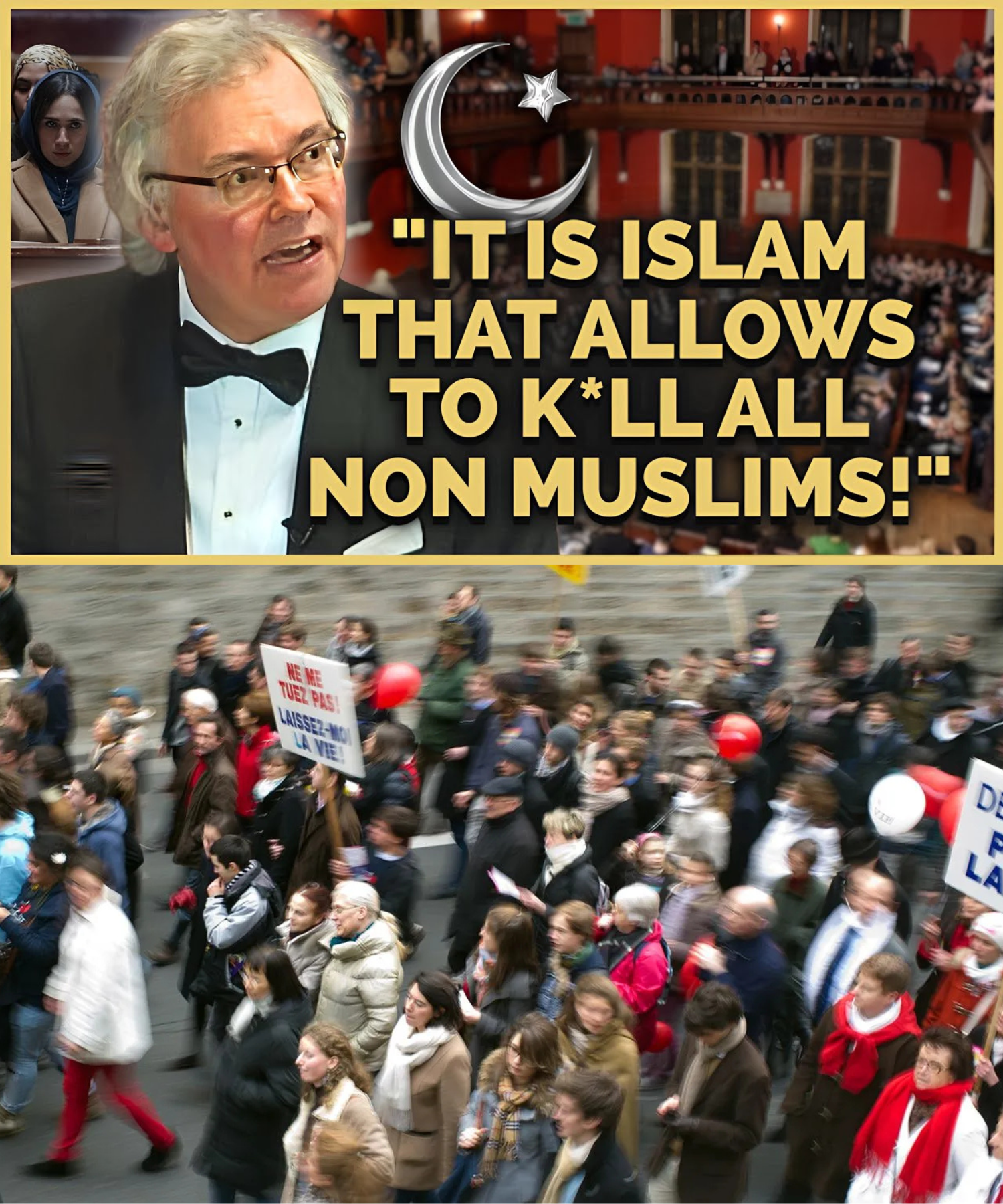
The speech, delivered by British journalist Daniel Johnson at an Oxford Union-style debate, has gone viral because of its uncompromising tone. Speaking in the shadow of recent Islamist violence in Britain, Johnson opens by saying he nearly decided not to attend. His reason was not scheduling, fatigue, or academic hesitation. It was fear.
He describes the recent murder of a British soldier in London by attackers invoking Islamist language, recalls the killing of filmmaker Theo van Gogh in the Netherlands, mentions Ayaan Hirsi Ali’s years of living under threat, and references friends and scholars who, in his telling, faced intimidation for speaking publicly about Islam.
Then he explains why he came anyway.
He says he does not want to live in fear in a free country.
He does not want Oxford to become a place where scholars are intimidated.
And he does not want free speech to die in the very civilization that gave that liberty to much of the modern world.
That opening has struck a powerful chord in the United States, where universities are already under pressure over speech codes, campus protests, antisemitism hearings, religious sensitivity, and whether fear of offense has replaced intellectual courage.
Oxford Becomes America’s Mirror
Although the speech took place in Britain, the reaction in America has been immediate.
U.S. commentators are framing the clip as a warning to American campuses: if universities cannot host difficult debates on religion, extremism, women’s rights, and civilizational conflict, then they are no longer places of inquiry — they are places of controlled speech.
Supporters of Johnson argue that he said what many academics privately believe but publicly avoid. Critics argue that the speech is sweeping, confrontational, and risks treating Muslims as collectively responsible for extremism committed in Islam’s name.
This is the tension driving the controversy.
Can the West criticize doctrines and political movements rooted in religion without turning believers into targets?
And if that distinction cannot be maintained, does free speech survive?
The Free Speech Argument
Johnson’s central claim is that Islam cannot meaningfully reform unless Muslim-majority societies allow the freedoms that Western societies take for granted: speech, press, conscience, academic inquiry, equality before law, constitutional democracy, and separation of mosque and state.
He contrasts that freedom with what he describes as the suppression of critical scholarship in many Islamic countries, especially on questions involving apostasy, blasphemy, and historical examination of the Prophet Muhammad.
To illustrate the value of intellectual liberty, he invokes the career of scholar Géza Vermes, whose work challenged both Christian and Jewish orthodoxies while flourishing in Oxford’s academic environment.
Johnson’s argument is simple but explosive: a scholar like Vermes could challenge religious tradition in the West, but similar inquiry into Islam in many Muslim-majority states could bring punishment, threats, or death.
For defenders of free inquiry, that is the heart of the issue.
For critics, the comparison is incomplete because Muslim societies are diverse, and not all Muslim-majority countries enforce religious law the same way.
Apostasy, Blasphemy, and Fear
The speech turns especially sharp when Johnson discusses apostasy and blasphemy.
He argues that leaving Islam or critically examining its sacred history can be dangerous in places where religious authority is backed by state power or violent movements.
This section has generated intense reaction among ex-Muslim activists in the United States, many of whom say Western progressives often ignore the dangers faced by dissenters from within Muslim communities.
Muslim advocacy groups, however, warn that such discussions must avoid implying that all Muslims support punishment for apostasy or violence against critics. They argue that many Muslims in America strongly defend religious freedom, pluralism, and peaceful coexistence.
The debate again returns to distinction: Islam as personal faith, Islamism as political ideology, and Muslims as diverse human beings.
Women’s Rights at the Center
Johnson also focuses heavily on women’s rights, citing survey data and arguing that many Muslim societies maintain attitudes that subordinate wives to husbands or restrict female autonomy.
He says he does not want Muslim women to “endure domestic tyranny,” and he links women’s equality to the broader need for religious reform.
That part of the speech has resonated with American feminist critics of religious conservatism, especially those who argue that women’s rights should not be sacrificed in the name of multicultural sensitivity.
But others push back, noting that patriarchy exists across many religious traditions, including Christianity, Judaism, Hinduism, and secular cultures. They argue that singling out Islam while ignoring broader misogyny can become politically selective.
Still, Johnson’s defenders say the topic of the debate was Islam, and that avoiding specific criticism by pointing to other religions is a familiar way of shutting down the conversation.
Antisemitism and the “Dirty Little Secret”
One of the most charged moments in the speech involves antisemitism.
Johnson references Muslim writer Mehdi Hasan’s description of antisemitism within parts of Muslim communities as a “dirty little secret,” arguing that more Muslims must openly confront such prejudice.
This theme has exploded in relevance in the United States since October 7 and the war in Gaza, as American universities, city councils, and protest movements have faced accusations of allowing anti-Jewish rhetoric to spread under the cover of anti-Israel activism.
Critics of Johnson’s speech say antisemitism must be confronted everywhere, including among Christians, secular extremists, and far-right groups. But they also acknowledge that anti-Jewish hostility inside some Muslim communities is a legitimate issue that should not be ignored.
Islamism vs Islam
The most important distinction in the debate is between Islam and Islamism.
Johnson argues that Islamist movements — including radical Sunni and Shiite currents — emphasize doctrines of domination, jihad understood as holy war, harsh enforcement of Sharia, and hostility to non-Muslims, women, homosexuals, and dissenters.
He says these movements are not marginal enough to be dismissed and that they pose a direct threat to Western civilization.
Muslim critics respond that Islamism is a political ideology, not the totality of Islam. They argue that millions of Muslims live peacefully in Western democracies, serve in public office, defend pluralism, and oppose terrorism.
This distinction has become central in American politics.
If public debate collapses Islam and Islamism into one category, Muslim citizens become unfairly stigmatized.
But if fear of stigmatization prevents scrutiny of Islamism, liberal societies may fail to confront real threats.
Why the Clip Is Spreading Now
The Oxford clip is spreading because America is already in the middle of a broader free speech crisis.
Speakers are shouted down on campuses. Professors fear viral backlash. Students report feeling unsafe over political disagreement. Religious offense is increasingly treated as a public emergency.
Johnson’s speech challenges that culture directly.
He argues that a free society must be willing to ask uncomfortable questions, especially about doctrines or movements that restrict freedom elsewhere.
His critics argue that freedom also requires protecting minorities from collective suspicion and demonization.
Both claims are true.
That is why the debate is so explosive.
The Unresolved Western Dilemma
The viral speech does not settle whether Islam is a religion of peace.
It exposes a deeper dilemma: Islam has peaceful believers, reformist voices, spiritual traditions, and millions of ordinary Muslims who want safety, family, dignity, and faith.
But Islamist movements also exist, and they do threaten free speech, women’s rights, minorities, dissidents, and Jews.
The West must be able to say both things at once.
If it cannot, the debate becomes either cowardice or bigotry.
America is watching this Oxford speech because the same fight is now happening here — in universities, newsrooms, churches, mosques, synagogues, courts, and Congress.
The question is not only whether Islam is a religion of peace.
The question is whether the West still has the courage to debate peace, violence, faith, and freedom without surrendering to fear.