“A Spiritual Confrontation at the Heart of London”: Massive Christian Rally Near Parliament Sparks Political and Cultural Firestorm
“A Spiritual Confrontation at the Heart of London”: Massive Christian Rally Near Parliament Sparks Political and Cultural Firestorm
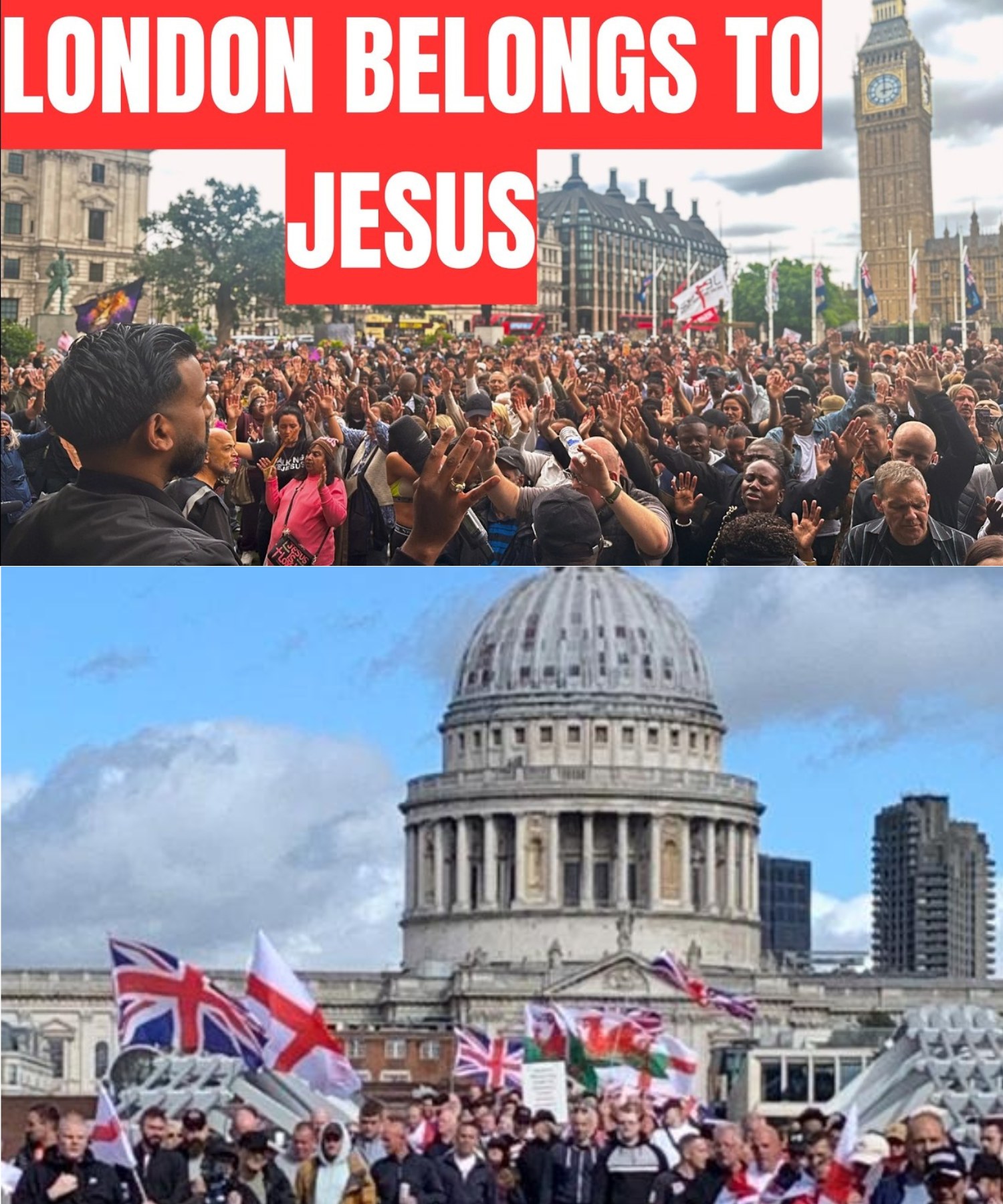
A large outdoor Christian gathering held near the Houses of Parliament in London has gone viral after footage showed thousands of participants engaged in intense worship, prayer declarations, and calls for national revival — triggering a heated debate across the UK about religion in public space, political messaging, and the role of faith in national identity.
The event, described by organizers as a “prophetic declaration,” brought together pastors, evangelists, and worship groups from across the country, and featured continuous prayer, public preaching, and collective declarations of Christian faith.
While supporters called it a powerful expression of spiritual unity and national renewal, critics have raised concerns about increasingly political language and confrontational rhetoric tied to religious messaging.
Worship or Political Statement? The Event That Divided Public Opinion
The gathering took place in central London within view of major political landmarks, including Parliament, and quickly drew attention both from passersby and online audiences after livestream clips spread rapidly across social media.
Organizers repeatedly emphasized that the event was not a political rally or protest, but a spiritual gathering focused on worship, prayer, and what they described as a call for national revival.
However, parts of the speeches included strong declarations about cultural direction, spiritual authority, and the future of the United Kingdom.
Phrases such as “lifting the name of Jesus over government and powers” and calls for national transformation through faith fueled debate over whether the event remained purely religious or had entered the political sphere.
“Revival in the Heart of Government”: The Message From the Stage
Speakers at the rally framed the gathering as a historic spiritual moment, drawing parallels with past Christian reformers and revival movements in British history.
References were made to historical religious figures such as William Tyndale, William Wilberforce, David Livingstone, and Smith Wigglesworth — individuals credited with shaping Christian theology, abolitionist movements, and missionary expansion.
Organizers argued that modern Britain stands at a critical spiritual crossroads and called on believers to “rise up boldly” in their faith.
Repeated slogans such as “we still believe the Bible” became a central chant throughout the event, echoing across the crowd.
A Call for National Transformation Through Faith
A key theme of the gathering was the belief that Britain is entering a period of spiritual urgency.
Speakers urged participants to pursue what they described as “revival and reformation,” emphasizing prayer, evangelism, and public declaration of Christian faith.
One central message repeatedly emphasized was the idea that national renewal would not come through politics or institutions alone, but through spiritual awakening among believers.
The crowd was encouraged to pray for national transformation, including references to government institutions, regional unity across the UK, and societal healing.
“We Will Not Be Silenced”: Strong Rhetoric on Culture and Faith
The tone of the event became more intense as speakers addressed what they described as cultural resistance to Christian expression in modern society.
Participants declared opposition to what they called “fear,” “cultural pressure,” and “silencing of religious truth.”
Statements such as “we will not bow to culture” and “we will not be subdued” were repeated in unison by attendees.
Supporters framed this language as spiritual encouragement and confidence in religious conviction.
Critics, however, argued that the rhetoric risked deepening cultural divides by presenting modern society as inherently hostile to Christianity.
Prayer, Worship, and Collective Declaration
Large sections of the event consisted of continuous worship, singing, and group prayer.
Organizers described the gathering as a “spiritual confrontation” in symbolic terms, not physical conflict, emphasizing prayer as the primary method of engagement.
Leaders called for unity among churches, pastors, and evangelists, encouraging participants to see themselves as part of a broader revival movement.
Prayers focused on national renewal, spiritual awakening, and increased public expression of faith across the UK.
Historical Framing and the Idea of a “Remnant Generation”
Speakers frequently referenced historical Christian figures and framed the present generation as a continuation of past spiritual movements.
The concept of a “remnant generation” — a small but faithful group called to lead spiritual renewal — was emphasized throughout the rally.
Participants were encouraged to see themselves as part of a larger historical and spiritual narrative extending back centuries.
This framing gave the event a sense of urgency and mission, according to supporters.
Political and Cultural Concerns Raised by Critics
The event has sparked significant debate among political commentators, religious scholars, and civil society observers in the UK.
Critics argue that while freedom of religion is a protected right, the proximity of such gatherings to political institutions raises questions about the blending of spiritual messaging with political symbolism.
Others expressed concern about language describing cultural confrontation, warning that it could contribute to increased polarization in already divided communities.
However, supporters insist that the event was peaceful, non-political in intent, and focused solely on worship and prayer.
The Role of Religion in Public Space
At the heart of the controversy is a broader question about the role of religion in public life.
Should large-scale religious gatherings near government institutions be interpreted as expressions of free worship, or do they inevitably carry political meaning?
In the UK, where secular governance coexists with a strong historical Christian identity, this question has become increasingly complex.
The London rally has now become a focal point in that ongoing debate.
Social Media Amplification and Viral Spread
Clips from the event spread rapidly across platforms, with some videos reaching millions of views within hours.
Supporters shared footage as evidence of what they described as a growing spiritual awakening in Britain.
Critics, meanwhile, highlighted moments of political language and interpreted them as signs of increasing religious activism in public discourse.
The result has been a sharply divided online response, reflecting broader tensions about religion, identity, and free expression in Western societies.
Conclusion: Faith, Identity, and a Nation in Debate
The London gathering has become more than just a religious event — it has become a cultural flashpoint.
For supporters, it represents a revival movement rooted in prayer, unity, and historical continuity.
For critics, it raises concerns about the increasing overlap between religious messaging and political symbolism in public spaces.
What remains clear is that the event has reignited a national conversation about faith, identity, and the role of religion in modern Britain.
And as the debate continues, one question remains at the center of it all:
Where does worship end — and public political expression begin?