Japan’s Hard Line on Islam Sparks Fierce Debate in America Over Immigration, Security, and National Identity
Japan’s Hard Line on Islam Sparks Fierce Debate in America Over Immigration, Security, and National Identity
A viral video praising Japan’s strict approach to Islam, immigration, and cultural integration has ignited a new firestorm across the United States, where debates over borders, religious accommodation, national identity, and civil liberties are already reaching a boiling point.
The video argues that while countries such as the United Kingdom, Germany, France, and the United States spent decades trying to manage multiculturalism, Japan chose a radically different path. Instead of building a large accommodation system around religious minorities, the narrator claims Japan kept its borders tight, insisted on cultural conformity, limited refugee intake, monitored potential security risks aggressively, and refused to let religious demands reshape public institutions.
For many American viewers, the message landed with force: Japan, the video suggests, protected itself by doing what Western governments were too afraid to do.
But critics say the argument is dangerous, incomplete, and risks turning legitimate concerns about integration into broad suspicion against Muslims as a whole.
That clash is exactly why the video has spread so quickly.
At the center of the viral argument is Japan’s small but growing Muslim population. The narrator traces Islam’s presence in Japan back to early diplomatic contact with the Ottoman Empire, the construction of mosques in Kobe and Tokyo in the 1930s, and the quiet existence of a small Muslim community for much of the 20th century. According to the video, that began to change after Japan opened more actively to foreign tourism and labor in the 2010s, driven by an aging population and shrinking workforce.
Prayer rooms appeared in airports and shopping centers. Hotels advertised prayer mats and qibla indicators. Restaurants sought halal certification. Tourism officials promoted Muslim-friendly services.
To supporters, that sounded like normal hospitality.
But the video argues that once infrastructure was created, new demands followed: halal school lunches, mosque approvals, public prayer concerns, and cemetery requests. The narrator frames these not as isolated issues, but as the beginning of a larger question every society must answer: how much should a host culture change to accommodate newcomers?
That question resonates deeply in America.
In U.S. cities and suburbs, similar debates have played out around school menus, religious holidays, zoning permits for mosques, workplace prayer, religious dress, and public funding. Supporters of accommodation say religious freedom means making room for peaceful citizens to practice their faith. Critics say constant exceptions can slowly transform public institutions and create resentment among people who feel they were never asked.
The Japan video focuses heavily on one issue that crystallized the debate there: burial.
Japan cremates more than 99% of its dead, and its funeral system is built around cremation. Islam traditionally requires burial. When Muslim communities requested dedicated cemetery space, local opposition grew. The video describes public resistance, political pushback, and one Japanese politician’s blunt suggestion that Muslims who die in Japan should either accept cremation or have their remains returned to their country of origin at their own expense.
That line became one of the most controversial parts of the video.
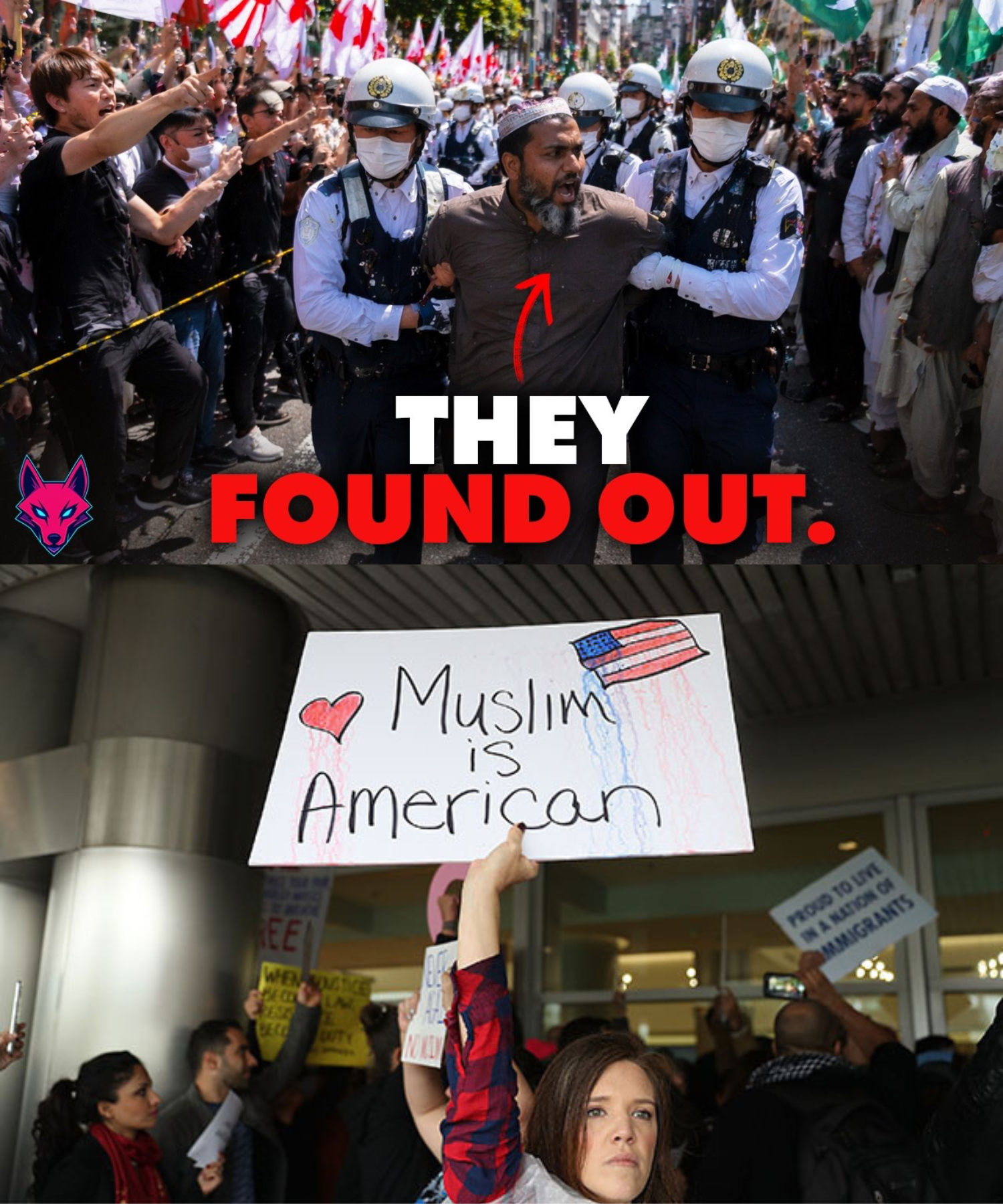
Supporters praised it as cultural honesty. Critics condemned it as harsh and exclusionary. For American viewers, it raised an uncomfortable question: when religious freedom collides with a country’s deeply established social systems, who is expected to adapt?
The most explosive section of the video concerns surveillance.
The narrator describes how, after September 11, Japanese police reportedly built a counterterrorism system focused on Islamic extremism, collecting files on thousands of Muslims living in Japan, including personal information, mosque affiliations, and movement details. According to the video, after leaked police documents became public, Muslim plaintiffs sued, arguing that their rights to privacy and religious freedom had been violated. Japanese courts ultimately upheld the surveillance framework.
That portion of the video has divided American audiences sharply.
Some national security hawks see Japan’s approach as proof that strong states prevent problems before they explode. They argue that Western countries have been too slow, too fearful of accusations, and too unwilling to confront extremist networks.
Civil liberties advocates see something much darker. They warn that mass surveillance based on religion violates the basic principles of liberal democracy. In the United States, where the Constitution protects both religious freedom and privacy from unreasonable government intrusion, a Japan-style system would face enormous legal and moral challenges.
For Muslim Americans, the clip touches an old wound. After 9/11, many Muslims in the United States experienced suspicion, surveillance, and profiling despite having no connection to terrorism. Civil rights groups argue that communities should not have to prove their loyalty simply because they worship differently.
Still, the viral video’s defenders argue that Japan’s results speak for themselves. The narrator points out that Japan has not suffered the kind of Islamist terrorist attacks seen in parts of Europe. He argues that controlled migration, limited refugee intake, language barriers, low welfare dependency, and strong cultural expectations prevented the formation of parallel societies.
That claim has become the core of the American debate.
Conservatives sharing the video say Japan shows what happens when a country remembers its duty to protect its people and culture. They contrast Japan with European countries where debates over integration, radicalization, crime, and social fragmentation have become politically explosive. They argue that Western leaders were pressured by guilt, postcolonial politics, and fear of being called racist, while Japan never accepted those rules.
Critics say this interpretation leaves out too much. Japan’s history, geography, language, legal system, immigration levels, and social structure are very different from America’s. The United States is not an island nation with one dominant ethnic identity and a long tradition of cultural conformity. It is a constitutional republic built around immigration, pluralism, and individual rights.
That difference matters.
America cannot simply become Japan. It has different laws, different founding ideals, and a different national story. But the video has still forced many Americans to ask whether pluralism can survive without shared expectations. Can a country welcome newcomers while still insisting on loyalty to its laws and customs? Can religious freedom coexist with a firm national identity? Can security be maintained without collective suspicion?
The most serious answer may be the hardest one.
A free society must reject extremism without demonizing peaceful believers. It must protect borders without abandoning compassion. It must defend national culture without turning minorities into enemies. It must allow religious practice while making clear that no religious law outranks the Constitution.
That is where America’s debate now stands.
The Japan video went viral because it offers a simple story: one country stood firm while the West surrendered. But reality is more complicated. Japan’s model may look strong to those worried about cultural erosion, but it also raises serious concerns about privacy, religious liberty, and the treatment of minorities.
Still, the video’s popularity reveals something important.
Millions of Americans no longer trust their leaders to manage immigration honestly. They no longer believe questions about culture can be dismissed as bigotry. They no longer accept that every request for accommodation must be granted automatically. And they are increasingly looking abroad for examples of countries that appear to have drawn harder lines.
Japan has now become a symbol in that argument.
To some, it is a warning to the West: protect your culture before it is too late.
To others, it is a warning of a different kind: fear can make a society trade freedom for control.
For America, the challenge is not to copy Japan blindly.
It is to answer the question Japan’s example has forced back into public view: what must a nation protect in order to remain itself?