Big Update For Exorcist Who Made Shock UFO Comments
Big Update For Exorcist Who Made Shock UFO Comments
The line between spiritual warfare and modern science fiction has blurred into a bureaucratic battleground within the Roman Catholic Church, exposing a deep theological rift over the nature of unexplained aerial phenomena and the boundaries of demonic influence.
In the early morning hours of what would become his last week as an officially sanctioned voice of the Archdiocese of Washington, Monsignor Stephen Rossetti sat before a high-definition webcam, his clerical collar stark against the dark wood of his study. For years, Rossetti had occupied a rare, highly sensitive niche within the American Catholic hierarchy: a licensed exorcist, a psychological consultant, and the head of the St. Michael Center for Spiritual Renewal. To his hundreds of thousands of social media followers, he was a reassuringly modern warrior against ancient evils. But on this particular morning, Rossetti chose to address a topic that has increasingly consumed the anxieties of the American public, the halls of Congress, and the dark corners of the internet: Unidentified Anomalous Phenomena (UAPs), colloquially known as UFOs.
“There is a danger here,” Rossetti warned his viewers, his voice measured but urgent. “And I want to raise that as an exorcist. Demons like to hide. They are more effective when we don’t realize they’re around. At times, demons will be manifest in this world.”
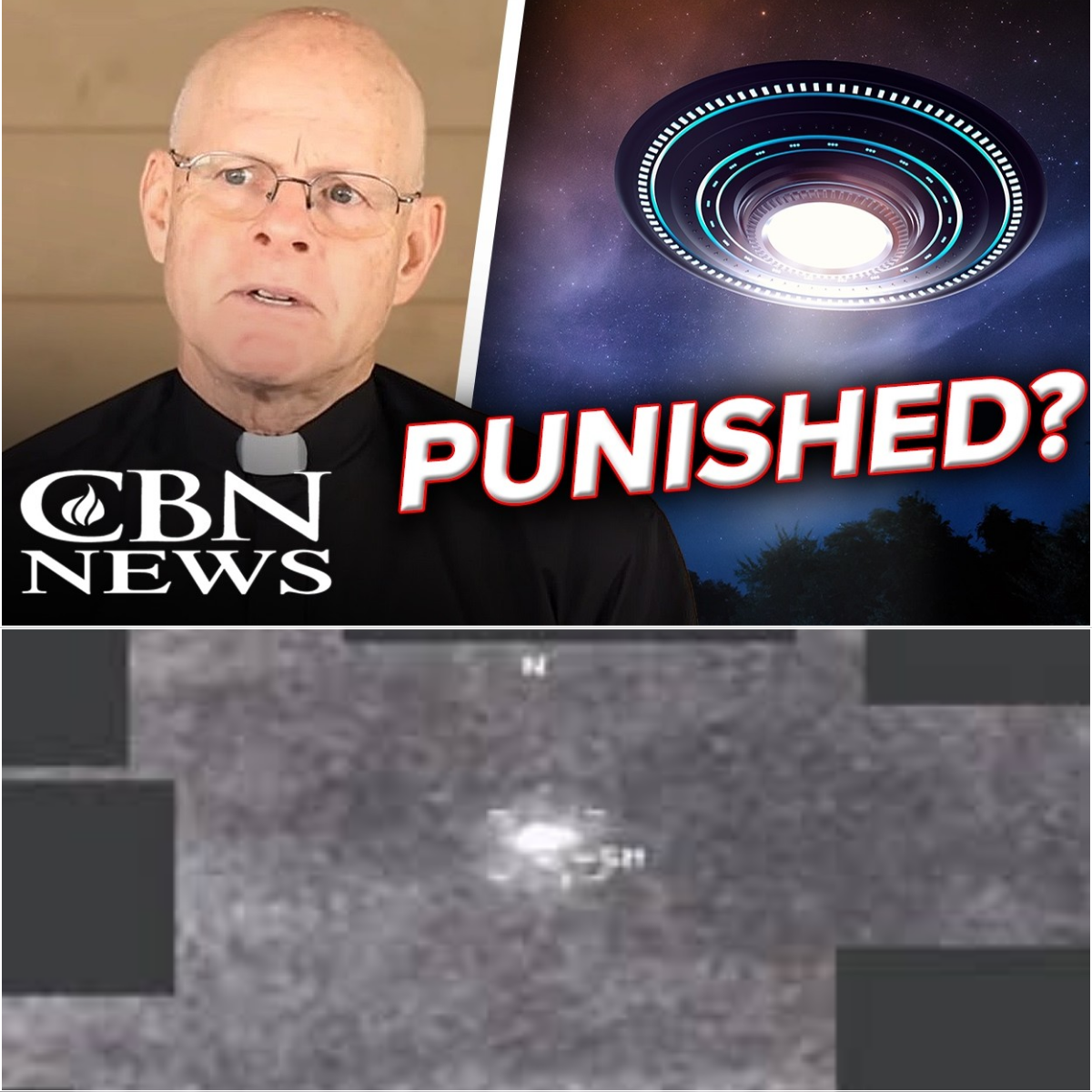
Rossetti then recounted an incident involving a woman possessed of a “particular spiritual gift” whom his center had vetted. When shown a high-resolution image of a UAP—an object tracking across the sky with the physics-defying agility that has recently baffled military aviators—the woman did not see an extraterrestrial visitor from a distant galaxy. She recoiled in terror.
“She said,” Rossetti whispered to the camera, “‘It’s a demon.’ So there you have it.”
The blowback from the chancery was swift, absolute, and uncharacteristically public. Within days, the Archdiocese of Washington issued a terse, sweeping directive that effectively severed all ties with the high-profile priest. Cardinal Robert McElroy, acting on behalf of ecclesiastical authority, announced that Rossetti had been removed from his position. Furthermore, the archdiocese terminated all institutional affiliations with the St. Michael Center for Spiritual Renewal, effectively excommunicating the organization from the official apparatus of the Church.
The official justification provided by the archdiocese was biting. Cardinal McElroy stated that Rossetti’s assertions linking UFOs to demonic presence, combined with the center’s aggressive and sensationalist use of social media, “gravely undermine the church’s very precise teaching on the devil, demons, and exorcism.”
To casual observers of the Vatican, the move seemed like a straightforward exercise in public relations management—a corporate hierarchy reining in a rogue executive who had wandered too far into the fringe. But to theologians, historians, and defense analysts who monitor the intersection of religious belief and national security, Rossetti’s dismissal is the opening salvo in a profound and volatile debate. The question at the heart of the controversy is no longer just whether intelligent life exists beyond Earth, but whether the Western world’s intelligence apparatus and its religious institutions are prepared for the psychological fallout if those entities are revealed to be not biological travelers from the stars, but interdimensional forces of a darker, spiritual nature.
The Rise of the “Collins Elite” and the Interdimensional Hypothesis
To understand why the Archdiocese of Washington reacted with such institutional panic to Rossetti’s comments, one must look beyond the immediate boundaries of Catholic dogma and into the strange history of American UFO research. For decades, the dominant cultural narrative regarding UFOs has been the “Extraterrestrial Hypothesis”—the idea that hardware-based spaceships are traveling vast distances across the cosmos, utilizing advanced propulsion systems to study our planet.
However, as the United States government has moved toward greater transparency regarding UAPs over the last several years, an alternative, far more unsettling theory has gained traction within the highest echelons of the Pentagon and the intelligence community. This perspective, often referred to as the “Interdimensional Hypothesis,” argues that these phenomena are not traveling from distant physical planets, but are crossing over from co-existing dimensions—realities that occupy the same space as our own but remain invisible to the naked human eye until they choose to manifest.
Within the classified corridors of the American defense establishment, this theory has long driven a quiet, factional civil war. According to declassified documents, investigative journalists, and former intelligence officials, a loosely organized group of deeply religious, high-ranking defense officials—informally dubbed the “Collins Elite”—spent decades working to suppress government research into UFOs. Their reasoning was not based on a desire to hide advanced technology from adversaries, but on a profound, existential terror. They believed that the entities behind the UFO phenomenon were biblical “principalities and powers”—demonic deceivers masquerading as advanced space travelers to lure humanity away from traditional religious faith.
When Monsignor Rossetti linked UAPs to demonic activity on social media, he was not merely spouting eccentric personal theology; he was validating a perspective that is widely held by a significant portion of the American evangelical and orthodox Catholic population, as well as a quiet contingent within the military-industrial complex.
“The physics of interstellar travel simply don’t hold up under our current understanding of the universe,” says Dr. Hugh Ross, an astrophysicist and prominent Christian theologian who has written extensively on the subject. Ross notes that the closest potential exoplanet capable of supporting any semblance of life is approximately 25 trillion miles away. To traverse those distances in physical craft would require traveling at or near the speed of light, an enterprise that encounters catastrophic thermodynamic and structural barriers.
“When you look at the radar data, the pilot testimonies, and the physical characteristics of these encounters,” Ross argues, “these objects do not behave like physical matter. They pull 700 Gs of acceleration without creating sonic booms. They materialize and dematerialize at will. They change shapes. These are not mechanical spaceships. They are manifestations that transcend our three-dimensional reality. In classic theological terms, they are interdimensional, spiritual interventions. And history tells us that when non-human spiritual entities intervene in human affairs without divine sanction, their motives are deceptive.”
The Precision of Catholic Demonology
If Rossetti’s views are shared by mainstream astrophysicists and millions of everyday believers, why did the Archdiocese of Washington deem them so dangerous that they required his immediate removal? The answer lies in the statement issued by Cardinal McElroy, specifically his reference to the Church’s “very precise teaching on the devil, demons, and exorcism.”
For the Roman Catholic Church, demonology is not a matter of speculative folklore or internet theater; it is a highly rigorous, centuries-old legal and theological discipline governed by the Rite of Exorcism (De Exorcismis et Quibusdam Supplicationibus). The Church views demonic possession and oppression as extremely rare, objective spiritual pathologies that must be diagnosed with absolute clinical and spiritual precision.
Under current Vatican guidelines, an exorcist is strictly forbidden from declaring an illness or an unusual phenomenon to be demonic until every possible natural explanation has been thoroughly investigated and ruled out. This requires extensive consultations with medical doctors, psychiatrists, and physicists. By publicly proclaiming that images of UFOs—phenomena that the U.S. government is currently actively investigating through scientific and military means—were definitively “demonic,” Rossetti violated a cardinal rule of his office. He engaged in public speculation, jumping to a supernatural conclusion before the scientific data had been fully compiled.
“The Church has spent centuries fighting the accusation that it is a superstitious, anti-scientific institution,” explains Father Thomas Brand, a church historian specializing in post-Vatican II administrative law. “When a high-profile exorcist goes on TikTok or YouTube and says, ‘A woman with a spiritual gift looked at a UFO photo and told me it’s a demon, so there you have it,’ it terrifies the hierarchy. It makes the Church look like it’s reverting to medieval panic. It undermines the very precise, intellectual skepticism that Catholic exorcists are supposed to bring to their work.”
Furthermore, church officials are deeply uncomfortable with the implications of Rossetti’s theory. If UFOs are demons, then the physical sky is populated by millions of visible, radar-detectable manifestations of Satan’s army, capable of interacting with military hardware and influencing international defense policy. Such a worldview approaches a form of cosmic dualism, suggesting that the devil possesses an independent, terrifying level of physical dominion over the atmosphere that threatens to eclipse the sovereignty of God in the minds of the faithful.
The Social Media War for the Modern Soul
The dismissal of Monsignor Rossetti cannot be separated from the broader, ongoing struggle within the Catholic Church over the wild, unregulated frontier of digital media. The St. Michael Center for Spiritual Renewal was not a quiet, cloistered monastery; it was a media-savvy enterprise that utilized daily blog posts, viral short-form videos, and social media apps to engage with a population increasingly obsessed with the paranormal.
In the digital age, content focusing on exorcisms, curses, occult deliverance, and spiritual warfare generates massive engagement. Rossetti’s accounts regularly pulled millions of views, drawing in a young, anxious demographic looking for absolute answers in an increasingly chaotic world. To his supporters, Rossetti was doing essential missionary work on the digital highways, equipping modern Christians to give a defense for their faith against a culture saturated with neo-paganism, witchcraft, and existential dread.
But to the archdiocese, this digital ministry had begun to resemble a spectacle. The presentation of complex spiritual warfare through the lens of viral internet culture was seen as trivializing the profound solemnity of the Church’s ministry. When the St. Michael Center began mixing the deeply serious reality of demonic possession with the sensationalist, click-driven world of ufology, the institutional tolerance of the chancery finally snapped.
The tension highlights a structural vulnerability within the modern Church: the rise of the “celebrity priest” who commands a larger, more loyal digital audience than the local bishop or cardinal. When such a priest uses his platform to endorse highly controversial, speculative theories that intersect with national security and global conspiracy theories, he becomes a liability that the hierarchy feels compelled to neutralize.
The Biblical Narrative of the Skies
Despite the institutional reprimand of Rossetti, the debate he sparked continues to rage among theologians who argue that his perspective is firmly rooted in the text of the New Testament. In the video segment that ultimately led to his ousting, Rossetti quoted directly from the Epistle to the Ephesians: “For our struggle is not with flesh and blood, but with the principalities, powers, and rulers of this present darkness, with evil spirits.”
To evangelical thinkers and orthodox Catholics alike, the specific vocabulary used by the Apostle Paul is highly instructive. The Bible repeatedly refers to Satan as the “prince of the power of the air” and describes the heavenly realms—the atmosphere—as the primary theater of spiritual warfare.
“The modern world has been conditioned by Hollywood to look at the sky and expect benevolent, highly evolved biological saviors from the Pleiades or Zeta Reticuli,” says Miguel Rodriguez, a cultural anthropologist who studies religious movements in the American Southwest. “But ancient civilizations had a completely different name for strange lights that descended from the sky, altered human consciousness, left behind physical trauma, and demanded obedience. They called them gods, demi-gods, and demons.”
Rodriguez notes that many of the reported characteristics of the “alien abduction” phenomenon share striking, identical markers with classic accounts of demonic oppression recorded by historical church authorities. Victims of abductions frequently report intense paralysis, a profound sense of overwhelming dread, telepathic communication that bypasses human language, and a preoccupation with sexual and genetic manipulation—themes that echo the biblical accounts of the Nephilim in the Book of Genesis, where spiritual beings crossed boundaries to interact with humanity.
“Furthermore, within the subculture of UFO research, there is a well-documented phenomenon where these ‘extraterrestrial’ encounters can be abruptly halted or permanently ended when the victim invokes the name of Jesus Christ,” Rodriguez adds. “If these are biological entities from a distant solar system utilizing advanced plasma propulsion, they should not be sensitive to the religious vocabulary of a specific terrestrial faith. The fact that they react to spiritual authority suggests that their nature is fundamentally spiritual, not biological.”
The Vatican’s Long Game on Extraterrestrial Life
The irony of Monsignor Rossetti’s dismissal is that while the Archdiocese of Washington was punishing him for linking UFOs to demons, the Vatican itself has spent decades quietly preparing for the scientific discovery of actual extraterrestrial life. The Holy See maintains a state-of-the-art astronomical observatory in Castel Gandolfo, Italy, as well as a research telescope on Mount Graham in Arizona.
Prominent Vatican astronomers, including Father José Gabriel Funes and Brother Guy Consolmagno, have publicly stated that the existence of intelligent extraterrestrial life would pose no threat to Catholic theology. In a famous interview, Consolmagno even remarked that he would be happy to baptize an alien, provided the creature explicitly requested the sacrament.
The Vatican’s long-term strategy appears to be one of cautious adaptation to the Extraterrestrial Hypothesis. If science eventually confirms the existence of biological life on other planets, the Church is prepared to absorb that discovery into its expansive theology, viewing those beings as fellow creatures within a vast, divinely ordered cosmos.
However, Rossetti’s “demonic hypothesis” throws a wrench into this progressive, intellectual narrative. If the phenomena currently tracking across our skies are not biological cousins waiting to be converted, but predatory spiritual entities intent on deception, the Vatican’s diplomatic, scientific approach to the cosmos becomes dangerously obsolete. By choosing to classify UAPs as demonic, Rossetti was pulling the Church away from the prestigious table of international scientific discourse and dragging it back into a grim, apocalyptic conflict that mainstream society has spent centuries trying to forget.
The Defense of the Faith in an Age of Artificial Uncertainty
As CBN News and other independent religious media outlets continue to track the fallout from Rossetti’s removal, the broader Christian community is left to grapple with the practical implications of the controversy. For many believers, the archdiocese’s decision to silence the priest feels like an act of institutional cowardice—a refusal to engage with the complex, bizarre realities of the modern age.
Supporters of Rossetti argue that as the world enters an era defined by deep-fake artificial intelligence, government disclosures regarding anomalous phenomena, and a catastrophic decline in traditional religious attendance, the Church cannot afford to stick its head in the administrative sand. Parents and pastors argue that they need a coherent, spiritually rigorous framework to discuss these topics with a younger generation that is exposed to paranormal content every time they open a smartphone.
“To just shut the discussion down seems incredibly premature,” said Raj, a Christian media analyst, during a recent panel discussion on the Rossetti case. “We as Christians need to be able to think about these things so that when crazy AI images and UFO disclosures happen, we can give a logical, coherent defense for the faith we profess. We need to be able to talk to our children about the reality of the spiritual realm without being treated like outcasts by our own leadership.”
For now, Monsignor Rossetti remains a priest without a public platform, his center dismantled and his warnings relegated to archives of the internet. The Archdiocese of Washington has returned to a quiet, dignified silence, hoping to distance itself from the sensationalist headlines of the paranormal.
Yet, as military sensors continue to track anomalies over our oceans and the American public continues to look toward the heavens with a mixture of awe and anxiety, the question Rossetti raised refuses to be buried by administrative decree. The skies remain vast, unexplained, and deeply unsettling—and the true nature of the entities navigating those heights remains a secret locked away in the mind of God, or hidden in the shadows of the air.