The 3 Questions Jesus Will Ask EVERYONE on Judgment Day
The 3 Questions Jesus Will Ask EVERYONE on Judgment Day
The rain in Seattle didn’t fall; it hung in the air like a wet wool blanket. Outside the glass walls of the mega-church’s broadcast studio, the Pacific Northwest was dissolving into its usual winter gray. Inside, under the relentless glare of forty-thousand-watt LEDs, Pastor Thomas Miller adjusted his lapel mic.
Thomas was forty-two, with the meticulously faded haircut of a man who traveled frequently for speaking engagements and the slight, dark circles under his eyes of a man who hadn’t slept through the night since 2022. He looked down at the teleprompter. Today’s broadcast wasn’t part of the regular sermon series on “Financial Stewardship in Uncertain Times.” This was a special digital-only drop.
The red light on Camera One blinked to life. Thomas locked his gaze into the lens, his voice dropping into that low, resonant register that had built his online following to nearly two million subscribers.
“Every single person watching this video will one day stand before Jesus Christ,” Thomas said, his face an unblinking mask of sober urgency. “Not as a teacher. Not as a friend. But as the righteous judge of all creation.”
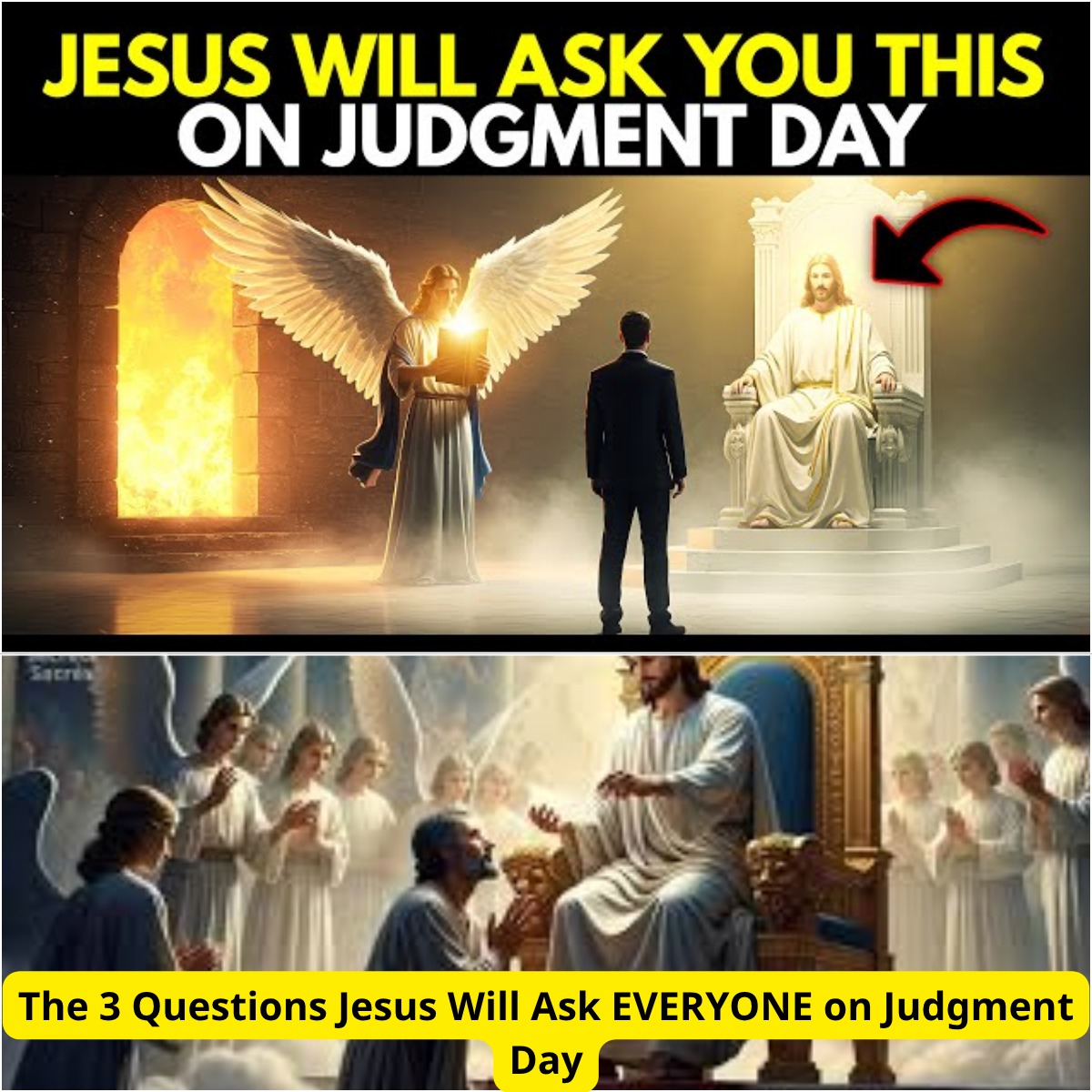
He paused, letting the silence hum through the expensive studio audio system.
“That moment is already set on the calendar of eternity. Hebrews 9:27 makes it clear: ‘It is appointed for man to die once, and after that comes judgment.’ But here’s what most people—even many lifelong churchgoers, even people sitting in the pews right now—don’t realize. There are three specific questions Jesus will ask you on that day. And your answers to those questions will determine one thing, and one thing only: heaven or hell, forever.”
Thomas leaned forward, his hands gripping the edges of the solid oak desk. “That’s why this message is so critical. Because these aren’t random questions. They’re not based on human opinion, modern culture, or church tradition. They are revealed directly in scripture. Jesus himself gave us a glimpse of what that final judgment will look like. And today, I’m going to walk you through each one. So before we go any further, make the decision right now. Watch this video all the way through. Don’t skip it. Don’t pause it to check your phone. This may be the most important message you ever hear in your life, because one day you’ll stand before Jesus, and absolutely nothing else on this earth will matter.”
Behind the glass of the control room, Marcus, the twenty-four-year-old production director, watched the audio levels bounce in perfect synchronization with Thomas’s cadence. Marcus had a tattoo of a Greek cross on his inner forearm and an open can of energy drink on the mixing console. He’d heard this tone from Thomas a thousand times. It was the “high-stakes” voice. It always performed well on the analytics dashboard.
Thomas continued, his eyes tracing the glowing green text of the prompter. “But before we look at the first question, we need to understand the gravity of the moment itself. What exactly is Judgment Day, and why does it matter? It’s not just an abstract religious idea. It’s not a poetic metaphor. And it’s definitely not just a dramatic scene from a Hollywood movie. Judgment Day is a real, guaranteed appointment that every single human being will face.”
He gestured with a smooth, practiced motion of his right hand. “The Bible makes this unmistakably clear in Romans 14:10-12: ‘We will all stand before the judgment seat of God… So then each of us will give an account of ourselves to God.’ Not just some of us. All of us. That includes mega-church pastors, secular politicians, high school teenagers, Wall Street business leaders, and stay-at-home parents. No one gets an exemption. No one can buy their way out of the room.”
Thomas’s voice took on a sharper edge. “In Revelation 20:12, the Apostle John describes the sheer scale of this moment: ‘And I saw the dead, great and small, standing before the throne, and books were opened… and the dead were judged according to what they had done as recorded in the books.’ Think about that. Every hidden thought, every whispered word, every secret action will be laid bare under the light of divine truth. But God is not only judging our external behavior; he’s examining the secret motives behind it. As 2 Corinthians 5:10 says, ‘We must all appear before the judgment seat of Christ so that each one may receive what is due.’ This is more than punishment or reward, my friends. This is about absolute truth. It’s the day when nothing hidden remains hidden. The masks we wear for our social media profiles, our employers, and our families—they all come off. The real you stands before the real God.”
The studio went entirely still. Even the production assistants holding the secondary bounce boards seemed to freeze.
“And when that day comes,” Thomas said, his voice dropping to a near-whisper that forced the viewer to lean in, “Jesus won’t start by asking how many good deeds you performed or how many religious rules you managed to keep. He’ll begin with something far more personal. The first question God will ask you on Judgment Day is this: What did you do with my Son?“
He let the question echo.
“This question is not about your church membership denomination. It’s not about your religious performance or how many Christian conferences you attended. It is not about your moral reputation among your neighbors or your advanced knowledge of systematic theology. This is the most personal, eternal, and unavoidable question you will ever face, because it has absolutely nothing to do with outward appearance and everything to do with your functional relationship with Jesus Christ.”
Thomas quoted from memory now, his eyes leaving the prompter to stare directly down the barrel of the camera lens. “In John 3:18, Jesus says, ‘Whoever believes in him is not condemned, but whoever does not believe is condemned already because he has not believed in the name of the only Son of God.’ The question is simple, yet infinitely heavy: Did you believe in Jesus or not? Not in theory. Not from a historical distance. But personally. First John 5:12 is even clearer: ‘He who has the Son has life; he who does not have the Son of God does not have life.’ You either have him, or you don’t. There is no grey area. There is no middle ground. And John 14:6 leaves absolutely no room for alternative options: ‘I am the way, the truth, and the life. No one comes to the Father except through me.’“
Thomas leaned back slightly, his expression turning analytical. “When Jesus asks you, ‘What did you do with me?’ He’s not looking at your calendar of religious activity. He’s asking, ‘Did you receive me? Did you trust me? Did you follow me? Did you truly surrender the trajectory of your life to my authority?’ Let’s look at three very common responses people might give to this question on that day, and how Jesus will answer them.”
He raised his index finger.
“The first response: ‘I tried to be a good person.’ This is perhaps the most common answer in the Western world today. People will stand there and say, ‘Lord, I was kind. I gave money to charity. I treated my coworkers with respect. I stayed away from violent crime. I truly tried my best.’ But here’s what Jesus will say to that response: ‘Your good works could never pay for your sin. Only my blood can.’ The scripture is unrelenting on this point: ‘All have sinned and fall short of the glory of God’—Romans 3:23. No one is inherently good enough. No one can earn a passport to heaven through moral effort. Salvation is not a corporate bonus for good performance; it is a gift of absolute grace.”
He raised a second finger.
“The second response: ‘I went to church. I volunteered. I served in the ministry.’ This person was highly active in religious life. Maybe they were a deacon, a worship leader, or even a pastor. They knew the Bible verses. They prayed eloquent public prayers. They looked remarkably faithful on the outside. But Jesus will look at them and say, ‘You knew about me, but you didn’t know me. You had religion, but you never had a relationship.’ This is the terrifying group of people described in Matthew 7:22-23: ‘Many will say to me on that day, “Lord, Lord, did we not prophesy in your name and cast out demons and do many miracles in your name?” And then I will declare to them plainly, “I never knew you; depart from me, you who practice lawlessness.” Christian activity is completely meaningless without true intimacy with Christ. Knowing facts about Jesus is not the same as knowing him. Serving in his name is not the same as surrendering to his lordship.”
A look of visible relief washed over Thomas’s face as he presented the final scenario. “But then there is the third response: ‘I received you as my Savior.’ This is the response that causes the angels in heaven to rejoice. This person knows they were a broken sinner in desperate need of grace. They recognized that no amount of human effort could save them, and they placed their full, unreserved faith in Jesus. They didn’t trust in their own resume; they trusted entirely in his cross. To this person, Jesus will look at them with love and say, ‘Well done, good and faithful servant. Enter into the joy of your Lord.’ That is what salvation looks like, my friends. Not moral perfection, not religious performance, but personal faith in the Lord Jesus Christ as Savior.”
Thomas took a deep breath, the studio lights reflecting in his eyes. “So let me ask you right now, as you watch this from your living room, your car, or your office: If Jesus stood before you today, looked you dead in the eye, and asked, ‘What have you done with me?’—what would your actual answer be? Would you nervously point to your good deeds, your church attendance, your knowledge of the Bible? Or could you say with absolute peace in your heart, ‘Lord, I received you. I trusted you. I belong to you’? Because that is the only answer he’s looking for. That is the only answer that leads to eternal life. And if you’re not sure—if your internal answer right now feels shaky, silent, or uncertain—the good news is that you still have time. As long as there is breath in your lungs, the invitation to receive Christ remains wide open. Jesus didn’t come into the world to condemn you; he came to save you. He died so that when this question is asked of you, you can look into his eyes without fear and say, ‘I gave you my life.’“
The prompter scrolled smoothly, transitioning to the next major section of the script. Thomas didn’t lose a beat, his voice shifting from the black-and-white clarity of salvation to the weight of personal responsibility.
“Once you’ve answered what you did with his Son, Jesus will then move to the second question,” Thomas said. “A question not just about your salvation, but about your stewardship. A question that speaks directly to your purpose, your daily priorities, and how you managed the earthly life he chose to give you. The second question God will ask on Judgment Day is this: What did you do with what I gave you?“
He emphasized the words with a firm tap on the desk.
“This question is about stewardship. It’s about everything God temporarily entrusted to your care: your time, your natural abilities, your financial resources, your sphere of influence, your voice, your mind, and your daily energy. Let’s be completely honest with ourselves: your life was never truly your own. You didn’t create your own talents. You didn’t choose the year or the generation you were born into. Everything you currently possess is a loan from God. And the question on the table is: Did you use it for his purposes, or did you consume it entirely on your own comfort?”
Thomas leaned back, adopting the narrative tone of a storyteller. “In Matthew 25:14-30, Jesus tells the famous Parable of the Talents. A master entrusts three of his servants with different amounts of money—not equally, but each according to their specific ability. One receives five talents, another two, and another one. The master goes away on a long journey, and when he finally returns, he calls them in for an accounting. The servants who invested and multiplied what they received are immediately rewarded. But the servant who received one talent—the one who went out and buried his gift in the dirt out of fear and laziness—is severely rebuked. Notice something critical here: that servant didn’t waste the money on wild, sinful living. He didn’t steal it. He simply did absolutely nothing with it. And in the economy of God, doing nothing was enough to lose everything.”
He leaned in toward the microphone. “Luke 12:48 states the spiritual law plainly: ‘To whom much is given, much will be required.’ God is not measuring your life against someone else’s highlight reel or someone else’s massive gift. He’s asking, ‘What did you do with exactly what I gave to you?’ Romans 14:12 echoes this truth: each of us will give an account of ourselves to God. Not just of our intellectual beliefs, not just of our good intentions, but of our concrete actions and how we managed what was placed directly into our hands.”
“And understand this,” Thomas warned, his finger rising again. “Jesus will not only ask what you did; he will ask why you did it. Your internal motives matter immensely to him. Were you building his eternal kingdom, or were you merely using his name to build your own temporary platform? Were you chasing human recognition and likes on a screen, or were you quietly serving in secret where no one could see you? God doesn’t just look at the statistical result; he sees the heart behind the numbers.”
He softened his tone, his face relaxing into an encouraging expression. “Even if your efforts were completely small and insignificant in the eyes of the world, they have massive weight when done in simple faithfulness. Consider the modern musician who possesses an extraordinary, world-class gift but chooses to never use it for God’s glory. Maybe they become incredibly wealthy and famous in the secular world, but they never point a single soul toward Christ. That immense gift was effectively buried in human ambition or fear. What eternal impact could it have had if it had been surrendered?”
“Now think of the contrast,” Thomas said. “Think of the person who works a quiet, unglamorous job. They’re never going to be famous. They’ll never be noticed by the culture. But they intentionally encourage someone every single day. They pray with their coworkers during breaks. They show genuine kindness to total strangers, and they remain fiercely faithful in every small opportunity. That, my friends, is true stewardship. That is what real fruitfulness looks like in the eyes of God.”
He pointed toward the camera with a gentle smile. “Think of the mother spending her days raising small children in the ways of the Lord. She may never preach on a global stage. She doesn’t have a verified social media platform with millions of followers. But in the grand economy of God, her daily, mundane investment in shaping those little souls for the kingdom carries absolute eternal weight. She’s doing far more than just raising kids; she is actively discipling future warriors for Jesus Christ. God is never impressed with flash. He is looking for consistency and faithfulness.”
Thomas’s voice took on an urgent intensity. “Some people build massive ministries and completely forget God in the process. Others live ordinary, quiet lives that shake the foundations of eternity simply because they were faithful with the small things placed in their hands. Jesus will not ask if you had the most talent in the room. He’ll ask if you multiplied what he placed in your hands. Did you invest your limited time in prayer, in people, in real love? Or did you waste the precious hours of your life scrolling through feeds, watching endless entertainment, worrying about things you can’t control, or chasing the fickle approval of people who won’t be standing next to you on Judgment Day?”
He shook his head slowly. “There are so many ways people bury their gifts today. Some do it out of fear—fear of failure, fear of what other people will think of them. Some do it out of pure laziness; they constantly tell themselves they’ll start serving God later, when they’re more financially secure, when they’re older, when they’re ready. And some do it out of pure selfishness, building their personal brand instead of advancing the gospel. But on Judgment Day, all the excuses will instantly evaporate. The Master will return, and he will look for fruit. So let me ask you right now: Are you actively multiplying what God gave you? Or are you burying it in the backyard of fear, laziness, or self-interest? Are you waiting for some perfect, elusive time to finally serve God? Or are you using exactly what you have right now? Because you don’t need a massive platform to be faithful. You don’t need a microphone to make a permanent impact. All you need is a willing heart and the courage to use what you’ve been given.”
The control room remained dead silent. Marcus checked the stream analytics on his monitor. The viewer retention graph was a flat, straight line across the top. No one was clicking away.
Thomas took a brief sip of water from a glass hidden beneath the lip of the desk, wiped his mouth, and looked back at the camera. The final movement of the message was here.
“And finally,” Thomas said, his tone shifting into something deeply intimate, “after he has asked about your personal faith and your functional faithfulness, Jesus brings it all down to one last, deeply revealing question. This final question isn’t about performance, corporate platforms, or measurable results. It’s about compassion. It goes far beyond what you intellectually believed or how dynamically you served, and it gets right down to the core of how much of his divine love truly lived inside of you.”
He paused, a look of personal warmth crossing his face. “But before we look at that final question, if this message has stirred your spirit today—if it’s helped you shake off the distractions of this world and think more deeply about your eternal life—then I want to personally invite you to subscribe to this channel. We don’t ask for your subscription just to grow our numbers, but so your heart can stay consistently anchored, fed with truth, and fully prepared for the most important day of your entire existence: the day you stand face-to-face before Jesus. With that in mind, let’s look at the third and final question Jesus will ask on Judgment Day.”
The prompter moved to its final paragraph.
“The third question Jesus will ask on Judgment Day is this: How did you treat my little ones?“
Thomas let the words sit in the quiet room. “This question goes beyond theology, beyond stewardship, and goes straight into the very muscle of love. Not a vague, warm feeling. Not a soft, passive sentiment. But real, visible, practical love in action. The kind of love that physically touches the broken, the unseen, and the completely forgotten. The kind of love that looks exactly like Jesus.”
He leaned forward, his eyes intense. “In Matthew 25:31-46, Jesus gives us a literal, vivid picture of the final judgment. He describes the Son of Man sitting majestically on his glorious throne, with all the nations of the earth gathered before him. A great, final separation takes place, just like a shepherd separating the sheep from the goats. To the sheep positioned on his right hand, he says, ‘Come, you who are blessed by my Father; inherit the kingdom prepared for you from the foundation of the world.’ And why does he say that? ‘For I was hungry and you gave me food, I was thirsty and you gave me drink, I was a stranger and you welcomed me, I was naked and you clothed me, I was sick and you visited me, I was in prison and you came to me.’“
“And remember how the righteous respond,” Thomas said, his hands opening wide. “They look at him confused and ask, ‘Lord, when did we ever see you hungry and feed you, or thirsty and give you drink? When did we see you a stranger and welcome you, or naked and clothe you? When did we see you sick or in prison and visit you?’ And Jesus replies with words that should shake every one of us to our core: ‘Truly, I say to you, as you did it to one of the least of these my brothers and sisters, you did it to me.’“
Thomas pointed a finger directly at the lens. “Jesus identifies himself personally and completely with the vulnerable. He doesn’t say you did it for them; he says you did it to me. Every orphan, every widow, every struggling addict, every homeless man shivering on a street corner—Jesus chooses to see himself in them. To look past them and ignore them is to look past and ignore Jesus. To love them in their brokenness is to love Jesus. This is the exact same truth we find in 1 John 4:20: ‘If anyone says, “I love God,” and hates his brother, he is a liar.’ You cannot claim to have a deep love for God while remaining completely indifferent to the suffering of human beings. Love for an unseen God is proven entirely by our practical love for the seen people around us—especially those who can offer absolutely nothing to us in return.”
“Who are these little ones today?” Thomas asked, his voice softening with genuine emotion. “They are the orphans—children with no stable home, no parental protection, no one to hold them when they’re afraid at night. They are the widows—women left alone in deep grief, carrying massive life burdens entirely by themselves. They are the immigrants—strangers in a foreign land, deeply misunderstood and often mistreated by the culture. They are the prisoners—not only those sitting behind iron bars in a state penitentiary, but those completely bound in the invisible chains of addiction, fear, or shame. They are the sick—not just physically ill in a hospital bed, but those struggling emotionally, spiritually, and mentally in isolation. They are the rejected people whom modern society casts aside as useless, unlovable, or broken completely beyond repair.”
He shook his head. “Jesus is not simply asking if you occasionally threw some spare change into a charity bucket to feel good about yourself. He is asking if you gave your actual heart. Did you show real love when it was highly inconvenient and expensive? Did you help someone who could never repay you or advance your social status? Did you serve them in secret when no one was around, or did you only do it when you could capture it for content?”
Thomas leaned in close to the desk. “There is a massive, gulf-sized difference between giving to be seen by men and giving in quiet secret. Between loving those who love you back and loving those who may never even say thank you. Anyone can post a clip of their generosity online when the cameras are rolling. Anyone can serve at a soup kitchen when their employer is watching. But Jesus sees exactly what happens when the lights are off and no one is watching your life. That is what matters to him. True, biblical love is always costly. It takes your limited time. It takes your physical energy. Sometimes it means severe inconvenience. It means opening your front door, opening your wallet, and opening your arms to the unlovely. But that is the exact love Jesus calls us to. Not comfort, but compassion. He is never impressed by how much theology you know; he is impressed by how deeply you love. He isn’t counting how many church services you checked off your list; he’s looking at how many broken people you touched with his grace. You can speak in the tongues of angels, you can memorize entire books of scripture, you can preach powerful sermons to thousands of people, but if practical love is missing from your life, the Bible says you are nothing more than a noisy, clanging gong.”
He paused, letting the weight of the statement hang in the studio air.
“So when Jesus looks at the record of your life, will he see love? Real, active, dirty, costly love. Not perfect love, not a performance love, but a life clearly marked by a genuine, heartbeat care for the exact people he cares about most. Because on that final, terrifying day, the dividing line will not be between the highly educated and the uneducated. It won’t be between the economically successful and the unsuccessful, or the famous and the unknown. The line will be drawn cleanly between those who loved him in the faces of the suffering, and those who chose to look away. That is the question. And your daily life is answering it every single day: How did you treat my little ones?“
Thomas let out a long breath, his posture relaxing as he moved into the final, pastoral invitation. The intensity faded, replaced by an atmosphere of quiet, unforced grace.
“These three questions don’t just apply to someone else out there,” he said softly. “They apply directly to you, sitting where you are right now. So let’s pause. Let’s take a collective breath and truly reflect. Now that you’ve heard these three eternal questions, take a quiet moment and look inward. Can you honestly answer them today with confidence?”
He spoke slowly, counting them off with his hand. “Have you truly received Jesus as your personal Savior? Not just knowing about him historically, not just admiring his moral teachings from a safe distance, but fully surrendering your heart and the control of your life to him? Did you place your trust entirely in his sacrifice on the cross, rather than your own good works, to make you right before God? Did you actively use what he gave you—your time, your specific talents, your daily opportunities, and your social influence—to build his kingdom? Were you a faithful, reliable steward of the life he placed into your hands? Or did you bury it in the dirt, delay your obedience, or spend it all entirely on your own desires? And did you love the least of these? Not just with pretty words or outward religious appearances, but with concrete, sacrificial actions? Did your lifestyle show the kind of love that genuinely sees the face of Jesus in the broken, the forgotten, and the overlooked?”
Thomas smiled warmly into the lens. “If your honest answer to those questions is yes, then I want to encourage you to press on. Stay faithful. Run the race. You are ready for that day. Keep walking in daily obedience and grace. But if your answer right now is no—or if your heart hesitates in a painful, silent uncertainty—the incredible, beautiful news is this: Jesus is still calling your name right now. Not with a voice of cold condemnation, but with a heart of absolute compassion. The door of divine mercy is still wide open, and you are still breathing. That means it is not too late. His grace is infinitely greater than your deepest guilt. His mercy is far larger than your worst mistakes. And today—right now, in this very minute—can be the beginning of a brand-new answer. An answer that you will never regret for all of eternity.”
He folded his hands together on the desk. “If you are ready to say a definitive yes to Jesus today—not just with empty words, but with the raw sincerity of your heart—then I want to invite you to pray a simple prayer with me right now, wherever you happen to be watching this. Close your eyes, shut out the distractions, and say these words to him:”
Thomas bowed his head, his voice steady and solemn.
“Lord Jesus, I know that I am a sinner. I believe with all my heart that you died on the cross for me, and I believe you rose again from the grave. Today, I receive you as my personal Savior. Forgive me for my rebellion. Cleanse me from my past. Make me entirely yours. From this day forward, I surrender the steering wheel of my life to your lordship. Thank you for saving a sinner like me. In your holy name I pray. Amen.”
He raised his head, his eyes shining with genuine joy under the studio lights. “If you just prayed that prayer from a sincere, honest heart, then scripture tells us that all of heaven is throwing a party right now—and so are we. You are not the same person you were just a moment ago. You legally and spiritually belong to him now. Do us a favor and let us know in the comments section below by simply writing the words, ‘I am ready.’ That simple, bold declaration could be the exact first testimony that someone else out there needs to read today. It just might be the spark that leads another broken soul to Jesus.”
Thomas began to slide his notes into a neat stack as the background music began to softly swell in the mix. “If this message has stirred something deep in your heart today—if it’s opened your eyes to what truly matters in this short life—then please share it. Send the link to a close friend, a family member, or someone you love who needs to hear this truth. Let’s not keep the reality of eternity to ourselves. And don’t forget to hit that subscribe button before you leave; we post gospel-centered videos right here every single day—messages designed to bless you, strengthen your daily faith, and keep your heart fully prepared for the only day that will ever truly matter: the day you stand before Jesus Christ.”
He extended his right hand toward the camera in a final gesture of pastoral benediction.
“As you walk away from this video, may the Lord bless you and keep you. May he make his glorious face shine upon you and be incredibly gracious to you. May he lift up his countenance upon you and give you his perfect, overriding peace—now, and for all of eternity. God bless you.”
The red light on Camera One snapped off.
Thomas held his position for five seconds in the sudden silence of the studio, breathing out the tension of the broadcast. In the control room, Marcus clicked the mouse, terminating the live feed. The gray Seattle rain continued to beat softly against the dark glass windows, but inside, the digital numbers were already climbing.









