You Won’t Believe What’s Happening in The UK…
You Won’t Believe What’s Happening in The UK…
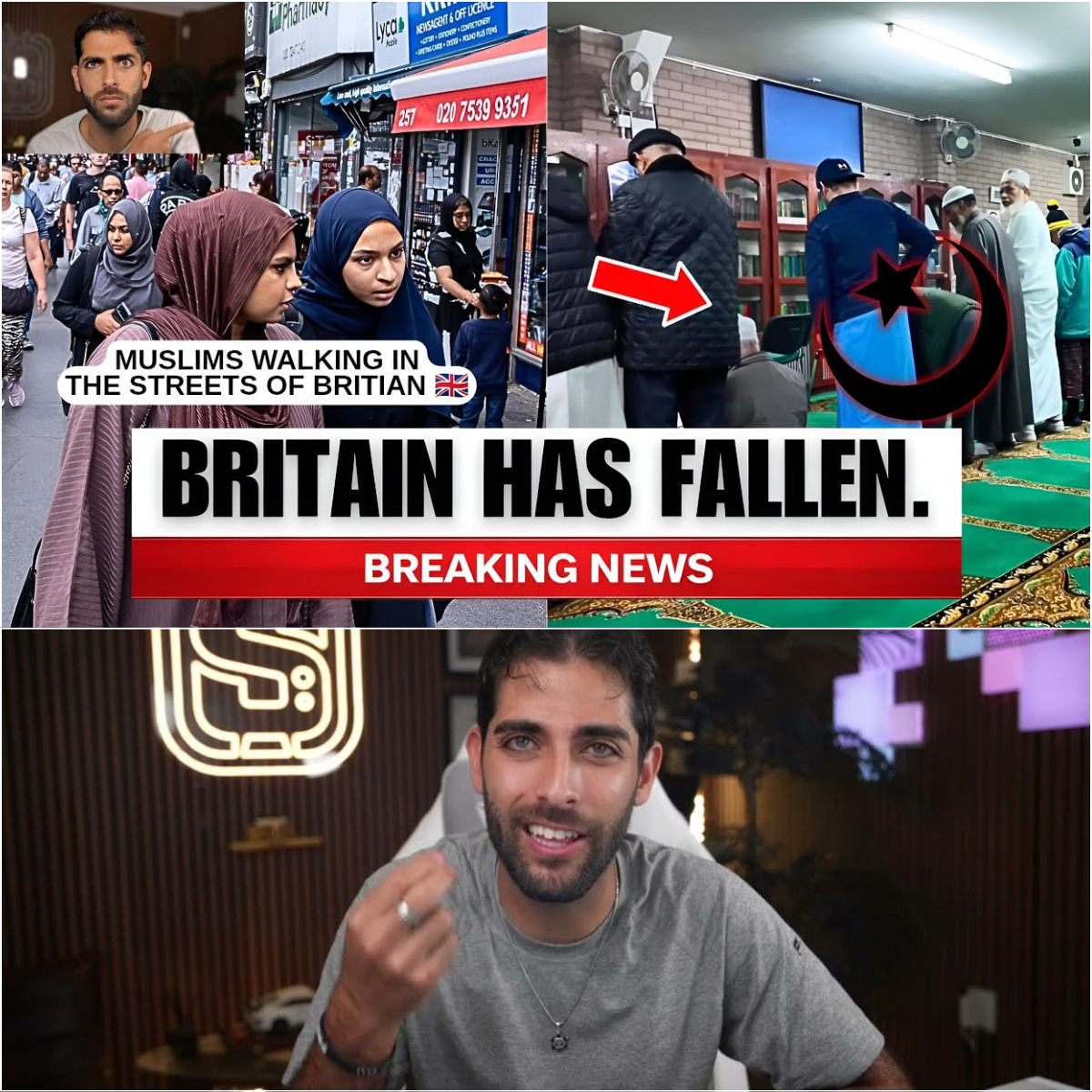
BIRMINGHAM, England — To step off the train in certain districts of Birmingham, Britain’s second-largest city, is to experience a profound sense of geographic disorientation. Along the bustling commercial arteries, the traditional signs of English high-street life have vanished, replaced by an expansive, self-contained marketplace of the Islamic world: rows of shops draped in intricately embroidered abayas, open-air stalls selling prayer mats, and the heavy scent of Middle Eastern perfumes drifting through the air. On a recent Friday afternoon, a Muslim vlogger recorded his journey through these streets, greeting local shopkeepers entirely in Arabic and filming former Christian churches that have been physically converted into mosques, their towers now echoing with the rhythmic cadence of the Islamic call to prayer. As the camera panned across a sea of worshippers leaving Friday services, waving sectarian banners and Palestinian flags under a gray British sky, a voiceover issued an unsettling query to a watching global audience: “Does this look like the United Kingdom to you?”
The striking transformation of Birmingham is not an isolated phenomenon, but rather the visible vanguard of a profound demographic and cultural mutation sweeping across Western Europe. Over the past several decades, sustained mass migration combined with differing birth rates has fundamentally reconfigured the social architecture of the British Midlands. Neighborhoods that were once the historic engine rooms of the Industrial Revolution are now home to vast, self-sustaining enclaves where English is frequently a secondary language and the foundational norms of British civic life have been entirely supplanted by the traditions of Pakistan, Somalia, and North Africa.
For an American public observing these developments, the reality of contemporary Birmingham challenges the very definition of the Western nation-state. In the United States, immigration has historically been viewed through the ideal of the melting pot—a process, however imperfect, designed to absorb newcomers into a shared constitutional and cultural identity. The European experiment, by contrast, has increasingly resulted in a fractured mosaic of parallel societies. In these spaces, newly arrived populations have not adapted to the host country; instead, they have successfully imported their domestic cultures, legal expectations, and tribal allegiances wholesale, establishing permanent sovereign enclaves within the heart of the West.
By analyzing the rapid physical and institutional conversion of British urban centers, the complete breakdown of traditional assimilation models, and the growing civilizational anxieties of an displaced native population, we can examine a transformation that is raising fundamental questions about what it means to be a Western nation.
The Architecture of Conversion: From Church to Mosque
The physical landscape of a city is the ultimate reflection of its underlying cultural values. In Birmingham, this landscape is being rewritten with astonishing speed, providing a tangible, visual record of a civilization in retreat.
The most symbolically charged aspect of this transformation is the widespread repurposing of religious architecture. Throughout districts like Sparkbrook and Alum Rock, buildings that for generations functioned as Christian churches—complete with distinct Gothic arches and historic masonry—have undergone complete institutional conversions. Crosses have been removed from steeples, interiors have been gutted to accommodate Islamic prayer halls, and Arabic signage has been affixed to brick facades built by Victorian laborers.
To the proponents of progressive multiculturalism, these conversions are framed as a pragmatic, harmonious reuse of urban space—a natural evolution of real estate matching the needs of a shifting population. However, to critics of Britain’s immigration policies, this architectural replacement represents something far more consequential: a visible display of cultural dominance and civilizational surrender.
This sense of replacement is further amplified by the construction of massive, purpose-built mega-mosques that dominate the local skylines. These structures, often funded by international capital, are designed to be highly visible, featuring prominent minarets and expansive domes that intentionally dwarf the surrounding architecture. When thousands of worshippers spill out of these centers during Friday prayers, completely blocking municipal roads and erecting temporary barriers with the passive consent of local authorities, it sends an unmistakable message regarding who controls the public square.
The visual environment is rounded out by a proliferation of foreign political symbols. During major religious gatherings, the streets of these British neighborhoods are frequently lined not with the Union Jack, but with the green banners of Islamic movements and the flags of distant geopolitical conflicts. For the native-born resident walking through these districts, the overwhelming message is one of total estrangement; they have become foreigners in the very cities built by their ancestors.
The Collapse of the Assimilation Model
The transformation of Birmingham exposes the complete bankruptcy of the post-war European assimilation model. For decades, Western political elites operated under the naive assumption that the benefits of Western democracy, economic prosperity, and social tolerance would automatically act as a universal solvent, dissolving ancient tribal loyalties and religious fundamentalism in favor of a shared liberal civic identity.
The reality on the ground has proven to be precisely the opposite. Rather than integrating into British society, large segments of the immigrant population have utilized their sheer numerical density to construct autonomous parallel realities. According to official census data, over twenty-one percent of Birmingham’s population now identifies as ethnically Pakistani, with rapidly growing communities from Somalia and across North Africa. In many localized wards, these minorities have become the absolute statistical majority.
Within these enclaves, the necessity to learn English, adopt British social customs, or participate in the broader national culture has completely evaporated. A resident can be born, educated, employed, and buried entirely within an Islamic ecosystem. They can shop at Halal markets, send their children to Islamic academies, settle disputes through unofficial Sharia councils, and consume media broadcast exclusively in Urdu or Arabic.
This total lack of integration has profound implications for the preservation of Western values. When a population is permitted to grow to a massive scale without undergoing any structured sifting or assimilation process, they inevitably retain the social, political, and religious prejudices of their origin countries.
In these parallel societies, foundational Western concepts—such as the separation of church and state, absolute freedom of expression, and the total equality of women—are not merely ignored; they are frequently viewed with overt hostility. The prevailing worldview within these districts is heavily influenced by conservative theological frameworks that place divine law far above any secular democratic constitution, creating a permanent, ticking friction with the wider British state.
The Domestic Reality: Sanitation, Crime, and Cultural Echoes
The social friction inside these parallel societies extends far beyond abstract political philosophy; it manifests in the daily, physical reality of the neighborhoods themselves. Visitors to these heavily migrant-dominated districts frequently note a stark, immediate decline in municipal maintenance, public sanitation, and civic order.
Independent digital creators and residents who document life in these areas regularly capture footage of streets littered with mountains of uncollected refuse, smashed automobile components on public pavements, and abandoned commercial waste left rotting in broad daylight. To an outside observer, the visual environment resembles the neglected urban centers of the developing world rather than a major metropolis in Western Europe.
Critics of current migration trends argue that this physical decline is the direct consequence of importing cultural habits from regions where civic responsibility and public sanitation standards are radically different from those historically maintained in the West. When individuals emigrate from unstable, underdeveloped nations in East Africa or South Asia, they do not magically shed their lifetime habits at the border. They bring their established cultural practices with them, transplanting the behaviors of their home countries directly into the suburbs of England.
Simultaneously, these neighborhoods are frequently characterized by an underlying currents of low-level lawlessness and intimidation. While Islamic vloggers often report feeling entirely safe and relaxed within these districts—attributing their comfort to the shared religious identity and the familiar, communal atmosphere—non-Muslim residents and independent journalists report a completely different experience.
Outsiders who attempt to film in public spaces, question local developments, or simply walk through these neighborhoods in traditional Western attire are routinely subjected to aggressive scrutiny, hostile confrontations, and explicit demands to leave the area. This enforcement of informal boundaries effectively creates a system of de facto segregation, where the laws and social norms of the host nation are systematically suspended in favor of localized, religious tribalism.
The Political Paradigm: Two-Tier Policing and Institutional Fear
The unchecked expansion of these parallel societies has been actively facilitated by a profound failure of nerve within the British political and judicial establishment. Faced with a rapid, volatile demographic shift, successive British governments—both Conservative and Labour—have consistently prioritized the avoidance of racial tension over the impartial enforcement of the law.
This institutional timidity has given rise to what critics bitterly term “two-tier policing.” Under this paradigm, British law enforcement agencies apply radically different standards of behavior based entirely on the identity of the group involved. When native British citizens engage in political protests or air grievances online regarding immigration, they face swift, uncompromising surveillance, rigorous public order enforcement, and severe criminal prosecution for “hate speech” or causing offense.
Conversely, when large-scale disturbances, illegal street blockades, or radical religious demonstrations occur within migrant enclaves, the police routinely deploy a strategy of passive appeasement. Officers are instructed to stand down, negotiate with self-appointed community leaders, and overlook clear violations of municipal law to prevent provoking wider urban riots.
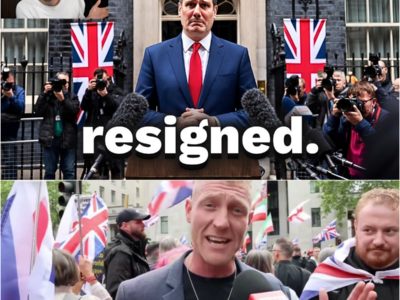
This double standard has completely eroded the public’s faith in the impartiality of the state. The British government, led by figures like Prime Minister Keir Starmer, continues to aggressively champion the rhetoric of multicultural diversity, demanding that the population celebrate the transformation of their cities.
Yet, by refusing to confront the rise of radicalism, the exploitation of child marriage laws, and the open rejection of British values within these communities, the political class has abandoned its primary duty: the protection of a unified, law-abiding national identity. The state’s anxiety over being labeled intolerant has effectively paralyzed its ability to govern, allowing a parallel sovereignty to take root in the heart of the country.
The Transatlantic Warning: A Civilizational Mirror
For an American audience watching the slow-motion fracturing of British society, the spectacle of contemporary Birmingham serves as an urgent, civilizational warning. The United States is currently locked in its own fierce, domestic debates regarding border security, illegal immigration, and the limits of multicultural policy.
The European experiment demonstrates with terrifying clarity that a nation cannot maintain a free, cohesive society if it abandons the requirement of assimilation. When a democracy admits millions of individuals from cultures deeply antithetical to Western liberties, and then actively encourages those populations to reject the host culture through state-sponsored multiculturalism, it is effectively engineering its own balkanization.
The lessons of Birmingham are a reminder that a nation is not merely a geographic space, a GDP metric, or a collection of administrative laws. A nation is a shared cultural inheritance—a specific consensus on human rights, individual liberty, civic duty, and the rule of law forged over centuries of historical trial. Once that cultural consensus is allowed to dissolve into a collection of competing, hostile tribal enclaves, the foundational architecture of the state cannot long survive.
As the cameras of independent journalists continue to document the changing face of Europe—capturing the dirty streets, the converted churches, and the foreign flags flying over British cities—the global public is being forced to confront an uncomfortable truth. The West is not being conquered by foreign armies; it is being dismantled from within by its own elite’s moral exhaustion.
The tragic reality of Birmingham is a preview of a post-Western future, where the historic identity of a nation is quietly erased, leaving behind a fragmented landscape of parallel worlds, locked in a silent, permanent struggle for dominance over the ruins of a great civilization.