Virgin Mary Appears in Lourdes Church!?
Virgin Mary Appears in Lourdes Church!?
The evening light in Alta Gracia always had a way of cutting through the dust of the Córdoba hills like a sharpened knife. Father Mateo liked the quietest hour best—the forty minutes between the final locking of the heavy cedar doors and the moment the mountain chill truly settled into the stone floor of the chapel.
The shrine had been built in the early twentieth century, its masonry a deliberate, faithful imitation of the famous grotto in Lourdes, France. For decades, it had smelled uniformly of beeswax, damp granite, and the distinct, sulfurous trace of thousands of cheap matches struck by pilgrims who had travelled across Argentina to stand before the plaster statue of the Virgin Mary.
But by August of 2011, the smell had changed. It smelled of turpentine, dry wood, and lime mortar.
The statue had been lowered from its high niche three weeks earlier, its base secured with thick hemp ropes while a team of restorers from the city worked on its chipped mantle at the foot of the altar. The niche itself—a deep, arched recess carved into the whitewashed stone high above the sanctuary—had been left entirely bare.
Mateo walked the center aisle, his sandals clicking against the tile. He stopped near the back row of pews, just where the shadow of the choir loft met the nave, and looked up. He intended to check the structural scaffolding, but his eyes caught on the empty recess.
He blinked once, his hand freezing on the wooden back of the pew.
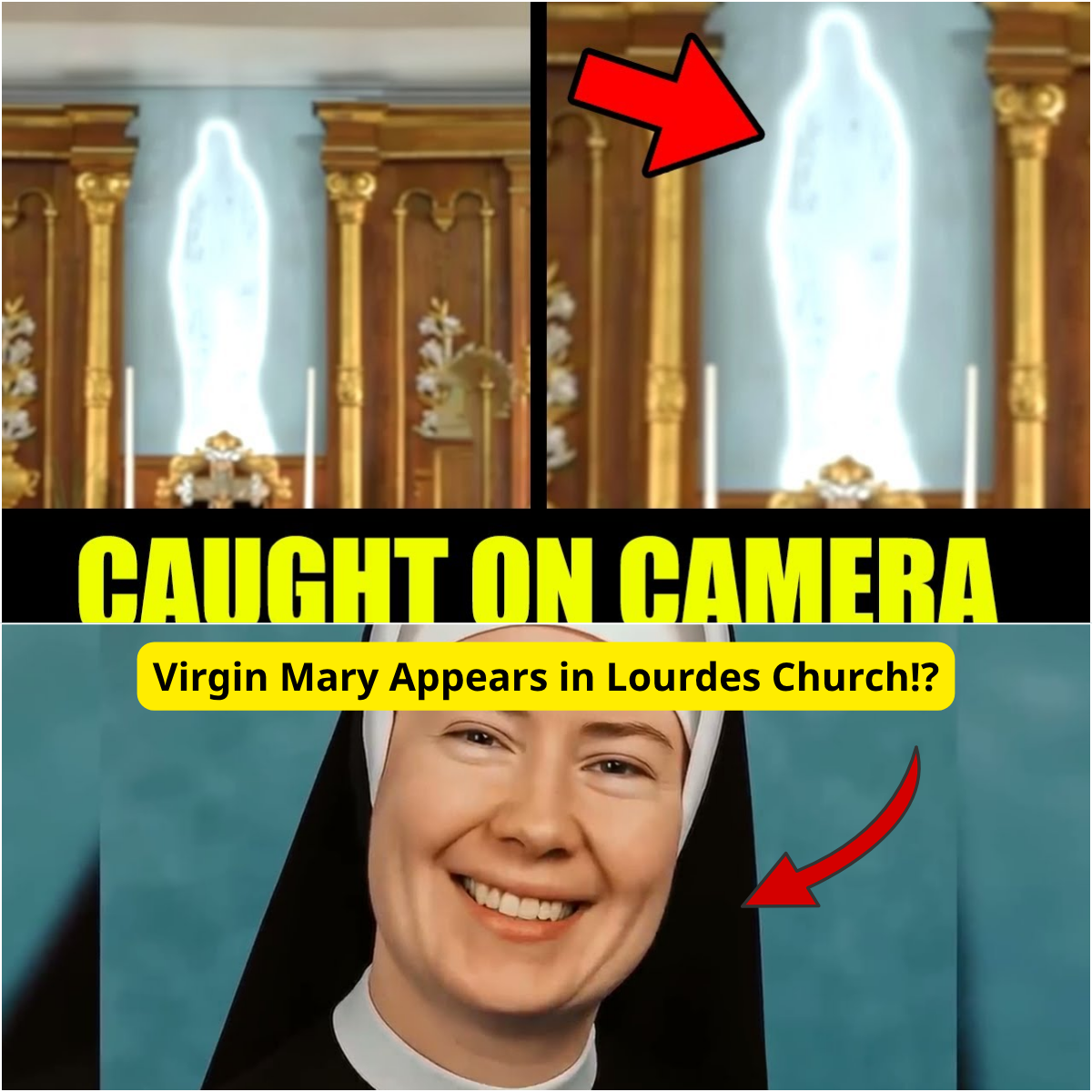
The niche wasn’t empty.
A white figure stood within the dark stone archway. It wasn’t a flat patch of light or a passing glare from the high clerestory windows; it had the clear, heavy three-dimensional weight of a physical presence. He could see the soft, vertical folds of a linen robe, the distinct line of an inclined head, and the gentle taper of a veil falling over shoulders that weren’t there.
“Hola?” Mateo’s voice sounded small, swallowed instantly by the high vault.
He took three steps forward, his heart hammering a rapid rhythm against his ribs. With every forward stride, the lines of the white robe began to blur, like an image dissolving through a wet lens. By the time he reached the communion rail, looking directly up into the stone alcove from below, there was nothing. Just bare, grey granite and a light dusting of plaster flakes left behind by the restorers.
He walked backward, slowly, keeping his eyes fixed on the blank stone. Ten feet. Twenty feet. At the midpoint of the aisle, the silhouette began to coalesce again, gathering the ambient twilight into itself until the figure stood complete within the frame.
“It’s the distance,” Mateo muttered to himself, his breath shallow. “It’s a trick of the perspective.”
But within forty-eight hours, the distance didn’t belong to him anymore.
The Luminous Negative
By November, the dirt road leading up from Córdoba city was choked with old diesel buses and the white dust of thousands of shuffling feet. Skeptics came with surveyor’s transits and polarized lenses; journalists came with heavy broadcast cameras; and the elderly came with plastic rosaries that clicked like beetles in the heat.
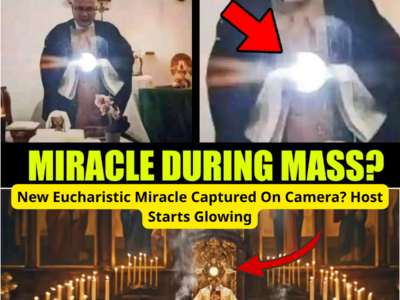
They all saw the same thing. From the threshold of the main doors, the Virgin was there—luminous, blue-white, perfectly shaped by an absence of matter. If you walked down the center aisle to touch her, she withered into nothingness.
“The manifestation has no current explanation under optical physics,” the Carmelite friars who kept the shrine wrote in a brief, strained statement to the provincial press. “It must be interpreted not as a spectacle, but as a sign to deepen the interior life.”
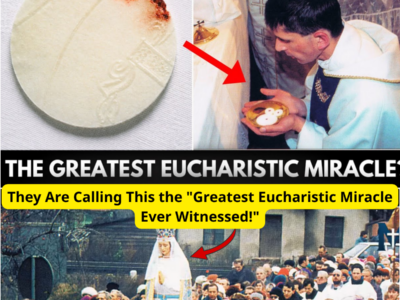
It was a single photograph that carried the Córdoba phenomenon across the northern hemisphere. A woman from the parish had raised a cheap digital camera from the back row, snapped a picture of the empty niche, and looked at the small LCD screen. The screen didn’t show empty grey stone. It showed a dense, glowing form with a mother’s face captured in pure light, standing where the human eye saw only an empty wall.
The image traveled through the early internet like a fever, moving from local parish newsletters to international Catholic wires, eventually catching the eye of a woman sitting in a small, wood-paneled room five thousand miles to the north.
The Third of August
Sister Paula didn’t like digital cameras. She didn’t trust the way they could be manipulated with a few keystrokes on a computer screen, and she didn’t like the flat, cold look of the prints they produced. She preferred her old plastic film camera—a heavy, clunky thing that required a conscious choice every time her finger pressed the shutter.
On August 3, 2008, three years before the statue in Argentina was ever moved from its alcove, Paula was sitting in a retreat house on the outskirts of Pittsburgh, Pennsylvania. The house was surrounded by old-growth oaks that kept the rooms in a permanent, green-tinted twilight. The air smelled of floor wax and old missals.
In the small side chapel of the house stood a mosaic of the Blessed Mother. It was a standard piece of mid-century parish art—composed of small cubes of colored glass and gold leaf that had grown dull with seventy years of altar smoke.
Paula had spent three hours in front of the wall, her rosary slipping through her fingers until the skin of her thumb was red. When she stood up to leave, she felt a sudden, distinct pressure behind her eyes—not a headache, but a sharp focus, like the tightening of a lens.
She lifted the old camera, looked through the small glass viewfinder, and took one picture of the ordinary mosaic.
Six days later, Paula sat at the long linoleum table in the convent basement, sorting through the white paper envelopes from the local drugstore. She passed over the blurry shots of the garden and the overexposed images of the dining room. Then she pulled out Frame 16.
She didn’t drop the photo, but her fingers went completely rigid.
The glass mosaic was gone. In its place, filling the frame from edge to edge, was a figure made of layered, brilliant light that seemed to rise off the surface of the paper. It was the silhouette of Our Lady of Guadalupe, but she wasn’t flat; she had a soft, rounded presence that looked as though she were leaning slightly forward, out of the picture, toward the kitchen table.
Paula held the glossy print up to the fluorescent light tube on the ceiling. There was no double exposure. There was no light leak from the back of the camera canister; a light leak would have streaked the film with red or yellow clouds, but this was a controlled, detailed embroidery of white brilliance.
“Look at the edges,” Sister Marguerite whispered, leaning over Paula’s shoulder, her breath smelling of mint. “Paula, look at the hem of the dress. That’s not a shadow.”
Three separate photo technicians in downtown Pittsburgh examined the negative over the next month. They looked for chemical staining, for double-printing, for fractures in the celluloid. They found nothing but silver halide grains that had reacted exactly as if they had been exposed to an immense, localized source of radiation that the human eye in the room had somehow failed to record.
The Studio on the River
The message didn’t come to Paula through an audible voice or a dramatic dream. It came as a heavy, immovable weight in her chest during morning prayers—a quiet directive that felt less like an idea and more like an instruction left behind by an old friend.
A statue must be made.
It was to be bronze, modeled precisely after the glowing figure in the photograph, and it was to be placed on a specific corner in North Philadelphia, directly across from the brick walls of a municipal hospital where the ambulances turned in from the avenue.
“A bronze statue costs twelve thousand dollars, Paula,” the mother superior said, her blue pen hovering over the community ledger. “We don’t have twelve thousand dollars for public art.”
“The money will be there before the clay is wet,” Paula said.
She was right. An anonymous donation from a retired bricklayer in Scranton arrived four days later, the check folded inside a plain white envelope with no return address.
By November, Paula was standing in a drafty warehouse studio near the Delaware River, watching Steve Kilpatrick work. Steve was a commercial sculptor who spent most of his months casting bronze greyhounds for corporate lobbies and historical plaques for city halls, but he had taken Paula’s photograph, pinned it to a wooden board under a halogen lamp, and stopped taking other commissions.
“The posture is wrong,” Paula said, her cane tapping against the concrete floor. She had begun to walk with a limp that autumn, her breath coming in short, rattling gasps that she tried to hide behind her heavy woolen habit.
“It’s exactly like the print, Sister,” Steve said, his hands grey with wet clay.
“No,” she said, stepping closer to the massive, nine-foot-tall armature. “The shoulders need to incline three more degrees. She isn’t standing on a pedestal to be looked at, Steve. She’s leaning over a crib. She’s looking at someone who is dying in the street. Fix the neck.”
Steve worked until his fingers bled from the wire mesh underneath the clay. Paula sat in a folding chair in the corner, her face growing smaller and greyed by the week, her eyes never leaving the figure as it took on its heavy, maternal shape.
The Promised Line
In the summer of 2013, the clay model was finally finished, its surface marked by thousands of small, deliberate thumbprints that caught the north light from the warehouse windows. But the casting foundry in New Jersey was backed up by six months.
Paula never saw the bronze.
The cancer had started in her liver and moved to her lungs with the speed of an autumn frost. By December, she was confined to a narrow bed in the infirmary, her old film camera sitting on the bedside table next to a small plastic cup of ice chips.
Her brother, an old rail worker with large, knotted knuckles, sat by the window.
“The mold is set,” he told her, his voice low. “Steve says they’ll pour the metal after the New Year.”
Paula looked at the ceiling, her skin the color of old parchment. “Don’t let them keep it in the yard,” she whispered, her voice cracking like dry grass. “People think it’s just a decoration for the parish. It isn’t. It’s an outpost. When the culture gets dark enough, people need to know where the border is. Tell Marguerite to keep the lamps lit at her feet.”
She died three hours before dawn on the first Friday of December.
Two years later, in September of 2015, the bronze statue was unveiled inside the Cathedral Basilica of Saints Peter and Paul in Philadelphia. The timing had the strange, deliberate precision that characterized everything about the Alta Gracia phenomenon in the south: it was the week Pope Francis arrived in the city for the World Meeting of Families.
The cathedral was surrounded by steel barricades and thousands of pilgrims from Warsaw, Manila, and Buenos Aires. When the purple cloth was pulled away from the bronze figure, there was no applause. There was only the sudden, heavy sound of three thousand people dropping their knees onto the marble floor at the same instant.
The Proximity of Steel
By the winter of 2021, three more identical bronze castings had been placed in different cities across the United States—one in an old coal town in Ohio, one near a clinic in New Jersey, and another on a high bluff overlooking the Mississippi River.
They became known colloquially among the locals as “Paula’s Stations.”
In June of 2022, the United States Supreme Court issued its ruling in Dobbs v. Jackson, overturning forty-nine years of federal abortion law. The news regularized a sort of low-grade fury in the streets; protests clogged the parkways, and police cruisers sat with their lights spinning outside the federal courthouse four blocks from the Philadelphia basilica.
That night, a man named Marcus walked up the cathedral steps. He wasn’t a believer; he was twenty-four, his hands smelled of the motor oil from the transit garage where he worked the third shift, and his girlfriend had left their apartment two days earlier after an argument that had ended with a cracked drywall panel near the kitchen door. He had a flask of cheap gin in his jacket pocket and an empty, hollow ache in his chest that felt like a physical wound.
He didn’t go inside for the service. He sat on the stone balustrade near the bronze statue of the Virgin, watching the blue exhaust fumes of the city buses drift across the streetlamps.
The statue was cold to the touch, its bronze greened slightly around the base by the rain. But as Marcus sat there, his back against the stone pedestal, he realized the noise of the traffic seemed to be receding, falling into a strange, muffled distance as if someone had pulled a heavy woolen blanket over his ears.
He looked up at the bronze face. In the yellow glare of the streetlights, the eyes of the statue didn’t look like metal. They had the same odd, deep three-dimensional depth that Father Mateo had seen in the empty niche at Alta Gracia ten years before—an invitation that existed only if you stood exactly where the shadow was darkest.
He didn’t pray because he didn’t know the words. He simply took his hand off the flask, reached out, and pressed his oily palm against the bronze hem of her skirt. He stayed there until his fingers went numb from the mountain wind coming off the river.
The Residual Light
The Catholic Church has never issued a formal decree on Frame 16 of Sister Paula’s film roll, nor has the Vatican sent a commission to investigate the empty stone alcove in the hills of Córdoba. The Carmelite friars still tell visitors that the miracle is simply the gospel itself, repeated across the centuries in different languages to people who have forgotten how to listen.
But the old film negative is still kept in a fireproof safe in the mother house in Pittsburgh. Every few years, a new archivist will take it out, hold it up to the window with a pair of tweezers, and marvel at how the silver grains have stayed so bright while the plastic base of the film has begun to yellow and crack with age.
Signs are never given to satisfy the curious, Paula had written in her diary during her final month in the infirmary. They are given as a fence around an empty field. They are there to remind us that when the house is torn down and the stones are scattered, the dirt beneath the floorboards still belongs to the King.
In Alta Gracia, the pilgrims still stand at the back of the chapel, watching the white robe form out of nothingness in the twilight. And in Philadelphia, the bronze mother still leans three degrees forward over the asphalt of the avenue, her metal hands held out toward the lights of the arriving ambulances, catching the dust of the city and turning it into something like gold.