The Shroud of Turin: 15 Unresolved Mysteries That Continue to Puzzle Science, Challenge Researchers, and Fuel the Ongoing Debate About Jesus Christ
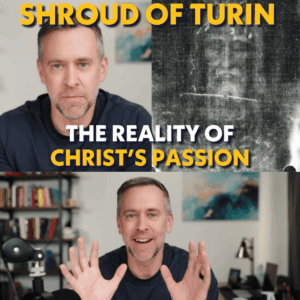
The Shroud of Turin: 15 Unresolved Mysteries That Continue to Puzzle Science, Challenge Researchers, and Fuel the Ongoing Debate About Jesus Christ
The Shroud of Turin is one of the most studied and controversial artifacts in the world. Believed by many to be the burial cloth of Jesus Christ, it carries an image of a man who appears to have suffered crucifixion. Despite decades of scientific investigation, many aspects of the Shroud remain unresolved, fueling ongoing debate between skeptics, scientists, and believers.
Below are 15 key mysteries that continue to challenge modern science:
1. The origin of the image
No consensus exists on how the faint image formed. It is not clearly painted, printed, or dyed, leaving researchers puzzled about its origin.
2. Surface-only coloration
The image appears only on the outermost fibers of the linen, a feature difficult to replicate with known artistic techniques.
3. Absence of directional brushstrokes
Microscopic analysis has not found consistent brush patterns, suggesting it may not be a traditional painting.
4. Blood-like stains
Tests have identified substances resembling blood, but contamination and preservation issues make interpretation difficult.
5. Unknown formation process
Competing theories include chemical reactions, heat exposure, or radiation-like events, but none are confirmed.
6. Three-dimensional properties
The image contains depth information that can be translated into a 3D representation, a rare feature in historical artifacts.
7. Radiocarbon dating controversy
The famous 1988 test suggested a medieval origin, but critics argue the sample may have been contaminated or not representative.
8. Textile structure consistency
The weave pattern of the cloth matches ancient linen techniques, but could also be consistent with medieval production.
9. Geographic trace elements
Particles found on the cloth suggest exposure to multiple regions, but their timeline and source are unclear.
10. Pollen and dust diversity
Microscopic particles from various environments have been detected, raising questions about the Shroud’s travel history.
11. Image durability
The image has remained stable over centuries without significant fading, unusual for organic or painted materials.
12. Lack of clear chemical signature
Scientific analysis has not identified a single known pigment or compound responsible for the image.
13. Temperature and energy hypotheses
Some theories suggest extreme energy events, but there is no experimental evidence to support them.
14. Human interpretation bias
Researchers acknowledge that expectations can influence how data from the Shroud is interpreted.
15. No universally accepted explanation
Despite extensive study across fields like forensic science and material analysis, no single theory is accepted by all experts.
Why the Shroud still matters
The Shroud is more than a scientific mystery. For believers, it is a powerful symbol connected to faith and the story of Jesus. For scientists, it is a complex case study in material analysis, historical preservation, and the limits of current technology.
Even with modern tools—advanced imaging, spectroscopy, and chemical testing—the artifact resists a final explanation. Each new study tends to answer one question while raising several more.
Conclusion
After decades of research, the Shroud of Turin remains unresolved. It sits at the intersection of science and belief, history and mystery. Whether it is ultimately proven to be a medieval artifact, an ancient relic, or something still not fully understood, it continues to captivate the world.
In the end, its greatest power may not be in what it proves—but in what it still refuses to reveal.
The Shroud of Turin remains one of the most controversial and intensely studied artifacts in the world. Associated by many with the burial of Jesus Christ, it has been examined through centuries of religious devotion and modern scientific inquiry. Yet even with advanced technology, the cloth continues to resist a single, unified explanation.
Building on the earlier mysteries, additional layers of complexity emerge when looking at how the Shroud behaves under modern scientific scrutiny.
16. Digital reconstruction challenges
When researchers attempt to recreate the image using modern imaging and simulation tools, results often fail to fully match the Shroud’s unique contrast and distortion patterns. This has made replication studies inconclusive.
17. Lack of clear anatomical distortion explanation
The image shows a highly detailed human form, yet some proportions appear unusually consistent across the entire cloth, raising questions in fields like forensic anthropology.
18. Unknown cause of fibril discoloration
Under high magnification, only the outer layer of individual linen fibers appears affected, while deeper layers remain unchanged. The mechanism behind this selective discoloration is still unknown.
19. Inconsistent chemical aging indicators
Different parts of the cloth show slightly varying signs of aging, making it difficult to establish a uniform timeline using standard degradation models.
20. Unresolved environmental exposure history
The Shroud contains traces of dust, pollen, and microscopic particles from multiple regions, but the exact sequence of exposure events cannot be reconstructed with certainty.
Scientific interpretations remain divided
Researchers in archaeometry continue to debate whether the Shroud is best explained through medieval craftsmanship, natural chemical processes, or a combination of environmental and historical factors.
Some hypotheses suggest the image could have formed through a brief, intense burst of energy affecting only the surface fibers. Others argue that slow chemical aging, combined with centuries of handling, could produce similar effects over time. However, none of these explanations have achieved full experimental replication under controlled conditions.
The role of radiocarbon dating revisited
The controversial 1988 results, which dated the cloth to the medieval period, remain a central point in the debate. Critics continue to question whether the sampled section accurately represents the entire cloth. Proposals for re-testing have been made, but access restrictions and preservation concerns have limited further large-scale sampling.
Why disagreement persists
One of the reasons the Shroud remains unresolved is the interdisciplinary nature of the problem. It sits at the intersection of chemistry, history, physics, textile analysis, and religious studies. Each field provides partial insight, but no single discipline can fully explain all observed features.
In addition, interpretation plays a major role. The same data can be seen as evidence of medieval origin, natural aging processes, or unknown historical phenomena depending on the analytical framework applied.
Cultural and psychological impact
Beyond science, the Shroud has a powerful psychological and cultural effect. Studies in cognitive science suggest that ambiguous images often trigger strong pattern recognition in the human brain, especially when tied to religious or emotional expectations.
This helps explain why the Shroud continues to generate intense personal interpretations, even when scientific conclusions remain uncertain.
Final reflection
After more than a century of modern study—and centuries of religious attention—the Shroud of Turin still stands as an unresolved artifact. Each new discovery tends to deepen the mystery rather than close it.
Whether it is ultimately understood as a historical relic, a medieval creation, or something still beyond current scientific models, it continues to occupy a unique space where evidence and belief overlap.
In the end, the Shroud’s enduring significance may lie not in providing answers, but in continually challenging the limits of what science can confidently explain.