Wife of Khameneis Top Advisor Leaves Islam After Jesus Appeared to Her and Rescue Iran
I kept telling myself to stay quiet, to survive.
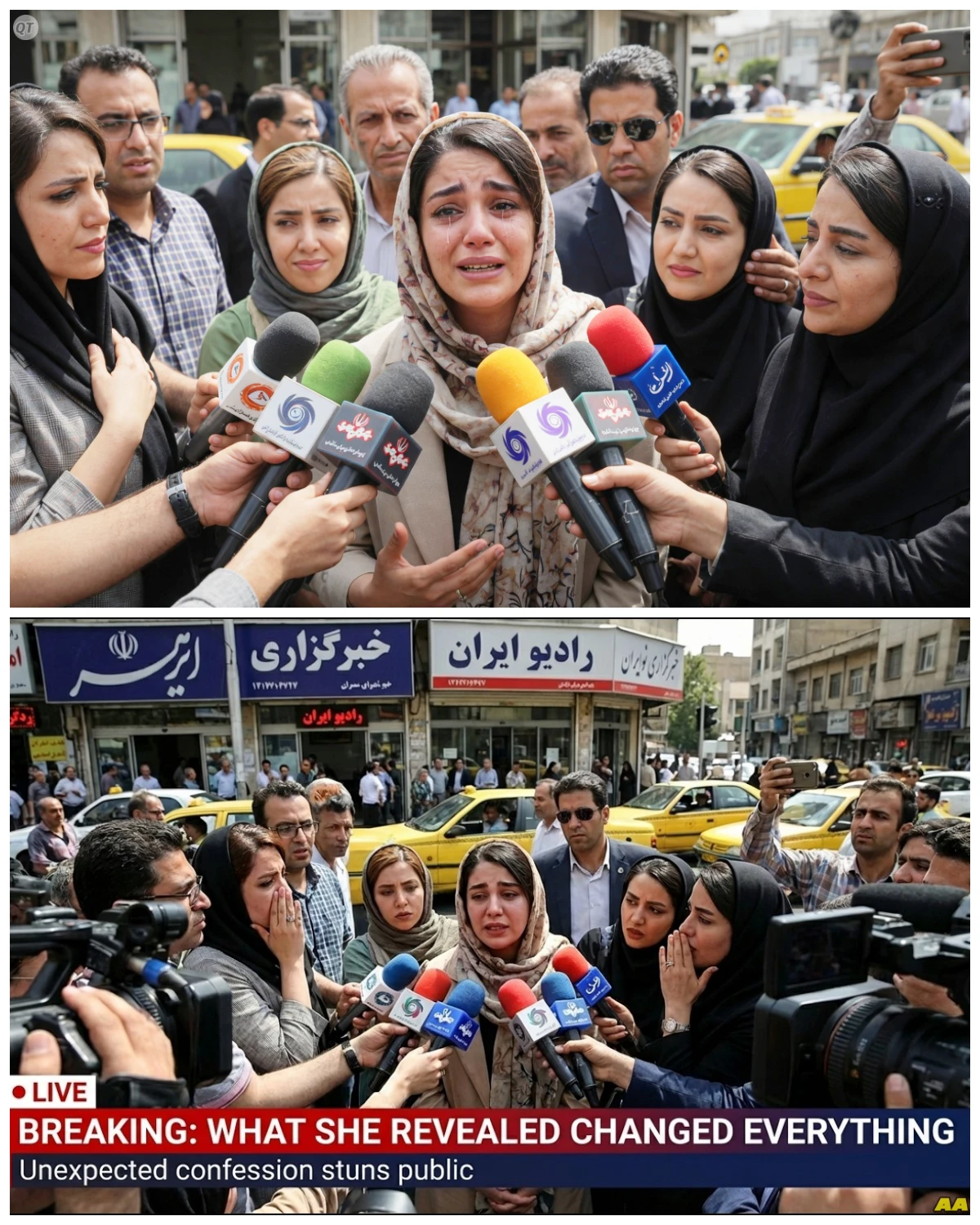
That standing there, something inside me finally broke, and I knew I could not live like this anymore.
I sat in rooms where Iran’s most powerful men decided who would live and who would disappear, and I called it my duty.
But the night Jesus walked into my bedroom in Tehran, every lie I had been living collapsed in a single moment.
I watched my husband use religion as a weapon for 20 years, and I helped him do it by staying silent.
What I am about to tell you has already cost me everything I owned in Iran, but I would lose it all again a thousand times over for what Jesus gave me in return.
My name is Nasrin Alizadeh, and I am from Tehran, Iran.
I now live in Canada, and I am telling you this story because the weight of staying silent has become heavier than the weight of every consequence that speaking will bring.
My husband was one of the most trusted advisers in the inner circle surrounding Ali Khamenei, the supreme leader of the Islamic Republic of Iran.
>> [clears throat] >> For 20 years, I sat at tables where the fate of ordinary Iranians was discussed like a logistics problem, and for 20 years, I said nothing.
This is the story of how Jesus Christ dismantled the life I had built in silence and replaced it with something I could have never constructed for myself.
I need you to understand where I came from before you can understand what I became and what I was delivered from.
Because the story of how someone ends up married to power in Iran is not the story of ambition.
It is the story of a girl who was raised to believe that that proximity to the right man was the highest form of safety a woman could achieve.
I was born in Tehran in the Tajrish neighborhood in the northern part of the city.
My father, Hossein Alizadeh, he was a mid-level official in the Ministry of Interior.
Not a grand figure, not someone whose name anyone outside the ministry would recognize, but he was connected.
He understood the architecture of the Islamic Republic, who answered to whom, which relationships opened which doors, which alliances provided protection, and which ones would be quietly cut loose when the political winds shifted.
He had survived multiple internal purges by being precisely useful enough to keep and precisely invisible enough to ignore.
He raised me with this survival philosophy baked into everything.
My mother, Shirin, was a woman of considerable intelligence who had been educated before the revolution and who, after the revolution, redirected every ambition she could no longer openly pursue into the management of our family’s social position.
She arranged everything.
Which families we visited on holidays, which invitations my father accepted and which he declined, which schools I attended, which daughters of which officials I was encouraged to befriend.
She was a social strategist of the first order, and she never once described herself that way.
She called it being a good wife and mother.
I was their only daughter.
I had two brothers, both of whom were pointed at professional careers in engineering.
I was pointed at marriage, not explicitly.
No one in my family sat me down and said, Your purpose is to marry strategically.
But the entire texture of my upbringing communicated it in a thousand small and large ways.
The languages I was taught, the social graces my mother drilled into me, the emphasis on my appearance and comportment alongside my academic performance.
I was being prepared for a role, the role of a woman who enhances a powerful man’s position by being exactly what is needed in every room she enters.
I was a serious student.
I studied Persian literature and political science at the University of Tehran.
My mother approved of the political science because it gave me conversational currency in the world my father moved through.
She was less enthusiastic about the Persian literature, which she considered decorative at best and dangerously romantic at worst.
She was right that it made me romantic.
I fell in love with language and ideas in a way that made me privately hunger for a life built around something other than careful social positioning.
But I was also my mother’s daughter, which meant I was practical enough to keep that hunger quiet.
I met Farhad Kasravi in my third year at university.
He was 10 years older than me.
He was not a student.
He had already completed his education and was working within a government research institute that studied political and strategic affairs.
He came to the university to deliver a lecture on regional security, and I was in the audience.
He was not physically remarkable, medium height, dark hair going slightly gray at the temples even then, a neat beard trimmed to the precise length that communicated seriousness without appearing careless.
What was remarkable about Farhad was how he spoke.
He spoke the way very few people speak, as if every word had been selected rather than simply produced, as if he had thought about language the way a craftsman thinks about materials, choosing the right tool for the right work.
I introduced myself to him after the lecture.
This was unusual for a young Iranian woman in that setting.
My mother would have been horrified, and also, knowing her, quietly pleased at my boldness.
Farhad looked at me with the kind of attention that is completely different from flattery.
He was assessing, not unkindly, but with the same precision he applied to everything.
He asked me two questions about a point he had made in the lecture, and I answered both of them from the text I had actually read rather than from performance, and something in his expression shifted slightly in a way that I understood meant I had passed a test I had not known I was taking.
We were married 18 months later.
My father was quietly overcome with satisfaction.
My mother cried happy tears that contained within them a complex mixture of genuine joy, a social triumph, and the particular relief of a woman who has successfully completed the most important project of her management career.
I want to be fair to Farhad because fairness requires me to say that he was not a cruel man.
He was not the kind of husband who diminishes a wife or keeps her from using her mind.
In private, he engaged with me as an intellectual equal.
He respected my opinions.
He argued with me genuinely, not the way powerful men sometimes argue with their wives, which is to perform engagement while having already decided.
He was interested in what I thought within the boundaries of what could be discussed, which were significant boundaries.
He was a genuine partner.
But the world he moved through was a world I was allowed to observe, but not enter.
And the longer I observed it, or the more I understood what it actually was.
Farhad’s position within the advisory structure surrounding the supreme leader’s office had grown significantly in the years after we married.
He specialized in what was called cultural and ideological affairs, which in the language of the Islamic Republic meant something specific and large.
It meant the management of what Iranians believed, not just politically, religiously.
The monitoring of ideological drift within the population, the assessment of threats posed by foreign cultural influence, the development of strategies to reinforce Islamic Republican values, particularly among young people who showed signs of finding those values inadequate.
He worked with institutions I will not name in full because some of the people involved are still in positions where naming them would put others at risk.
What I will say is that the work involved the identification and management of religious minorities inside Iran, the monitoring of converted Muslims and house church networks, the coordination with the judiciary on cases involving apostasy and cultural crimes, and the broader project of maintaining the Islamic Republic’s monopoly on what was considered legitimate spiritual expression within the country’s borders.
I knew this, not in full detail.
Farhad did not bring operational specifics home, but the texture of what he worked on was not invisible to a woman who had been trained since childhood to read rooms and understand unspoken realities.
I knew what the phone calls meant.
I knew what certain visitors to our home represented.
I understood the vocabulary used in the conversations I overheard, and I said nothing.
Not to Farhad, not to anyone.
Because what could I have said? This is the life I chose.
This is the life I was prepared for.
The Islamic Republic was not an external imposition on my world.
It was my world.
My father was part of it.
My husband was part of it.
Our social circle was entirely composed of families who were part of it.
The values it claimed to uphold were the values I had been raised with.
The God it invoked was the God I prayed to formally at the correct intervals, in the correct posture, with the correct words.
I was a good Muslim wife of a powerful Muslim man in the Islamic Republic of Iran.
That was my identity.
That was my purpose.
That was what I had been built for.
The question of whether I was happy is not one I spent much time with because spending time with that question was a luxury that women in my position could not afford.
Happy was not the point.
Safe was the point.
Secure was the point.
Positioned correctly within a system that could destroy you if you were positioned incorrectly was the point.
These were the terms I understood my life in and they were not terms that left much room for happiness as a category.
But there was something underneath the terms, something I managed by not looking at it directly.
A low-level grief that had no specific object.
A sense of living inside a beautiful and perfectly maintained house with no windows.
Everything was correct.
Everything was in its right place.
And the air was slowly quietly running out.
I prayed.
I prayed correctly and consistently and entirely without feeling.
I recited the words my father’s religion had given me.
The words my mother had taught me.
The words that the Islamic Republic printed on banners across the streets of my city.
They were correct words.
They were the right words.
They produced nothing inside me.
No warmth.
No response.
No sense of being heard.
This is not a small thing.
This is the thing I want women who have been raised inside a religious structure to hear.
The performance of faith and the experience of faith are not the same thing.
I was performing perfectly.
And the performance was a prison that looked exactly like righteousness.
The first serious fracture appeared in the winter of 2019.
My younger brother, Reza, although was a software engineer who had been increasingly involved in the online protest communities that had been growing among young Iranians.
I did not know the extent of his involvement.
I should have known.
I chose not to know because knowing would have required me to act and acting would have required a choice I was not ready to make.
He was arrested in November 2019 during the the crackdown on protests that followed the fuel price increase.
Hundreds were arrested across Iran that week.
Many were released after short periods.
Some were not.
Reza was not.
My father used every connection he had accumulated over 30 years of careful positioning inside the ministry to reach into the system and find his son.
I watched my father who had survived everything by being precisely useful and invisible.
He burned through relationships he had spent decades cultivating in a single week.
He called men he had not called in years.
He agreed to obligations he would have never accepted under normal circumstances.
He prostrated himself in ways that cost him professionally and personally.
And Reza was released after 6 weeks.
He came home thinner.
His wrists carried marks that we did not ask about and he did not explain.
He sat in my parents’ kitchen and drank tea and did not speak for most of that first evening.
My mother put food in front of him and refreshed his tea and did not cry until she was in the kitchen alone where she thought no one could hear her.
I sat across the table from my brother and I looked at his hands wrapped around the tea glass and I felt something move through me that I had been managing carefully for years.
It moved through me and it did not ask for permission and it did not respect the careful architecture of my managed interior life.
It was rage.
Pure, clean, irrefutable rage.
Not at an abstract political situation.
At the specific system that my husband served.
At the institutions whose vocabulary filled our house.
At the God who was invoked to justify the marks on my brother’s wrists.
I drove home that night with my hands tight on the steering wheel and I said nothing to Farhad.
He asked about Reza’s condition.
I told him Reza was home and recovering.
Farhad nodded and returned to his reading.
He did not ask further questions.
I did not offer further information.
This was the shape of our marriage.
Two intelligent people who had agreed without discussing it to not look at each other too directly.
The rage did not go away.
I had expected it to.
I had expected the management system I had developed over decades to absorb it as it had absorbed every other inconvenient feeling.
But it did not absorb this one.
It sat in my chest and it burned and it illuminated things that I had been I’ve been keeping in the dark.
I started paying different attention.
Not to the big public narratives of the Islamic Republic which I had always known how to read.
To the smaller personal things.
To the people around me whose lives had been shaped by the system in ways I had previously processed as regrettable necessities.
A woman in our social circle whose son had been barred from university because his file contained a notation about his family’s religious practices.
A colleague of Farhad’s whose daughter had been arrested for posting a video of herself dancing at a private gathering.
A neighbor who had emigrated to Germany after her husband was summoned for questioning about his library and never quite recovered from the experience even though nothing ultimately happened to him.
These were not new stories.
I had been hearing versions of them my entire life.
What was new was that I could no longer process them as regrettable necessities.
My brother’s wrists would not let me.
I began very quietly and very carefully to ask questions I had not asked before.
Not of Farhad.
Never of Farhad.
But inside my own mind, in the private space I had always maintained even within the most externally constrained life.
Questions about God.
About whether the God whose name was on every government building and every state proclamation and every justification for every action that left marks on the wrists of young men was the same God who was supposed to hear prayers.
About whether a God that permitted this and endorsed this and was invoked to command this was a God worth praying to.
These were dangerous questions.
I knew they were dangerous.
Not just politically, which would have been enough.
They were dangerous to the entire structure of my identity which was built on a foundation that those questions were designed to destabilize.
Late one night in the early months of 2020 I sat in our study after Farhad had gone to sleep and I found myself searching online in a way I had not done before.
Looking for something I could not fully name.
I found testimonies.
Few Iranian women and men who had left Islam.
Some who had left for secular reasons, simply stepping away from a faith that no longer held them.
And some who had left because they had encountered something else.
Something they described in terms that I, raised with every resource of Islamic theology and practice, found startling because they described precisely the thing that Islamic practice had never given me.
A sense of being personally known and personally loved by a God who was actually present and actually paying attention.
I read carefully.
I read critically.
I looked for the seams in the stories.
The way a person trained to operate within a system of managed information learns to look for the seams in everything.
Some of them I could see the edges of.
Some of them I could not.
Some of them were written with a specificity of inner experience that I could not explain away because it matched too precisely the specific shape of my own interior emptiness.
I filed it away.
I was not ready.
I was not there yet.
But the file was open.
The breaking point did not come as a single event.
It came as a series of recognitions that arrived over several months like individual blows to the same place until the structure finally gave way.
The first recognition was about Farhad’s work in a way I had never directly allowed myself to see.
I came across a document that had been left on his desk partially visible beneath other papers.
I should not have read it.
I read it.
It was a briefing of some kind, internal regarding the monitoring of house church networks in Tehran and several other cities.
It described specific methods.
Took surveillance of communications.
Placement of informants within congregations.
Protocols for arrests.
The language was bureaucratic and precise and entirely without acknowledgement that the people being described were human beings who were gathering in private living rooms to pray together.
I replaced the document exactly as I had found it and went to the kitchen and stood at the sink looking out the window at the garden and understood with complete clarity that my silence had been a form of participation.
That every year I had not asked questions had been a vote for the continuation of what I had just read.
That my comfortable life inside the system was not separate from what the system did.
It was funded by it and it funded it and the two things could not be separated.
The second recognition came when I went back to the testimonies I had been reading.
I went back with different eyes, not the eyes of a critic looking for weakness, the eyes of someone who was beginning to be desperate.
I had been praying into silence for decades.
My brother had come home with marked wrists.
I had read a document that described human beings as surveillance targets.
The beautiful and perfectly maintained house I had been living in had turned out to have a foundation I could not stand on.
I read the testimonies of people who had called out to Jesus in their desperation.
And what they described receiving back was the opposite of everything I had experienced in formal religion.
They described being answered personally, specifically, in their own language with knowledge of their specific situation that only someone who had actually been watching could have.
I was not yet ready to believe this, but I was ready to ask.
And asking was something I had not done in 30 years of formal prayer, not really asking.
Performing a prayer posture and reciting correct words and calling it asking.
This was different.
I knelt in my study at 1:00 in the morning with the door locked and the house silent and I did not recite any words I had been given.
I used my own words.
I said, I do not know if you are real.
I do not know if what these people describe is real or constructed.
I do not know what is true anymore about anything I was raised to believe, but if you are there if you are actually there and not just a word on a government banner, then I need you to show me.
Uh because I have run out of every other option and I cannot live in this house in my own chest one more day.
I went to bed.
I slept.
I woke up the next morning and made breakfast and Farhad left for work and nothing visible had changed.
But something invisible had moved.
I cannot point to the exact mechanism.
I can only tell you that after that night the silence I had been praying into for 30 years was different.
It was not noisier.
It was not full of dramatic signs, but it had a quality that it had not previously had.
The quality of something that is listening.
Over the following weeks I continued to read.
I found a Farsi translation of the New Testament through a channel I will not describe.
I read it the way I had read poetry as a student looking for the places where the language opened into something larger than itself.
And I found them everywhere.
The Jesus of those pages was unlike any figure I had been given in my religious education.
Not the cold doctrinal Jesus that Islamic theology dismissed as a prophet who had been superseded.
A Jesus who stopped for individuals who saw people who had been trained to be invisible who spoke to women with the kind of direct equal attention that was radical in his historical context and I thought reading it remained radical in mine.
He was the kind of presence I had been looking for in every prayer I had ever recited.
The encounter came on a Tuesday night in the autumn of 2020.
I want to be precise about the circumstances because the circumstances matter.
I was not in a heightened emotional state.
I had not been fasting or praying in any unusual way.
I had been to a dinner with Farhad and two of his colleagues and their wives, a standard social obligation the kind I had attended hundreds of times.
The conversation had been what it always was careful and pleasant and utterly without substance.
I had smiled and contributed appropriately and felt the familiar windowed silence of my interior self watching from behind glass.
I came home and changed out of my dinner clothes and sat on the edge of the bed.
Farhad was in his study.
The house was quiet.
I was looking at nothing in particular, a space on the floor near the wardrobe, and I was thinking about nothing in particular.
Or rather, the particular kind of nothing that is actually the accumulated weight of everything you are not thinking about.
And he was there.
I am not going to dress this up with more than I can accurately say.
I did not see a physical form the way you see a person standing in a room.
It was not a dream because I was fully awake and sitting upright on the edge of my bed with both feet on the floor.
What I can tell you is that the room changed, not its furniture or its lighting.
The quality of the air in the room changed the way the air changes before a rain.
That shift in pressure that your body registers before your mind does.
Something was present in the room that had not been present before I sat down.
And then I felt something that I have never felt in any other moment of my life before or since.
I felt known.
Completely, specifically, exhaustively known.
The way I described praying into silence, that specific loneliness of speaking words that never seemed to arrive anywhere, it was reversed, completely and instantaneously reversed.
You’re It was as if someone had turned on a light in a room that I had been navigating by memory in the dark for 30 years.
And in the light I could suddenly see everything including the exact shape of the darkness I had been living in.
A voice.
Not audible the way Farhad’s voice is audible.
Not a sound wave reaching my ears.
Something more interior than that.
But with more clarity and more authority than any sound I have ever heard externally.
It spoke in Farsi.
It said, Nazrin.
And in the way that voice said my name I heard my entire history.
Not a condemnation of it.
A knowledge of it.
Every year of managed silence.
Every prayer that went nowhere.
Every morning I had made breakfast and acted as though the document on my husband’s desk did not exist.
I Every moment I had smiled across a dinner table and felt the glass between myself and everything real.
All of it known.
All of it without judgment and without the particular cruelty of pity.
With something I had no existing category for and had to construct a new category to contain.
Completely free love.
Love that did not ask what I had done to earn it because it was not organized around the concept of earning.
Love that knew everything I was ashamed of and remained.
The voice said, You have been trying to maintain a life that was built on foundations that cannot hold.
You already know this.
You have known it for longer than you have admitted.
I did not build you for that life.
I built you for this moment and for what comes after this moment.
I said out loud in the empty bedroom, Are you Jesus? And the answer was not a word.
So it was a deepening of the presence in the room that was itself an answer.
Yes.
Not spoken but communicated with a completeness that no word has ever communicated anything to me.
I slid off the edge of the bed onto my knees on the bedroom floor.
Not as a posture I had been trained into because my legs could no longer hold me upright in the presence of what was in that room.
I pressed my face into my hands and I said things that I will not repeat here because they were the most private things I have ever said and they were said to the only one who needed to hear them.
All the accumulated truth of 30 years of a managed life.
All the complicity and the silence and the rage and the grief and the profound bone-deep hunger for something real.
And what came back was rest.
What the specific rest of a person who has been fighting a losing battle for decades and finally finally puts the weapons down.
Not because they have been defeated.
Because they have been found by someone who does not need them to fight anymore.
He said to me still in that interior voice that was more real than sound Everything you gave your life to serve was built on fear.
My kingdom is not built on fear.
I am rescuing Iran not through weapons or politics or the violence that men use to hold power but through exactly this.
One person at a time.
One bedroom at a time.
One honest moment at a time.
And you, Nazrin, are part of that rescue.
I stayed on my knees until I heard Farhad’s study door open and his footsteps in the hallway.
I got up and went to the bathroom and looked at my face in the mirror.
My eyes were wet.
My face was completely undone in the way that faces are undone when something real has happened to them.
I ran cold water and composed myself and went to bed and lay in the dark next to my sleeping husband and felt the presence still there, dimmer but present.
Like an ember rather than a flame.
Warm.
Real.
Staying.
The months that followed were the most difficult and the most alive months of my life.
Both of those things simultaneously and inseparably.
I began reading the New Testament with the seriousness I had previously reserved for academic work.
Every word landed differently than it would have landed before the bedroom.
I had been reading it as literature, as evidence, as a document to be assessed.
Now, I was reading it as correspondence, letters from someone I knew, someone who had been in my room and said my name and stayed.
Odd, I found community with extreme caution.
The networks of Iranian believers who operated in secret inside Iran are real and they are brave beyond what I have adequate language for.
People who gather in apartments with blankets over the windows to sing worship songs quietly enough that neighbors cannot hear.
People who smuggle scriptures and disciple new believers and pray for their country with a faith so specific and so sustained that it humbles every casual religious observance I had ever performed.
I found them slowly through careful contacts, through encrypted communication, through the specific trust that builds between people who are all risking the same things.
They prayed with me.
They taught me.
A woman named Maryam who had been a believer for 12 years in secret and discipled me through months of conversation that I received like water after a very long drought.
She had a quality that I recognized from the testimonies I had read and from my own experience.
Peace that did not negotiate with circumstances.
Peace that sat in the room with all the real and terrible things and was not diminished by them.
I began praying specifically for Iran.
Not the prayer of a person performing a religious obligation.
The prayer of someone who had been told something about their country and who was standing on that promise every day.
I am rescuing Iran.
He said that.
I wrote it on a small piece of paper that I kept inside my Farsi New Testament.
One person at a time.
One bedroom at a time.
One honest moment at a time.
I want to describe what I saw happening around me in those months because it is directly connected to what Jesus said to me about Iran.
Through the network I had joined, I began to hear testimonies from across the country.
Not just Tehran, Isfahan, Mashhad, Shiraz, Tabriz.
Young Iranians who had encounters with Jesus in dreams.
College students who had been given Bibles and read them in secret on their phones late at night.
Housewives whose neighbors had whispered something to them that opened a door.
Professionals in their 30s and 40s who had reached the exact limit of what the Islamic Republic’s religious framework could offer them and had found that limit was not the limit of God, only the limit of the system.
Good.
The underground church in Iran was not a small operation by foreign missionaries pushing religion onto a resistant population.
It was an explosion of indigenous hunger.
Iranians finding Jesus largely on their own terms, in their own language, in their own homes because something in the lived experience of being Iranian in the Islamic Republic had created an enormous and specific appetite for exactly what Jesus offered.
For a God who did not use religion as a weapon.
For a God who came close.
For a God whose love was not a reward for compliance, but a gift freely given.
Farhad had spent his career trying to monitor and suppress this and it was growing faster than it could be monitored.
One person at a time.
One bedroom at a time.
Uh living inside my marriage while carrying all of this was a sustained exercise in the particular pain of double life.
I loved my husband in the way you love someone you have built a life with over 20 years.
I did not love what he did.
I did not love what I now understood his work to mean for the specific people I had come to know through the underground network.
The woman whose husband had been arrested by a system my husband served.
The young man who had lost his position because his file contained the wrong notation.
I prayed for Farhad every day.
Not the way you pray for someone when you have given up on them.
The way you pray for someone because you know that the thing that changed your life is not something you can keep to yourself.
He did not change.
Not in the time I had left with him in Iran.
He was who he was.
Uh he served what he served and I could not stay.
The decision to leave came after an evening in the spring of 2022 when Farhad mentioned in the casual way he sometimes mentioned things that were professionally significant to him that there had been an increase in activity within underground Christian networks in the city.
That the monitoring had become more intensive.
That the judiciary was preparing to move on several cases.
He said it the way he said everything about his work.
Precisely.
Without drama.
As a professional matter.
And I thought of Maryam.
I thought of the apartment with the blankets over the windows.
I thought of the people I had been meeting and praying with and being discipled by.
I thought of the young man whose story I had heard the week before.
Uh who had found Jesus in a dream and wept and called out to him and been answered with the same answer I had been given.
And I understood that my knowledge of what Farhad’s office was planning made me either a warning or an informant.
And there was only one of those options I could live with.
I made calls carefully through the network.
People who knew how to move.
People when moving became necessary.
I will not describe the mechanics because they are not mine to describe and the people who carry out that work are still doing it and their safety is not a detail I will trade for narrative completeness.
I left Tehran on a morning in late spring 2022.
I took what I could carry in a bag that looked like I was going to a standard appointment.
I left the apartment in Niavaran exactly as it was.
Farhad’s breakfast things still on the table.
My reading glasses on the bedside table.
The study full of books that had shaped the woman I no longer was.
The garden that had been my private comfort for 20 years.
The roses I had planted the first spring after we moved in.
I also left a letter for Farhad.
I will not reproduce it in full.
What I will say is that I told him the truth.
Not as an accusation and not as a farewell constructed to wound.
The truth about the bedroom.
About the voice that spoke my name.
About what Jesus had said about Iran.
About what I understood about the work he had spent his life doing and what I could no longer be the silent beneficiary of.
About the prayer I was praying for him every day and would continue to pray.
About love that is not performance and not compliance and does not depend on shared framework.
I do not know what he did with the letter.
I I have not heard from him.
I did not expect to.
But I wrote it honestly and I would write it the same way again.
I am in Canada now.
I have been here for over a year.
I am rebuilding a life out of components that look very different from the life I left.
Smaller in every material measurement.
Immeasurably larger in the only measurement that has ever actually mattered.
I attend a Persian speaking church here.
The first time I walked into it and heard Farsi spoken in the context of worship that was entirely free.
No fear.
No blankets over windows.
No whispering.
Just the full open sound of people praising Jesus in their own language.
I stood in the doorway and could not move for several minutes.
The woman next to me put her hand on my arm and did not ask questions.
She just stood there with me until I was able to walk in.
That is what the church is supposed to be.
That is what it was designed to be.
Not an institution of power.
A family of people who have all been found by the same love and who stand in doorways with other people until they can walk in.
I want to speak to several people directly because I have been given a voice and I intend to use it for the purpose it was given.
To every Iranian woman who is where I was.
Living inside a framework that was built for you before you could choose it.
Performing a faith you cannot feel.
Managing your interior life with the expert efficiency of a woman trained since childhood to keep inconvenient things invisible.
The emptiness you feel is not a spiritual failure.
It is a door.
On the other side of the door is not a Western religion or a political position or a betrayal of your culture.
It is a person.
His name is Jesus and he knows your name.
He knows the shape of your specific silence.
He knows about the wrists and the documents and the dinners and the glass between yourself and everything real.
Call his name.
Just his name.
In your own language, in your own room.
He will answer.
To every person watching this from inside Iran.
The church is there.
It is there and it is growing and it is growing faster than the people who monitor it can contain it.
You are not alone.
The underground believers in your city are praying for you specifically.
Jesus is building something in Iran that no political system and no intelligence apparatus and no religious establishment has the architecture to stop.
What he told me was true.
I have seen it with my own eyes.
One person at a time.
One bedroom at a time.
The rescue is already happening.
To the men who run the Islamic Republic.
To the offices that monitor and arrest and file and surveil.
I was married to your world for 20 years.
I know its language and its logic and its deep fundamental fear of exactly what is spreading through Iran right now.
I want to tell you that the fear is correct and the response to the fear is wrong.
You cannot arrest a presence that enters bedrooms in the middle of the night and says a person’s name with complete knowledge and complete love.
You cannot file a case against a God who answers the desperate prayers of women on their knees at 1:00 in the morning.
You cannot suppress what is happening one person at a time across your entire country.
Jesus is rescuing Iran.
This was not my idea.
It was not a Western political project.
It was not the ambition of an opposition movement.
It was the declaration of the risen Christ in a bedroom in northern Tehran to a woman who had spent 30 years praying into silence.
And it is happening exactly as he said.
To Farhad, if you ever read this, I pray for you every single day.
Not the prayer of someone who has given up on you or dismissed you.
The prayer of someone who knows what it feels like when Jesus says your name and believes with everything in me that he wants to say yours.
The God you have spent your career suppressing is the God who loves you.
And his love does not stop at the boundaries of what you have done in his name or what was done in his name to the people I came to know.
It is waiting for you exactly as it was waiting for me.
On the floor of some room you have not reached yet.
Come to him, Farhad.
Just come.
My name is Nasrin Alizadeh.
Uh I was the wife of one of the most powerful men in the inner circle of the Islamic Republic of Iran.
I sat at tables where ordinary Iranians were discussed as problems to be managed and I called that my life.
And then Jesus walked into my bedroom and said my name.
And I understood for the first time what the word rescue actually meant.
They took my apartment.
They froze what assets were reachable.
They erased my name from the comfortable world I had inhabited for 20 years.
They cannot take what he put inside me.
And what he put inside me tells me every single day that Iran is coming.
The harvest is coming.
The rescue he promised is happening right now in bedrooms and apartments and labor camps and university dorms all across the country where I was born.
I am watching for it.
I am praying toward it and I will not stop.
If this testimony found you in a place where you thought nothing could find you, write in the comments Jesus rescues.
Let those words be your first honest declaration.
Let them be the beginning of the conversation that changes everything.
He is listening.
He has always been listening.
And he is not finished with Iran.