Anti-ICE Protester Left SPEECHLESS After Conservative Prank Flips the Script in Heated Street Clash in the U.S.
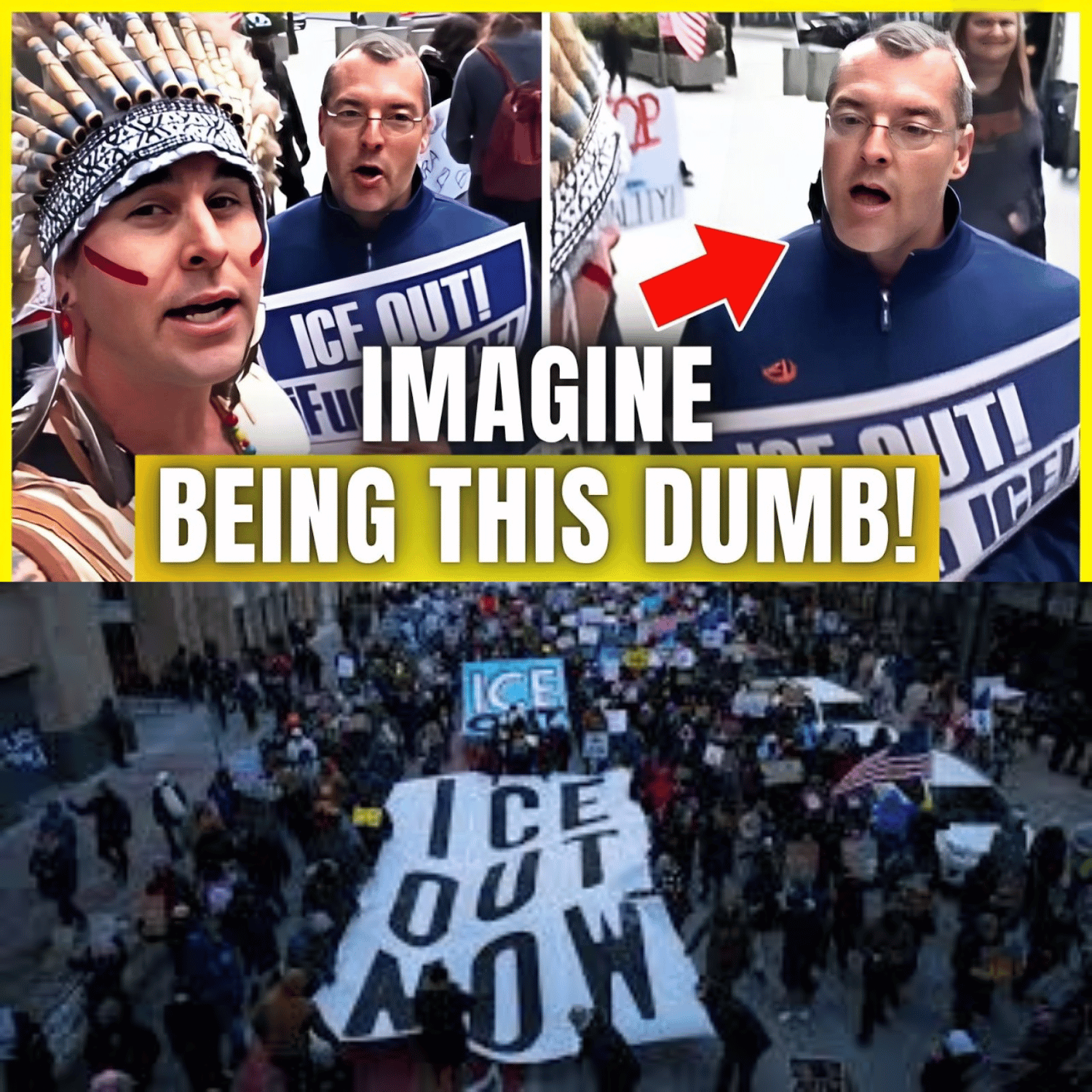
Viral “Prank Questionnaire” Street Interview Sparks Heated Moment and Renewed Debate on Political Polarization in the U.S.
A street interview filmed in the United States has gone viral after a politically charged questionnaire escalated into a tense exchange, raising fresh questions about the rise of confrontational content online, the ethics of ideological pranks, and the widening divide in American political culture.
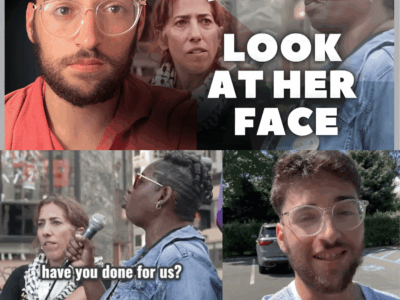
The video begins in a calm, almost routine fashion. A man identifying himself as “Finn” approaches a resident outside a home displaying a political flag. He introduces himself as part of a group allegedly focused on “fighting political extremism and right-wing tyranny,” and asks whether the homeowner would be willing to participate in a short questionnaire.
The resident agrees, appearing open to conversation. At first, the interaction resembles a standard street interview—something increasingly common on social media platforms where creators ask strangers for opinions on politics, culture, or current events.
However, the tone quickly shifts.
The Questionnaire Takes a Sharp Turn
The interviewer begins with questions about political labeling and enforcement measures against ideological opponents. He asks whether the participant would support classifying political conservatives as “domestic terrorists.” The homeowner responds affirmatively.
The questioning then escalates further, introducing more extreme hypotheticals involving the idea of isolating or imprisoning ideological opponents, framed under the term “re-education camps.” The participant again agrees.
At this point, the exchange becomes noticeably more tense. The interviewer begins repeating and reframing the answers, pushing the logical implications of what was said. The resident, sensing the direction of the conversation, becomes increasingly uncomfortable and eventually asks the interviewer to leave the property.
The interaction ends shortly afterward, with the interviewer challenging the consistency of the responses and the homeowner firmly demanding that he leave private property.
A Familiar Format in Online Political Content
While the clip has sparked intense discussion online, the format itself is not new. In recent years, a growing number of content creators have adopted what is often called “prank interviewing” or “gotcha questioning.”
These videos typically begin with a neutral or agreeable premise before shifting toward more provocative or extreme hypotheticals. The goal is often to capture moments where interviewees appear to contradict themselves or endorse positions they might not fully consider in a more formal setting.
Media analysts say the format is designed for virality rather than dialogue.
“These clips are structured for reaction,” said one digital media researcher. “They’re not about understanding someone’s worldview in depth. They’re about creating a moment of tension that can be clipped, shared, and debated.”
Why These Videos Spread So Quickly
On platforms like X, TikTok, Instagram, and YouTube Shorts, short-form political content thrives on emotional intensity. Content that provokes surprise, outrage, or confusion is more likely to be shared and replayed.
In this case, the video quickly spread across multiple platforms, with viewers interpreting it in very different ways. Some saw it as exposing contradictions in activist rhetoric. Others criticized it as manipulative framing that pushes participants toward extreme answers.
Comment sections under the video reflect this divide, with debates not only about the content of the responses but also about the legitimacy of the questioning style itself.
The Psychology Behind “Gotcha” Interactions
Experts in political psychology note that people respond differently when placed in unfamiliar or high-pressure conversational settings.
Street interviews often involve rapid questioning, social pressure, and the presence of a camera—all of which can influence how people respond.
“Most people don’t answer hypothetical political questions the same way they would in a structured conversation,” one psychologist explained. “When you add pressure, framing effects, and emotionally loaded language, you can easily get responses that sound more extreme than the person’s actual beliefs.”
This dynamic is central to why such videos generate controversy. Viewers often interpret answers as fully formed ideological statements, rather than reactions under conversational pressure.
The Role of Editing and Context
Another factor is editing. Viral clips are typically shortened to highlight moments of tension while removing broader context, disclaimers, or follow-up clarification.
This can amplify misunderstandings. A single exchange, isolated from its broader conversation, can take on a completely different meaning when circulated online.
Digital media experts warn that this creates a feedback loop: creators produce content designed for clips, audiences consume fragments, and political interpretations are formed based on incomplete information.
Private Property and Escalation Points
In this particular case, the interaction escalated when the homeowner asked the interviewer to leave. This moment is common in street interviews that occur on or near private property boundaries, where participants may feel their space is being encroached upon.
Legal experts note that while filming in public spaces is generally protected in the United States, private property introduces different expectations. When a resident requests someone to leave, continuing the interaction can quickly shift the tone from conversation to confrontation.
A Snapshot of a Larger Cultural Trend
Beyond the specific exchange, the viral clip reflects a broader trend in American online culture: the transformation of political discourse into performance.
Street interviews, debate clips, and prank interactions now function as entertainment as much as they do information. The goal is often not consensus or understanding, but engagement.
This shift has contributed to what many analysts describe as “algorithmic polarization,” where emotionally charged content is rewarded with visibility, while nuanced or slow-paced discussion struggles to gain traction.
The Human Side of Viral Confrontations
For those involved, these moments can become unexpectedly amplified. A short exchange intended for a local or niche audience can quickly reach millions of viewers, with interpretations shaped by commentary rather than context.
In such environments, participants often become symbols in larger cultural debates they never intended to join.
Conclusion: Entertainment, Politics, and the Internet Attention Economy
As this latest video continues to circulate, it adds to a growing library of viral political confrontations that blur the line between journalism, activism, and performance.
Whether viewed as a critique of political inconsistency, a manipulative prank, or simply online entertainment, the clip highlights a deeper reality of modern digital life: conversations about politics are increasingly shaped not by dialogue, but by the incentives of virality.
And in that environment, a few minutes of edited footage can outweigh hours of context—turning everyday interactions into global talking points almost overnight.