Piers Morgan Panel Explodes as Michael Knowles Defends Tommy Robinson in Henry Nowak Firestorm
Piers Morgan Panel Explodes as Michael Knowles Defends Tommy Robinson in Henry Nowak Firestorm
New York — A brutal murder case in Britain has now detonated inside America’s political media machine, after Michael Knowles clashed with Piers Morgan’s panel over the death of 18-year-old Henry Nowak, the role of Tommy Robinson, and the explosive accusation that Western police systems are practicing “two-tier justice.”
The exchange was loud, bitter, and deeply revealing.
On one side were commentators warning that the tragedy is being hijacked by anti-Muslim agitators and far-right activists. On the other was Knowles, who argued that the killing of Nowak has become politically significant not merely because of the murder itself, but because of what happened after police arrived.
That is the issue now consuming conservative audiences across the United States.
Henry Nowak, a young student, was fatally stabbed in Southampton. The case became a national scandal after reports and bodycam footage showed that Nowak, while badly wounded and saying he could not breathe, was handcuffed by police after his attacker falsely claimed he had been racially abused and assaulted. For critics of British policing, the image was horrifying: a dying young man treated with suspicion while his killer’s accusation appeared to shape the immediate police response.
That moment has become the center of the controversy.
Piers Morgan opened the debate by challenging Knowles over Tommy Robinson’s reaction. Morgan argued that Robinson has tried to pull the case into his broader anti-Islam politics, even though the killer in this case was Sikh, not Muslim. For Morgan, this exposed Robinson’s pattern: no matter the facts, he claimed, Robinson redirects public anger toward Muslims and Islam.
Knowles did not deny that Muslims had nothing to do with Nowak’s killing. But he argued that the public response to the case cannot be separated from wider British anxiety over immigration, policing, grooming gang scandals, and the perception that authorities treat minority suspects and white victims differently.
That answer immediately triggered the panel.
Morgan pushed back hard, saying Robinson does not talk with the same energy about crimes committed by white people. He argued that the problem with Robinson is selective outrage — a habit of highlighting crime by minorities while ignoring the fact that most crime in Britain, simply because of demographics, is committed by white people.
Marc Lamont Hill took the argument further. He rejected the idea that white suspects in handcuffs are uniquely ignored by police. If the dying man had been Black, Jamaican, West African, or another minority, Hill argued, there is no serious reason to believe officers would automatically have treated him with greater trust or compassion. In the United States, he noted, there is a long history of Black suspects being disbelieved, mistreated, or neglected by law enforcement.
That American framing matters.
For U.S. viewers, the Henry Nowak case is being processed through the shadow of George Floyd. The phrase “I can’t breathe” instantly carries emotional and political force. But where Floyd’s death became a global symbol of police brutality against Black Americans, parts of the right now argue that Nowak’s death exposes a different problem: a white victim allegedly denied immediate trust because a minority attacker invoked racism.
That parallel is exactly what makes the story so explosive.
The left sees a tragedy being weaponized by anti-immigration activists.
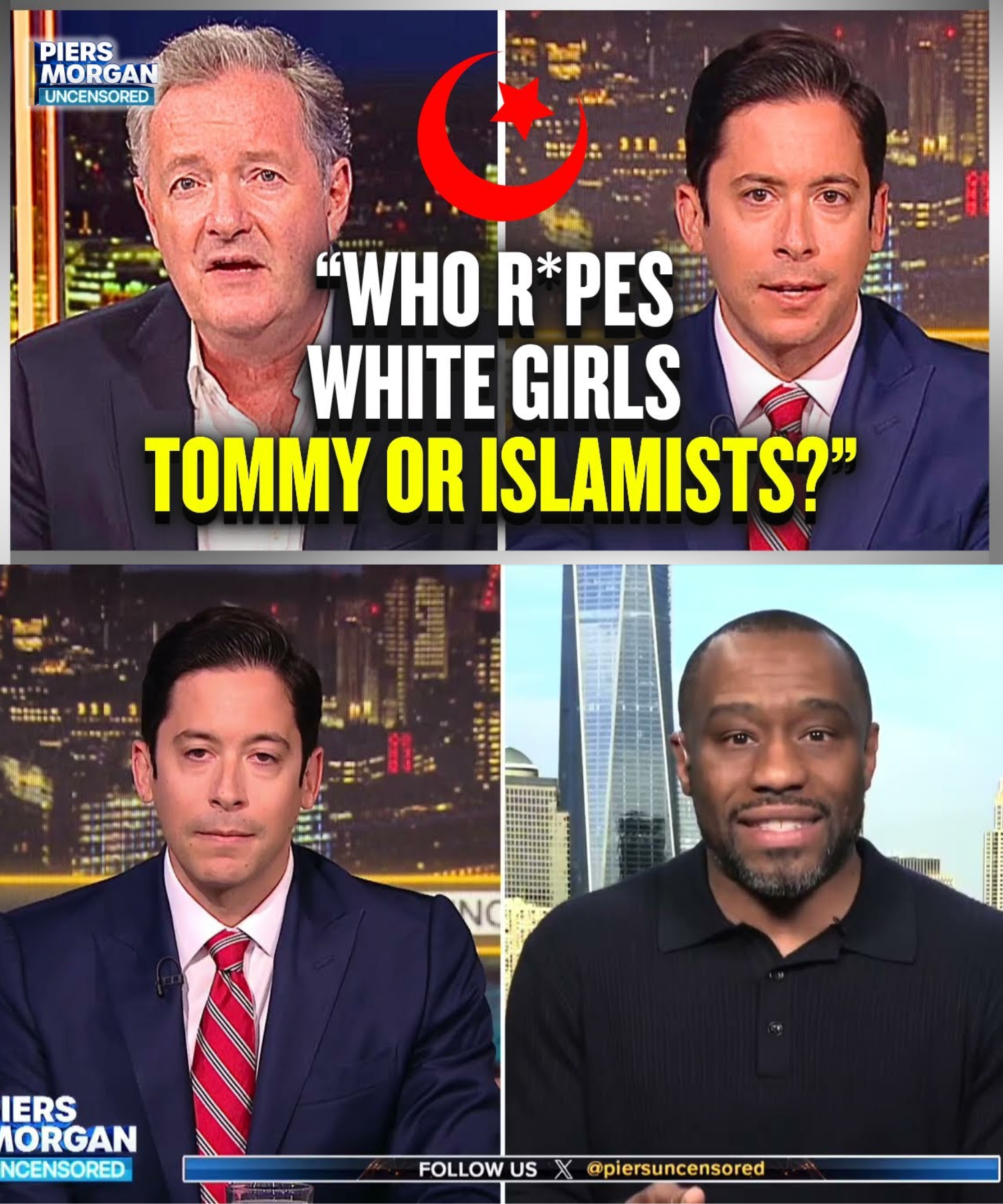
The right sees a tragedy being downplayed because the victim does not fit the preferred narrative.
The tension reached its highest point when Knowles defended the political importance of the case. He argued that the key issue is not the Sikh community, nor any collective blame for a religious group. The key issue, he said, is whether police showed undue deference to one person’s claim of racial victimhood while ignoring the bleeding man on the ground.
That argument has become central to what British and American conservatives call “two-tier policing.”
In the transcript, Knowles connects the case to other controversies, including grooming gangs and public frustration over immigration. He argues that voters have repeatedly asked for control over borders, crime, and integration, but political elites have failed to deliver. From his perspective, Nowak’s death became symbolic because it seemed to confirm a deeper public fear: that authorities are more afraid of appearing racist than of failing innocent victims.
Morgan, Hill, and Wajahat Ali rejected that interpretation.
Ali attacked Knowles for defending Tommy Robinson, describing Robinson as a divisive figure who attracts extremists and inflames tensions. He accused Robinson and figures around him of rage farming — using tragedy to build political power, attention, and money. Ali argued that when mobs chant Robinson’s name, when riots erupt, and when minority communities fear collective blame, the problem is not simply policing. The problem is political exploitation.
That point is difficult to dismiss.
After Nowak’s death became public, protests did occur, and some turned violent. Police were injured. Men were jailed. Communities were put on edge. Nowak’s own family reportedly urged that his story not be used to create further division or hatred. That plea stands in sharp contrast to the way the case has been consumed online.
This is where the American media angle becomes unavoidable.
U.S. conservative audiences have increasingly turned British controversies into warnings about America’s future. Britain becomes the example: uncontrolled immigration, weak policing, elite fear of minority grievance, free speech restrictions, and a native population told to accept decline quietly. For American populists, the Henry Nowak case fits that template perfectly.
For progressives, that framing is dangerous. They argue it turns a specific murder into a racial narrative, risks collective suspicion of minorities, and gives oxygen to activists whose rhetoric can lead to violence.
The truth may be more uncomfortable than either side wants.
Henry Nowak’s death deserves outrage. The police response deserves investigation. The false accusation made against him deserves public condemnation. But using one murder to smear entire religious or ethnic communities is reckless. At the same time, refusing to discuss whether institutions mishandle accusations of racism out of fear is also dishonest.
That is why the Piers Morgan clash went viral.
It exposed the two conversations America and Britain are having at once.
One conversation is about racism, minority safety, and the danger of far-right mobilization.
The other is about crime, immigration, policing, and whether ordinary citizens believe the state will protect them without political bias.
The tragedy of Henry Nowak sits between those two conversations like an open wound.
Everyone says they want justice.
But each side defines justice differently.
For Morgan’s side of the panel, justice means refusing to let grief become anti-Muslim or anti-immigrant propaganda. For Knowles and his supporters, justice means admitting that police and politicians may have failed Nowak because they were conditioned to privilege a racial accusation over a dying man’s pleas.
Both arguments now have audiences in America.
And both are intensifying.
The most haunting part of the entire debate is that the young man at the center of it cannot speak for himself. Others are speaking over him — politicians, activists, influencers, rioters, journalists, and international commentators.
His death has become a symbol.
But before it was a symbol, it was a human life.
That is the fact every side must confront before turning tragedy into ammunition.