Rage Baiting Cryptids In Appalachia
Rage Baiting Cryptids in Appalachia
It always starts with a video that looks just real enough to believe.
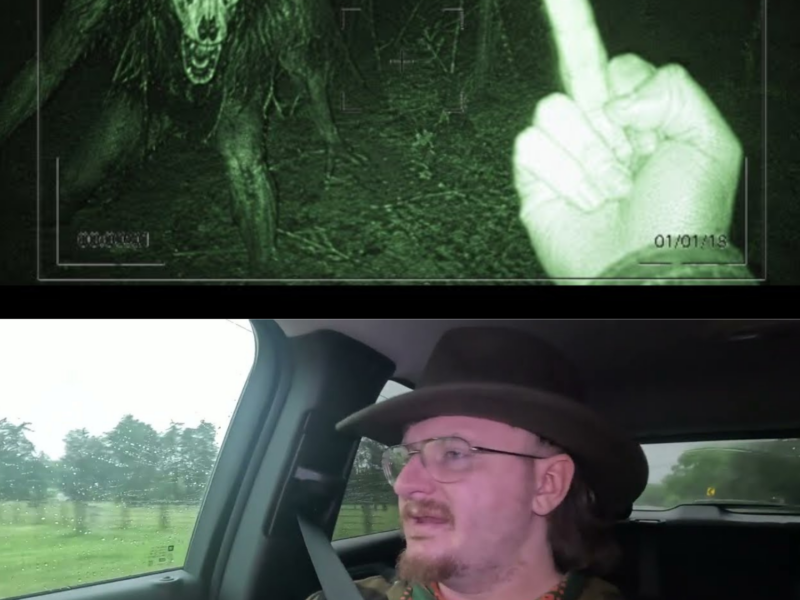
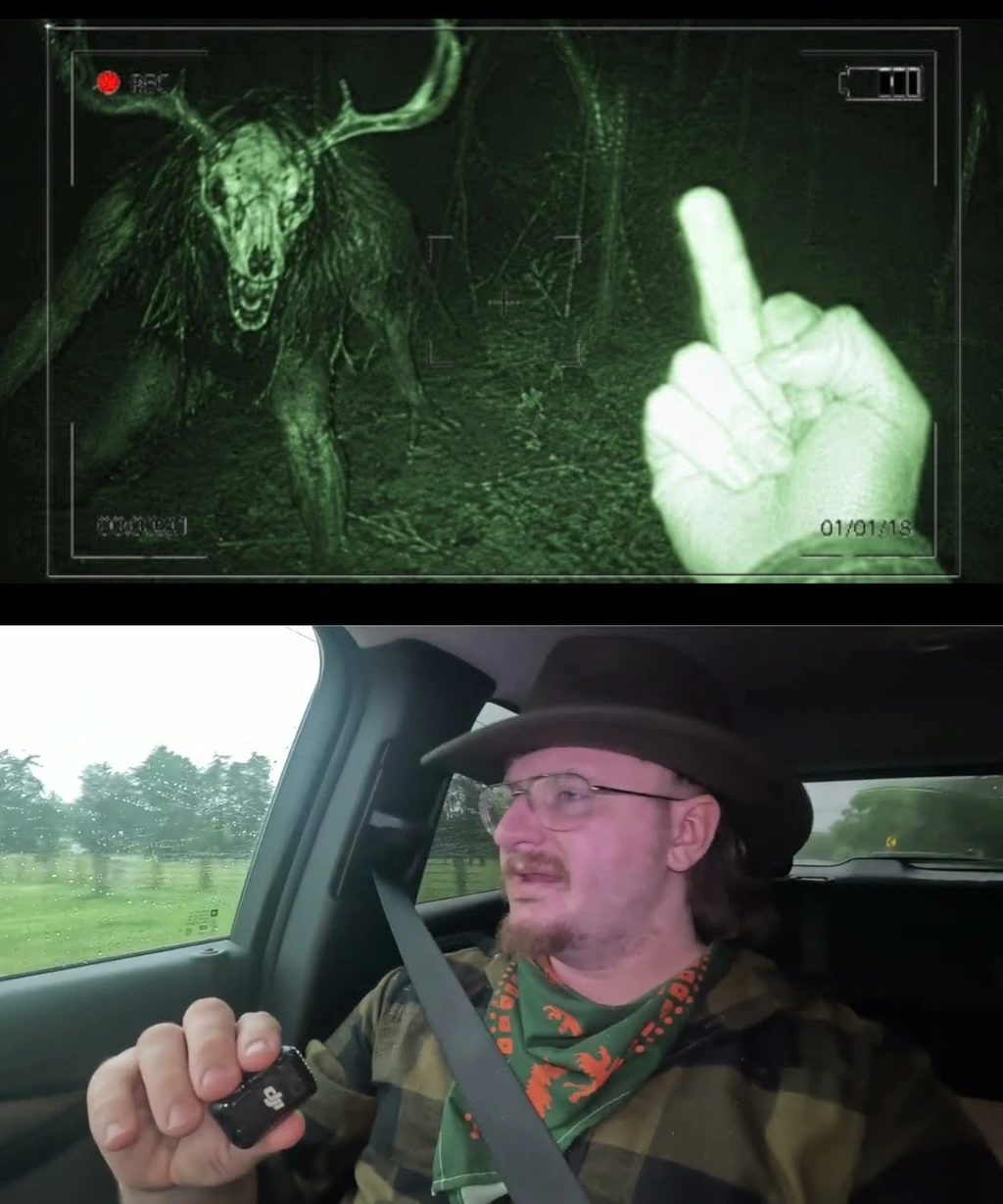
A shaky camera. Night vision green. A shape moving between the trees on a ridge somewhere deep in the Appalachian Mountains. The uploader’s voice is whispering too loudly, like they already know millions of people will hear it. “It’s back,” they say. “It’s back again.”
And then the comments explode.
Some people swear it’s a bear. Others insist it’s military testing. But a louder group always takes over—people who already believe the mountains are not empty at night. People who talk about things that don’t belong in modern biology. Things with too many joints. Things that move like they’re remembering how to be human, not actually human at all.
Cryptids.
But lately, something strange has been happening in Appalachia. The stories aren’t just spreading anymore. They’re being engineered.
And that changes everything.
The Appalachian Mountains have always been good at hiding things.
Stretching from Alabama up through Pennsylvania, the region is a maze of dense forests, abandoned mines, forgotten towns, and roads that seem to loop back into themselves. It’s the kind of place where fog doesn’t lift so much as it disappears without explanation. Where cell service fails in patterns that feel intentional. Where locals can tell you exactly which holler to avoid after dark—but they won’t explain why.
For generations, cryptid stories have grown naturally here. The Black Dog sightings. The Mothman reports from West Virginia. The strange footprints found near riverbeds after heavy rain. The “thing in the woods” that no one ever describes the same way twice.
These stories used to behave like folklore always does—slow, local, personal.
Now they behave like viral content.
And viral content has a different kind of hunger.
It began subtly.
A livestream from a hiker near the Kentucky border. He claimed he was documenting a night trek for his small audience. At first, everything was normal—rustling leaves, distant owl calls, the steady crunch of boots on gravel.
Then the audio changed.
A second sound appeared underneath the forest.
Not an animal. Not wind.
A rhythmic tapping, almost like something knocking from inside the trees themselves.
The hiker stopped walking.
“Do you hear that?” he asked.
His chat exploded immediately. Half the viewers said yes. Half said no. And within minutes, the livestream clipped and reposted itself across platforms with different captions:
“APPALACHIAN WOODS HAVE NEW CREATURE?”
“THIS IS NOT A BEAR.”
“DO NOT GO INTO THE FOREST AFTER 3AM.”
That clip alone would have been nothing new in the world of internet horror. But what made it different was what happened afterward.
More videos appeared.
Not older ones resurfacing. Not coincidences.
New ones.
All with similar patterns: shaky night footage, partial glimpses of movement, and just enough ambiguity to keep argument alive. No clear creature. No proof. Only suggestion.
And suggestion is where cryptids become profitable.
In Appalachia, cryptids are not new.
But “rage baiting cryptids” are.
The term doesn’t come from science or folklore studies. It comes from the internet itself—a phrase used by researchers and content analysts to describe videos designed not to convince people of something, but to provoke them into fighting about it.
Because engagement is no longer about belief.
It’s about reaction.
A normal cryptid story tries to make you wonder if something is real.
A rage bait cryptid story tries to make you argue about it until you forget what you were even looking at.
And in the Appalachian context, that distinction matters more than anywhere else.
Because here, belief is already layered into the land.
Ask any local in the deeper parts of the region, and you’ll hear versions of the same warning.
Don’t whistle at night.
Don’t follow lights into the woods.
Don’t respond if something calls your name from the tree line.
These aren’t modern internet inventions. They are inherited rules—passed down through families who learned them from families who never wrote anything down.
So when a video appears showing a pale figure standing between pine trunks in West Virginia, people don’t just see content.
They see continuity.
A continuation of something that might already have been there.
And that’s where rage bait becomes dangerous.
Because it doesn’t just exploit curiosity.
It exploits cultural memory.
The first major “Appalachian Entity Incident,” as online communities later named it, happened in a place that doesn’t even fully exist on most maps anymore.
A mining town that declined in the late 20th century. Half abandoned. Half repurposed. A place where houses sit too far apart and streets end in dirt without warning.
A teenager posted a short video from there.
He claimed he was filming “something in the ridge line that kept matching his movement.”
In the clip, a dark silhouette appears whenever the camera turns. Not clearly shaped. Not identifiable. Just present enough to feel intentional.
Every time the viewer thinks it’s gone, it returns closer.
The video ends abruptly when the camera drops.
No explanation. No follow-up.
But within 24 hours, the footage had been enhanced, slowed down, zoomed in, analyzed, debunked, re-debunked, and turned into dozens of reaction videos.
Some insisted it was a hoax using digital overlay.
Others insisted it was a known cryptid species.
A few claimed it was government surveillance testing disguised as folklore baiting.
But what almost nobody noticed at first was the metadata.
The upload time pattern.
Because the video wasn’t alone.
It was part of a sequence.
Over the next week, similar clips appeared across different Appalachian counties—Virginia, West Virginia, eastern Tennessee. Each one featured a slightly different environment. A different voice. A different “creature.”
But the structure was identical.
Human witness alone.
Forest setting.
Auditory anomaly.
Visual suggestion of presence.
Sudden cut.
And then chaos.
Comment sections turned into battlegrounds. Reddit threads expanded into thousands of replies. YouTube creators built entire channels around “debunking” or “confirming” sightings. TikTok stitched reactions into chains that stretched across continents.
And through all of it, one thing kept happening:
The original clips kept getting deleted.
Or replaced.
Or re-uploaded with subtle changes.
That’s when researchers started asking a different question.
Not “Are the cryptids real?”
But “Who benefits from making people think they might be?”
The answer, disturbingly, is not simple.
Some of the content appears to come from known content farms—groups that generate engagement-based media using horror themes. Others appear to be independent creators chasing viral attention. A few traces point toward augmented reality experiment communities, where users deliberately plant “false folklore” into real-world environments to see how quickly myths form.
But a small portion of the content resists explanation.
Videos that appear only once.
Then vanish completely.
Even archives fail to hold them.
Even screenshots degrade.
Even mirrors break apart into static.
And those are the clips that keep people talking the longest.
Because absence is more powerful than evidence.
What makes Appalachia uniquely vulnerable to this phenomenon is not just its geography.
It is its narrative density.
Few places in the United States carry as much folklore tied to the landscape itself. In Appalachia, the mountains are not just terrain—they are characters. The valleys are not just empty space—they are hiding places. The forests are not neutral—they are watchful.
So when something appears to move incorrectly inside that environment, the mind doesn’t start from zero.
It starts from expectation.
And expectation fills in the gaps.
That is where rage bait thrives.
Not in what is shown.
But in what the viewer supplies.
Psychologists studying the trend have noted something unsettling.
People are no longer asking “Is this real?”
They are asking “Why is this real?”
And more importantly, “Why are they lying about it?”
That shift transforms cryptid content from entertainment into conflict.
Because once viewers believe deception is involved, every interpretation becomes an accusation.
The forest is no longer just a setting.
It becomes evidence.
And evidence demands an enemy.
One researcher who studied the Appalachian uploads described the phenomenon in simple terms:
“You’re not watching a monster story. You’re watching disagreement being engineered.”
That idea may be the most important part of the entire situation.
Because if the goal were simply to create fear, the videos would be clearer.
If the goal were to convince, the footage would be more consistent.
But instead, what we see is fragmentation.
Contradiction.
Competing narratives forming around the same five seconds of shaky forest footage.
And in that fragmentation, something else begins to form.
Not belief in creatures.
But belief in manipulation.
And that brings us back to Appalachia itself.
Because long before the internet, long before cameras and livestreams, this region already had a reputation for things being… unclear.
Miners spoke of tunnels that extended farther than maps allowed. Hunters described animals that didn’t match known species. Entire communities passed down stories of lights moving through valleys with no source.
Whether these stories were real or not has never been the point.
The point is that they existed as shared uncertainty.
And shared uncertainty is the perfect soil for modern viral mythology.
Because once uncertainty is monetized, it no longer needs truth to survive.
It only needs attention.
By the time the latest wave of Appalachian cryptid clips reached mainstream discussion, something had changed in how people interacted with them.
No one watched quietly anymore.
They watched to respond.
They watched to correct.
They watched to argue.
They watched to accuse.
And in doing so, they became part of the system that created the content’s power.
Because rage bait does not need you to believe.
It only needs you to react.
And in the Appalachian forests—real or digital, recorded or imagined—something has learned to stay just outside the frame long enough to keep that reaction alive.
But the most disturbing question is not what is in the woods.
It is what happens when enough people stop caring whether the woods were ever real at all.
And start caring only about the fight over what they think they saw.
Because that is when the stories stop belonging to Appalachia.
And start belonging to everyone watching.
Even those who never intended to believe in monsters in the first place.
Especially them.