What Just Happened in New York City Blew My Mind!!
What Just Happened in New York City Blew My Mind!!
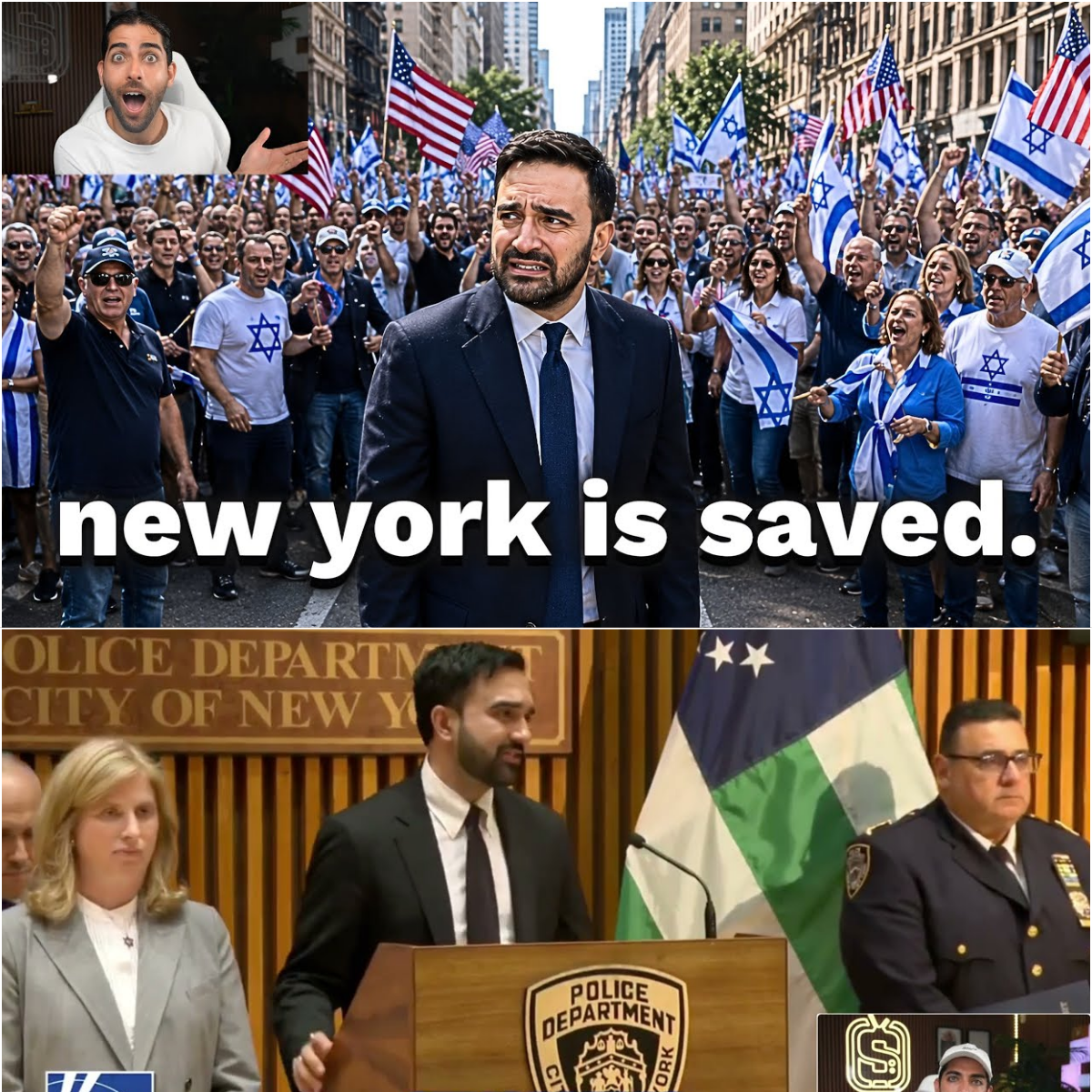
A highly symbolic political ritual in the United States folded into a sharp display of cultural friction along Manhattan’s Fifth Avenue, signaling a profound realignment within the Democratic Party. For more than six decades, the annual Israel Day Parade served as an mandatory pilgrimage for New York City mayors, an ironclad bipartisan tradition signifying solidarity with the largest Jewish community outside the state of Israel. Yet, as a vibrant procession of flag-waving crowds, marching bands, and Christian Zionist groups streamed past Central Park, the reviewing stand remained notably vacant of the city’s current chief executive. Mayor Zohran Mamdani became the first city leader since 1964 to skip the historic event, fulfilling a progressive campaign pledge that has exposed deep ideological fractures across the five boroughs.
Mamdani’s deliberate absence has catalyzed a fierce domestic backlash, drawing condemnation from centrist Democrats, Jewish community leaders, and local conservative commentators who view the boycott as a direct insult to Jewish New Yorkers. While the newly elected progressive mayor defended his decision as a principled objection to the policies of the right-wing Israeli government, critics have pointed to a glaring double standard, highlighting his enthusiastic participation in other national heritage events. The controversy has ignited a broader national debate over identity politics, selective human rights standards, and the responsibilities of municipal leadership within America’s most diverse urban metropolis.
The Social Contract of the Secular State
The political geography of New York City has long required its leaders to master the art of symbolic governance. In a city built on successive waves of immigration, cultural parades are not merely weekend entertainment; they are the civic arenas where ethnic communities assert their belonging and mayors validate their status as leaders of all citizens. For generations, leaders from Robert F. Wagner to Eric Adams understood that marching along Fifth Avenue was an unwritten codify of municipal leadership, a tangible affirmation that the city’s diverse populations were respected and protected by City Hall.
This long-standing social contract was underscored by the prominent appearance of former Mayor Eric Adams, who marched alongside current New York Governor Kathy Hochul, explicitly contrasting his predecessor’s approach with that of the new administration.
“It’s so important when you’re here marching in the Israel Day Parade,” Adams remarked to reporters as he moved through the crowded streets. “It shows the level of support the people have for Israel and what it stands for. We’re not going to boycott a country that is clearly our ally. The largest Jewish population outside of Israel is here in New York. I’m marching today because Jews marched with Dr. King. I’m marching because young Jewish people lost their lives fighting with us in Mississippi during the civil rights movement. Today, I cannot thank them enough.”
The presence of figures like Adams and Hochul highlighted the traditional coalition that has sustained municipal politics for half a century: a fusion of centrist liberalism, institutional labor, and deep-seated ties to the city’s historic ethnic enclaves. By intentionally fracturing this lineage, Mamdani has positioned his administration on the vanguard of a new, highly ideological progressive movement that rejects traditional bipartisan consensus in favor of explicit geopolitical alignments.
The Doctrine of Selective Disassociation
Faced with a mounting wave of criticism from religious organizations and secular civic groups, Mayor Mamdani sought to reframe his absence not as an act of hostility toward his constituents, but as a localized protest against international policy.
“I said on the campaign trail that I wouldn’t be attending the parade, and I’ve made my views on the Israeli government abundantly clear,” Mamdani stated during a press briefing intended to quell the controversy. “I also said on that same campaign that I would have a responsibility as the mayor of the city to ensure the safety and security of each and every New Yorker. I don’t believe that my presence as the mayor should determine whether or not a New Yorker is safe or secure. What we take seriously as an administration is to ensure that we are delivering on not just keeping Jewish New Yorkers safe, but ensuring that they understand that they belong in this city.”
To reinforce this message of domestic protection, administration officials pointed to a substantial 800% increase in municipal funding dedicated specifically to hate crime prevention and security enhancements for local religious institutions. Yet, for many Jewish leaders, the mayor’s attempts to separate the state of Israel from the cultural identity of New York’s Jewish population appeared disingenuous, given the deeply intertwined religious and historical ties that define the community’s relationship to the Jewish state.
Furthermore, critics noted an internal contradiction within the administration’s own ranks. While the mayor observed a strict boycott of the event, his own top law enforcement official, NYPD Commissioner Jessica Tisch, broke sharply with City Hall policy, choosing to serve prominently as one of the parade’s grand marshals. The public divergence between the mayor and his police commissioner exposed an administrative apparatus struggling to reconcile its progressive ideological commitments with the deeply rooted institutional traditions of the city.
The Paradox of the Pakistani Procession
The core vulnerability in Mamdani’s administrative position emerged not from his theoretical arguments regarding foreign policy, but from the stark contrast provided by his past attendance at alternative ethnic celebrations. Conservative commentators and political opponents quickly juxtaposed the mayor’s strict boycott of the Israel Day Parade with his enthusiastic, smiling participation in the Pakistan Independence Day Parade held across the outer boroughs.
This selective participation has drawn intense scrutiny, with critics arguing that if international human rights records are to serve as the baseline metric for a mayor’s attendance at civic parades, the administration’s standards are applied with staggering inconsistency. Opponents of the mayor have compiled an extensive ledger of Pakistan’s systemic domestic challenges and historical atrocities to highlight the hypocrisy of the administration’s moral stance.
Modern Pakistan remains a documented global transit point for international human trafficking and suffers from a devastating public health crisis, recording some of the highest per capita rates of heroin addiction anywhere in the world. Human rights organizations continue to document over 1,000 annual occurrences of “honor killings”—state-tolerated gender-based violence where women are murdered by relatives for alleged violations of cultural or religious modesty norms.
Furthermore, historical critics pointed to the deeply troubling record of the Pakistani military during the 1971 Bangladesh Liberation War, an international conflict marked by systemic war crimes, including the documented rape of between 200,000 and 400,000 Bengali women and the mass slaughter of between 300,000 and three million civilians.
The political argument advanced by Mamdani’s detractors centers on this profound contradiction: if a nation-state’s historical violence and contemporary human rights failures are sufficient grounds to boycott a cultural parade celebrating Jewish New Yorkers, then the same ethical standard should logically preclude a mayor from marching alongside the Pakistani community. By celebrating one national heritage while aggressively isolating another, the mayor has exposed himself to the accusation that his policy is driven not by a universal commitment to human rights, but by a partisan affinity that aligns exclusively with his own cultural and religious background.
The Realignment of the Modern Left
The institutional breakdown over the Fifth Avenue parade is an unvarnished reflection of a broader, structural civil war occurring within the Democratic Party across the United States. For decades, the party’s platform maintained an unshakeable, unquestioned commitment to the security and recognition of the state of Israel. This position was viewed as essential not only for Middle Eastern stability but also for securing the electoral base of major urban centers like New York, Los Angeles, and Miami.
However, the rapid ascent of the Democratic Socialists of America (DSA)—the political faction that propelled Mamdani from a grassroots housing activist in Queens to the steps of City Hall—has shattered this institutional consensus. For the modern progressive left, the geopolitical landscape is viewed almost entirely through an ideological prism of anti-colonialism and intersectional grievance. Within this framework, Israel is no longer viewed as a democratic oasis or a historical sanctuary for a persecuted minority; it is re-categorized as an oppressive, ethnoreligious state backed by Western capital.
This ideological shift was explicitly voiced by prominent progressive media figures and allies of the administration, who defended the mayor’s boycott by framing the issue as an existential choice between democratic universalism and racial supremacy.
“You look at this sea of beautiful Jewish people and allies fighting for the one Jewish state in a sea of 57 Arab Muslim countries,” remarked conservative activist Zach Sage Fox, highlighting the defensive posture of the parade attendees. “You can’t stand for equality if you are trying to get rid of the one Jewish state and replace it with a 58th Arab Muslim state.”
The rhetorical divide illustrates how completely the language of progressive politics has flipped. While traditional liberals view the defense of Israel as an extension of post-World War II human rights commitments, the new progressive elite views any defense of the Jewish state as an implicit endorsement of apartheid. This intellectual shift explains why Mayor Mamdani felt comfortable breaking a 61-year political tradition: within his specific electoral coalition, skipping the Israel Day Parade is not a political liability; it is a vital badge of ideological purity.
Conclusion: The Horizon of a Divided Metropolis
The fallout from New York City’s fractured parade season extends far beyond the immediate media cycle, offering a sobering preview of the future of urban governance in a deeply polarized America. When the chief executive of the nation’s largest metropolis adopts a policy of selective civic engagement, the traditional concept of the mayor as a unifying figure for all citizens is effectively dismantled.
By substituting traditional administrative neutrality with a highly combustible mixture of international geopolitics and selective moral outrage, Mamdani has inadvertently heightened the very tribalism he claims to oppose. When a government signals to a major segment of its population that their cultural celebrations are too toxic for the mayor to attend, it erodes the foundational premise of civic integration.
As New York moves forward under its first socialist administration in modern history, the empty reviewing stand on Fifth Avenue will remain a powerful, enduring symbol of a city in transition. It stands as a warning that when international grievances are prioritized over local civic traditions, the shared spaces that bind a diverse populace together will inevitably begin to tear. The struggle over New York’s cultural parades is ultimately a struggle over the nature of the American melting pot—a choice between a city that celebrates its diverse heritages under a unified civic banner, or a fragmented metropolis divided into hostile, ideologically segregated enclaves.