The REAL Reason why the Gospel Was Hidden From Satan
The REAL Reason why the Gospel Was Hidden From Satan
The rain over New Haven was unrelenting, streaking the high, arched windows of the Yale Divinity School library with gray sheets of water. Inside, the atmosphere was different—warm, quiet, and smelling faintly of old leather, unvarnished oak, and damp wool.
It was a Tuesday evening, and the grand reading room was largely empty, save for a long table near the back stacks. On it sat two massive stacks of books: one composed of early Christian patristic texts, Greek lexicons, and theological journals; the other a small mountain of modern apologetics paperbacks and open notebooks.
Behind the table sat Michael Vance, a senior research fellow whose sharp, dark eyes and thick-rimmed glasses gave him the look of a hawk perched over a manuscript. Michael was a man who didn’t just read history; he lived inside it. To him, the words written by men two thousand years ago weren’t dry ink; they were active battle lines.
Across from him sat Thomas Stafford, a brilliant but anxious young graduate student. Thomas had been tapped to participate in a high-profile public debate the following week against a prominent Unitarian writer, and he was losing his nerve.
“They’re going to use First Corinthians 2, Michael,” Thomas said, his voice a tense whisper that barely carried across the empty room. He tapped his pen frantically against a legal pad. “The Modalists and the Unitarians—it’s their favorite playground. They look at Paul’s language about the Spirit searching the depths of God, and they flip it. They say, ‘Look, just as a man’s spirit isn’t a separate person from the man himself, God’s Spirit isn’t a separate person from the Father.’ They use it to flatten the Trinity. I need an answer that doesn’t just defend; I need something that breaks their line.”
Michael didn’t look up immediately. He carefully turned a page of a massive Greek text of Justin Martyr, tracing a line of text with his index finger.
“Thomas,” Michael said, his voice a low, resonant baritone that anchored the nervous energy in the room. “You are approaching the text like a defense attorney trying to win a technicality. You’re looking at the verses through a keyhole. But Paul wasn’t writing a modern legal brief. He was unveiling a grand cosmic chess match.”
Michael closed the heavy volume before him with a soft, authoritative thud.
“If you want to answer the Unitarians, you have to understand what Paul means by a mystery. And to do that, you have to realize that the entire plan of salvation was coded in an ancient cipher—specifically designed to keep the most powerful, intelligent, and malicious entities in the universe completely in the dark.”
Michael leaned back in his chair, taking off his glasses and looking intently at the young student.
“Let’s look at the chessboard, Thomas. Open your Greek text to First Corinthians chapter 2, and let’s start where Paul starts—with maturity. Paul tells the Corinthians that he speaks wisdom among those who are mature (teleiois). He’s warning them: if you are spiritually immature, if you are carnal and looking at the world through purely human observation, this will look like foolishness to you. The unregenerate world will laugh at it.”
“Right,” Thomas nodded, flipping his Bible open. “Because human wisdom can’t reach it.”
“Exactly,” Michael said. “Through human observation, through your senses, you can look at the physical universe and deduce that a God exists. You can see the intricate complexity of design and realize there is a massive, powerful Mind behind it. You can look at a sunset and realize He must be a God of beauty. But your senses will never tell you that this God is Triune. They will never tell you His name, or the exact limits of His nature. That requires something the ancient world called mysterion.”
Michael leaned forward, tapping the table with his finger to emphasize the point.
“In our modern English, a ‘mystery’ means a puzzle you solve by looking for clues—like a Sherlock Holmes story. But in the biblical context, mysterion comes from the root muo, meaning to shut the mouth. It signifies a divine secret. Something once deeply concealed, which cannot be discovered by human intelligence, but can only be known because God chooses to draw back the veil and reveal it.”
“And Paul says this mystery was predestined before the ages,” Thomas murmured, reading down the page.
“Yes! Before the world even came into being, God purposed to make Himself known,” Michael’s eyes flashed with intensity. “He is a God of love, and He creates out of love so that His creatures can experience that love. He never intended to leave us in the dark. But after the fall of Adam, a grand deception had to be deployed. Because there were other powers listening.”
Michael gestured toward the high, dark ceiling of the library. “Paul explicitly states that this hidden wisdom was something ‘none of the rulers of this age understood.’ He isn’t talking about Pontius Pilate or Herod, Thomas. Not merely them. He is talking about the diabolical, demonic forces—the cosmic rulers of this age under the influence of Satan himself. And God deliberately kept them from deciphering the transmission.”
Thomas leaned over the table, captivated by the shift in the narrative. “Why would God hide it from them? If the gospel is the truth, why keep the demonic realm from seeing it?”
“Look at verse 8,” Michael commanded, his voice dropping to a fierce, rhythmic whisper. “Read it carefully.”
Thomas looked down and read: “Which none of the rulers of this age understood; for if they had understood it, they would not have crucified the Lord of Glory.”
“Think about the staggering weight of that statement,” Michael said. “If Satan and his legions had fully understood what the cross actually was—that it was not the defeat of Jesus, but the definitive, cosmic destruction of their own empire—they would have done everything in their power to stop Him from being killed. They would have protected Him! They would have shielded Him from the nails!”
Michael turned a page in his notebook, revealing a meticulously drafted set of cross-references.
“But look at how Paul describes the one who was executed. He calls Him the Lord of Glory. That is not a human title, Thomas. That is a heavy, uncompromising divine ascription. It echoes Psalm 24: ‘Lift up your heads, O ye gates… and the King of Glory shall come in. Who is this King of Glory? Yahweh strong and mighty, Yahweh mighty in battle.’ The King of Glory is Yahweh of Hosts.”
“But wait,” Thomas interrupted, his brow furrowing as he tried to mentally parse the theology. “If the ‘Lord of Glory’ refers to His divine nature… God is spirit. God cannot be killed. Divine nature cannot die on a Roman cross. Why does Paul apply a total divine title to the crucifixion?”
Michael smiled—a sharp, brilliant expression. “Because Christ is not a fractured collective of two different people. He is one single, uncreated Divine Person who became a true human being. He is the God-man. When they nailed His human flesh to the wood, they crucified the Person who is the Lord of Glory. God died a human death, Thomas. He didn’t cease to exist—He is ever-living—but by virtue of the personal union, the writers of Scripture have absolutely no problem using a divine title while speaking of His human suffering. The Miaphysites and the ancient Fathers used this exact text to show the absolute unity of His person.”
“So Satan thought he was winning a victory,” Thomas said, a sudden realization dawning on his face. “He saw a man, he saw the human nature, and he thought he was crushing a threat to his kingdom.”
“Exactly,” Michael said. “The demonic realm saw the signs. They knew He was the Messiah. They knew He was dangerous. That’s why Satan kept trying to get rid of Him, trying to destroy Him throughout His ministry. But Satan’s pride blinded him. He had absolutely no idea that the very death he was orchestrating through his human agents would become the ransom that set mankind free from the debt of sin—the very debt that gave Satan his legal authority to accuse us. God used Satan’s own malice to sprung the cosmic trap.”
Michael reached over to his stack of patristic volumes and pulled out a smaller book, flipping to a marked section.
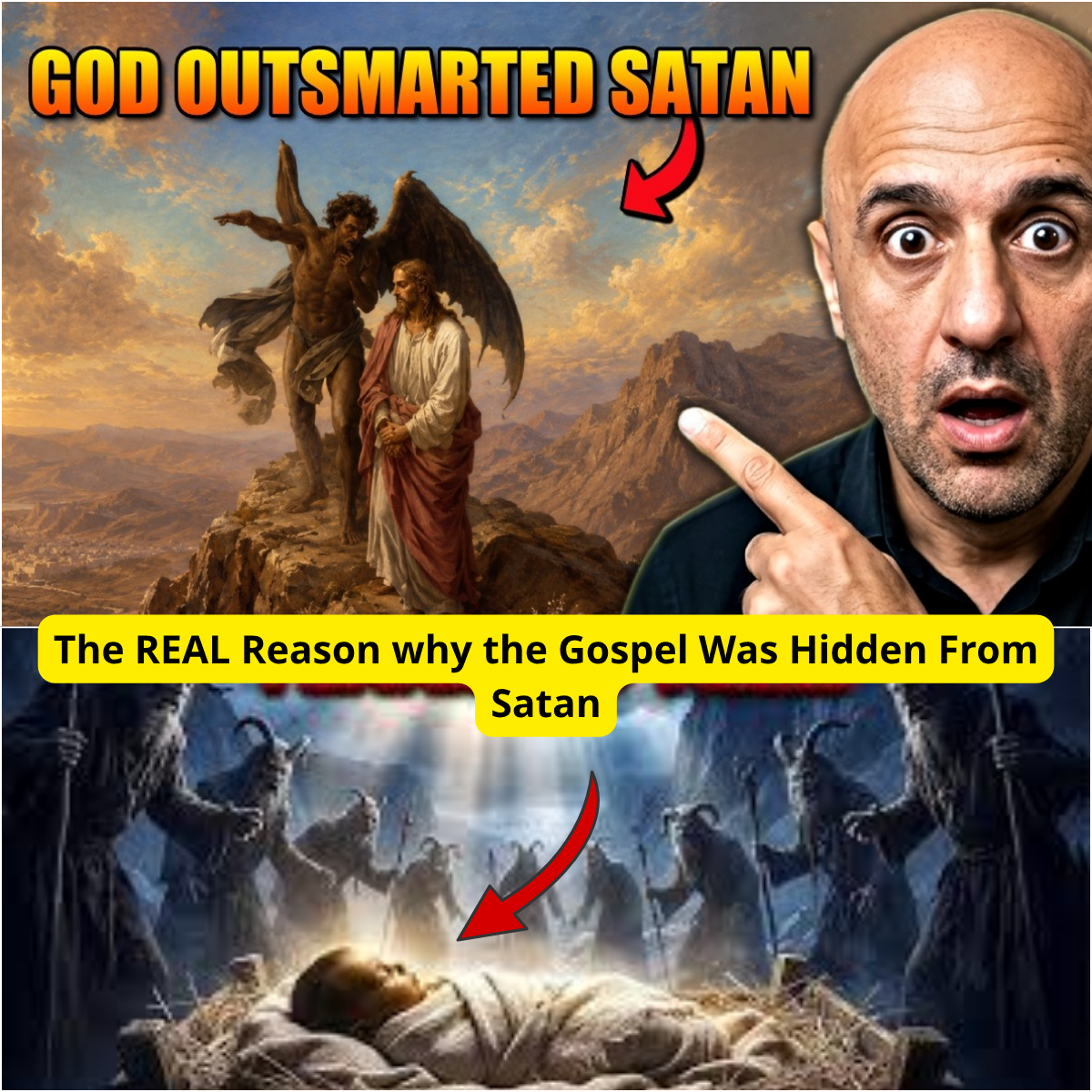
“And do you know how deep this hidden plan goes, Thomas? It didn’t start at the cross. The camouflage was active from the very moment of His conception. Let me show you the receipts.”
Michael pointed to a passage from the early second century—a letter written by Ignatius of Antioch on his way to be martyred in Rome, barely a few decades after the Apostles.
“And the virginity of Mary or her child-bearing escaped the notice of the ruler of this age, as did also the death of the Lord: three mysteries of a loud cry, which were wrought in the silence of God.”
“Ignatius got that directly from the apostolic circle,” Michael explained, his voice vibrant. “Think about the brilliant engineering of the Incarnation. Why did God insist that Mary be legally betrothed to Joseph before the child was born? On a surface level, it provided physical protection and legal standing. But on a cosmic level, it was divine counter-intelligence.”
Thomas looked up from the text of Ignatius, his eyes wide. “Counter-intelligence?”
“Think about it,” Michael urged. “Satan was actively watching the world, searching the scriptures, looking for the prophecy of a virgin birth. But God set it up so that when Joseph took Mary into his house as his legal wife, the demonic realm looked at the household and assumed the child was naturally conceived by Joseph. The supernatural nature of the conception was entirely cloaked in the ordinary, quiet reality of a Jewish marriage. The virgin birth escaped the devil’s notice because God hid it in plain sight.”
Michael leaned back, a look of profound admiration for the text written across his face.
“And look at how God even worded the Old Testament prophecies to maintain the operational security of the plan. Look at Isaiah 7:14. For centuries, liberals, skeptics, and rabbis have argued over that text because Isaiah uses the Hebrew word ha-almah instead of ha-betulah. Betulah is the clinical, specific word for a virgin. But Isaiah used almah, which means a young woman of marriageable age.”
“Right,” Thomas nodded. “Critics use that to say Isaiah never predicted a virgin birth at all.”
“But that is the sheer genius of the divine mind!” Michael countered, his voice rising with infectious enthusiasm. “If God had inspired Isaiah to use betulah, the prophecy would have been a glaring neon sign to the demonic forces. They would have scanned every village in Judea looking for an unmarried virgin giving birth. Instead, God worded it with a layer of deliberate ambiguity on the surface. To a superficial reader—or a demon operating on cold, literal intellect—it looks like an ordinary young maiden.”
Michael tapped his finger firmly against his legal pad. “But when you dig beneath the surface, when you look with the illumination of the Holy Spirit, you find that every single time almah is used in the plural or singular throughout the Old Testament, it consistently refers to a young woman who is legally and biologically a virgin, yet mature enough to be betrothed. Mary was exactly that—mature enough to be a wife, but completely untouched. God left just enough hints and proofs in the architecture of the prophecy so that those who have eyes to see would realize the conception had to be a supernatural sign from God. There’s nothing miraculous about a young woman getting pregnant through natural relations. The sign had to be a miracle, but it was coded to keep the enemy at bay.”
Michael let the weight of the historical narrative hang in the air for a moment, then he reached over and lightly tapped Thomas’s legal pad, bringing the conversation back to the upcoming debate.
“Now, Thomas, let’s tie this entire cosmic narrative back to your Unitarian opponents and First Corinthians 2. When they stand up next week and try to use Paul’s language to argue that the Holy Spirit is just an impersonal force or an extension of the Father—like a man’s inner thoughts—how do you answer them?”
Thomas paused, looking at his notes, his mind racing to connect the pieces. “I… I point out the context of the mystery?”
“You point out the absolute identity of the Persons involved in the operation,” Michael said firmly. “Paul’s entire point in First Corinthians 2 is that human observation cannot access the mind of God. He asks, ‘Who has known the mind of the Lord?’ quoting Isaiah. Then he states that the Spirit searches the deep things of God. If the Spirit were merely an unthinking force, or a non-distinct extension, it could not actively evaluate, search, and reveal the personal, hidden depths of a Triune God. The Spirit must be fully divine to know the divine mind, and distinctly personal to communicate that mind to the Apostles.”
Michael leaned forward, his expression hardening into a posture of absolute confidence.
“And you tell them that the very fact that this plan had to be hidden from the ‘rulers of this age’ proves that the salvation of mankind wasn’t a corporate adjustment of human philosophy. It was an objective transaction carried out by distinct Divine Persons. The Father predestined the plan. The eternal, uncreated Son—the Lord of Glory—became flesh to execute it on the cross. And the Holy Spirit reveals it to the mature. It is a trinitarian operation from start to finish.”
Michael looked at the young graduate student, his eyes steady behind his glasses.
“When you step up to that podium next week, Thomas, you aren’t just reciting verses. You are standing on the shoulders of Ignatius, of Justin Martyr, and of Paul himself. You are exposing a shallow, surface-level reading of Scripture that was designed to be bypassed by those who seek the deep things of God.”
Michael reached out and closed Thomas’s notebook for him, a quiet gesture of finality.
“The Unitarians want to pull you into a semantic playground. Don’t let them. Take them into the cosmic reality of the hidden wisdom. Show them the brilliance, the beauty, and the absolute sovereignty of a God who out-maneuvered the darkness in total silence. Checkmate. Now go get ready.”