The CIA Remote Viewer Who Found Russia’s Secret Typhoon Submarine
The CIA Remote Viewer Who Found Russia’s Secret Typhoon Submarine
The fluorescent lights of the windowless briefing room hummed a steady, mind-numbing B-flat. Joe McMoneagle sat at the metal table, his large hands wrapped around a lukewarm mug of black coffee. Across from him sat his monitor—the man tasked with keeping Joe’s analytical left brain anchored to reality while his right brain drifted through the ether.
Between them lay a sealed manila envelope. Inside was a single slip of paper with a set of geographic coordinates written on it by a Pentagon tasker. Neither Joe nor the monitor had any idea what those numbers pointed to. That was the rule. Total blind targeting. No leading questions, no preconceived notions, no tainted data.
Joe took a deep breath, closed his eyes, and let the walls of the room dissolve.
“I’m at a structure,” Joe began, his voice dropping into a low, rhythmic cadence. “It’s massive. A cold harbor. Frigid. I can see big icebreakers idling outside the bay, keeping the lanes clear. There’s a building here. It’s easily the largest structure I’ve ever seen this far north. It might be the largest building north of the Arctic Circle.”
The monitor watched the tape recorder reels spin, jotting down notes. “Describe the activity around the building, Joe.”
“Heavy security,” Joe muttered, his brow furrowing as the mental images sharpened. “Guards everywhere. High fences. Railroad cars are pulling right up to it, unloading massive amounts of raw material. Steel, heavy machinery. But here’s the strange part… the building isn’t connected to the water. It’s set back. Intelligence thinks it’s some kind of mechanized troop carrier factory or a land-based manufacturing hub. They’re wrong.”
“What’s inside?”
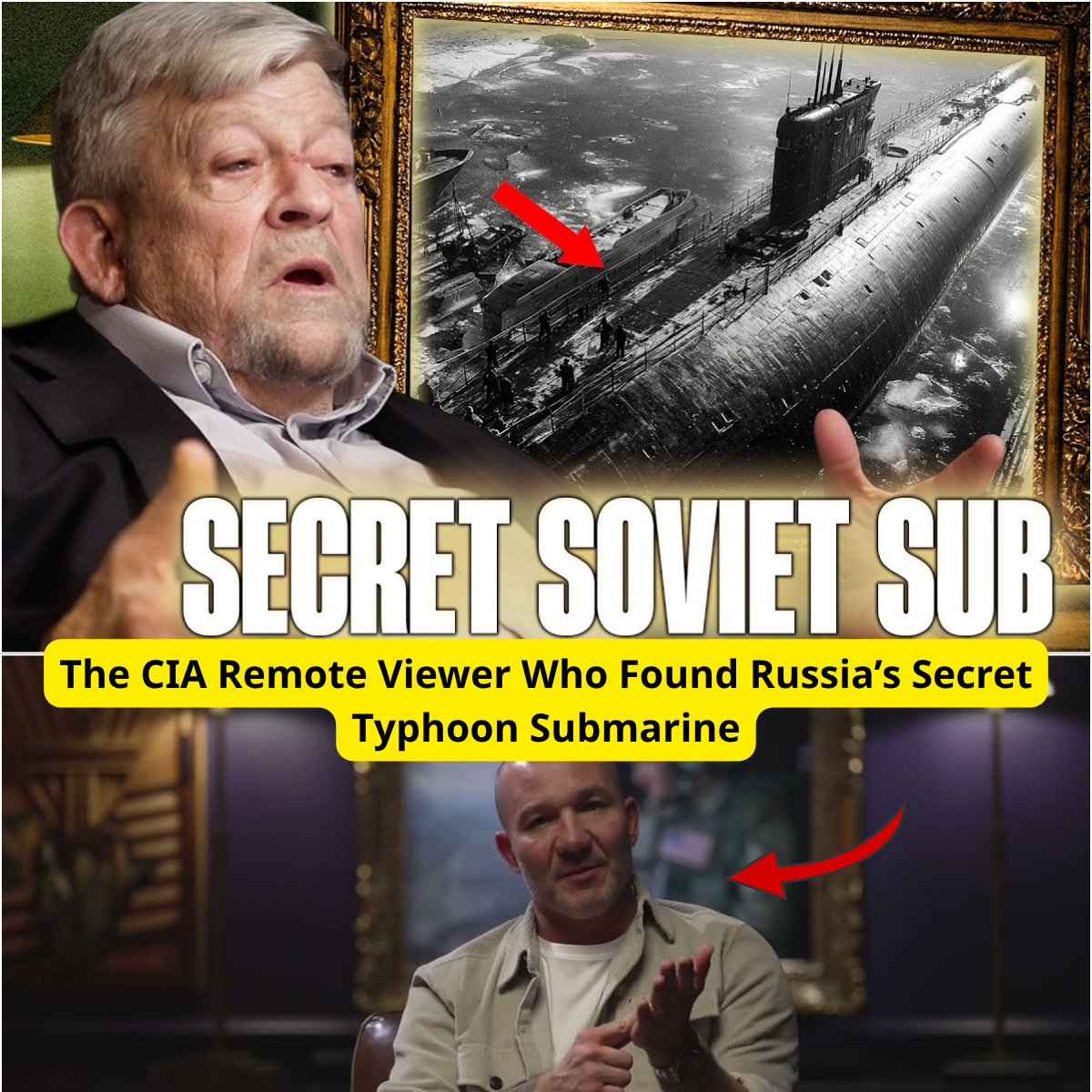
Joe’s hands began to move, tracing a massive shape in the air. “They’re building something huge. A vessel. I keep seeing a hull. But it’s not like anything we know. It’s like… two large submarines were cut in half lengthwise and welded together side-by-side.”
“How big, Joe? You keep saying massive. Quantify it.”
Joe paused, his mind’s eye hovering over the leviathan resting in the dry dock. “It’s enormous. If you parked it next to a Soviet aircraft carrier, it would only be about thirty feet shy of the carrier’s total length. And wide—maybe seventy or seventy-five feet across. It’s a monster.”
Joe shifted in his chair, a sudden realization hitting him. “And the missile tubes… they aren’t vertical. Up until now, every Soviet sub carrying ICBMs has to stop dead in the water to launch. They have an eighteen-minute window where they’re sitting ducks. This thing? The tubes are slanted. They’re building this so they can launch ballistic missiles on the move. It eliminates their greatest vulnerability.”
Hours later, after Joe had sketched out the twin-hull design and the angled missile bays, he stepped out into the hallway. He didn’t know it yet, but in an identical, isolated room down the hall, his colleague Hartley Trent had just finished a separate session on the exact same coordinates. Under strict orders never to discuss their targets to prevent data contamination, the two men exchanged nothing more than a nod as they passed.
When the two independent reports were compiled, they were identical down to the layout of the slanted missile tubes.
Admiral Jake Stuart carried the final report directly to the National Security Council. The NSC had been staring at satellite imagery of that mysterious Arctic building for two years, desperate to know what was inside, unable to get a human asset close enough to snap a single photograph.
An hour later, Admiral Stuart walked back into the remote viewing unit, tossing the folder onto a desk. His face was a mask of frustration.
“They won’t accept it,” Stuart said flatly.
Joe stared at him. “What do you mean they won’t accept it? Hartley and I drew the exact same vessel independently.”
“They’re calling it total fantasy, Joe,” Stuart sighed. “They’re already locked into the idea that it’s a troop carrier or a factory for land vehicles. Their main argument is geographic. The building is physically separated from the harbor by hundreds of yards of solid land. They say it’s functionally impossible to launch a submarine from there.”
Anger flashed through Joe. The bureaucratic arrogance was stifling. They had asked for insight, received a flawless psychic blueprint, and rejected it because it didn’t fit their rigid, conventional logic.
“Take it back to them,” Joe said, his voice dropping to a dangerous, icy whisper. “You tell them that their ‘fantasy’ is going to launch in exactly 112 days.”
Stuart blinked, caught off guard by the specificity. “112 days?”
“Tell them to order the National Reconnaissance Office to point a satellite at that harbor 114 days from now,” Joe snapped. “And see what’s floating in the water.”
The report was shelved, ignored by the higher-ups who preferred comfort over the inexplicable. But someone within the chain of command—perhaps Stuart, perhaps an open-minded analyst at the NRO—quietly scheduled the satellite pass.
One hundred and fourteen days later, the overhead reconnaissance imagery cleared the processing lab.
The analysts who gathered around the light table froze in absolute silence.
From the giant building north of the Arctic Circle, a massive, freshly blasted channel had been cut straight through the rock and earth to the sea. And floating in the harbor, tied directly to a Soviet aircraft carrier, was the monster.
It was the first-ever prototype of the Typhoon-class nuclear submarine, designated TK-089.
The Soviets had moored it tightly against the side of the aircraft carrier, using the massive ship as a physical shield to blind any Western vessels sailing past the port and block the view of casual observers. But from directly above, the dimensions were unmistakable. It was exactly thirty-three feet shy of the length of the aircraft carrier. It was wide, twin-hulled, and boasted slanted missile tubes capable of launching devastation while running at full speed.
Joe’s “fantasy” was real.
Years passed. The Cold War thawed, the Berlin Wall crumbled, and Perestroika opened doors that had been locked for generations. The CIA began declassifying chunks of the Stargate Project, and Joe McMoneagle finally wrote a book detailing some of his experiences, including the remote viewing of the Typhoon.
In the mid-1990s, Joe traveled to Russia alongside Dr. Edwin May to meet with their former counterparts—Soviet scientists and military officers who had run their own top-secret psychotronics programs.
During a formal reception, Joe found himself being approached by a high-ranking official, a man who had served as a Chief of the Red Army. The general was holding a translated copy of Joe’s book, looking visibly unsettled.
“Mr. McMoneagle,” the general said through an interpreter, his demeanor stiff. “I need you to sign this book for me.”
Joe smiled warmly. “I’d be honored, General. I’m glad you enjoyed it.”
“I did not enjoy it,” the general replied sharply, his eyes drilling into Joe. “For six years, I believed your book was an elaborate piece of American disinformation.”
Joe paused, his pen hovering over the title page. “Disinformation? Why?”
“Because you wrote about the existence of eight additional secret submarines built in that region,” the general whispered, leaning in. “And I was a Chief of the Red Army. I checked our official naval manifests. I checked our construction logs. There were no such submarines. I assumed you were lying to make your intelligence capabilities look superior.”
Joe set the pen down. “Then why do you want me to sign it now?”
The general looked around the room nervously. He leaned over the table, dropping his voice so low the interpreter had to strain to hear.
“Because last week, I finally found out the truth. Your book was not disinformation. The secret production lines existed outside normal military bureaucracy.”
Joe raised an eyebrow. “How did you confirm it?”
The general glanced toward the doorway, his face pale. “I know because our spy inside your own DIA confirmed to us that your remote viewing report was entirely real. You knew about them before most of our own high command did.”
A cold chill ran down Joe’s spine. The wilderness of mirrors was still very much alive. “Can you give me the initials of that spy, General?”
The general jumped back, putting his hands up. “Oh, no, no, no! I could never do that. If I breathed a word of that name, they would bury me under the front steps of the FSB!”
Joe looked at the panicked military man, realizing just how deep the rabbit hole went. He decided to give the man an out. “It’s okay, General. Go to sleep tonight. Just wipe it from your mind. Get it out of your head.”
The general didn’t wait for another word. He snatched the signed book from the table, spun on his heel, and practically sprinted out of the briefing room.
A few moments later, another Russian general—the host of the conference—walked over to Joe, shaking his head with a weary smile.
“Joe,” the general sighed, tapping Joe on the shoulder. “You’ve got to stop scaring my generals.”
Joe laughed, picking up his coffee. “Okay. I won’t do it anymore.”