Piers Calls Tommy’s UTK Rally “Isl@mophobic” Then J. Conricus SHREDS His Lie!
Piers Calls Tommy’s UTK Rally “Isl@mophobic” Then J. Conricus SHREDS His Lie!
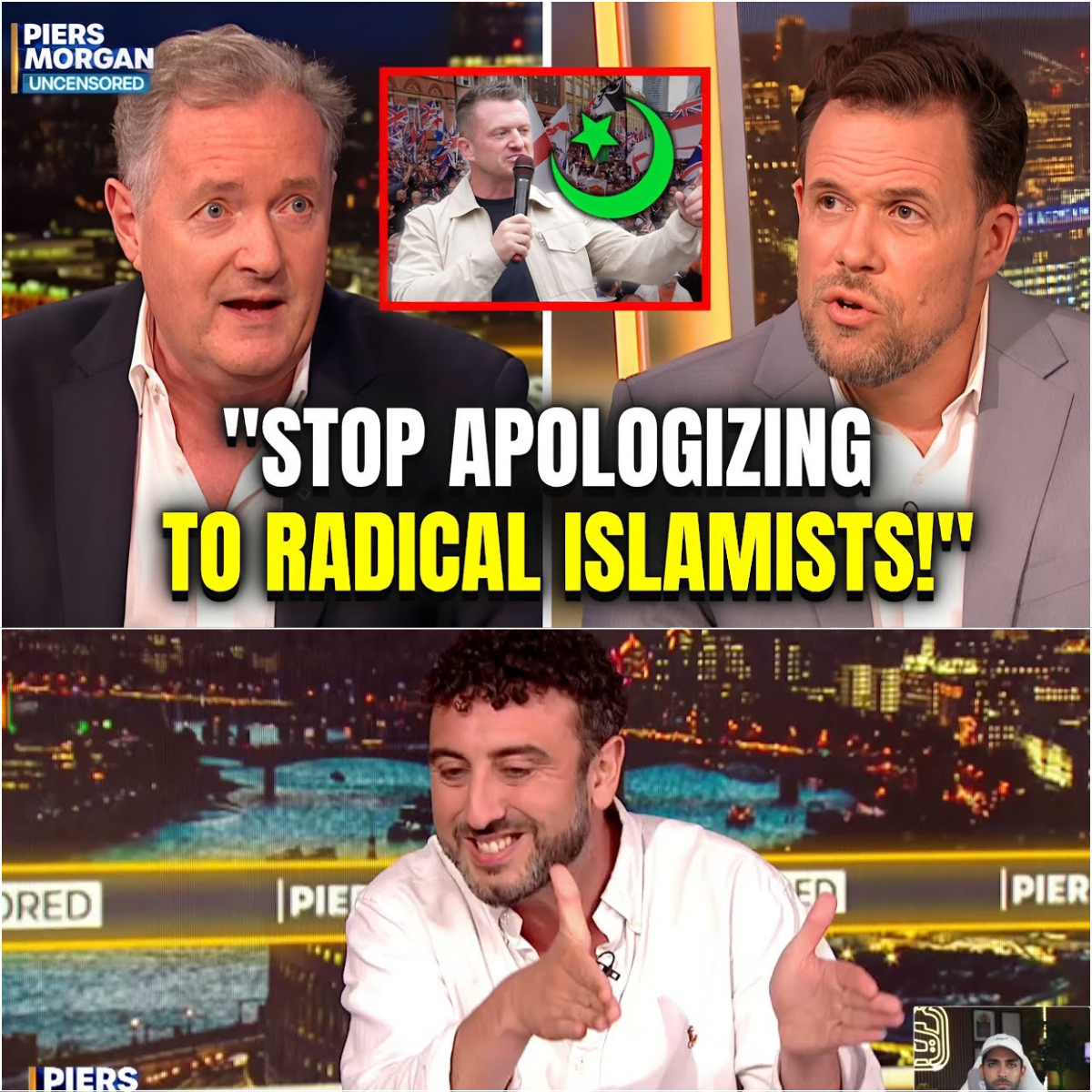
The boundary between legitimate political dissent and systemic bigotry has become the most volatile fault line in Western democracy, shifting unpredictably with every viral broadcast. This tension erupted on international television recently during a fierce debate on the British program Piers Morgan Uncensored, where host Piers Morgan clashed with Jonathan Conricus, a prominent commentator and former international military spokesman. The argument centered on Conricus’s attendance at a massive, right-wing “Unite the Kingdom” rally in London organized by the controversial activist Tommy Robinson. What began as a dispute over a street demonstration quickly transformed into a high-stakes debate over the nature of populist movements, the normalization of anti-immigrant rhetoric, and a fundamental question facing Western societies: Can a democracy aggressively oppose an ideology without persecuting the human beings who practice it?
For an American public currently navigating its own fierce battles over border security, national identity, and the limits of protected expression, this British television clash offers a stark preview of a shared democratic crisis. To supporters, rallies like the one in London represent a necessary, patriotic defense of traditional Judeo-Christian values against globalist shifts and unintegrated immigration. To critics, they are dangerous breeding grounds for nativism that weaponize the language of secularism to mainstream islamophobia. By exploring the semantic arguments, cultural symbols, and deep political divisions exposed in this broadcast, we can better understand how the struggle for national identity is reshaping the political landscape across the Atlantic.
The Semantic Shield: Religion, Ideology, and the Politics of Phrasing
The most intense part of the debate centered on a viral clip from the London rally featuring a speaker named Kelly Jean King. Addressing a cheering crowd of tens of thousands, King declared, “It is absolutely vital if we want to save this country, we have to remove Islam from every single place of authority.”
When pressed by Morgan on whether he felt comfortable standing among a crowd cheering for the removal of a specific group from public life, Conricus mounted a defense based on linguistics. “She didn’t say Muslims, did she? She specifically said Islam,” Conricus argued, maintaining that there is a vast, vital difference between attacking a religious doctrine and targeting the people who follow it.
This distinction touches on a foundational principle of Western liberal thought: in a free society, all ideas, philosophies, and religions must be open to rigorous criticism, mockery, and rejection. In this view, Islam—like Christianity, Judaism, Marxism, or capitalism—is a system of thought, and demanding its removal from state institutions is an exercise in political speech, not an act of bigotry.
However, Morgan countered by exposing the practical flaws in this semantic defense. He posed a direct counterfactual: If a speaker at a left-wing rally demanded that “Judaism be removed from every level of parliament,” would Western commentators accept the excuse that the speaker was merely criticizing a theological doctrine rather than Jewish people?
In the real world of political rhetoric, this strict separation between a faith and its faithful often collapses. Because a religion cannot exist, vote, or hold office without human practitioners, demanding the complete eradication of “Islam” from public infrastructure functions as a call to exclude Muslim citizens from the democratic process.
This linguistic maneuvering represents a broader trend among modern populist movements. By replacing crude racial or ethnic slurs with the language of political science, secularism, or constitutional defense, speakers can broadcast radical ideas while maintaining a shield of plausible deniability.
The Battle of the Burqa: Bodily Autonomy or Cultural Threat?
The television debate grew even more tense when Morgan introduced a second viral moment from the London demonstration. Three French women took the stage dressed in full-length burqas—traditional Islamic garments that cover the entire face and body—and performed a theatrical skit, prompting the massive crowd to erupt into a chant of “Take it off! Take it off!”
This performance highlighted a deep irony in how Western populist movements approach the concept of personal freedom. Conricus defended the principle of individual liberty in the abstract, noting that in a truly free nation, women should have the right to wear whatever they choose, whether it is a bikini on a beach or a conservative headcovering. Yet, he simultaneously defended a political rally that transformed that choice into a public spectacle of mockery.
For critics, this performance was a clear display of intimidation. They argue that when a crowd of tens of thousands aggressively chants for a woman to strip away her religious garments, it creates an environment of hostility. A Muslim woman walking down a British or American street in traditional attire after such a display is far more likely to face real-world harassment, suspicion, or exclusion.
Conversely, supporters of the demonstration view the burqa not as a personal fashion choice or an expression of religious devotion, but as a political symbol of female oppression and cultural segregation. From this perspective, the chant was an act of liberation—a rejection of a garment they associate with patriarchal control and the suppression of women’s rights.
This debate exposes a profound contradiction within modern Western conservative movements. While these groups frequently champion individual liberty, minimal state intervention, and freedom of expression as core tenets of Western civilization, their anxiety over cultural shifts often leads them to endorse collective social pressure, or even legislative bans, against minority religious practices.
Sharia, the Ummah, and the Anxiety of Integration
Beneath the arguments over rally speeches and stage performances lies a deeper, more systemic anxiety regarding immigration and cultural integration. During the broadcast, the conversation turned to the growing number of Muslim elected officials in British local government, with commentators debating whether these individuals prioritize the secular laws of the state or religious principles.
Central to this anxiety are two Islamic concepts that are frequently misunderstood in Western political discourse: Sharia and the Ummah.
Sharia: Often translated in Western media as a rigid, static penal code, Sharia is understood within Islamic jurisprudence as a broad, evolving ethical framework guiding personal morality, charity, prayer, and family law.
The Ummah: This concept refers to the global spiritual community of Muslim believers, transcending national borders, race, and ethnicity.
For critics of immigration, the idea of the Ummah raises concerns about dual loyalty. They worry that as the Muslim population grows within Western democracies, elected officials might seek to replace secular, democratic legal structures with religious laws. They point to instances where local councils in European cities have adjusted public policies regarding dietary restrictions in schools or gender-segregated hours in public pools as early signs of cultural erosion.
However, political scientists and legal scholars note that these fears often ignore the reality of how religious minorities actually engage with democratic systems. The vast majority of Muslim politicians and citizens in the West operate entirely within existing constitutional frameworks. For these individuals, participating in the democratic process is not an attempt to overthrow secular law, but a standard effort to ensure their community’s interests, religious liberties, and civil rights are protected under the law—much like Christian, Jewish, or secular interest groups have done for generations.
The Geopolitical Context: Translating the Middle East to the West
The intense disagreement between Morgan and Conricus also reflects how international conflicts shape domestic politics. As a commentator deeply connected to the Middle East, Conricus brought a perspective shaped by regional security conflicts and the rise of political Islamist movements in that part of the world. He argued that Western societies, shielded by decades of peace and geographic isolation, fail to understand the long-term risks associated with the institutionalization of religious ideologies.
In this view, the rise of fundamentalist movements in the Middle East serves as a warning for the West. Proponents of this argument maintain that liberal democracies are uniquely vulnerable to being undermined from within by groups that utilize democratic protections—such as freedom of speech and assembly—to build political power, with the ultimate goal of restricting those very freedoms once they achieve authority.
But critics warn against directly applying the political dynamics of the Middle East to domestic minority populations in Western democracies. They argue that conflating the actions of extremist political factions abroad with the domestic religious practices of millions of Western citizens is a dangerous mistake. This conflation can turn ordinary civic integration into a national security issue, treating law-abiding citizens as a potential internal threat based entirely on their faith.
This dynamic is further complicated by real statistics regarding targeted violence in the West. During the debate, Conricus cited law enforcement data showing a massive rise in antisemitic hate crimes, arguing that Jewish communities face disproportionate levels of threat and violence. Morgan and other participants acknowledged this crisis but emphasized that combating antisemitism should not come at the expense of ignoring or minimizing the rise of Islamophobia.
Populism, Polarization, and the Future of the West
The clash on Piers Morgan Uncensored is an accurate reflection of a broader political transformation occurring across Europe and North America. The traditional political spectrum—once defined primarily by economic debates over taxes, spending, and the size of government—is increasingly being replaced by a cultural divide centered on identity, borders, and demographics.
In this new political landscape, traditional center-right parties are facing intense pressure from populist movements that position themselves as the sole defenders of national sovereignty and traditional culture. These movements have successfully capitalized on widespread public anxieties regarding:
Rapid Demographic Shifts: Concerns over the pace of immigration and its impact on the cultural fabric of local communities.
Economic Dislocation: A feeling among working-class citizens that globalized economic policies have left them behind while changing the face of their home countries.
The Perceived Failure of Multiculturalism: A growing belief that state policies have encouraged parallel societies to develop rather than fostering a unified national identity.
As these anxieties intensify, the space for nuanced public discussion continues to shrink. The digital media environment thrives on polarization, transforming complex debates about integration and religious freedom into simplistic battles between two opposing camps. One side brands all concerns over immigration as bigotry, while the other dismisses all calls for tolerance and minority protections as weakness or capitulation.
The challenge for modern Western democracies is to break out of this destructive cycle. A healthy, resilient democracy must find a way to allow open, unrestricted debate about religious doctrines and immigration policies without allowing that debate to degenerate into the harassment and exclusion of minority communities. It requires maintaining a commitment to secular public institutions and the rule of law, while ensuring that the foundational promise of religious freedom remains open to every citizen, regardless of their faith.