JESUS’ MOST POWERFUL PARABLES EXPLAINED
JESUS’ MOST POWERFUL PARABLES EXPLAINED
The heat in the lower Jordan Valley did not merely fall from the sky; it radiated upward from the chalky marl, baking the ankles of the thousands who had tracked the Nazarene to the edge of the acacia groves. They were a dense, suffocating press of humanity—people who carried the distinct odors of unwashed wool, pickled fish, and the sour sweat of chronic anxiety. They had not packed provisions. They had simply dropped their nets, left their tanning vats, and walked out into the wasteland because a rumor had spread through the taverns of Bethsaida: The prophet is speaking of a new inheritance.
Among them stood Caleb, a man whose skin had been turned to gray parchment by three decades of collection work for the Herodian tax syndicates. He stayed at the fringe of the gathering, his fingers reflexively drumming against the heavy leather purse concealed beneath his sash. He knew what crowds wanted. They wanted dramatic displays—thunder over Mount Tabor, iron chariots crushed by lightning, or a miraculous multiplying of barley loaves to satisfy their growling stomachs.
Instead, the young rabbi from Nazareth stepped into a flat-bottomed fishing boat moored in the shallows to keep from being crushed by the press. He sat down on the wooden thwart, the gentle slap of the brackish water against the hull providing a rhythmic undercurrent to his words. When he spoke, he did not cite the complex legal commentary of the Jerusalem academies. He reached down into the mud of their everyday existence.
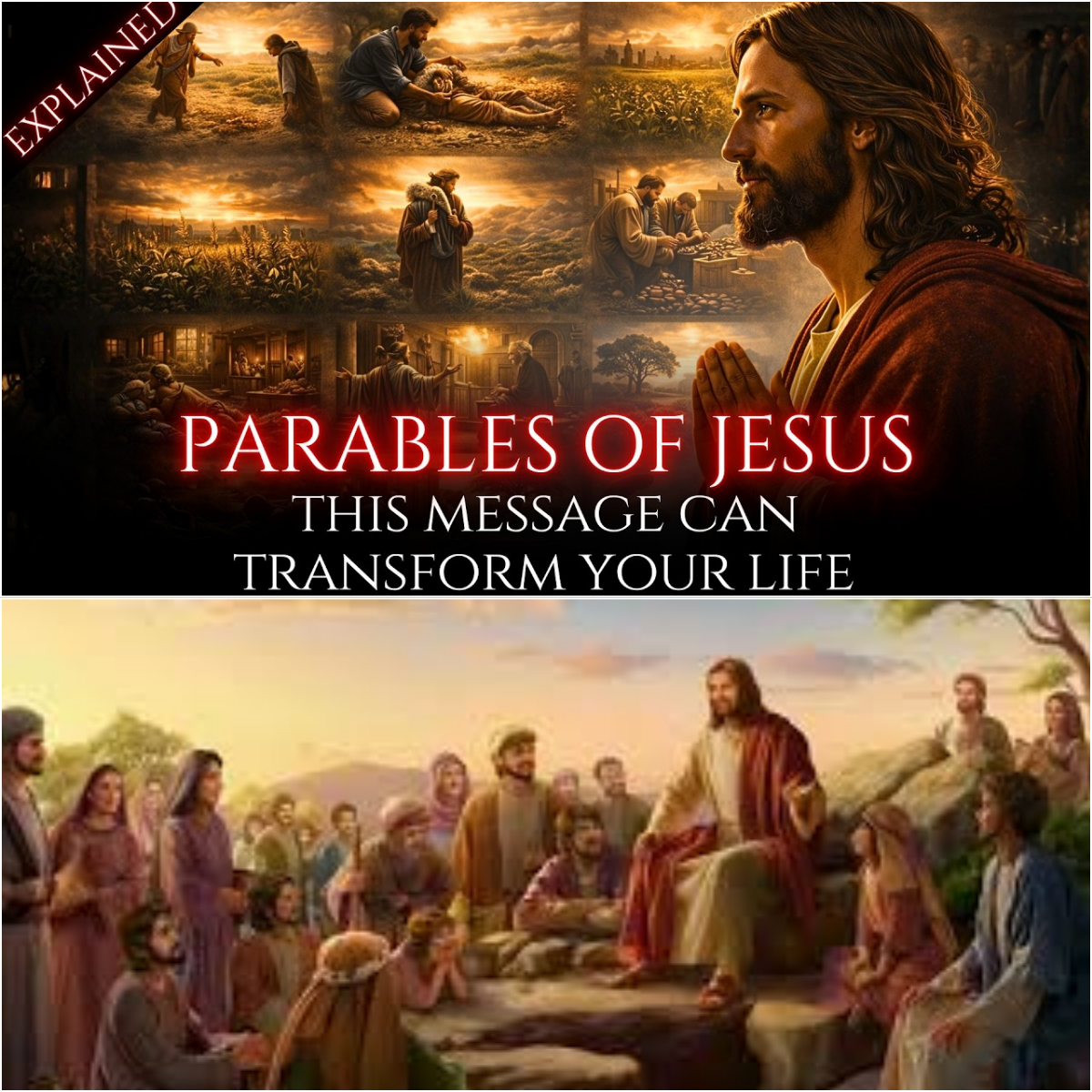
“A sower went out to sow,” the rabbi said, his voice carrying effortlessly across the water to the natural amphitheater of the shore.
Caleb tilted his head. It was a mundane image. Every man on that hillside had seen a farmer with a linen bag slung over his shoulder, casting handfuls of winter barley across the terraced earth.
“And as he sowed,” Jesus continued, “some seeds fell along the path, and the birds came and devoured them. Other seeds fell on rocky ground, where they did not have much soil, and immediately they sprang up, since they had no depth of soil, but when the sun rose they were scorched. Other seeds fell among thorns, and the thorns grew up and choked them. Other seeds fell on good soil and produced grain, some a hundredfold, some sixty, some thirty.”
A disappointed murmur rippled through the Zealots standing near Caleb. They wanted a manifesto, not an agricultural primer. But Caleb, whose life was spent calculating yields, percentages, and hidden assets, felt a strange, cold prickle of discomfort. The story was too simple; it had the sharp, concealed edge of a fishhook. The power wasn’t in the description of the grain, but in the diagnostic anatomy of the terrain. The seed was constant, unyielding in its potential potency, but the outcome was entirely dictated by the silent, hidden condition of the dirt that rushed to meet it.
PART II: THE ANATOMY OF THE ROADSIDE
As the afternoon deepened, the rabbi left the boat and walked inland, the multitude trailing behind him like a slow, multi-headed beast. They gathered again in the shade of a ruined limestone watchtower. A scholar of the law—a man whose linen robes were pristine and whose eyes were sharp with intellectual ambition—stepped forward to test the teacher.
“Teacher,” the lawyer asked, his voice dripping with academic polish, “what must I do to inherit eternal life?”
“What is written in the Law?” Jesus countered smoothly. “How do you read it?”
The lawyer straightened his shoulders, reciting the ancient liturgical core with practiced ease: “You shall love the Lord your God with all your heart and with all your soul and with all your strength and with all your mind, and your neighbor as yourself.”
“You have answered correctly,” Jesus said. “Do this, and you will live.”
But the lawyer, looking for a loophole to protect his social boundaries, pressed further: “And who is my neighbor?”
The Nazarene did not offer a technical definition. Instead, he painted a landscape of blood and gravel.
“A man was going down from Jerusalem to Jericho,” Jesus said, pointing down the very valley where the road twisted through red limestone cliffs—a track known locally as the ‘Ascent of Blood’ because of the bandits who nested in its caves. “And he fell among robbers, who stripped him and beat him and departed, leaving him half dead.”
The crowd grew utterly still. They knew that road. They had all calculated the risk of traveling it.
“Now by chance a priest was going down that road,” Jesus said, “and when he saw him, he passed by on the other side. So likewise a Levite, when he came to the place and saw him, passed by on the other side.”
Caleb watched the lawyer’s jaw tighten. Scribes and priests had logical, systemic reasons for their coldness—ritual purity laws, temple schedules, the fear that the body was a trap set by the bandits to lure another victim. Their religion lived entirely in the abstract spaces of the mind and the sanctuary.
“But a Samaritan,” Jesus dropped the word like a piece of carrion into a well, “as he journeyed, came to where he was, and when he saw him, he had compassion.”
An involuntary hiss of disgust went up from several old men in the front row. To a first-century Jew, a Samaritan was not an icon of kindness; he was a theological mongrel, a member of a despised ethnic underclass that had desecrated the temple archives. He was the last person who should have been holding the moral mirror.
“He went to him and bound up his wounds, pouring on oil and wine,” the Nazarene said, his voice dropping into a granular, tactile register. “Then he set him on his own animal and brought him to an inn and took care of him. And the next day he took out two denarii and gave them to the innkeeper, saying, ‘Take care of him, and whatever more you spend, I will repay you when I come back.'”
Jesus leaned forward, his dark eyes locking onto the lawyer. “Which of these three, do you think, proved to be a neighbor to the man who fell among the robbers?”
The lawyer could not even bring his lips to form the hated word Samaritan. He swallowed hard, his face flushed. “The one who showed him mercy.”
“You go,” Jesus said softly, “and do likewise.”
Caleb reached beneath his tunic and touched the heavy iron coins in his purse. The story had torn through the fabric of their tribal security. It showed that true love was not an emotion or a matter of correct heritage; it was an expensive, inconvenient intervention that crossed boundaries of ancient hatred to tend to a broken body in the dirt. And more terrifyingly, Caleb realized that the Samaritan wasn’t just a moral example—he was a portrait of the Nazarene himself, an outsider moving through a broken world where institutional religion had walked by on the other side.
PART III: THE SCANDAL OF THE RUNNING MAN
By the time the moon rose over the dark hills of Gilead, the religious elite had begun to murmur against the teacher. They stood apart from the campfires, their arms crossed. “This man receives sinners,” they whispered loudly, “and he eats with them.”
Jesus stood up from the fire, the light flickering across his features, and addressed their grumbling with a trilogy of losses. He spoke of a shepherd who abandoned ninety-nine secure sheep in the wilderness to track a single stray through the briars, carrying it home on his shoulders with unseemly joy. He spoke of a woman who turned her house upside down for a single lost coin. Then, he delivered the blow that would dismantle their entire understanding of divine justice.
“There was a man who had two sons,” Jesus said, his voice carrying through the cool night air. “And the younger of them said to his father, ‘Father, give me the share of property that is coming to me.'”
Caleb drew a sharp breath. In the ancient world, to ask for an inheritance while the father was still in good health was an explicit, shocking declaration of malice. It was the functional equivalent of saying, I wish you were dead; your life is an obstacle to my consumption.
“And he divided his property between them,” Jesus said. “Not many days later, the younger son gathered all he had and took a journey into a far country, and there he squandered his property in reckless living.”
The crowd nodded along with dark satisfaction. They knew this trajectory. The boy had broken the covenant, insulted the village, and crossed into the pagan territory of the Decapolis.
“And when he had spent everything, a severe famine arose in that country, and he began to be in need. So he went and hired himself out to one of the citizens of that country, who sent him into his fields to feed pigs. And he was longing to be fed with the pods that the pigs ate, and no one gave him anything.”
To the Jewish ear, this was the absolute bottom of the cosmos. A son of Abraham, knee-deep in pagan muck, starving among animals that represented ritual defilement. He had been reduced to an animal baseline.
“But when he came to himself,” Jesus continued, his voice softening, “he said, ‘How many of my father’s hired servants have more than enough bread, but I perish here with hunger! I will arise and go to my father, and I will say to him, “Father, I have sinned against heaven and before you. I am no longer worthy to be called your son. Treat me as one of your hired servants.”‘”
He had rehearsed his speech. He had constructed a transaction—a legal contract of restitution where he would work off his debt as a day laborer.
“And he arose and came to his father,” Jesus said. Then he paused, letting the crackle of the wood fire fill the silence. “But while he was still a long way off, his father saw him and felt compassion, and ran and official-level fell on his neck and kissed him.”
The elder scribes in the shadow of the watchtower stiffened. In the ancient Near East, an older patriarch, an honorable master of an estate, did not run. To run meant he had to bunch up his long robes, exposing his bare ankles, completely destroying his dignity in the sight of his servants. He did it to reach the boy before the village could perform the Kezazah—the ritual ceremony of total banishment used against sons who lost their inheritance to Gentiles.
“The son began his speech,” Jesus said, “but the father interrupted him. He did not let him finish his contract of slavery. He said to his servants, ‘Bring quickly the best robe, and put it on him, and put a ring on his hand, and shoes on his feet. And bring the fattened calf and kill it, and let us eat and celebrate. For this my son was dead, and is alive again; he was lost, and is found.'”
Caleb looked at the Pharisees. Their faces were dark with indignation. They were waiting for the second shoe to drop, and Jesus did not spare them.
“Now his older son was in the field,” Jesus said, his gaze shifting directly to the religious leaders. “And as he came and drew near to the house, he heard music and dancing… and he was angry and refused to go in.”
The father came out to entreat him, but the older brother’s resentment boiled over: “Look, these many years I have served you, and I never disobeyed your command, yet you never gave me a young goat, that I might celebrate with my friends. But when this son of yours came, who has devoured your property with prostitutes, you killed the fattened calf for him!”
“Son,” the father said in the story, his voice heavy with an agonizing tenderness, “you are always with me, and all that is mine is yours. It was fitting to celebrate and be glad, for this your brother was dead, and is alive; he was lost, and is found.”
The story cut off abruptly, hanging in the midnight air like an unresolved musical chord. Jesus did not tell them if the older brother ever went into the feast. Caleb realized with a sudden, clarity that the parable was an open door, and the older brother was standing on the threshold. It exposed two distinct ways of being separated from God: one through the flagrant rebellion of the wilderness, and the other through the cold, transactional, self-righteous compliance of the courtyard. Both sons were equally estranged from the father’s heart; one was lost in his sins, and the other was lost in his virtues.
PART IV: THE WEIGHT OF THE UNSEEN
The next day, Jesus moved toward the market towns, where the reality of economic disparity was carved into the very architecture of the stone villas that overlooked the mud-brick hovels of the poor.
“There was a rich man,” Jesus said to the crowd that lined the narrow street, “who was clothed in purple and fine linen and who feasted sumptuously every day. And at his gate was laid a beggar named Lazarus, covered with sores, who desired to be fed with what fell from the rich man’s table. Moreover, even the dogs came and licked his sores.”
It was a stark, brutal image. The rich man’s life was an endless, private liturgy of luxury, while Lazarus was a broken piece of human refuse dropped at his threshold, an inconvenient obstacle for the guests who arrived for the daily banquets.
“The beggar died,” Jesus said, his voice flat and unyielding, “and was carried by the angels to Abraham’s side. The rich man also died and was buried, and in Hades, being in torment, he lifted up his eyes and saw Abraham far off and Lazarus at his side.”
The landscape of the story shifted instantly from the material to the eternal, but the rich man’s internal architecture remained completely unchanged. Even in the flames of torment, he looked at Lazarus not as a human being, but as a utility—a servant to be dispatched on an errand of mercy.
“Father Abraham,” the rich man cried, “have mercy on me, and send Lazarus to dip the end of his finger in water and cool my tongue, for I am in anguish in this flame.”
“Child,” Abraham replied in the parable, “remember that you in your lifetime received your good things, and Lazarus in like manner bad things; but now he is comforted here, and you are in anguish. And besides all this, between us and you a great chasm has been fixed.”
The rich man pleaded one final time, asking that Lazarus be sent to his father’s house to warn his five brothers so they wouldn’t end up in the same place.
“They have Moses and the Prophets,” Abraham said. “Let them hear them.”
“No, father Abraham,” the rich man argued, “but if someone goes to them from the dead, they will repent.”
Jesus paused, his eyes drilling into the religious leaders who would within a few short months plot his own execution. “If they do not hear Moses and the Prophets, neither will they be convinced if someone should rise from the dead.”
Caleb took a step backward into the shade of an awning. He looked down at his own clean sandals, then looked across the street where a blind man sat in the dust, his hand extended for a copper coin. The rich man’s sin wasn’t his balance sheet; it was his structural blindness. He had allowed his daily comforts to act as an insulation layer against the agony at his doorstep. He had stepped over Lazarus so many times that the beggar had become part of the masonry.
PART V: THE STEWARDSHIP OF THE SILENT GROWTH
The sun was sinking low over the western ridge, casting long, dramatic beams of light across the valley when Jesus gathered his disciples for his final teaching of the week. He reached into his pocket and pulled out a single, microscopic grain, holding it up between his thumb and forefinger against the golden light.
“The kingdom of heaven,” Jesus said, “is like a grain of mustard seed that a man took and sowed in his field. It is the smallest of all seeds, but when it has grown it is the larger than all the garden plants and becomes a tree, so that the birds of the air come and make nests in its branches.”
The crowd stared at the tiny spec. They had expected a kingdom that arrived like an imperial legion—loud, catastrophic, and immediately dominant. But the Nazarene was pointing them to an asymmetric, organic reality. The kingdom of God did not impose itself by military force; it entered the world silently, secretly, like an invisible germ of life dropped into the dark soil of human history. It began in the weakness of a stable, in the poverty of a village, in the broken lives of fishermen and tax collectors, but within that microscopic beginning lived the explosive, unstoppable architecture of eternity.
Caleb looked around at the thousands who had gathered on the hillside. The sun had finally set, and the first stars were beginning to pierce the violet sky. The parables had dismantled everything they thought they knew about power, success, and holiness. They were left with no place to hide.
The crowd began to disperse, their torches bobbing like fireflies as they picked their way down the dark goat tracks toward the lake. Caleb stood alone by the watchtower, his leather purse heavy against his hip. He knew that if he walked down that mountain unchanged, he would be the man who built his house upon the shifting sand, waiting for the winter floods to erase his life.
He reached into his girdle, pulled out the heavy purse, and looked at the blind beggar who was still sitting by the edge of the path, wrapping his cloak against the night chill. Caleb walked across the stones, knelt down in the dirt, and placed the silver into the man’s calloused hand. It was an insignificant act, a tiny mustard seed of repentance dropped into the dark, but as he stood up and looked down the valley where the teacher’s shadow had vanished, Caleb felt the first deep, subterranean root of the kingdom take hold within his soul.