I Went To The Most Muslim City in U.K. – You Won’t Believe What Happened!
I Went To The Most Muslim City in U.K. – You Won’t Believe What Happened!
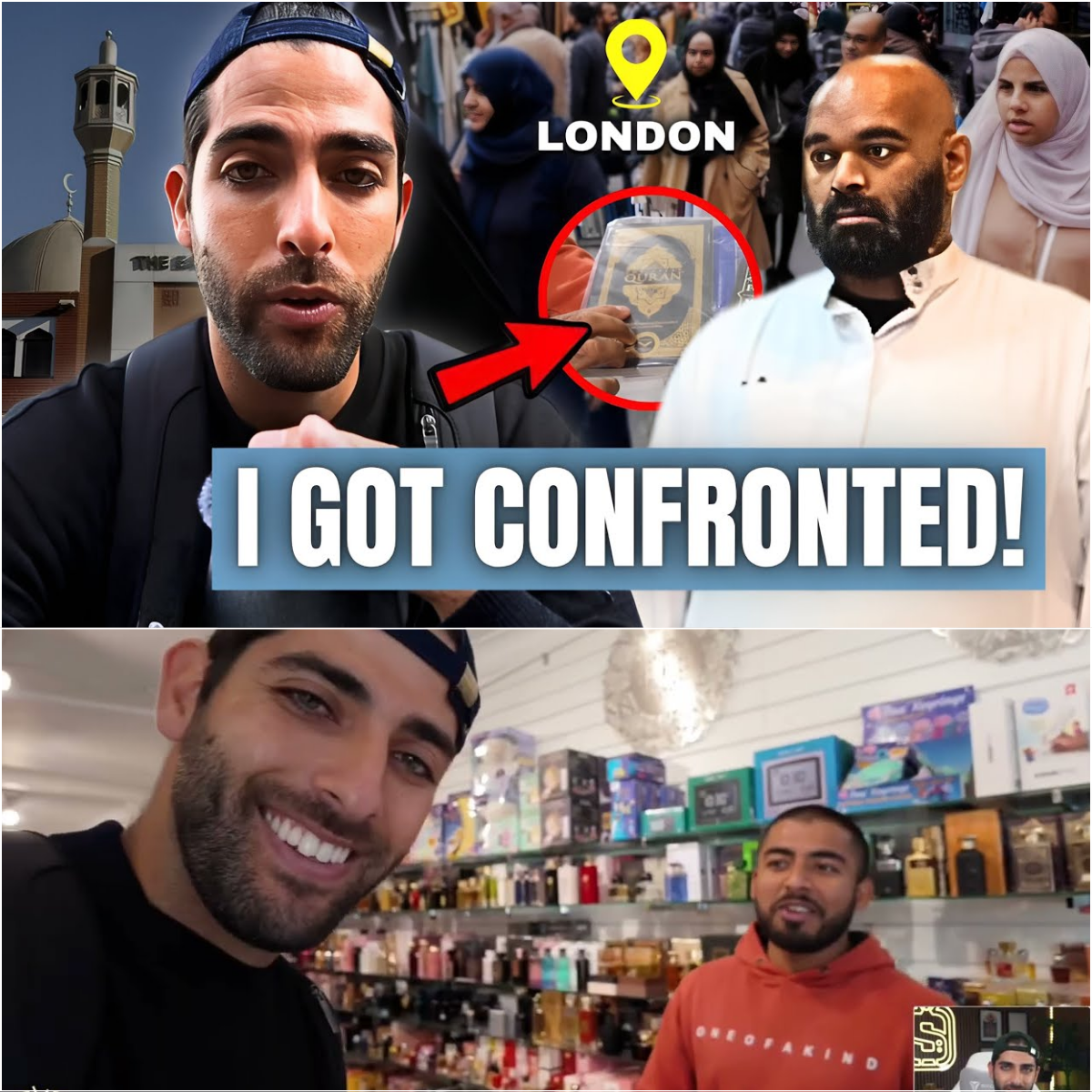
Just a few subway stops from the gleaming financial towers of Canary Wharf and the historic majesty of Tower Bridge lies White Chapel, an East London neighborhood that has long served as the first home for waves of immigrants arriving on British shores. Once a densely packed enclave of Jewish refugees fleeing 19th-century European pogroms, the area has undergone a total demographic transformation over the last several decades, evolving into one of the most culturally distinct Islamic communities in the Western world. For a casual traveler stepping off the Underground platform, the shift is sudden and profound; within a few city blocks, the traditional sights and sounds of the British capital fade, replaced by a bustling marketplace of stalls selling traditional South Asian garments, dynamic street vendors hawking exotic fruits, and storefronts adorned with religious flags. This striking contrast has turned White Chapel into a focal point for intense international debates over integration, national identity, and the fracturing of multicultural ideals across Europe.
To an American public increasingly preoccupied with its own debates over cultural assimilation and the rise of distinct urban enclaves, the reality of contemporary East London offers a complicated look at the future of Western pluralism. To some, the neighborhood represents a successful story of cultural preservation—a vibrant community where immigrant families have built a thriving social infrastructure while maintaining their ancestral faith and customs. To others, the total absence of traditional British cultural markers raises troubling questions about parallel societies that operate outside the mainstream national identity. By exploring the complex street-level interactions, religious literature, and geopolitical symbols that define daily life in this neighborhood, we can see how the battle for the cultural future of Europe is being fought not in halls of parliament, but along the sidewalks of ordinary city neighborhoods.
The Street-Level Encounters: The Ease of Conversion and Cultural Gaps
The immediate reality of stepping into an enclave like White Chapel is the speed with which a visitor is invited to engage with the dominant faith of the community. Street-level interactions highlight a profound confidence among residents in the universal truth of their message. In an environment where the majority of women wear the full niqab and the daily rhythm of life revolves around the call to prayer from the nearby East London Mosque, visitors are frequently invited to consider joining the faith.
During these encounters, local merchants and residents often emphasize how simple it is to enter the Islamic fold. Unlike the lengthy, demanding process required to convert to Judaism, or the highly structured catechism classes common in traditional Christianity, entry into Islam requires only the recitation of the Shahada—a two-sentence declaration of faith acknowledging the oneness of God and the prophethood of Muhammad.
[ Paths of Faith Regulation ]
      |
      +-----------------------+-----------------------+
      |                                               |
[ Western Statutory Law ]                      [ Strict Sharia Interpretations ]
- Freedom of conscience.                       - Religion tied to state citizenship.
- Absolute right to exit any faith.            - Departure viewed as political treason.
- Complete separation of church/state.         - Historically penalized with capital sanctions.
However, this emphasis on an easy entry point stands in sharp contrast to a much more difficult theological issue: the rules surrounding a person’s departure from the faith. When asked about what happens if a new believer later decides the religion is not for them, local proselytizers frequently dodge the question, assuring visitors that once a person discovers the truth, they would simply never want to leave.
This hesitation to address the mechanics of leaving the faith points to a deep, historical tension between traditional religious law and modern Western civil liberties. In classical Islamic jurisprudence, the act of leaving the religion (apostasy) was traditionally viewed not merely as a private change of personal conscience, but as an act of political treason against the state. Under strict historical interpretations of Sharia law, this offense carried severe penalties, including capital punishment.
While these classical penalties are entirely unenforceable under the civil laws of the United Kingdom, the persistent theological defense of these ideas creates a profound sense of unease for Western observers. It highlights a fundamental philosophical gap between a host society that treats religious belief as a flexible, individual choice, and an enclave culture that views faith as a permanent, collective commitment.
The Monopolization of Grievance: The Symbolism of Palestine in the Urban Space
Walking through the commercial heart of White Chapel reveals a striking consistency in the political and religious messaging found in local shops. Inside the numerous Islamic gift stores and bookshops that line the main thoroughfare, the traditional symbols of British identity are entirely absent. Instead, these spaces are filled with the flags, scarves, and political imagery of the Palestinian national movement.
From children’s activity books featuring maps of the Levant to bottles of virgin olive oil explicitly labeled as imports from Gaza and Jaffa, the Palestinian cause has been woven into the fabric of everyday commerce. This phenomenon raises a vital question for outside observers: Why has this specific conflict become an all-consuming focal point within Western Muslim enclaves, far overshadowing other global humanitarian crises?
+-----------------------------------------------------------------------------------------+
|                              THE GEOPOLITICAL FOCUS                                     |
+---------------------------------------------------+-------------------------------------+
| Secondary Geopolitical Crises                     | The Palestinian Narrative           |
+---------------------------------------------------+-------------------------------------+
| - Sudan: Massive displacement & civil strife.     | - Framed as a universal religious   |
| - Syria: Decades of intense internal conflict.    |   duty for the global Ummah.        |
| - China: Systemic persecution of Uyghur Muslims.  | - Directly tied to the theological   |
| - Yemen: Severe ongoing humanitarian disaster.    |   importance of Jerusalem.          |
+---------------------------------------------------+-------------------------------------+
The intense focus on Palestine within these shops is rarely matched by a similar concern for other regions where Muslim populations face severe hardship, such as the civil conflicts in Sudan, the long-running war in Syria, or the state-sponsored persecution of the Uyghur population in western China.
To understand this discrepancy, we must examine how the Palestinian conflict is framed within traditional religious history. For many believers, the issue is not viewed primarily as a modern political dispute over borders, land rights, and national sovereignty. Instead, it is understood as a vital religious struggle tied to the history of the faith.
Jerusalem holds a unique place in Islamic history as the First Qibla—the initial direction toward which the Prophet Muhammad and his early followers turned during their daily prayers, prior to a revelation that permanently redirected the focus toward the Kaaba in Mecca. This deep theological connection makes the status of the region an issue of intense personal importance for members of the global spiritual community (Ummah), regardless of their individual ethnic or national background.
However, critics view the relentless promotion of this narrative in Western cities as evidence of a deeper, systemic hostility toward the state of Israel and the broader Jewish community. By framing the geopolitical conflict in absolute terms and presenting it as a core component of religious identity to young children through targeted coloring books and educational materials, these enclaves can foster an environment where integration with neighboring communities becomes increasingly difficult.
The Myth of Global Symmetry: Grooming Gangs and Local Defensiveness
The defensive reactions of enclave communities when confronted with criticisms of local crime trends highlight how difficult it has become to have open, honest discussions about social integration. When asked about the highly publicized “grooming gang” scandals that have plagued various British towns over the past two decades, some residents reflexively downplay the ethnic dynamics of those crimes, claiming that such behavior is common across all ethnic and religious groups.
This desire to create a sense of moral equivalence across communities is directly contradicted by official government reports and independent investigations. While sexual abuse occurs across all segments of society, major independent inquiries—such as the landmark reviews in towns like Rotherham, Rochdale, and Telford—have consistently revealed a specific, recurring pattern in these systemic exploitation networks: the perpetrators were overwhelmingly men of Pakistani heritage, while the victims were predominantly vulnerable white British girls.
+-----------------------------------------------------------------------------------------+
|                               GROOMING GANG DYNAMICS                                    |
+---------------------------------------------------+-------------------------------------+
| Cultural Defensive Narrative                      | Documented Investigative Findings   |
+---------------------------------------------------+-------------------------------------+
| - Claims abuse occurs symmetrically across        | - Inquiries show specific, systemic |
|   all ethnic and religious communities.           |   demographic patterns in networks.  |
| - Dismisses tracking ethnic trends as             | - Pathologies rooted in local       |
|   inherently biased or discriminatory.            |   patriarchal and tribal dynamics.  |
+---------------------------------------------------+-------------------------------------+
The refusal of some community members to acknowledge these documented patterns points to a deep fear that any admission of localized cultural problems will be used to indict their entire faith. Investigative journalists and social workers have noted that the pathologies driving these specific exploitation networks were often rooted in complex tribal and patriarchal attitudes imported from conservative rural regions. In these traditional settings, women outside the community are sometimes viewed with a complete lack of respect, leading to a breakdown in basic moral standards.
By treating any discussion of these specific cultural factors as an attack on the religion as a whole, enclave leaders and defensive residents make it incredibly difficult to implement effective prevention strategies. This defensiveness creates a protective barrier around harmful behaviors, deepening the mistrust felt by the wider host society, which views the refusal to engage with these facts as a sign of institutional complacency.
The Fragmented Metropolis: London’s Shift toward Parallel Societies
The dramatic demographic shift in areas like White Chapel is part of a larger, systemic transformation that is redefining the major urban centers of the Western world. For generations, the concept of the melting pot was a central ideal of Western immigration policy—the belief that while immigrant communities would enrich a city with their unique traditions, they would ultimately adopt the primary language, legal values, and cultural norms of their host nation.
In many modern European capitals, this ideal has been replaced by the reality of parallel societies. In these distinct neighborhoods, the public space is entirely shaped by the traditions of a single minority group:
The Dominance of Religious Signage: Shops, community boards, and public advertisements are printed primarily in non-native languages, with little effort made to acknowledge the history of the host country.
The Enforcement of Social Norms: Informal social pressure is often applied within the neighborhood to enforce traditional standards of dress, behavior, and commerce, creating an uncomfortable environment for outsiders.
The Rejection of Host-Country Institutions: A growing preference for resolving family, financial, and personal disputes through informal religious councils rather than using the secular legal system of the state.
This level of separation is fundamentally different from the historic immigrant neighborhoods of the past, such as the Italian or Jewish enclaves that characterized early 20th-century New York. While those historic communities maintained a strong connection to their ancestral homelands, they actively prioritized learning the national language, participating in mainstream political institutions, and embracing the core civic values of their new country.
The emergence of permanent parallel societies in Europe is often accelerated by a well-meaning but flawed approach to multiculturalism. By treating all cultural practices and social values as equally valid, and avoiding any defense of core Western principles for fear of appearing intolerant, European societies have inadvertently encouraged deep social fragmentation.
The Great American Intersection: Lessons from the European Crisis
As the United States watches these developments unfold across Europe, the lessons of neighborhoods like White Chapel become increasingly relevant to the American political conversation. While the United States has historically been more successful at integrating diverse immigrant populations due to its strong civic identity and dynamic economy, it is not immune to the forces of cultural polarization.
The American political center is facing many of the same questions that are currently dividing European societies:
The Limits of Accommodation: To what extent should public institutions, schools, and local governments modify their standards to accommodate traditional religious practices that conflict with modern secular values?
The Preservation of Civic Unity: How can a diverse, pluralistic nation maintain a shared sense of national purpose and common values when major segments of its population live in completely separate cultural and information ecosystems?
The Freedom of Speech vs. Social Cohesion: How can a free society protect the right of its citizens to criticize religious ideas and cultural practices without allowing that criticism to turn into systemic discrimination against individual people?
The reality of contemporary East London serves as a powerful reminder that social cohesion is incredibly fragile. It demonstrates that a healthy society cannot be maintained through economic policy alone; it requires a baseline of shared cultural understanding, mutual respect, and a willingness from all communities to participate in a single, unified public life.
Moving beyond this polarization requires a renewed commitment to the core principles of liberal democracy. It means defending the right of individuals to practice their faith freely and protect their heritage, while firmly insisting that the secular laws, civil liberties, and national identity of the host country remain the supreme standard for all citizens. Only by balancing an openness to the world with a strong defense of democratic values can Western nations avoid the deep fragmentation that threatens to turn our greatest cities into collections of isolated, hostile enclaves.