FIVE First-Hand Paranormal Encounter in the Forest 😱 | These Woods Are Haunted
FIVE First-Hand Paranormal Encounter in the Forest 😱 | These Woods Are Haunted
The American wilderness has long been romanticized as a canvas of reinvention and serene beauty, a sprawling sanctuary where one can escape the relentless hum of modern life. Yet, beneath the majestic canopy of our national parks and the pastoral charm of rural woodlands lies a starker, older reality. For a growing number of backcountry travelers, hunters, and late-night drivers, the forest ceases to be a refuge at night, transforming instead into a theater of the unexplained. Across the country, from the fog-shrouded peaks of the Blue Ridge Parkway to the dense, primeval forests of northwestern Wisconsin, ordinary citizens are returning from the woods with chilling accounts of encounters that defy conventional science. These are not the familiar tales of straying bears or territorial mountain lions, but visceral experiences of claustrophobic dread, impossible acoustics, and physical anomalies that leave witnesses questioning their surroundings—and their sanity.
The Static on the Parkway
For decades, the Blue Ridge Parkway has served as a scenic ribbon winding through the Appalachian Highlands, celebrated for its sweeping vistas and vibrant autumn foliage. But when darkness drapes over the ridges, the isolation of the mountains takes on a heavier, more suffocating quality.
It was roughly 1:00 a.m. when a pair of local musicians pulled their vehicle into a secluded overlook near Asheville, North Carolina. Their intention was simple: to find a quiet, unbothered space under the stars to play music. The night air was crisp, and the surrounding peaks were swallowed by a pitch-black void.
The initial disruption was subtle. Between chords, the musicians began to notice an undercurrent of sound filtering through the trees—disembodied voices, reminiscent of a young man and woman laughing. At first, they reasoned it must be other late-night visitors or campers hidden in the brush. However, as they stopped playing to listen, the laughter mirrored their actions, abruptly cutting out. When they resumed their music, the voices returned, growing progressively louder, weaving a bizarre, responsive game of cat-and-mouse. The sound did not possess the distant, echoing quality typical of a mountain valley; it felt localized, immediate, and unnervingly close.
The playful nature of the auditory anomaly quickly curdled. The ambient chatter dissolved into a guttural, bone-chilling snarl that resonated from the darkness just beyond the reach of their headlights. Instantly gripped by a primitive urge to survive, they abandoned the spot and fled down the mountain road.
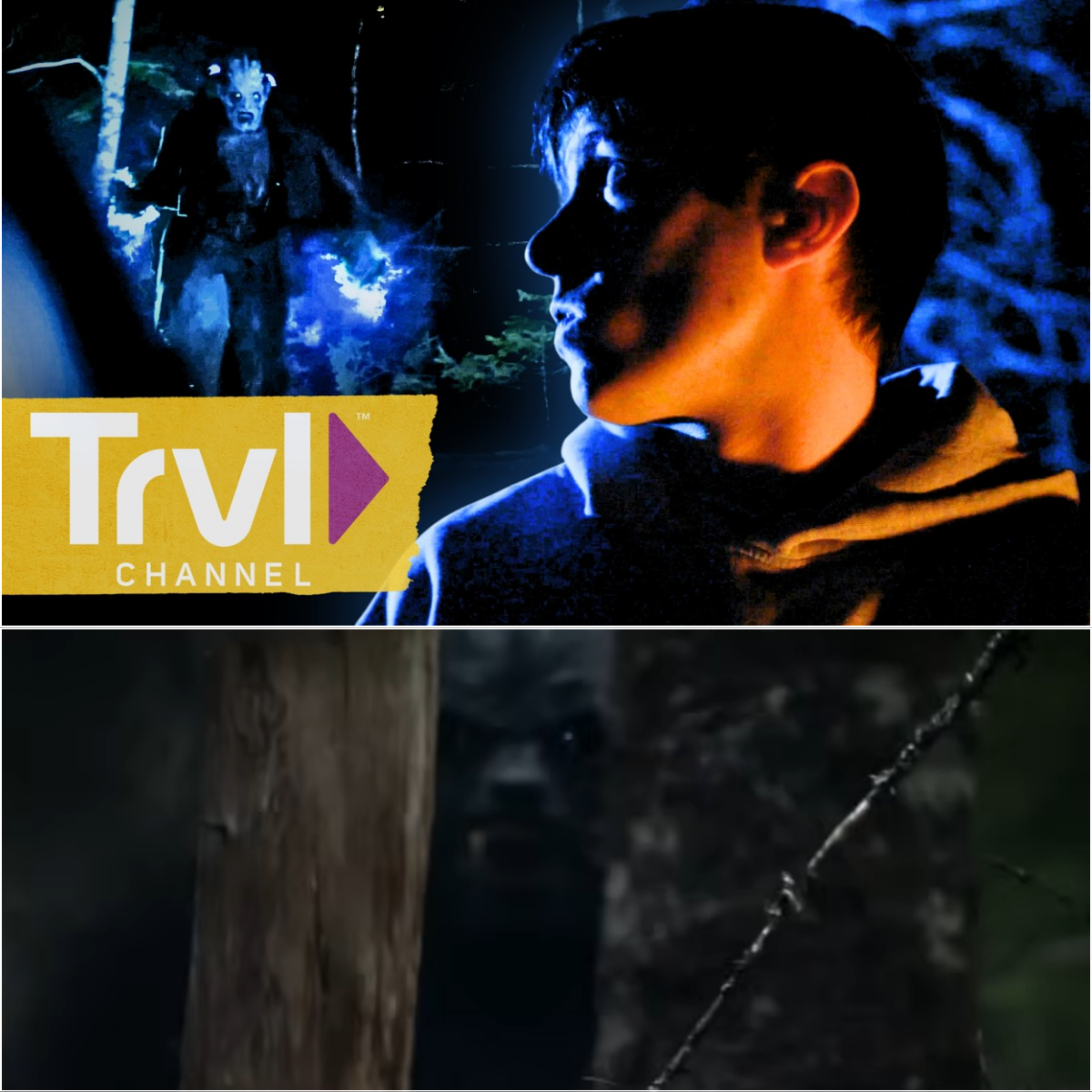
Seeking safety and a brightly lit space, they pulled into a larger, primary overlook down the ridge. It was there that the atmosphere shifted from eerie to genuinely hostile. The driver described a palpable sensation of being watched, accompanied by a bizarre physical phenomenon: a sudden, heavy pressure in the air, akin to a massive static charge. The hair on their arms stood on end, mimicking the electric tension that precedes a severe lightning strike, yet the sky remained clear.
As one of the men stepped away from the car to relieve himself, the stillness was broken by a rhythmic, heavy thudding. It sounded unmistakably like hooves, but the cadence was wrong—it was the unmistakable bipedal gait of something walking on two legs, moving rapidly from the tree line toward the vehicle. The sound accelerated, growing louder and closer with terrifying speed.
As they scrambled back into the car, the driver glanced into his side mirror. Illuminating the periphery of the vehicle’s lights was a silhouette that shattered his understanding of local wildlife: a towering, powerfully built figure with the head resembling a goat and lower extremities that left the impression of massive, heavy hooves.
The terror of the encounter lingered long after the vehicle sped away. Moments after pulling onto the main road, the car’s electronics flickered and died, leaving them rolling through the dark before the engine mysteriously caught again. The lingering dread was compounded by an auxiliary sight they had witnessed at that same overlook—a lone man in a truck, walking into the woods with a shovel in the dead of night. The confluence of the bizarre entity, the physical static in the air, and the suspicious human activity prompted an anonymous, panicked call to the Asheville Police Department, with the witness withholding his name out of a distinct fear of being institutionalized.
The Silence of the Wisconsin Pines
Further north, deep within the glacial terrain of northwestern Wisconsin near the town of Siren, the wilderness takes on a different composition. Here, the landscape is defined by miles of impenetrable pine barrens, dense hardwood forests, and isolated bogs. To the residents who keep seasonal cabins in these remote tracts, the forest is a trusted companion by day and an object of deep caution by night.
One lifelong woodsman, raised in the Twin Cities but intimately familiar with the Wisconsin backcountry since childhood, recalls an unspoken rule passed down through his family: when night falls, you watch the tree line. For years, family gatherings around the fire pit were dictated by an oppressive sensation of eyes locked onto them from the dark edge of the woods—a collective instinct shared by his mother and grandparents that kept them from ever wandering past the clearing after dark.
The validity of that instinct was proven during a daylight game of tactical recreation. The witness, an experienced hunter trained in firearm safety from the age of eleven, was playing a simulated combat game with his cousin using plastic BBs. Outfitted in military woodland camouflage, he retreated into the thick brush to utilize the cover, moving fluidly from tree to tree.
As the two boys reached the crest of a hill overlooking a fifty-yard clearing, the witness called for a temporary timeout to catch his breath. It was in that moment of stillness that his lifelong woodsman instincts screamed that something was profoundly wrong. The forest had gone utterly, completely dead quiet.
To an experienced hunter, the sudden cessation of birds chirping and insects buzzing is an absolute biological indicator. It is the immediate response of an ecosystem hiding from a top-tier apex predator—typically a black bear or a roaming cougar.
Scanning the clearing from left to right, his eyes eventually locked onto a shadow beneath the low-hanging branches. As his vision focused, the form materialized into a massive set of jaws lined with prominent, white canine teeth. The creature’s eyes were fixed on the boys, darting with predatory calculation between the witness and his cousin.
The psychological response was instantaneous paralysis, but survival instinct overrode the fear. “You can’t freeze,” the witness later reflected. “You freeze, you die.”
Turning to run back toward the safety of the cabin, the boys discovered that the predator was not merely stalking; it was actively closing the distance. The sound of heavy, rapid footsteps tore through the undergrowth directly behind them. The witness described the entity as being close enough that he could feel the displacement of air, an imminent presence trailing inches from his back.
The pursuit ceased instantly the moment their boots cleared the tree line and hit the manicured grass of the cabin outpost. Breathless and trembling, the witness chose to tell his cousin and grandparents that the pursuer was simply an aggressive bear—a rationalization deployed not because he believed it, but because the alternative was too terrifying to give voice to, and far too unbelievable for his elders to accept.
The Demonic Echoes of Gettysburg
While remote forests provide a natural screen for the anomalous, historical battlefields carry an entirely different flavor of localized dread. Gettysburg, Pennsylvania, is deeply etched into the American consciousness as a site of immense national trauma, where tens of thousands of soldiers perished over three days of brutal warfare. It is also regarded by paranormal researchers as an open-air laboratory of residual energy.
A professional tour guide, tasked with leading a private, late-night investigation during the infamous “devil’s hour” between midnight and 3:00 a.m., experienced an escalation of activity that shattered her seasoned professionalism. Escorting two clients into a notoriously heavy meadow where a civilian woman named Ida had been killed during the conflict, the guide utilized a standard spirit box—a device that rapidly sweeps through radio frequencies, generating a steady stream of white noise through which researchers believe entities can communicate.
Frustrated by an initial lack of activity and feeling the pressure of a high-priced private tour, the guide did something she later deeply regretted: she adopted an aggressive tone, demanding that any spirit present show itself.
The response was immediate and terrifying. The constant hiss of the spirit box suddenly dropped into absolute, dead silence. Thinking the batteries had failed, the guide reached for the device, only for her flashlight to illuminate an active, physical anomaly in the grass. Right before their eyes, the blades of wild grass were being systematically pressed and flattened into the earth, forming a distinct sequence of advancing footprints moving directly toward them.
Before anyone could scream, a monstrous, high-volume grunt—resembling the violent squeal of an aggressive wild boar—ripped through the open air. The sound did not emanate from the speaker of the spirit box; it materialized directly out of the empty space in front of them. The clients panicked, fleeing immediately through the darkness toward their vehicles.
Remaining behind for a brief, stubborn moment to document the event, the guide called out into the dark. The oppressive grunt blasted out a second time, forcing her into a full sprint toward the parking area. As she ran, her flashlight beam cut across a figure sitting quietly by the roadside. The man was dressed in immaculate, period-accurate Confederate clothing. Assuming him to be a late-night historical reenactor out past park hours, she slowed down and called out to ask if he was alright.
The figure turned, and from its mouth issued the exact same, monstrous animalistic grunt that had echoed in the meadow. The guide fled in sheer panic, later capturing a single, distorted photograph before leaving the area permanently. The encounter left her with a profound, lasting respect for the boundaries of the unknown, vowing never again to aggressively provoke the hidden history of the landscape.
The Footsteps on the Abandoned Island
The theme of uninvited intrusion is a common thread among those who encounter the unexplained. On a remote, uninhabited island accessible only by boat, a small group of urban explorers sought out an abandoned lightkeeper’s house. The structure, preserved by time and historical neglect, was filled with decaying artifacts and memories of a bygone maritime era.
From the moment the group discovered an unlatched door and stepped inside, the atmosphere inside the home felt distinct and heavy. It was not the familiar smell of rot and dust, but an active, negative energy that made several members of the party physically sick to their stomachs. One explorer noted the overwhelming sensation that they were committing a severe social transgression—violating the privacy of a home where the occupant was still very much present and deeply hostile to company.
While a few members of the group retreated to the safety of their vehicle parked outside, two explorers pushed deeper into the dark corridors, documenting the interior with audio recording equipment. The house had been completely disconnected from the electrical grid for decades; it possessed no running water, no neighbors, and no legal inhabitants.
Yet, as the recorders rolled, the empty house came alive with activity. From the floorboards directly above them came the rhythmic, heavy sound of deliberate footsteps walking from one side of the room to the other. The steps were followed by a violent, grating screech—the unmistakable sound of a heavy piece of furniture, like a wooden table, being dragged forcefully across an uncarpeted floor.
Attempting to locate the source, they approached a central interior door. As one explorer reached out and shook the locked handle, the psychological temperature of the house plummeted. A wave of intense, overwhelming dread washed over them, a non-verbal warning that if they remained inside the structure for another minute, physical harm would follow.
When the final explorers burst out of the front door and scrambled back into the vehicle, their companions noted that their faces were completely drained of color, a stark, pale white. As the boat pulled away from the island’s shore, the group experienced a profound, sudden wave of physical relief, the oppressive weight lifting from their chests the further they traveled into open water.
The Shaking Geometry of the Deep Woods
Perhaps the most acoustically devastating encounter occurred on a state park trail frequented by college students looking for nighttime hikes. A group of friends had ventured along a familiar path when they noticed an abrupt change in the terrain. The well-maintained, packed dirt and mulch of the hiking trail suddenly gave way to a large circular clearing where the earth appeared to have been freshly turned and disturbed.
Encircling this perimeter was a bizarre, waist-high fence. It was not constructed of standard wire or wooden posts, but rather an intricate, heavy mesh of twisted metal chains that closely resembled interlinked bicycle chains welded together in a crude, industrial web. The immediate reaction from the students was dark humor, joking that the structure looked like a set piece from a horror film, but the laughter died when they discovered the carvings.
Etched deeply into the surrounding trees were an array of complex, geometric symbols. None of the students, despite varied academic backgrounds, recognized the markings, but the intent was undeniable: they were deliberate, purposeful signifiers marking a boundary.
As the group fractured into smaller clusters to examine the perimeter, two students lagging behind heard a low, resonant growl. Initially, the sound possessed a distant quality, sounding like a large animal marking its territory a mile or more off into the deep valley. They turned to debate the sound, but within a span of three seconds, the source of the noise closed the distance across the valley with impossible velocity.
Suddenly, the air around them erupted. A sound of unfathomable volume materialized, completely encircling the students in a tight, three-hundred-and-sixty-degree perimeter. The noise was a contradictory, horrifying acoustic anomaly: a combination of piercing, high-pitched screams and low, vibrating groans occurring simultaneously from every direction.
The students possessed four high-powered tactical flashlights, which they swept frantically through the brush. There were no trees snapping, no brush moving, and no physical forms illuminated by the beams. The woods were visually empty, yet the sound was so intensely loud that it crossed from an auditory perception into a violent physical sensation, literally shaking the students’ chests and vibrating the ground beneath their boots.
Terrified by an invisible, multi-directional threat that defied the laws of acoustics, the group sprinted for a quarter of a mile, crossing a pedestrian bridge over a local creek before finally reaching their vehicle. The sheer volume of the entity remained the defining trauma of the event; one witness, who had spent years working professional concert production and was intimately familiar with high-decibel audio systems, stated unequivocally that the sound in those woods was the loudest, most violent acoustic force he had ever experienced in his life.
The Common Thread of the Unseen
When we analyze these disparate accounts—spanning different geographies, terrains, and demographics—a series of striking commonalities emerge that challenge the standard skeptical explanations of wildlife misidentification or collective hysteria.
Location
Auditory Signature
Physical Sensations
Visual Anomalies
Blue Ridge Parkway
Disembodied laughter, predatory snarl, accelerating bipedal hooves
Extreme static charge in the air, localized electronic failure
Towering bipedal goat-like silhouette in side mirror
Northwestern Wisconsin
Absolute ecosystem silence, rapid heavy pursuit footsteps
Sudden drop in ambient forest activity, intense fight-or-flight paralysis
Massive jaws with prominent canine teeth hidden in low brush
Gettysburg Battlefield
Sudden drop in white noise, violent boar-like grunts
Flattening of wild grass forming physical advancing footprints
Period-dressed figure emitting identical animalistic sounds
Abandoned Island House
Rhythmic footsteps overhead, heavy furniture dragging across floor
Nausea, sudden drop in room temperature, intense psychological dread
None (Strictly auditory and atmospheric)
State Park Trail
Sudden 360-degree high-pitched screams and low groans
Internal physical vibration, air displacement, turned earth boundaries
Intricate twisted chain fencing, unrecognized geometric tree carvings
The most compelling aspect of these encounters is the consistent prelude: the alteration of the environment before the event occurs. Witnesses repeatedly report a profound change in the atmosphere—a sudden drop in temperature, the absolute silencing of local fauna, or a heavy, electric pressure that mimics a localized electromagnetic field. These details suggest that these phenomena are not merely biological entities wandering through the woods, but occurrences that alter the local environment itself.
Furthermore, the psychological toll on the witnesses highlights the severity of the experiences. These are individuals who, in many cases, are highly comfortable in the outdoors. They are hunters, woodsmen, and hikers who understand the vocabulary of the American wild. They know the sound of a hooting owl, the screech of a bobcat, and the heavy crash of a white-tailed deer through the brush. Yet, in these moments, that vocabulary fails them entirely.
What remains is a sobering reminder of the limitations of our map-making. We have paved roads through the mountains, erected cabins in the deep woods, and turned historic battlefields into manicured parks. We have illuminated the darkness with electricity and cataloged the animal kingdom with scientific precision. But when the sun dips below the horizon and the ancient forests of America reclaim the night, they remind us that there are still places on the map where human authority ends—and where something else, ancient and unseen, still holds dominion.